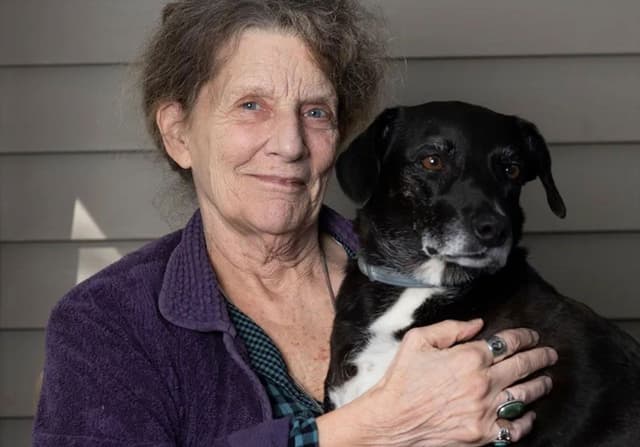
We yearn for our mother’s love, and if we never have it, we crumble. But the indomitable Neko Case not only survived an unspeakable childhood, but the Grammy-nominated singer-songwriter transcended it through the force of music.
In the exquisitely written memoir The Harder I Fight, The More I Love You, Case, raised in the Pacific Northwest, writes how her first memory is one of neglect. We read, almost with hands over our eyes, as she recounts how, for example, her mother faked death by cancer and then popped up two years later. Young Neko is left alone for hours, with little food, and moves back and forth between her mom and stepdad’s place and her father’s, a Vietnam War veteran.
Violence and predation suffuse her story; at 14, she is raped by a friend’s 19-year-old brother. “Trauma is a disease that just keeps traumatizing and re-traumatizing everyone around the initial victim,” she writes. At 16, she gets an “emancipation” from her parents.
With feral rage swirling inside, she yearns for friends and finds them at Vancouver’s Emily Carr University of Art + Design in 1994, where she plays the drums with two female art-student singers in Maow, a punk rock band. She thinks of herself as an honorary Canadian, and recounts travelling with band members to Cape Breton and back, before she has to go back to the U.S. because she doesn’t have a visa.
Case – who also witnessed the aftermath of her mother’s rape at 18 – writes she was “so saturated by male violence” by the time she was 22 that she was volatile and angry. “I have a hard time remembering my own kindnesses and loyalty during this period, even though they were present. I was just so aggressive. Thank god for drums.”
Her early career fluctuates between wins and losses as she gravitates to country music. She overcomes setbacks with sound and fury, hurtling her mighty “flamethrower” voice to the rafters. A founding member of Canadian indie rock group The New Pornographers, Case recalls playing with The Sadies and performing at Toronto venues like the Horseshoe, The Matador and Lee’s Palace.
Now 54, Neko Case lives peacefully in Vermont on a farm, with horses, a garden, a range of pianos in disrepair, her partner Jeff and his daughter. She is currently working on a musical version of the 1991 film Thelma and Louise with the original screenwriter, Callie Khouri.

In the following excerpt from Chapter 12, “I Was Just Getting Started as an Adult When …,” Case, 16, moves into a basement suite in a house owned by her ex-boyfriend’s mom and connects with the music world.
“The Community World Theatre, which sat on the corner of Fifty-Sixth and M Streets in Tacoma, [Wash.] was a small, black-box cement and brick theater that used to be something, then was a porno house, then became the music oasis I came to know and love. I saw so many incredible shows. So many seminal punk bands, so many forgotten ones, too. Fang, Flipper, Dag Nasty, Fugazi’s first tour before they even had a record out. Bomb, Lush (Slim Moon from Kill Rock Stars’ band), Malfunkshun, Dr. Know, Frightwig, Scream, Girl Trouble, SNFU, Beat Happening, Dangermouse, My Name – the list goes on and on. Music was the friend in the dark and the physical outlet that helped me shed some of the pent-up sorrow and frustration that roiled in my system. It was my family. It was when women played that I really took notice, like Portland’s the Obituaries or the incredible band Tragic Mulatto, who were from San Francisco. Sadly, this did not happen near enough.
The thought that I might join a band or perform hadn’t yet occurred to me. I was in this way still not far removed from the kid listening to AC/DC during a rained-out recess in elementary school – her toes moving, but not yet daring to do more. Music was reconfiguring my inner organs, but my vantage on it was as a fan, not as a possible musician. Something quavered in me, though, when Tragic Mulatto was playing – a lust I wasn’t ready to heed. In the meantime, I used the Community World as a scrim to hide all of my many failings and threw all my energy into becoming a part of it, whether asked or not. I made posters for shows. I volunteered taking tickets or cleaning up. I was a lousy volunteer, but the owner, Jim May, didn’t seem to mind too much. Jim was a tall, friendly, mop-haired ball of energy, then in his early thirties, who loved art and music and wanted our city to have a worthy punk scene. He, with the help of his wonderful network of friends made up of musicians, artists, writers, and oddballs, worked hard and joyfully and made incredible things happen. They were all older than me, but for some reason they let me hang around. No one tried to corrupt me, and maybe they even protected me a little. It was the healthiest thing I had going.
Community World aside, the only social life I had was based around heavy drinking. I drank, but not to the levels of the people I knew, since my mom had shown me how low it could take you. But among some of my friends it seemed like a race to see who could hit full-on messy alcoholic status. They tried to outdo each other, a competition to see who could get the most obliterated, as though destruction was harmless. It was the stupidest kind of rebellion. I was so lonely in that life, I slept with a few of the men in that scene. It was awful, but I just wanted someone’s arms around me, and as cliché as that is, I managed to take it one step further to reach the nadir of cliché by just getting even that much lonelier. Thank god for my cassette tapes. I could at least disappear into music from time to time. I had the Bad Brains and the Meat Puppets. Mazzy Star and the Crucifucks. The Pogues and Nomeansno. The Cocteau Twins and the Cramps and obscure things taped off the radio late at night. They comforted me. They still do.
But then I didn’t have enough money, even with the deal on rent. I had no money for food, and I’d be so famished at night I couldn’t sleep or pay attention at school the next day. Dean’s mom finally had enough. I’d let a kid I knew from the scene stay over on the couch and he’d repaid the good deed by racking up a sixty-eight-dollar phone bill calling Greece that I couldn’t afford to pay back. Dean’s mom looked heartbroken as she gave me the news I had to leave.
I couldn’t argue. But it didn’t solve the problem of where I would go.
There was only one person to call, and it was the person I least wanted to speak to. My mom. I dropped out of school and slunk back to her, and it was just as terrible as it had been before I left.”
Excerpted from The Harder I Fight The More I Love You. Copyright © 2025 Neko Case. Published by Grand Central Publishing, a Hachette Book Group company. Reproduced by arrangement with the Publisher. All rights reserved.