Susan Wood/Getty Images
8 Buzzy and Under-the-Radar Books We’re Recommending Right Now
New titles from Susan Orlean, Lyse Doucet, Joe Hill and more have left a lasting impression on our Zed contributors
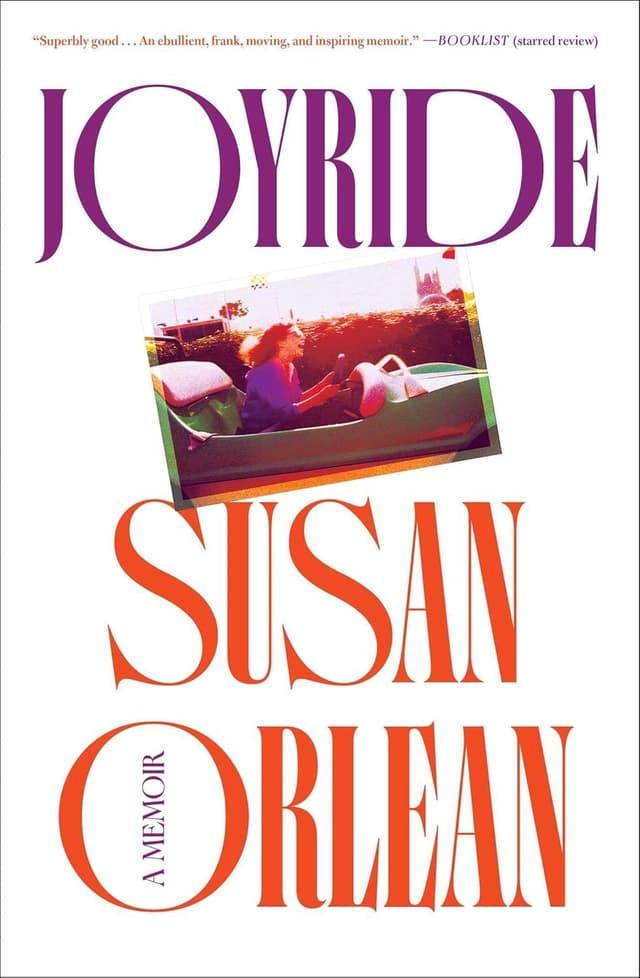
1JOYRIDE: A MEMOIRby Susan OrleanAuthor’s Home Base: Los Angeles
Author’s take: “That’s a little bit what non-fiction writers do. They hot-wire someone else’s life, take it for a ride and no one’s hurt.”
Favourite lines: “I write because I think it’s important. There are a million different kinds of writing, but this belief applies to all of them. Writing in all its forms is the essence of human interaction. It is the most essential unit of exchange.”
Review: Celebrated New Yorker staffer and non-fiction author Susan Orlean’s latest is billed as a memoir. And it is, insofar as it recounts her contented childhood, her troubled first marriage and happy second one, a couple of affairs and, especially, her lifelong love of unspooling left-field real-life tales that she frames as her north star. But Joyride includes much more, making it something of an instructional guide for writers, an outsider’s glimpse into Hollywood’s nonlinear approach to turning books into movies (as with her 1998 title The Orchid Thief, which winningly became 2002’s Adaptation), and a giddy commemoration of the heyday of marquee periodicals – like Vogue and Rolling Stone – with their dizzying expense accounts. Also, at the risk of seeming indelicate, Joyride salutes Orlean’s own ingenuity, a trajectory Stephen King sidestepped in his thematically similar but darker/funnier 2000 work, On Writing: A Memoir of the Craft. Still, given the abundant storytelling pleasures Orlean, 70, has bestowed on fans across the decades, the self-congratulating seems both earned and fair. –Kim Hughes
Author’s Home Base: Los Angeles
Author’s take: “That’s a little bit what non-fiction writers do. They hot-wire someone else’s life, take it for a ride and no one’s hurt.”
Favourite lines: “I write because I think it’s important. There are a million different kinds of writing, but this belief applies to all of them. Writing in all its forms is the essence of human interaction. It is the most essential unit of exchange.”
Review: Celebrated New Yorker staffer and non-fiction author Susan Orlean’s latest is billed as a memoir. And it is, insofar as it recounts her contented childhood, her troubled first marriage and happy second one, a couple of affairs and, especially, her lifelong love of unspooling left-field real-life tales that she frames as her north star. But Joyride includes much more, making it something of an instructional guide for writers, an outsider’s glimpse into Hollywood’s nonlinear approach to turning books into movies (as with her 1998 title The Orchid Thief, which winningly became 2002’s Adaptation), and a giddy commemoration of the heyday of marquee periodicals – like Vogue and Rolling Stone – with their dizzying expense accounts. Also, at the risk of seeming indelicate, Joyride salutes Orlean’s own ingenuity, a trajectory Stephen King sidestepped in his thematically similar but darker/funnier 2000 work, On Writing: A Memoir of the Craft. Still, given the abundant storytelling pleasures Orlean, 70, has bestowed on fans across the decades, the self-congratulating seems both earned and fair. –Kim Hughes
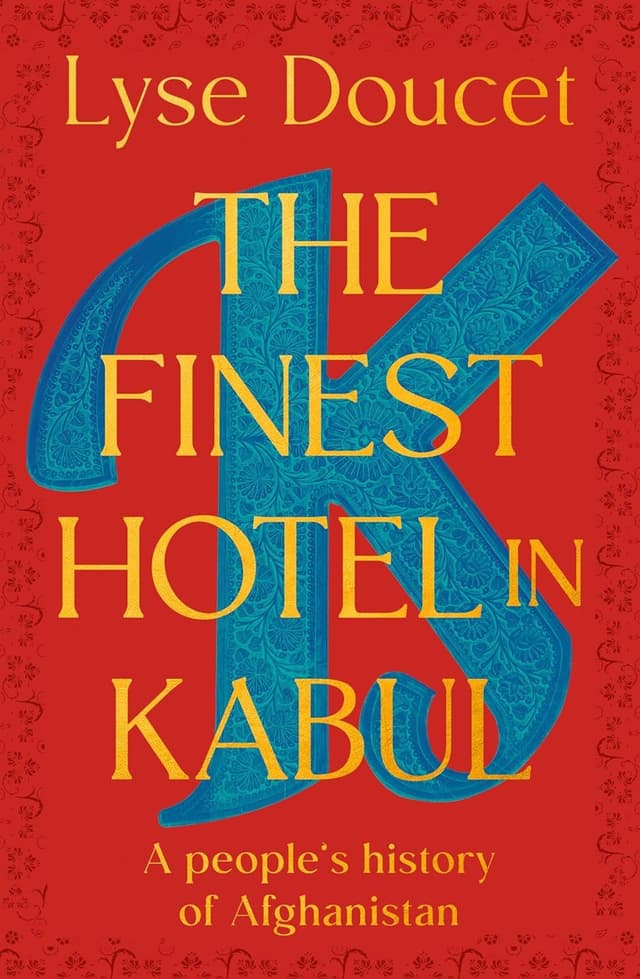
2THE FINEST HOTEL IN KABUL: A PEOPLE’S HISTORY OF AFGHANISTANby Lyse DoucetAuthor’s Home Base: London, England
Author’s take: “[The book] is about Afghanistan, but it’s also about very universal human experiences: people who live in times of huge flux, violence and change, and how their lives are disrupted as a result. It’s also about how people still get up in the morning and find an everyday courage to carry on.”
Favourite lines: “As Afghanistan lurched through decades of trial and terror, laced with bright but brief beginnings, the Inter-Con was an unbreakable constant.”
Review: Canadian-born Lyse Doucet, the BBC’s long-serving and very decorated chief international correspondent, gets top marks for conceptual originality with The Finest Hotel in Kabul, which chronicles Afghanistan’s recent history through the lens of the Hotel Inter-Continental which, when it opened in 1969, promised to link the nation to the wider world. Doucet, 66, – a hotel devotee since her first stay in 1988 – follows a roster of local employees who helped elevate the Inter-Con to legendary status among diplomats and jet-setters before a tsunami of coups, civil wars and invasions threatened to reduce the building, and its environs, to rubble. Though diminished, the Inter-Con still stands sentinel over a country rarely noted for producing good news. To say Doucet’s book is immersive is an understatement: in one instance, readers are offered a detailed description of the uniforms staff were wearing on Christmas Day in 1979 when the Soviets arrived. That same staff put a human face on the conflicts that continue to ravage Taliban-ruled Afghanistan. While it’s a lot to digest, Doucet’s storytelling captivates. –KH
Author’s Home Base: London, England
Author’s take: “[The book] is about Afghanistan, but it’s also about very universal human experiences: people who live in times of huge flux, violence and change, and how their lives are disrupted as a result. It’s also about how people still get up in the morning and find an everyday courage to carry on.”
Favourite lines: “As Afghanistan lurched through decades of trial and terror, laced with bright but brief beginnings, the Inter-Con was an unbreakable constant.”
Review: Canadian-born Lyse Doucet, the BBC’s long-serving and very decorated chief international correspondent, gets top marks for conceptual originality with The Finest Hotel in Kabul, which chronicles Afghanistan’s recent history through the lens of the Hotel Inter-Continental which, when it opened in 1969, promised to link the nation to the wider world. Doucet, 66, – a hotel devotee since her first stay in 1988 – follows a roster of local employees who helped elevate the Inter-Con to legendary status among diplomats and jet-setters before a tsunami of coups, civil wars and invasions threatened to reduce the building, and its environs, to rubble. Though diminished, the Inter-Con still stands sentinel over a country rarely noted for producing good news. To say Doucet’s book is immersive is an understatement: in one instance, readers are offered a detailed description of the uniforms staff were wearing on Christmas Day in 1979 when the Soviets arrived. That same staff put a human face on the conflicts that continue to ravage Taliban-ruled Afghanistan. While it’s a lot to digest, Doucet’s storytelling captivates. –KH
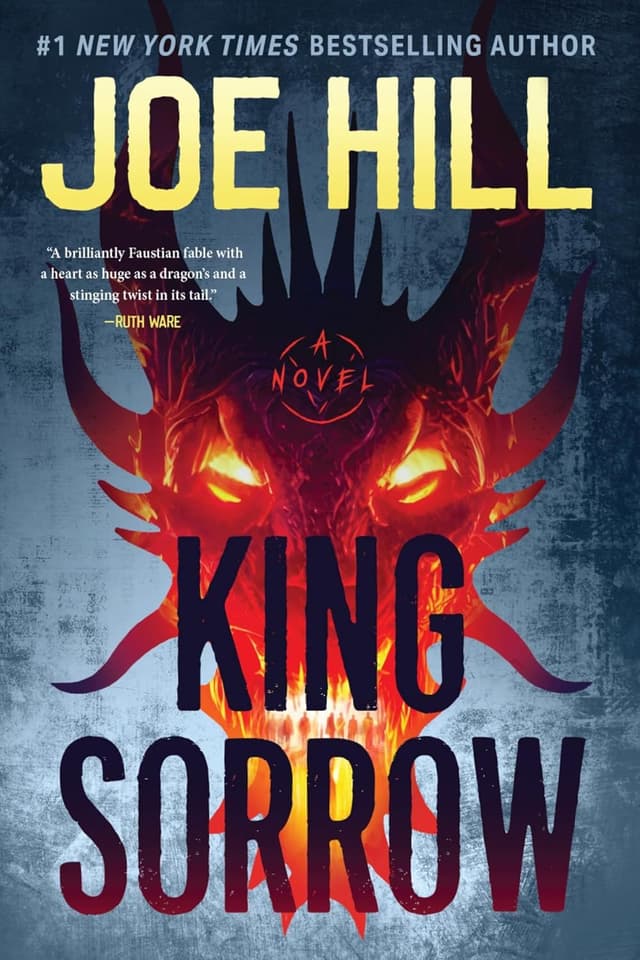
3King Sorrowby Joe HillHome Base: New England
Author’s Take: “It’s fashionable to make fun of the stuff that’s taught at liberal arts college — who needs to know anything about Arthurian legends when they could be learning to code? But I always kind of thought someday I’d put all that reading to good use and I was right. It only took 30 years.”
Favourite Line: “If there has to be evil in the world, then I’d at least like to be in charge of it.”
Review: Sometimes – all too rarely, really – when you start reading a new book, it feels like slipping into a warm bath: instantly welcoming, utterly comfortable and immediately immersive. That’s how I felt reading the opening pages of King Sorrow, the new novel from horror writer Joe Hill, his first in almost a decade. And, despite the fact that King Sorrow is, at its heart, a horror novel (and that it weighs in at almost 900 pages), that feeling never lets up. This novel is a glorious, archly self-aware, genuinely chilling and deeply funny read, which begins as something of a dark academic piece (with significant surface similarities to Donna Tartt’s The Secret History) before catapulting into an entirely different direction. Nay, an entirely different world. Beginning in 1989, King Sorrow follows a group of friends – most of them students at a small New England liberal arts college – who summon a dragon (yes, you read that right) to help one of their number, only to find themselves beholden to said creature, the titular King Sorrow, to provide a sacrifice for him every year. Or else. The novel follows the characters (and the dragon) through a quarter-century of American history (both real and imagined – the line gets blurry at times) and a series of almost self-contained episodes, many of which could be stand-alone novels in their own right. To say any more would be to give too much away – King Sorrow is a big, bold, home-run of a book, and a swift rejoinder to those who might say “they don’t make books like they used to.” Joe Hill does, and we’re all the richer for it. –Robert Wiersema
Home Base: New England
Author’s Take: “It’s fashionable to make fun of the stuff that’s taught at liberal arts college — who needs to know anything about Arthurian legends when they could be learning to code? But I always kind of thought someday I’d put all that reading to good use and I was right. It only took 30 years.”
Favourite Line: “If there has to be evil in the world, then I’d at least like to be in charge of it.”
Review: Sometimes – all too rarely, really – when you start reading a new book, it feels like slipping into a warm bath: instantly welcoming, utterly comfortable and immediately immersive. That’s how I felt reading the opening pages of King Sorrow, the new novel from horror writer Joe Hill, his first in almost a decade. And, despite the fact that King Sorrow is, at its heart, a horror novel (and that it weighs in at almost 900 pages), that feeling never lets up. This novel is a glorious, archly self-aware, genuinely chilling and deeply funny read, which begins as something of a dark academic piece (with significant surface similarities to Donna Tartt’s The Secret History) before catapulting into an entirely different direction. Nay, an entirely different world. Beginning in 1989, King Sorrow follows a group of friends – most of them students at a small New England liberal arts college – who summon a dragon (yes, you read that right) to help one of their number, only to find themselves beholden to said creature, the titular King Sorrow, to provide a sacrifice for him every year. Or else. The novel follows the characters (and the dragon) through a quarter-century of American history (both real and imagined – the line gets blurry at times) and a series of almost self-contained episodes, many of which could be stand-alone novels in their own right. To say any more would be to give too much away – King Sorrow is a big, bold, home-run of a book, and a swift rejoinder to those who might say “they don’t make books like they used to.” Joe Hill does, and we’re all the richer for it. –Robert Wiersema
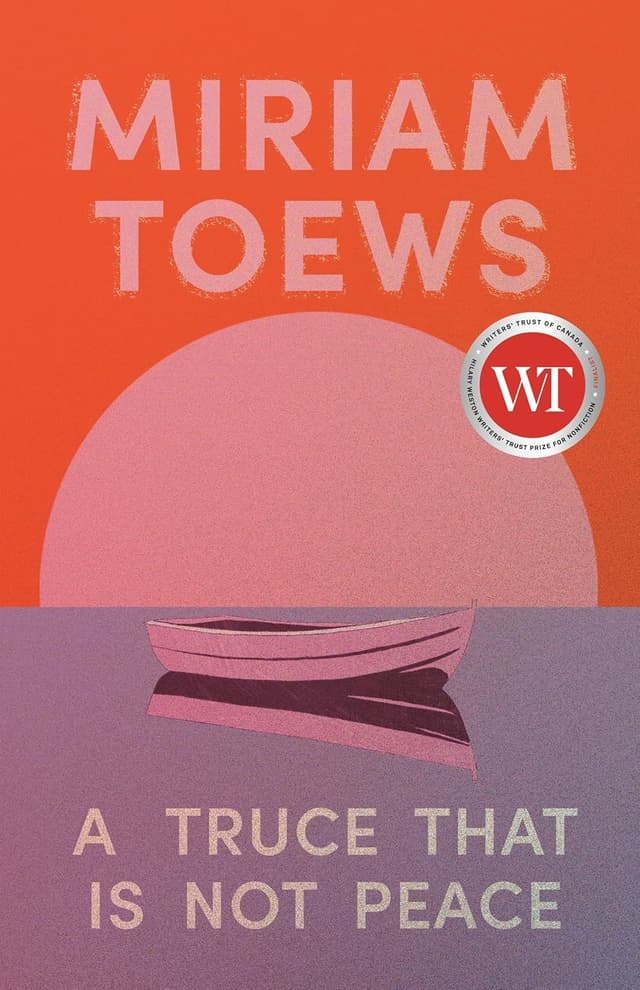
4A TRUCE THAT IS NOT PEACEby Miriam ToewsAuthor’s Home Base: Toronto
Author’s take: “There’s no sense of peace of mind, or closure, or anything like that. I don’t believe in those things anymore. But it certainly was a type of truce.”
Favourite lines: “I don’t believe my father and my sister were impulsive. They spent their lives planning their deaths, living their deaths, almost dying every day, dying almost every day.”
Review: There is no way to sugarcoat it: Canadian novelist Miriam Toews’s latest book, a work of non-fiction propelled by the suicides of her father, Melvin, and sister, Marjorie, as well as the author’s desire to better understand the impetus behind her craft, is very often emotionally wrenching. Yet as in life, tragedies happen alongside joys. As Toews’s memoir recalls her childhood with her family in Manitoba and present-day adventures with her Scrabble-obsessed mother, she brings humour to bear, tempering fearless introspection with flashes of delightful absurdity, as when her four-year-old grandson requests a cigarette for his birthday so he can then play with Toews’s forbidden lighter. Reprinted letters sent by Toews to her sister and chronicling an early European adventure with an intractable beau offer a window into the author’s developing technique and her singular identity. But her profound sorrow over Marjorie’s death in 2010 – fictionalized in 2014’s All My Puny Sorrows – is the book’s lifeblood. “Why did the psychiatrist, in the last days before my sister died, refuse to see her if she wouldn’t speak? What harm was she causing?” Toews asks before later concluding: “If silence says more, why write?” Count us lucky that Toews ultimately solved that haunting dilemma. –KH
Author’s Home Base: Toronto
Author’s take: “There’s no sense of peace of mind, or closure, or anything like that. I don’t believe in those things anymore. But it certainly was a type of truce.”
Favourite lines: “I don’t believe my father and my sister were impulsive. They spent their lives planning their deaths, living their deaths, almost dying every day, dying almost every day.”
Review: There is no way to sugarcoat it: Canadian novelist Miriam Toews’s latest book, a work of non-fiction propelled by the suicides of her father, Melvin, and sister, Marjorie, as well as the author’s desire to better understand the impetus behind her craft, is very often emotionally wrenching. Yet as in life, tragedies happen alongside joys. As Toews’s memoir recalls her childhood with her family in Manitoba and present-day adventures with her Scrabble-obsessed mother, she brings humour to bear, tempering fearless introspection with flashes of delightful absurdity, as when her four-year-old grandson requests a cigarette for his birthday so he can then play with Toews’s forbidden lighter. Reprinted letters sent by Toews to her sister and chronicling an early European adventure with an intractable beau offer a window into the author’s developing technique and her singular identity. But her profound sorrow over Marjorie’s death in 2010 – fictionalized in 2014’s All My Puny Sorrows – is the book’s lifeblood. “Why did the psychiatrist, in the last days before my sister died, refuse to see her if she wouldn’t speak? What harm was she causing?” Toews asks before later concluding: “If silence says more, why write?” Count us lucky that Toews ultimately solved that haunting dilemma. –KH
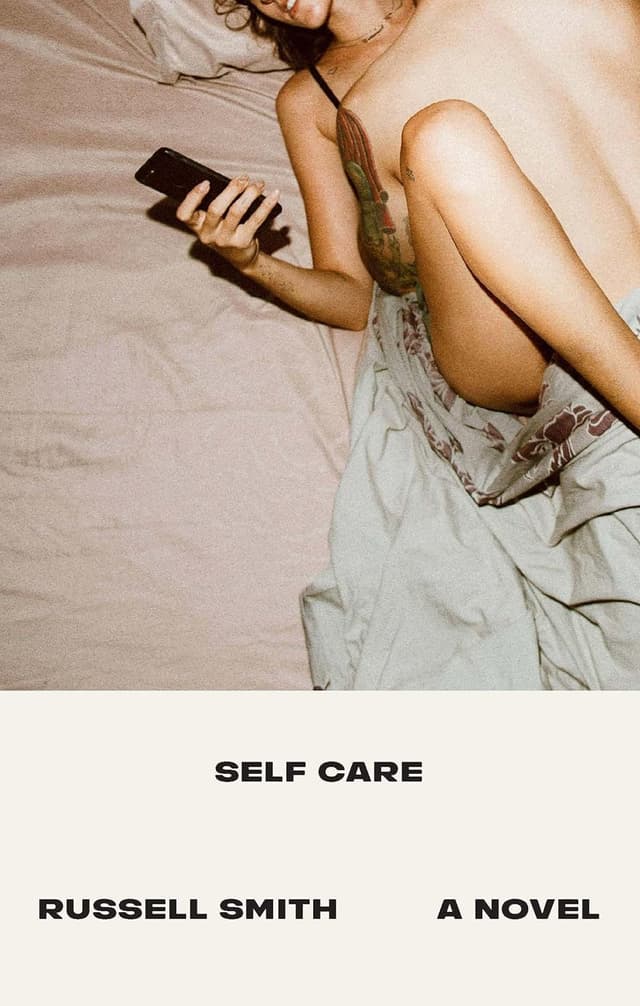
5SELF CAREby Russell SmithAuthor’s Home Base: Toronto
Author’s take: “My 10th book is from the point of view of a young woman and it’s about a world of people much younger than I am. I taught creative writing for several years and I was inspired by talking to lots of young people. I became fascinated by certain problems that they had that I didn’t have when I was their age.”
Favourite lines: “‘Look,’ he said. His voice was high and shaky. ‘I have nothing in my life except for you, okay? Nothing.’ ‘Oh for.’ She tried to calm her breathing. It wouldn’t help to scream at him that he was a baby. ‘Well if that’s true,’ she said, ‘then you’d better not call me a slut, right? Or anything else.’”
Review: There is a lot of sex, suicide and coarse language in Russell Smith’s very dark latest novel, which pivots on issues as native to gen Z as smartphones: incel culture, gig work, limited upward mobility, pervasive online shenanigans and antidepressants for everyone. It’s unclear whether Self Care is intended for the audience it depicts or audiences of the author’s age (62) who side-eye this successive cohort – which may explain the book’s somewhat discombobulating drift. Do we relate, or do we judge? In a nutshell, Toronto-based protagonist Gloria is barely making rent as a freelance writer-slash-content creator. She is orbited by one lover who cares too little and a roommate and bestie who care too much. Enter Daryn, a maybe incel that Gloria is ostensibly profiling but promptly takes to bed, where she dominates him in a vaguely plotted attempt to alter his worldview. Things, like, don’t go to plan. Self Care is a genuine page-turner even as you find yourself praying never to be seated next to any of its glum characters on a long-haul flight. –KH
Author’s Home Base: Toronto
Author’s take: “My 10th book is from the point of view of a young woman and it’s about a world of people much younger than I am. I taught creative writing for several years and I was inspired by talking to lots of young people. I became fascinated by certain problems that they had that I didn’t have when I was their age.”
Favourite lines: “‘Look,’ he said. His voice was high and shaky. ‘I have nothing in my life except for you, okay? Nothing.’ ‘Oh for.’ She tried to calm her breathing. It wouldn’t help to scream at him that he was a baby. ‘Well if that’s true,’ she said, ‘then you’d better not call me a slut, right? Or anything else.’”
Review: There is a lot of sex, suicide and coarse language in Russell Smith’s very dark latest novel, which pivots on issues as native to gen Z as smartphones: incel culture, gig work, limited upward mobility, pervasive online shenanigans and antidepressants for everyone. It’s unclear whether Self Care is intended for the audience it depicts or audiences of the author’s age (62) who side-eye this successive cohort – which may explain the book’s somewhat discombobulating drift. Do we relate, or do we judge? In a nutshell, Toronto-based protagonist Gloria is barely making rent as a freelance writer-slash-content creator. She is orbited by one lover who cares too little and a roommate and bestie who care too much. Enter Daryn, a maybe incel that Gloria is ostensibly profiling but promptly takes to bed, where she dominates him in a vaguely plotted attempt to alter his worldview. Things, like, don’t go to plan. Self Care is a genuine page-turner even as you find yourself praying never to be seated next to any of its glum characters on a long-haul flight. –KH
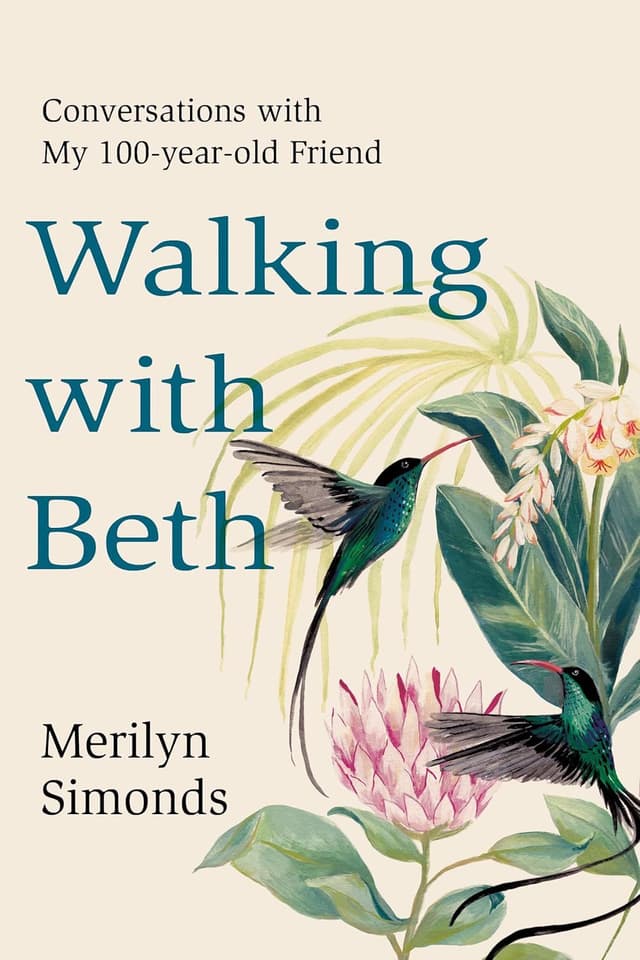
6WALKING WITH BETH: CONVERSATIONS WITH MY 100-YEAR-OLD FRIENDby Merilyn SimondsAuthor’s Home Base: Kingston, Ont., and San Miguel de Allende, Mexico
Author’s take: “Beth has great intentionality in her life, and living well is an intention. In writing this book, I have captured for myself and for others Beth’s approach to life, which is not unique to her latter years; I expect she has always been like this.”
Favourite lines: “Beth and I agree: it doesn’t matter when we met. All that matters is that somehow, somewhere, our lives intersected. And we said to ourselves, I want that woman as my friend.”
Review: “Since I was a very young child, words have been my way into life and its mysteries,” writes Merilyn Simonds. “But now that I have reached my biblical threescore and ten” — that’s 70 if you’re wondering — “I find few books to guide me through this new territory.” So, Simonds wrote one alongside her centenarian friend and fellow Kingston native Elizabeth (“Beth”) Pierce Robinson, who turns out to be a human storehouse of wisdom just waiting to be unpacked. As the title suggests, Walking with Beth chronicles discussions shared by these two almost ridiculously vibrant and creative women over the course of three years and ending, mercifully, not with Beth’s death – she turned 105 last July – but when Simonds felt it was done. Presenting the story narratively permits the author to explore tangents about aging, health, art, grief, joy and, of course, life and death, broadening the scope of the women’s ponderings. Candid, considered and beautifully organized in short but focused chapters, this is not just one for the aged. It’s for the ages as well. –KH
Author’s Home Base: Kingston, Ont., and San Miguel de Allende, Mexico
Author’s take: “Beth has great intentionality in her life, and living well is an intention. In writing this book, I have captured for myself and for others Beth’s approach to life, which is not unique to her latter years; I expect she has always been like this.”
Favourite lines: “Beth and I agree: it doesn’t matter when we met. All that matters is that somehow, somewhere, our lives intersected. And we said to ourselves, I want that woman as my friend.”
Review: “Since I was a very young child, words have been my way into life and its mysteries,” writes Merilyn Simonds. “But now that I have reached my biblical threescore and ten” — that’s 70 if you’re wondering — “I find few books to guide me through this new territory.” So, Simonds wrote one alongside her centenarian friend and fellow Kingston native Elizabeth (“Beth”) Pierce Robinson, who turns out to be a human storehouse of wisdom just waiting to be unpacked. As the title suggests, Walking with Beth chronicles discussions shared by these two almost ridiculously vibrant and creative women over the course of three years and ending, mercifully, not with Beth’s death – she turned 105 last July – but when Simonds felt it was done. Presenting the story narratively permits the author to explore tangents about aging, health, art, grief, joy and, of course, life and death, broadening the scope of the women’s ponderings. Candid, considered and beautifully organized in short but focused chapters, this is not just one for the aged. It’s for the ages as well. –KH
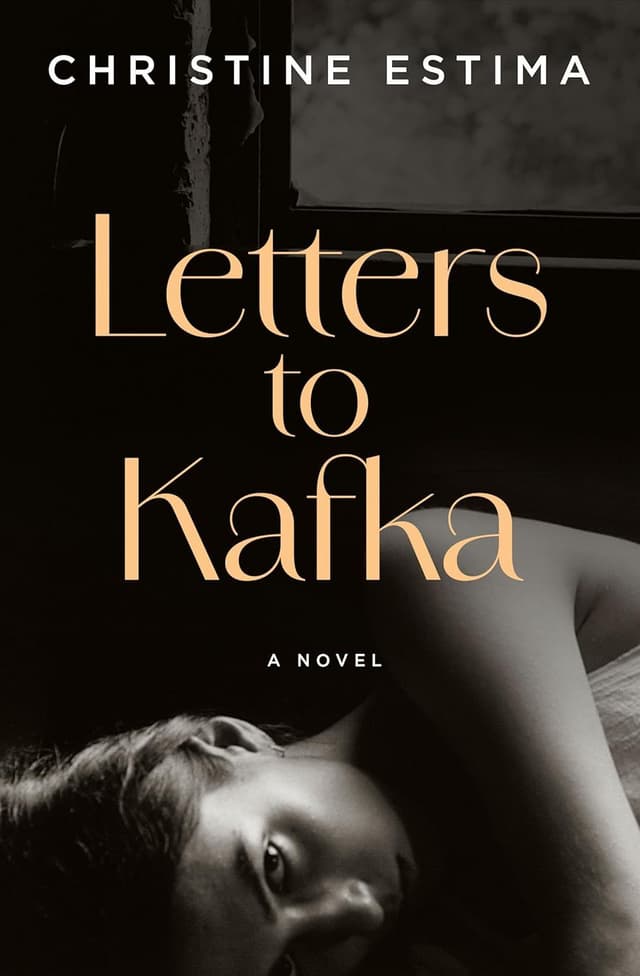
7Letters to Kafkaby Christine EstimaHome Base: Toronto
Author’s Take: “When I came across the love story of famed 20th-century author Franz Kafka and his first translator, Czech writer Milena Jesenská, I thought to myself, ‘Wow, someone should write a novel about this.’ And then I realized, ‘Wait a minute … I’m someone.’”
Favourite Line: “She could have fled, but she was stubborn, always stubborn; Kafka had accused her of this several times. It was her worst fault.”
Review: Milena Jesenská first approached Prague writer Franz Kafka (The Metamorphosis) with a business proposal – the young Milena, based in Vienna with her husband, offered to translate Kafka’s short story The Stoker from German to Czech. Things did not stay strictly business for long – in a series of letters, Kafka confessed his adoration, wooing her with words. She is widely regarded as one of the great loves of the writer’s life. While some of Kafka’s letters were published in 1952 (Letters to Milena), the correspondence – and the nature of the relationship – was one-sided; Milena’s letters to Kafka were lost. Christine Estima’s debut novel, Letters to Kafka, steps into that gap with a richly imagined and deeply felt narrative focused on Milena herself. Following the invasion of Czechoslovakia by the Nazis, Jesenská became a member of the resistance, and the novel is set around her imprisonment and interrogation in Prague following her arrest by the SS. Largely unfolding through memory and flashback, Letters to Kafka is a powerful blend of history and fiction, and a worthy reminder of the great women who have lived too long in the shadows of great men. –RW
Home Base: Toronto
Author’s Take: “When I came across the love story of famed 20th-century author Franz Kafka and his first translator, Czech writer Milena Jesenská, I thought to myself, ‘Wow, someone should write a novel about this.’ And then I realized, ‘Wait a minute … I’m someone.’”
Favourite Line: “She could have fled, but she was stubborn, always stubborn; Kafka had accused her of this several times. It was her worst fault.”
Review: Milena Jesenská first approached Prague writer Franz Kafka (The Metamorphosis) with a business proposal – the young Milena, based in Vienna with her husband, offered to translate Kafka’s short story The Stoker from German to Czech. Things did not stay strictly business for long – in a series of letters, Kafka confessed his adoration, wooing her with words. She is widely regarded as one of the great loves of the writer’s life. While some of Kafka’s letters were published in 1952 (Letters to Milena), the correspondence – and the nature of the relationship – was one-sided; Milena’s letters to Kafka were lost. Christine Estima’s debut novel, Letters to Kafka, steps into that gap with a richly imagined and deeply felt narrative focused on Milena herself. Following the invasion of Czechoslovakia by the Nazis, Jesenská became a member of the resistance, and the novel is set around her imprisonment and interrogation in Prague following her arrest by the SS. Largely unfolding through memory and flashback, Letters to Kafka is a powerful blend of history and fiction, and a worthy reminder of the great women who have lived too long in the shadows of great men. –RW
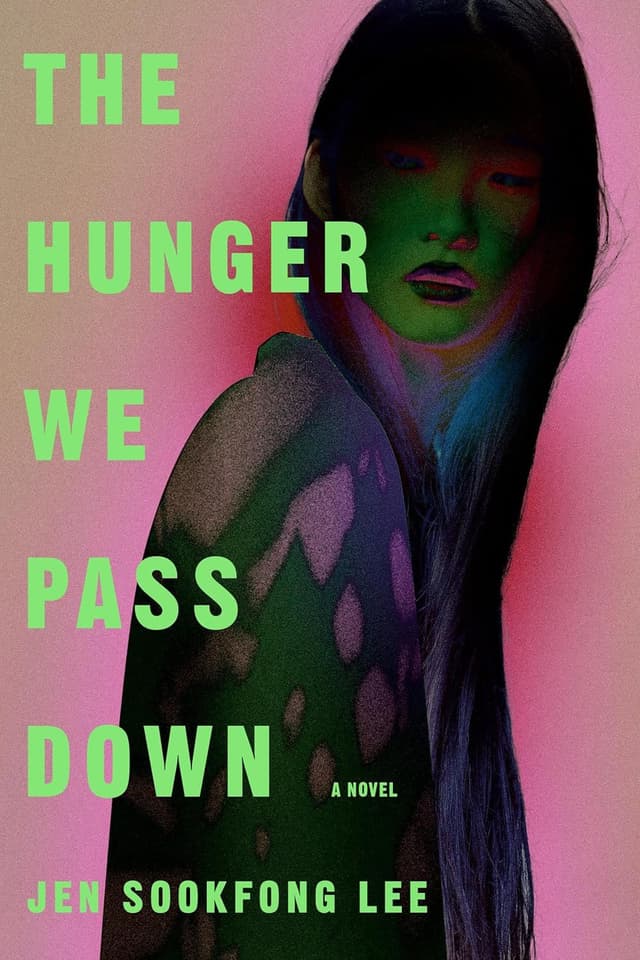
8The Hunger We Pass Downby Jen Sookfong LeeHome Base: North Burnaby, B.C.
Author’s Take: “I think that I have mostly been writing about motherhood my whole career. … And The Hunger We Pass Down is no different, it’s just that I am taking all the issues I usually write about – intergenerational trauma, migration, gentrification – and imposing a layer of the supernatural.”
Favourite Line: “Every morning, the day stretched out before her, time broken up by chores and tasks that she hated. Without the drinking, without the numbness, she couldn’t do it all and not want to die.”
Review: From her debut novel The End of East (2008), Vancouver writer Jen Sookfong Lee has engaged in an ongoing act of psychic exploration, not only of her many selves – as a Chinese-Canadian daughter and mother, as a pop-culture obsessive, among others – but of her place in the world, both geographically (historical and contemporary Vancouver is a frequent subject and setting) and socially. In the process, she has created a powerful, involving body of work, which rivals that of any other Canadian writer at work today. Lee continues that relentless process of examination with her new novel The Hunger We Pass Down, a daring, multi-layered saga in which history and contemporary life share space, and generational trauma and supernatural haunting blur together. Rooted in the experience of overworked, underslept, divorced single-mother Alice, who wakes up (hungover) one morning to discover that her house has been cleaned while she slept, the novel shifts back to incorporate the stories of the women in Alice’s family, and the demons which have haunted them all. It’s a bravura performance, and perhaps Lee’s finest book – so far. –RW
Home Base: North Burnaby, B.C.
Author’s Take: “I think that I have mostly been writing about motherhood my whole career. … And The Hunger We Pass Down is no different, it’s just that I am taking all the issues I usually write about – intergenerational trauma, migration, gentrification – and imposing a layer of the supernatural.”
Favourite Line: “Every morning, the day stretched out before her, time broken up by chores and tasks that she hated. Without the drinking, without the numbness, she couldn’t do it all and not want to die.”
Review: From her debut novel The End of East (2008), Vancouver writer Jen Sookfong Lee has engaged in an ongoing act of psychic exploration, not only of her many selves – as a Chinese-Canadian daughter and mother, as a pop-culture obsessive, among others – but of her place in the world, both geographically (historical and contemporary Vancouver is a frequent subject and setting) and socially. In the process, she has created a powerful, involving body of work, which rivals that of any other Canadian writer at work today. Lee continues that relentless process of examination with her new novel The Hunger We Pass Down, a daring, multi-layered saga in which history and contemporary life share space, and generational trauma and supernatural haunting blur together. Rooted in the experience of overworked, underslept, divorced single-mother Alice, who wakes up (hungover) one morning to discover that her house has been cleaned while she slept, the novel shifts back to incorporate the stories of the women in Alice’s family, and the demons which have haunted them all. It’s a bravura performance, and perhaps Lee’s finest book – so far. –RW