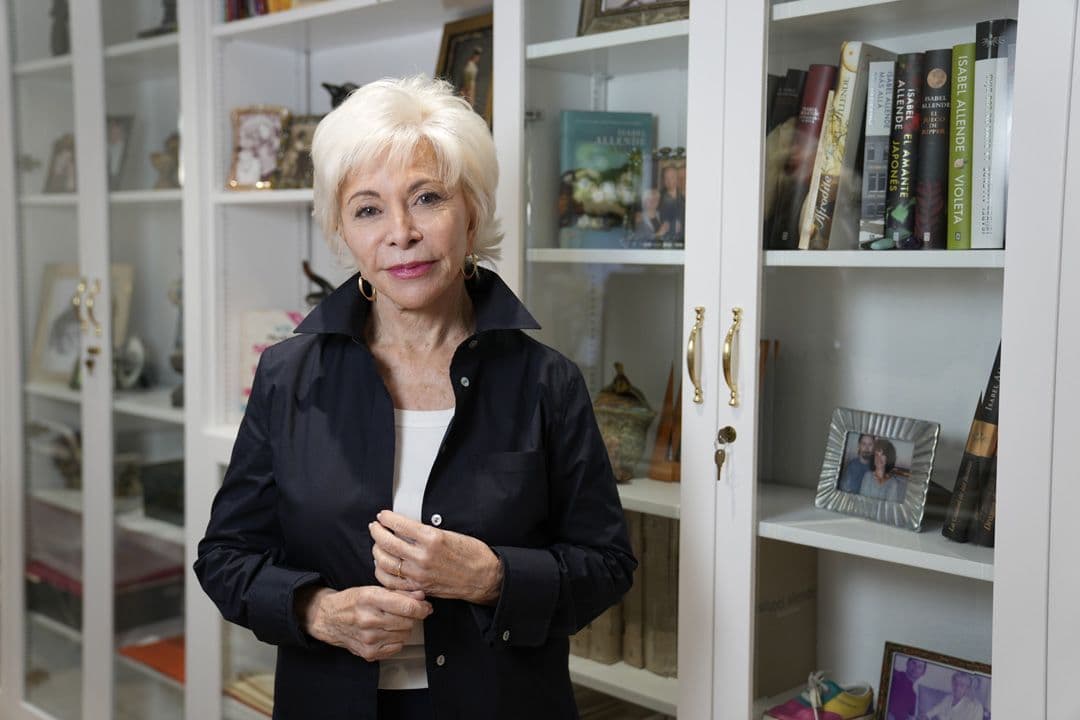
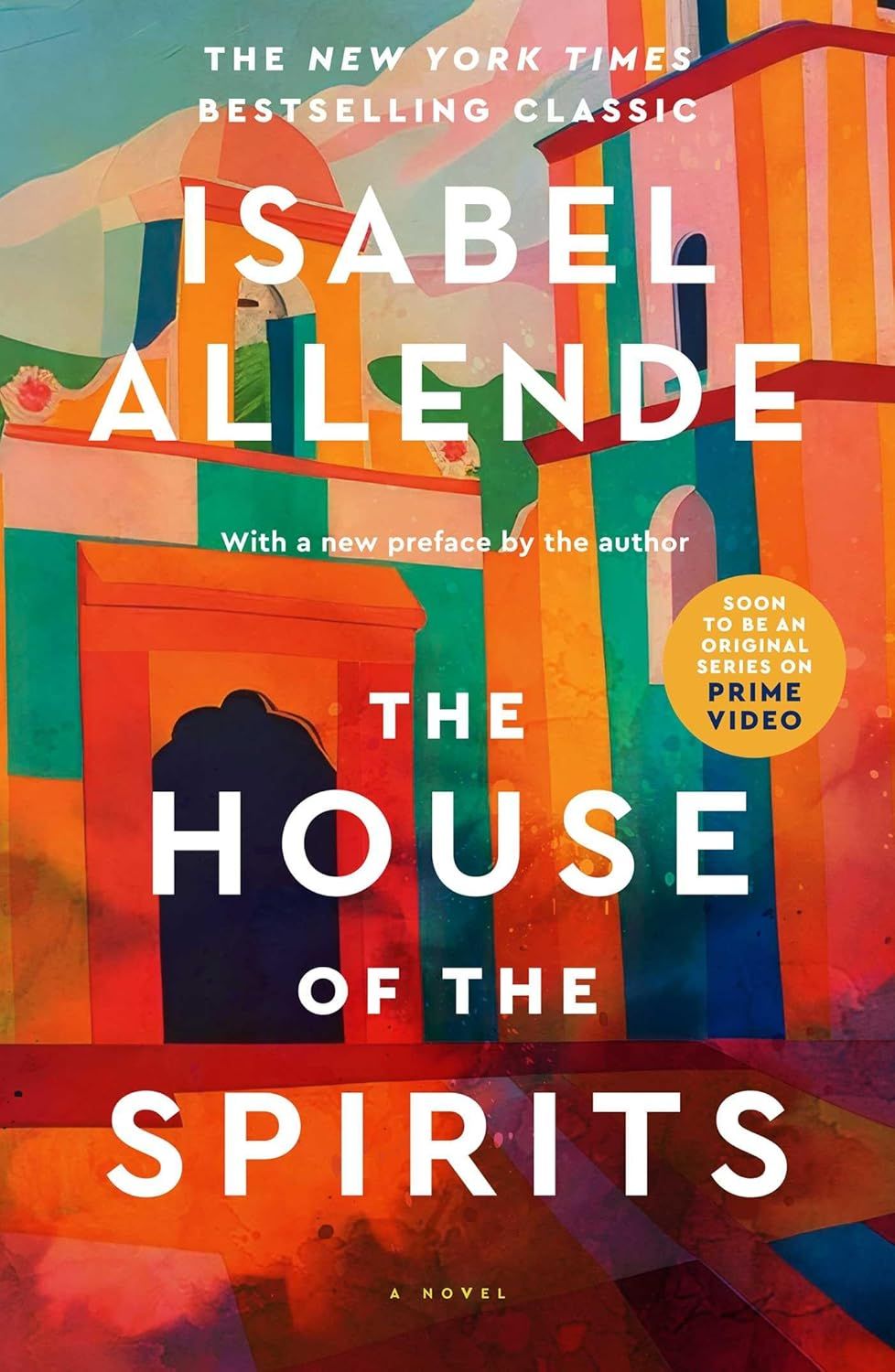
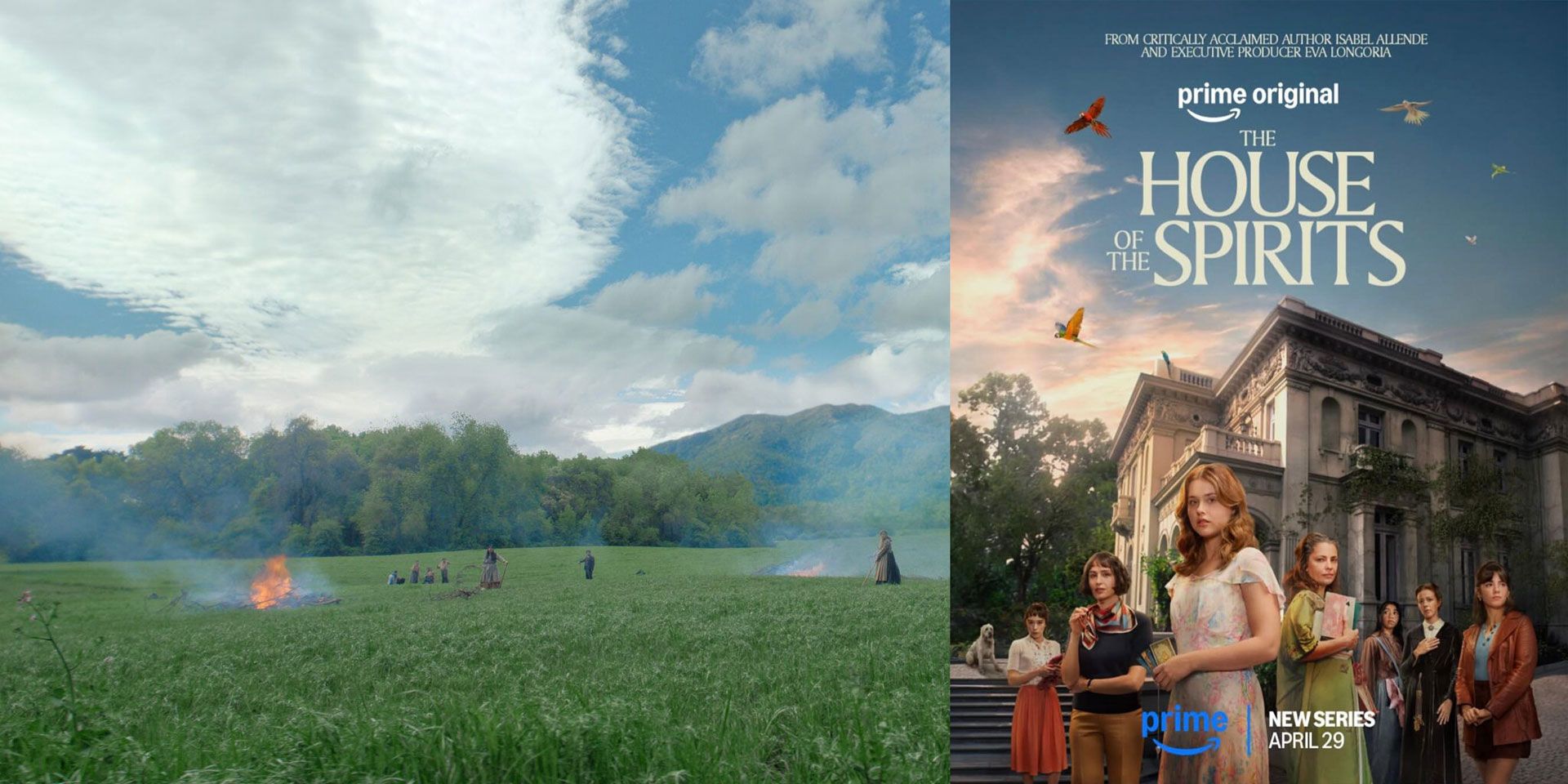
It’s been a long time coming for Isabel Allende. On April 29, the bestselling author will see her 1982 debut novel, The House of the Spirits – in which she wrote about generations of her Chilean family – hit the small screen as an eight-part Spanish-language series on Prime. You might remember that the book was adapted into a film back in 1993 – by Danish director Bille August, shot in Portugal and Denmark, and featuring an almost uniformly white, American, English-speaking cast. The characters, Allende said recently, were “portrayed by Meryl Streep, Glenn Close and Jeremy Irons, who don’t resemble my relatives at all. They are much better looking.” A sly take that is amplified by what she tells me about the new series and its Latin American ensemble: “These actors look so much like the people I knew. These were the people I imagined, the people in my book.”
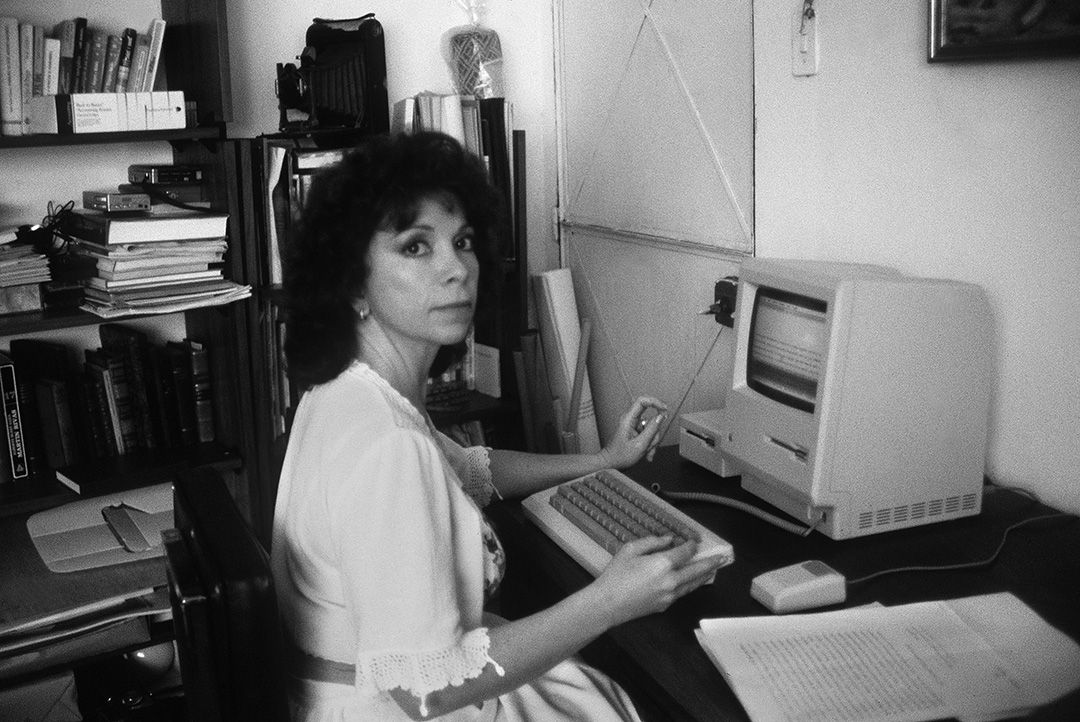
Quick-witted, fierce and fun, Allende has a great big beautiful personality – meanwhile, she stands at five-foot-nothing. She was, early in life, a prominent Chilean journalist who was summoned by the country’s Nobel Prize-winning poet Pablo Neruda to his home, where he told her to change careers and become a fiction writer (due to her propensity to make stuff up in her articles). When Isabel’s first cousin, Chilean president Salvador Allende, was overthrown in the country’s 1973 coup, she fled to Venezuela as a political refugee. There, she took Neruda’s advice – and at age 39 wrote The House of the Spirits (which four decades later remains in print in 42 languages). She later emigrated to the U.S. to be with her second husband.
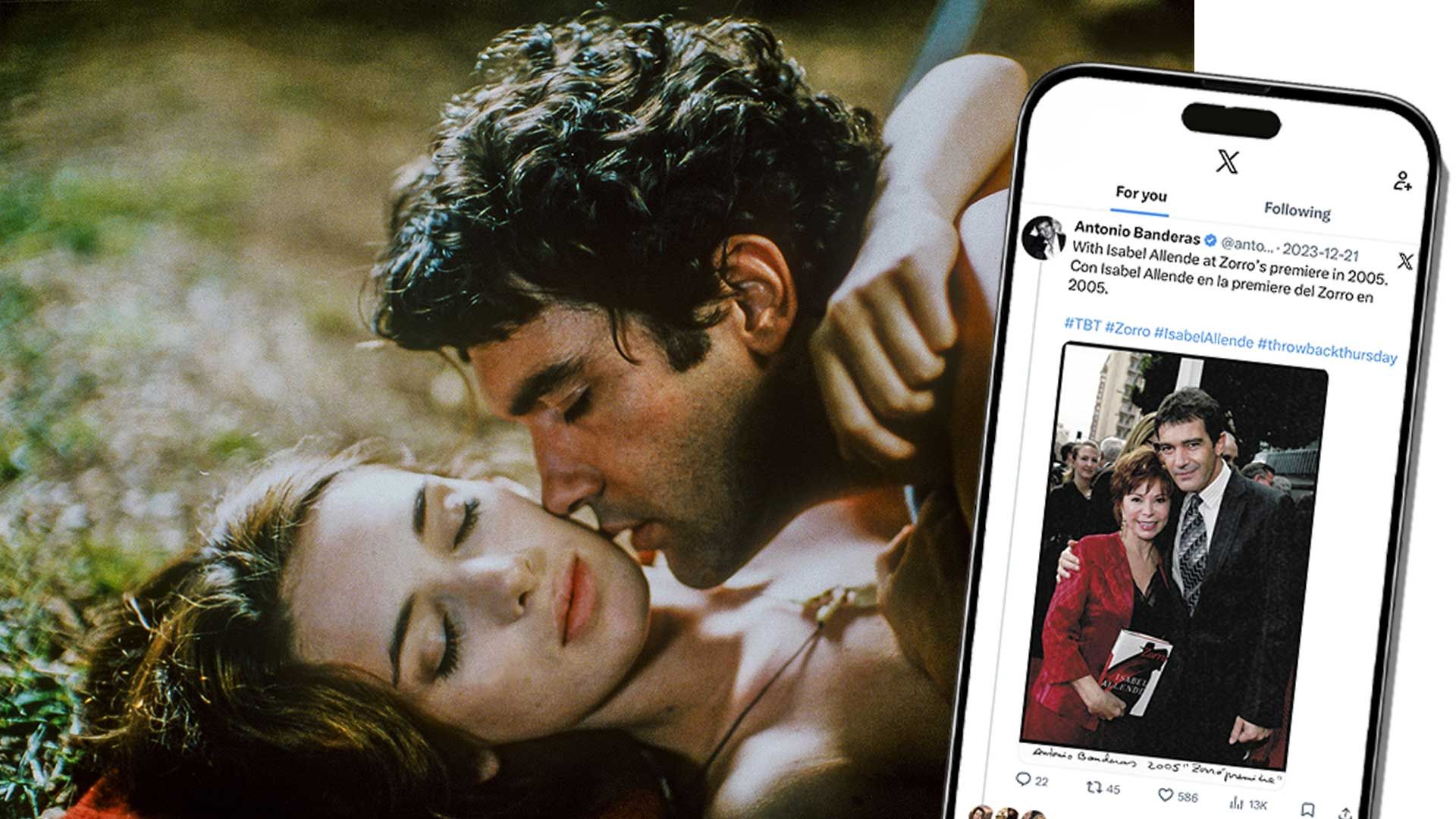
She’s still penning novels about politics, women and families, as well as children’s books (about a friendly dog with a mighty roar) and memoirs. In 1994, she wrote Paula, a moving tribute to her daughter who died of cancer. And later, Allende came out of a long period of writer’s block with a meditation on “lust and gluttony.” The book, Aphrodite, was filled with tales of love and food, and was inspired by an erotic dream: “I dreamt that I placed a naked Antonio Banderas on a Mexican tortilla,” she has said, “slathered him with guacamole and salsa, rolled him up, and ate him.”
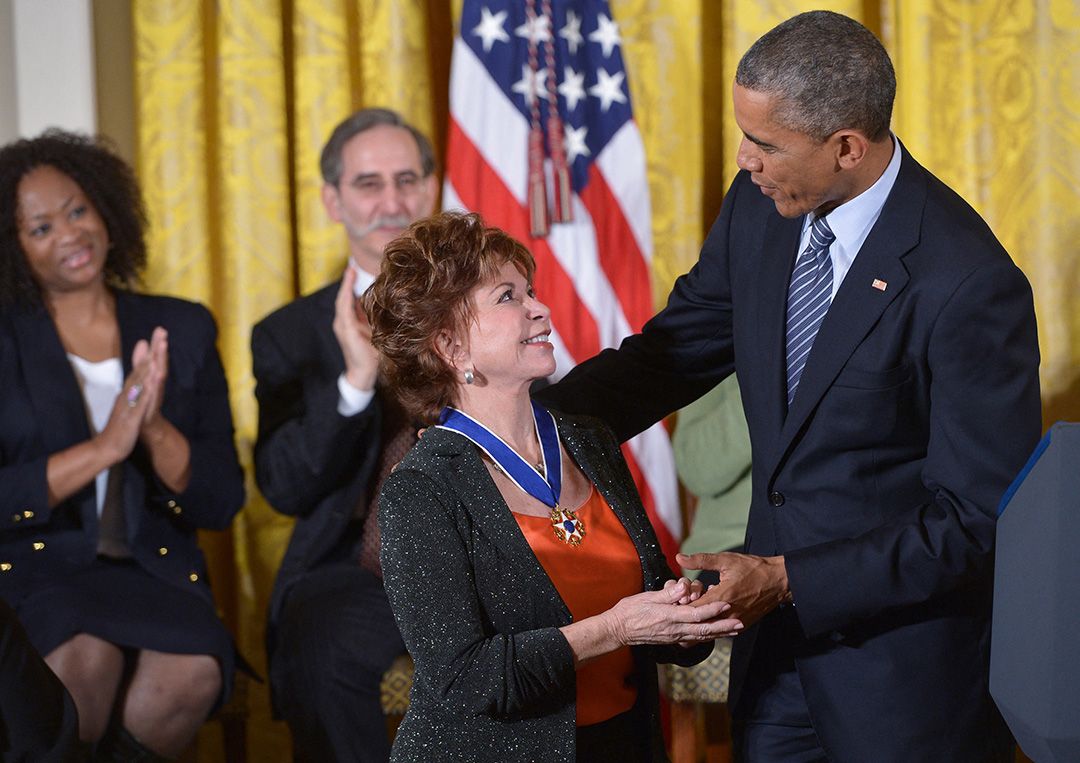
But her legacy, at 83, is much more than what is on the page. The 2014 Medal of Freedom recipient (awarded by Barack Obama) was acknowledged for both her contributions to literature and to the human rights of women and children. To this day, she is on the front lines, working for migrant rights, reproductive justice and health in developing countries – work she recognizes is more important than ever in today’s political climate.
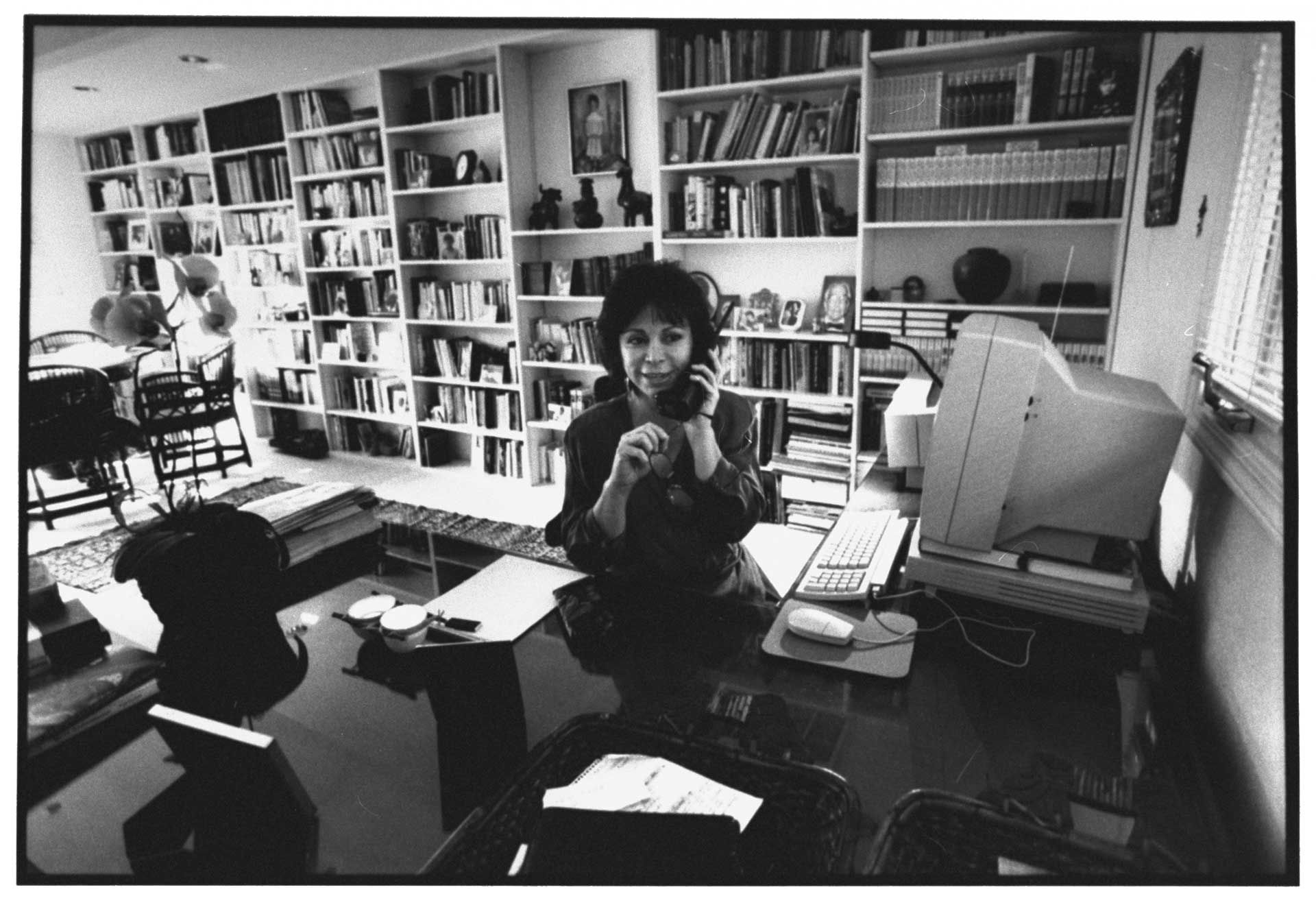
In our Zoom call, from her home office in Sausalito, Calif., she opens up about her own cinematic life, new love and the power of aging.
Shanda Deziel: When you watched this new series, what were the poignant moments for you, something that moved you?
Isabel Allende: Besides seeing the kinds of faces that I grew up with, what was also very poignant was seeing my country as it was before. Now Chile is modern, and completely different from the story in The House of the Spirits and from where I grew up. So to see that, to see the house, the dog, all of that was really moving to the point that I found myself crying. I practically couldn’t watch the end because … well, you haven’t seen the end, so I’m not going to ruin it for you. But I cried.
SD: There was one actor from the 1993 film adaptation in 1993 that you felt was cast correctly, your long-time crush Antonio Banderas as Pedro Tercero. How did you feel about his replacement?
IA: Yeah, where was he? Why wasn’t Antonio in this one? I’m so sorry that he wasn’t, but he was in my other two movies [The House of the Spirits and Of Love and Shadows], so I’m good with him. [Laughs]
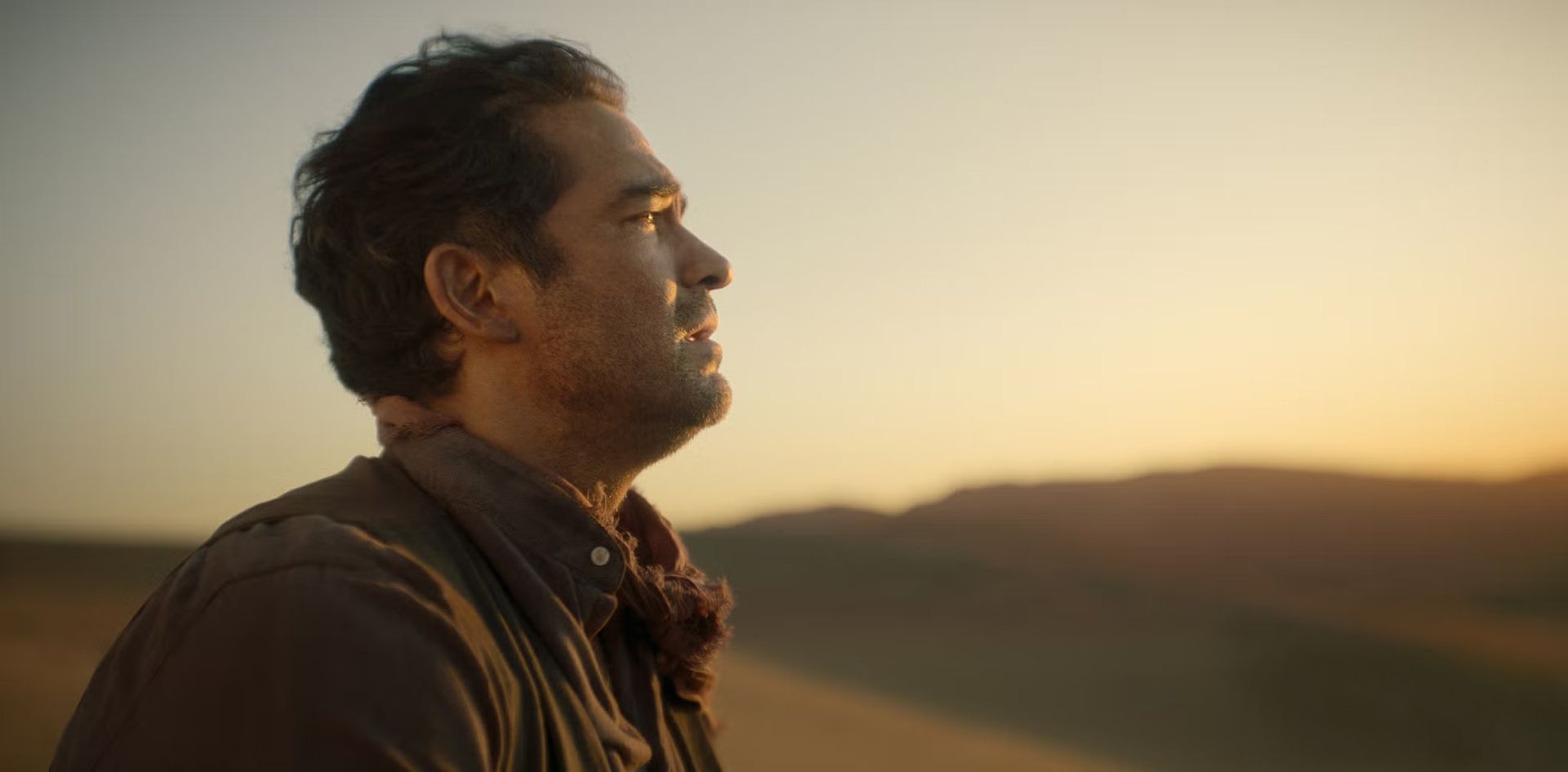
SD: Your book is known for its use of magic realism. Even when reading it, it’s hard to imagine replicating those scenes on screen – something the earlier movie was criticized for. How do you think the new series handled it?
IA: It’s the hardest thing to do because magic realism looks absurd, ridiculous on the screen. In literature, you can imagine things. But on the screen, they have to give it to you, and it very seldom works. But here, they did it in a very subtle way, I think. It doesn’t overpower.
SD: Do you re-read The House of the Spirits every once in a while?
IA: No. Why would I read something that I already wrote? No. No, there are so many other wonderful books to read. Why would I read my stuff?
SD: I was wondering if you would see it differently now. You wrote it as a granddaughter about your grandparents and now you are a grandparent and have lived through generations. Do you relate to your characters differently now?
IA: I hadn’t analyzed it that way, but what I see is that the story has become sort of universal because it deals with very basic things, very basic emotions. All the great stories that we remember are very basic. We remember Shakespeare. We remember jealousy, revenge, war. Those are the basic things that grab us, love and death. And that resonates everywhere and forever. So the times don’t matter. In the book, we see Chile in the ’50s, ’60s, ’70s. And now 50 years have gone by and the country has changed completely, but the circumstances that linked those people remain the same.
SD: But do you personally understand the people that you were writing about differently now that you are their age?
IA: No, because we are very different. My grandmother died relatively young and she spent her life in another world [of spirits]. She escaped this world and I live immersed in the world. My grandfather was a wonderful human being and not the villain he is in the book – but he was an authoritarian, patriarchal. For example, I remember that once someone sent a letter to my grandmother and they didn’t use his name. They used her surname as a single woman. He did not give the letter to her. He returned it. In a way, he felt he was protecting her. My grandmother and my mother were protected by the males but also submissive and controlled completely. My life has been so different from that. I escaped completely from that pattern.
SD: And you’ve fought against it your whole life.
IA: Shanda, I still do because the patriarchy is there. It’s not changed.
SD: Something you speak about often is aging. What does it feel like to be 83 – does the good outweigh the bad?
IA: The good is freedom. Freedom to be myself; freedom to do what I want; to see the people I want; to eliminate all the toxic creatures around me; to surround myself with lovely human beings and pets; to just work on my stories and not worry about promotion, book tours, editors – nothing. The other thing that I discovered very late is true love. I have been married all my life, and I have men around me, legally or illegally, always. And now, in my old age, I’m recently married again. Well, six years ago. I am married to a man who gives me unconditional love and unconditional support in every way. So, I established with this person a kind of relationship that is incredibly intimate and funny and kind and easy but with one ingredient that no relationship had before – and that is a sense of urgency. I am going to die soon and so is he. So, we have very little time.
SD: How do you protect that love and be urgently invested?
IA: You cannot waste your time in little shitty things. You really have to not only share it and nurture this love, but be incredibly grateful. And in spite of the circumstances we are currently living under, like Trump, my private world in this house where we live, in this room where I write, I have something extraordinary that I never had before. And the other thing is that, at my age, I don’t have to take care of my parents anymore or my children or my grandchildren. I don’t have to take care of anybody except my two dogs and [my husband] Roger.
SD: That sounds good to me.
IA: But you were asking about the bad things about aging. It’s that everybody around me is sick or dead or in a nursing home or in a retirement home. I am an exception because I have very good health. Nothing hurts. There’s nothing wrong with my body. But I see around me, people in my generation are falling like flies. So, that is sad and hard. And then to see my own body and my wrinkles in the mirror – well, I don’t look at myself too much.
SD: You often bring up the fact that you’re “vertically challenged.”
IA: Yes, I’m five feet tall. Now, I’m probably three feet tall.
SD: That was my question, do you feel you’re shrinking as your main character Esteban worries about in The House of the Spirits?
IA: Of course. I shrank because all people shrink. But also because I can’t wear high heels anymore. All my life, until my 70s, I was on stiletto heels. Now I have sneakers. But there was a time when I felt so much taller with my shoes and my hair had so much height. Now I feel that the furniture is getting higher. The counter in the kitchen is up to my chin.