Joy, Pain and an Infuriating Read: 3 Nonfiction Books that Pack a Punch
Some books just stick with you, and our Zed contributors are still talking about these memoirs by beloved writers Susan Orlean and Miriam Toews, as well as a meticulously researched investigation by Sarah Weinman into a little-known – and very disturbing – aspect of criminal history.
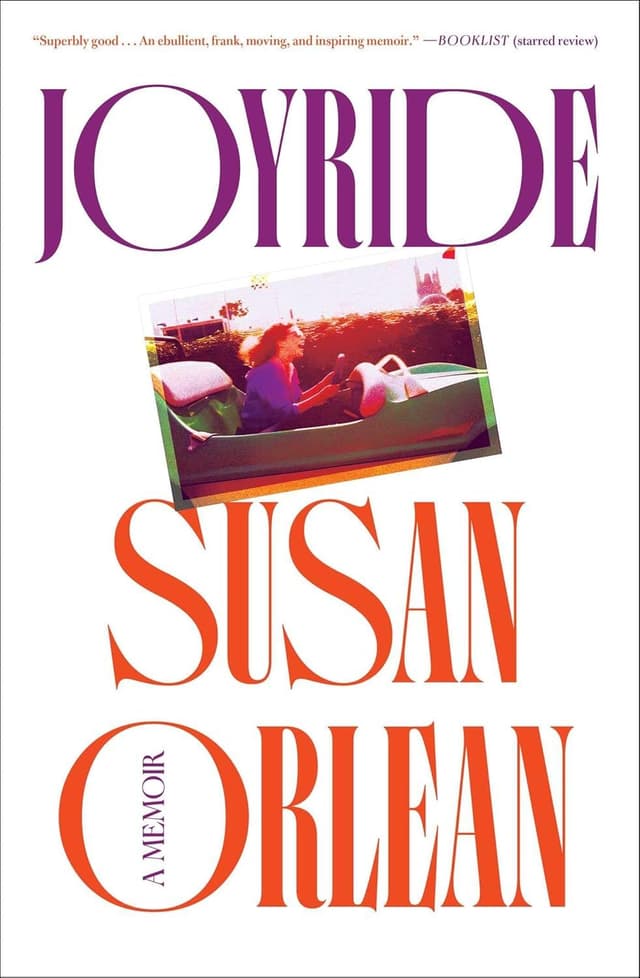
1JOYRIDE: A MEMOIRby Susan OrleanAuthor’s Home Base: Los Angeles
Author’s take: “That’s a little bit what nonfiction writers do. They hotwire someone else’s life, take it for a ride and no one’s hurt.”
Favourite lines: “I write because I think it’s important. There are a million different kinds of writing, but this belief applies to all of them. Writing in all its forms is the essence of human interaction. It is the most essential unit of exchange.”
Review: Celebrated New Yorker staffer and nonfiction author Susan Orlean’s latest is billed as a memoir. And it is, insofar as it recounts her contented childhood, her troubled first marriage and happy second one, a couple of affairs and, especially, her lifelong love of unspooling left-field real-life tales which she frames as her north star.
But Joyride includes much more, making it something of an instructional guide for writers, an outsider’s glimpse into Hollywood’s nonlinear approach to turning books into movies (as with her 1998 title The Orchid Thief, which, winningly, became 2002’s Adaptation), and a giddy commemoration of the heyday of marquee periodicals like Vogue and Rolling Stone with their dizzying expense accounts.
Also – at the risk of seeming indelicate – Joyride salutes Orlean’s own ingenuity, a trajectory Stephen King sidestepped in his thematically similar but darker/funnier 2000 work, On Writing: A Memoir of the Craft. Still, given the abundant storytelling pleasures Orlean, 70, has bestowed on fans across the decades, the self-congratulating seems both earned and fair. –Kim Hughes
Author’s Home Base: Los Angeles
Author’s take: “That’s a little bit what nonfiction writers do. They hotwire someone else’s life, take it for a ride and no one’s hurt.”
Favourite lines: “I write because I think it’s important. There are a million different kinds of writing, but this belief applies to all of them. Writing in all its forms is the essence of human interaction. It is the most essential unit of exchange.”
Review: Celebrated New Yorker staffer and nonfiction author Susan Orlean’s latest is billed as a memoir. And it is, insofar as it recounts her contented childhood, her troubled first marriage and happy second one, a couple of affairs and, especially, her lifelong love of unspooling left-field real-life tales which she frames as her north star.
But Joyride includes much more, making it something of an instructional guide for writers, an outsider’s glimpse into Hollywood’s nonlinear approach to turning books into movies (as with her 1998 title The Orchid Thief, which, winningly, became 2002’s Adaptation), and a giddy commemoration of the heyday of marquee periodicals like Vogue and Rolling Stone with their dizzying expense accounts.
Also – at the risk of seeming indelicate – Joyride salutes Orlean’s own ingenuity, a trajectory Stephen King sidestepped in his thematically similar but darker/funnier 2000 work, On Writing: A Memoir of the Craft. Still, given the abundant storytelling pleasures Orlean, 70, has bestowed on fans across the decades, the self-congratulating seems both earned and fair. –Kim Hughes
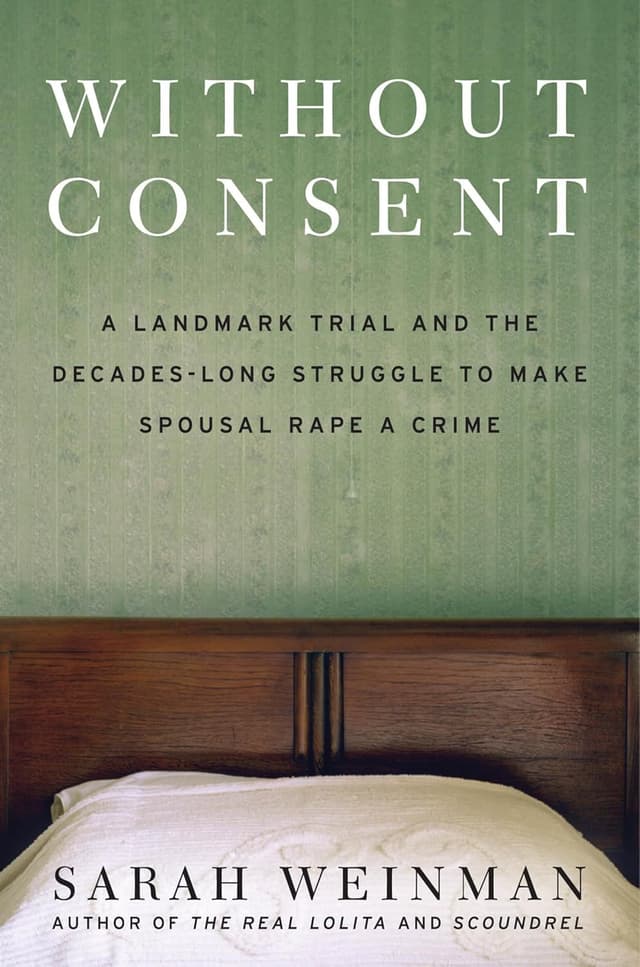
2Without Consentby Sarah WeinmanHome Base: New York City
Author’s Take: “Knowing this not-exactly-ancient history is particularly important for the future we’re going to face as a country for the next few years, and beyond.”
Favourite Line: “How can you rape someone when the law says she is permanently, and irrevocably, at your beck and call, subject to your every whim, however violent and damaging?”
Review: Those with long memories may recall that, until the mid-1970s, it was legal for a man to rape his wife in the United States. Owing to the “marital exemption” in criminal codes, a man was only guilty if the act was committed upon a female not his wife. By the mid-1990s, marital exemptions had been removed from state codes. And in Canada, marital rape wasn’t criminalized until 1983.
As shocking (and antiquated) as that exemption seems today, what is truly horrifying is just how widely accepted was the very idea that a man couldn’t rape his wife, because a wife couldn’t refuse her husband sex. This is the legal and cultural backdrop of Without Consent, a powerful book from Canadian true crime writer Sarah Weinman.
Weinman frames her examination with a case in Oregon in 1978, in which John Rideout was prosecuted for the rape of his wife, Greta. It was the first major case of that nature, and attracted national press and controversy; the new public awareness created a groundswell of protest and political action, which Weinman adroitly follows over the next five decades.
In Without Consent, Weinman – who was born in Ottawa, went to McGill University in Montreal and now lives in New York, where she works as a freelance writer and reviews mysteries for the New York Times – shifts from her more specific approach in previous books (The Real Lolita, about the kidnapping and life of Sally Horner, thought to have inspired Nabokov’s novel; and Scoundrel about the crimes and life of murderer Edgar Smith) to the systemic.
Without Consent is both an impressive work of scholarship and an engaging and infuriating read. Weinman writes with a cool, understated authority, supported by scrupulous research and a clear-eyed perspective. The subject is prime material for emotional reaction; Weinman, instead, presents the facts, recounts the history, and records the stories of the survivors, letting the horror build off-the-page, in the minds of the readers. –Robert Wiersema
Home Base: New York City
Author’s Take: “Knowing this not-exactly-ancient history is particularly important for the future we’re going to face as a country for the next few years, and beyond.”
Favourite Line: “How can you rape someone when the law says she is permanently, and irrevocably, at your beck and call, subject to your every whim, however violent and damaging?”
Review: Those with long memories may recall that, until the mid-1970s, it was legal for a man to rape his wife in the United States. Owing to the “marital exemption” in criminal codes, a man was only guilty if the act was committed upon a female not his wife. By the mid-1990s, marital exemptions had been removed from state codes. And in Canada, marital rape wasn’t criminalized until 1983.
As shocking (and antiquated) as that exemption seems today, what is truly horrifying is just how widely accepted was the very idea that a man couldn’t rape his wife, because a wife couldn’t refuse her husband sex. This is the legal and cultural backdrop of Without Consent, a powerful book from Canadian true crime writer Sarah Weinman.
Weinman frames her examination with a case in Oregon in 1978, in which John Rideout was prosecuted for the rape of his wife, Greta. It was the first major case of that nature, and attracted national press and controversy; the new public awareness created a groundswell of protest and political action, which Weinman adroitly follows over the next five decades.
In Without Consent, Weinman – who was born in Ottawa, went to McGill University in Montreal and now lives in New York, where she works as a freelance writer and reviews mysteries for the New York Times – shifts from her more specific approach in previous books (The Real Lolita, about the kidnapping and life of Sally Horner, thought to have inspired Nabokov’s novel; and Scoundrel about the crimes and life of murderer Edgar Smith) to the systemic.
Without Consent is both an impressive work of scholarship and an engaging and infuriating read. Weinman writes with a cool, understated authority, supported by scrupulous research and a clear-eyed perspective. The subject is prime material for emotional reaction; Weinman, instead, presents the facts, recounts the history, and records the stories of the survivors, letting the horror build off-the-page, in the minds of the readers. –Robert Wiersema
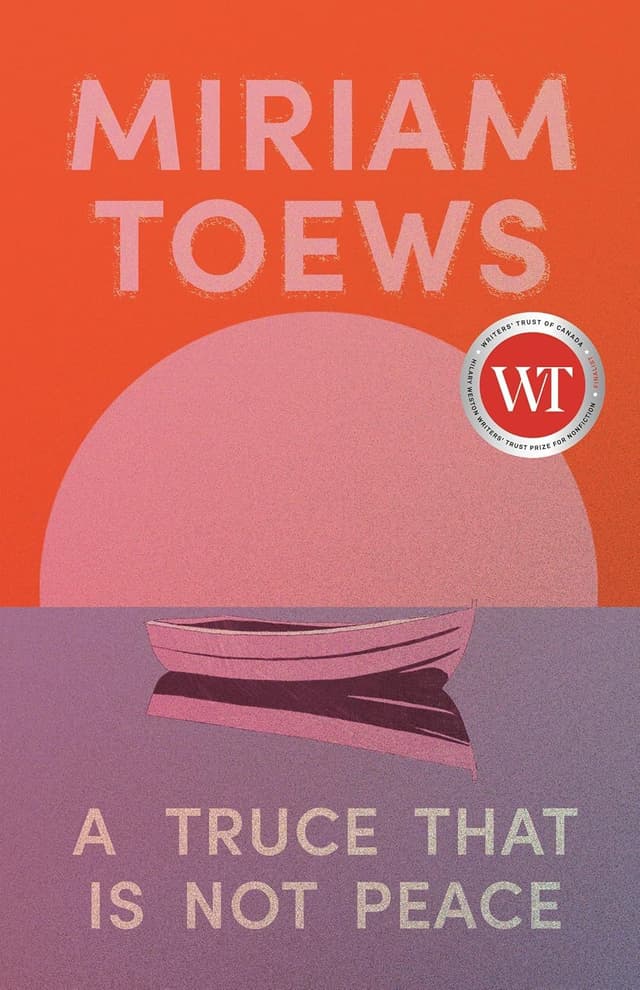
3A TRUCE THAT IS NOT PEACEby Miriam ToewsAuthor’s Home Base: Toronto
Author’s take: “There’s no sense of peace of mind, or closure, or anything like that. I don’t believe in those things anymore. But it certainly was a type of truce.”
Favourite lines: “I don’t believe my father and my sister were impulsive. They spent their lives planning their deaths, living their deaths, almost dying every day, dying almost every day.”
Review: There is no way to sugarcoat it: Canadian novelist Miriam Toews’ latest book, a work of nonfiction propelled by the suicides of her father, Melvin, and sister, Marjorie, as well as the author’s desire to better understand the impetus behind her craft, is very often emotionally wrenching. Yet as in life, tragedies happen alongside joys. As Toews’s memoir recalls her childhood with her family in Manitoba and present-day adventures with her Scrabble-obsessed mother, she brings humour to bear, tempering fearless introspection with flashes of delightful absurdity, as when her four-year-old grandson requests a cigarette for his birthday so he can then play with Toews’s forbidden lighter. Reprinted letters sent by Toews to her sister and chronicling an early European adventure with an intractable beau offer a window into the author’s developing technique and her singular identity. But her profound sorrow over Marjorie’s death in 2010 – fictionalized in 2014’s All My Puny Sorrows – is the book’s lifeblood. “Why did the psychiatrist, in the last days before my sister died, refuse to see her if she wouldn’t speak? What harm was she causing?” Toews asks before later concluding: “If silence says more, why write?” Count us lucky that Toews ultimately solved that haunting dilemma. –KH
Author’s Home Base: Toronto
Author’s take: “There’s no sense of peace of mind, or closure, or anything like that. I don’t believe in those things anymore. But it certainly was a type of truce.”
Favourite lines: “I don’t believe my father and my sister were impulsive. They spent their lives planning their deaths, living their deaths, almost dying every day, dying almost every day.”
Review: There is no way to sugarcoat it: Canadian novelist Miriam Toews’ latest book, a work of nonfiction propelled by the suicides of her father, Melvin, and sister, Marjorie, as well as the author’s desire to better understand the impetus behind her craft, is very often emotionally wrenching. Yet as in life, tragedies happen alongside joys. As Toews’s memoir recalls her childhood with her family in Manitoba and present-day adventures with her Scrabble-obsessed mother, she brings humour to bear, tempering fearless introspection with flashes of delightful absurdity, as when her four-year-old grandson requests a cigarette for his birthday so he can then play with Toews’s forbidden lighter. Reprinted letters sent by Toews to her sister and chronicling an early European adventure with an intractable beau offer a window into the author’s developing technique and her singular identity. But her profound sorrow over Marjorie’s death in 2010 – fictionalized in 2014’s All My Puny Sorrows – is the book’s lifeblood. “Why did the psychiatrist, in the last days before my sister died, refuse to see her if she wouldn’t speak? What harm was she causing?” Toews asks before later concluding: “If silence says more, why write?” Count us lucky that Toews ultimately solved that haunting dilemma. –KH