3 Buzzy Reads That Ask: Is it all Just a Dream?
Add these literary and non-fiction takes on the subconscious to your to-be-read list
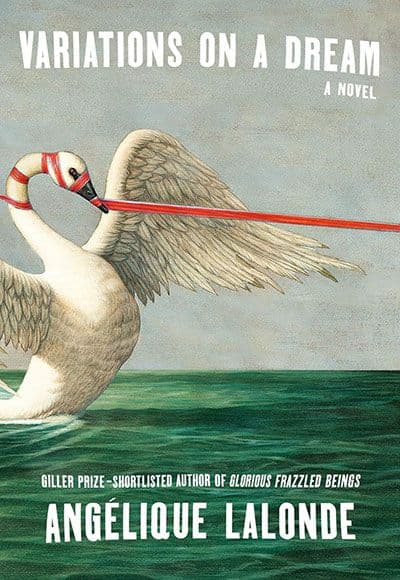
1VARIATIONS ON A DREAMby Angélique LalondeAuthor’s Home Base: Gitxsan Territory, Northern B.C.
Author’s take: “My stories emerge from the tentative magic, beautiful sustenance and obscure connections between beings, lands, creative worlds and relations.”
Favourite lines: “Trevor had learned much from Bukowski, but he would find his own kind of freedom. He could not be Bukowski, nor could he be Sean. He had to make of Trevor what he could. His words, one day, to be carried in worn paperbacks in the pockets of other men.”
Review: There is every likelihood that a dozen people could read Variations on a Dream, the kaleidoscopic debut novel from Giller-shortlisted author Angélique Lalonde (Glorious Frazzled Beings) and arrive at a dozen different conclusions about what, exactly, transpired between protagonists Sarah and Trevor and how their story ends. Which may be Lalonde’s point as she maps notions of gender roles, conformity, desire and abandonment, and how these things impact and influence our conscious and subconscious minds. After all, everything depends on one’s perspective, and perspective is nothing if not malleable. At its core, Variations on a Dream traces the crumbling marriage of Sarah, an eager-to-please mommy blogger whose rose-coloured view of husband Trevor – a porn-damaged, navel-gazing obsessive – is fast-changing, sending her into a kind of fantasy realm earmarked by charades. Meanwhile, Trevor mostly wants to get laid and be heralded a genius. Symbolism, sex and psychology proliferate; and Lalonde stitches the mythological tale of Ariadne (and that kooky ball of string) into the narrative alongside references to real-world icons like feminist philosopher Amia Srinivasan and Bob Dylan. As with dreams, things here don’t always make perfect sense. But the concepts explored are riveting.
Author’s Home Base: Gitxsan Territory, Northern B.C.
Author’s take: “My stories emerge from the tentative magic, beautiful sustenance and obscure connections between beings, lands, creative worlds and relations.”
Favourite lines: “Trevor had learned much from Bukowski, but he would find his own kind of freedom. He could not be Bukowski, nor could he be Sean. He had to make of Trevor what he could. His words, one day, to be carried in worn paperbacks in the pockets of other men.”
Review: There is every likelihood that a dozen people could read Variations on a Dream, the kaleidoscopic debut novel from Giller-shortlisted author Angélique Lalonde (Glorious Frazzled Beings) and arrive at a dozen different conclusions about what, exactly, transpired between protagonists Sarah and Trevor and how their story ends. Which may be Lalonde’s point as she maps notions of gender roles, conformity, desire and abandonment, and how these things impact and influence our conscious and subconscious minds. After all, everything depends on one’s perspective, and perspective is nothing if not malleable. At its core, Variations on a Dream traces the crumbling marriage of Sarah, an eager-to-please mommy blogger whose rose-coloured view of husband Trevor – a porn-damaged, navel-gazing obsessive – is fast-changing, sending her into a kind of fantasy realm earmarked by charades. Meanwhile, Trevor mostly wants to get laid and be heralded a genius. Symbolism, sex and psychology proliferate; and Lalonde stitches the mythological tale of Ariadne (and that kooky ball of string) into the narrative alongside references to real-world icons like feminist philosopher Amia Srinivasan and Bob Dylan. As with dreams, things here don’t always make perfect sense. But the concepts explored are riveting.
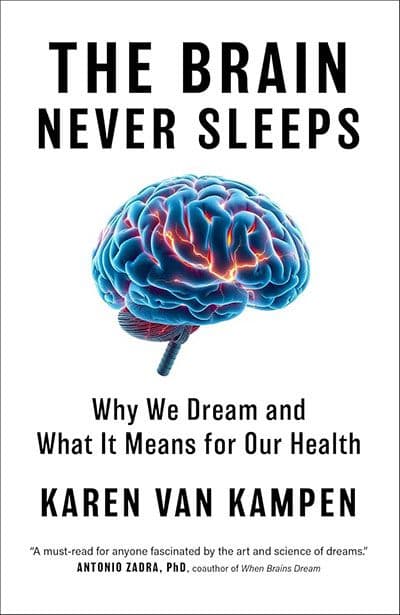
2THE BRAIN NEVER SLEEPS: WHY WE DREAM AND WHAT IT MEANS FOR OUR HEALTHby Karen van KampenAuthor’s Home Base: Toronto
Author’s take: “This is a book about the art and science of dreaming. It’s about how dreams are built, why we dream, and how we can use our dreams in everyday life. It’s about the intrinsic connection between dreams and our well-being.”
Favourite lines: “How does the brain create this common physiological phenomenon that is at the same time a personal psychological experience?”
Review: Why do we dream? What fuels those often-hallucinatory dream-state images and storylines we experience? And how do dreams impact our conscious lives and mental health? Even today, these questions prompt debatable answers, though author and science journalist Karen van Kampen – an admitted dream obsessive and daughter of a renowned sleep researcher – offers persuasive clues in The Brain Never Sleeps, which dives deep into the history of sleep and dream investigation while analyzing the folklore, physiology and psychology shaping our current understanding. Fun facts abound amid the more clinical findings. For instance, the COVID-19 pandemic proved a boon as “Researchers could study the sleep effects of a global crisis when people were confined to their homes, sleeping longer and more fitfully.” Approximately five percent of the general population have regular nightmares; nightmares are more common among children and women than men. And all dream-analysis roads, whether historical or contemporary, lead to Sigmund Freud. Van Kampen’s lively book also includes “A Dreamer’s Toolkit” or a series of exercises that, ostensibly at least, allow people to manipulate and better document their dream activity. Topics don’t come more universal than this.
Author’s Home Base: Toronto
Author’s take: “This is a book about the art and science of dreaming. It’s about how dreams are built, why we dream, and how we can use our dreams in everyday life. It’s about the intrinsic connection between dreams and our well-being.”
Favourite lines: “How does the brain create this common physiological phenomenon that is at the same time a personal psychological experience?”
Review: Why do we dream? What fuels those often-hallucinatory dream-state images and storylines we experience? And how do dreams impact our conscious lives and mental health? Even today, these questions prompt debatable answers, though author and science journalist Karen van Kampen – an admitted dream obsessive and daughter of a renowned sleep researcher – offers persuasive clues in The Brain Never Sleeps, which dives deep into the history of sleep and dream investigation while analyzing the folklore, physiology and psychology shaping our current understanding. Fun facts abound amid the more clinical findings. For instance, the COVID-19 pandemic proved a boon as “Researchers could study the sleep effects of a global crisis when people were confined to their homes, sleeping longer and more fitfully.” Approximately five percent of the general population have regular nightmares; nightmares are more common among children and women than men. And all dream-analysis roads, whether historical or contemporary, lead to Sigmund Freud. Van Kampen’s lively book also includes “A Dreamer’s Toolkit” or a series of exercises that, ostensibly at least, allow people to manipulate and better document their dream activity. Topics don’t come more universal than this.

3MY HUSBAND’S WIFEby Alice FeeneyAuthor’s Home Base: Devon countryside, U.K.
Author’s take: “I had so much fun writing this story. I fell in love with a character called Birdy, and I hope you might too. This is my favourite book I have written and it has one of my favourite twists.”
Favourite lines: “I am a mother. I am a wife. And I will not let some other woman steal my husband or hurt my family. People always think it’s the husband, but sometimes it’s the wife.”
Review: British mystery novelist Alice Feeney is not dubbed the “Queen of Twists” for nothing. And her latest – arriving on the heels of Netflix’s adaptation of her equally twisty 2020 novel His & Hers – upholds the onetime BBC reporter’s rep as a peerless plot wrangler. Which means summarizing the fabulously titled My Husband’s Wife briefly and without revealing spoilers is a feat. But here goes: an artist returning home from a jog is met at her front door by a woman claiming to be her. Meantime, a shadowy Londoner named Birdy who is connected to the very house the (maybe?) confused artist and her (maybe?) husband just bought arrives in their small, seaside town, which is roiling with intrigue beneath its calm surface. Everyone, it seems, is concealing an essential truth. For good measure, there’s a local cop of dubious motives, a subplot about a company that can predict the day people will die, and a mute, institutionalized daughter you just know has something to spill. In Feeney’s hands, all that “is this just a bad dream type” storyline is more exhilarating than exhausting – though some suspension of disbelief is required. In fact, My Husband’s Wife – please excuse the cliché – is a bona fide page-turner with brisk chapters alternately narrated by various characters that one can visualize if not always sympathize with. Another Netflix deal can’t be far behind.
Author’s Home Base: Devon countryside, U.K.
Author’s take: “I had so much fun writing this story. I fell in love with a character called Birdy, and I hope you might too. This is my favourite book I have written and it has one of my favourite twists.”
Favourite lines: “I am a mother. I am a wife. And I will not let some other woman steal my husband or hurt my family. People always think it’s the husband, but sometimes it’s the wife.”
Review: British mystery novelist Alice Feeney is not dubbed the “Queen of Twists” for nothing. And her latest – arriving on the heels of Netflix’s adaptation of her equally twisty 2020 novel His & Hers – upholds the onetime BBC reporter’s rep as a peerless plot wrangler. Which means summarizing the fabulously titled My Husband’s Wife briefly and without revealing spoilers is a feat. But here goes: an artist returning home from a jog is met at her front door by a woman claiming to be her. Meantime, a shadowy Londoner named Birdy who is connected to the very house the (maybe?) confused artist and her (maybe?) husband just bought arrives in their small, seaside town, which is roiling with intrigue beneath its calm surface. Everyone, it seems, is concealing an essential truth. For good measure, there’s a local cop of dubious motives, a subplot about a company that can predict the day people will die, and a mute, institutionalized daughter you just know has something to spill. In Feeney’s hands, all that “is this just a bad dream type” storyline is more exhilarating than exhausting – though some suspension of disbelief is required. In fact, My Husband’s Wife – please excuse the cliché – is a bona fide page-turner with brisk chapters alternately narrated by various characters that one can visualize if not always sympathize with. Another Netflix deal can’t be far behind.