Susan Wood/Getty Images
3 Buzzy Books Offering Bold, Creative Takes on Longevity
These must reads examine the extraordinary life of an Ontario centenarian, a literary dragon and an iconic Afghanistan hotel
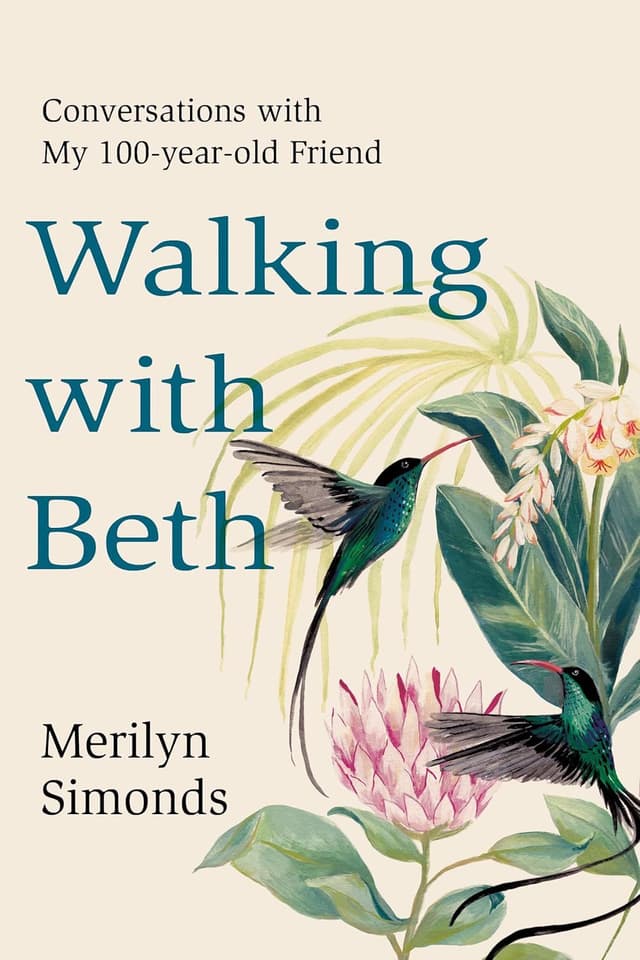
1WALKING WITH BETH: CONVERSATIONS WITH MY 100-YEAR-OLD FRIENDby Merilyn SimondsAuthor’s Home Base: Kingston, Ont., and San Miguel de Allende, Mexico
Author’s take: “Beth has great intentionality in her life, and living well is an intention. In writing this book, I have captured for myself and for others Beth’s approach to life, which is not unique to her latter years; I expect she has always been like this.”
Favourite lines: “Beth and I agree: it doesn’t matter when we met. All that matters is that somehow, somewhere, our lives intersected. And we said to ourselves, I want that woman as my friend.”
Review: “Since I was a very young child, words have been my way into life and its mysteries,” writes Merilyn Simonds. “But now that I have reached my biblical threescore and ten” — that’s 70 if you’re wondering — “I find few books to guide me through this new territory.” So, Simonds wrote one alongside her centenarian friend and fellow Kingston native Elizabeth (“Beth”) Pierce Robinson, who turns out to be a human storehouse of wisdom just waiting to be unpacked. As the title suggests, Walking with Beth chronicles discussions shared by these two almost ridiculously vibrant and creative women over the course of three years and ending, mercifully, not with Beth’s death – she turned 105 last July – but when Simonds felt it was done. Presenting the story narratively permits the author to explore tangents about aging, health, art, grief, joy and, of course, life and death, broadening the scope of the women’s ponderings. Candid, considered and beautifully organized in short but focused chapters, this is not just one for the aged. It’s for the ages as well. –Kim Hughes
Author’s Home Base: Kingston, Ont., and San Miguel de Allende, Mexico
Author’s take: “Beth has great intentionality in her life, and living well is an intention. In writing this book, I have captured for myself and for others Beth’s approach to life, which is not unique to her latter years; I expect she has always been like this.”
Favourite lines: “Beth and I agree: it doesn’t matter when we met. All that matters is that somehow, somewhere, our lives intersected. And we said to ourselves, I want that woman as my friend.”
Review: “Since I was a very young child, words have been my way into life and its mysteries,” writes Merilyn Simonds. “But now that I have reached my biblical threescore and ten” — that’s 70 if you’re wondering — “I find few books to guide me through this new territory.” So, Simonds wrote one alongside her centenarian friend and fellow Kingston native Elizabeth (“Beth”) Pierce Robinson, who turns out to be a human storehouse of wisdom just waiting to be unpacked. As the title suggests, Walking with Beth chronicles discussions shared by these two almost ridiculously vibrant and creative women over the course of three years and ending, mercifully, not with Beth’s death – she turned 105 last July – but when Simonds felt it was done. Presenting the story narratively permits the author to explore tangents about aging, health, art, grief, joy and, of course, life and death, broadening the scope of the women’s ponderings. Candid, considered and beautifully organized in short but focused chapters, this is not just one for the aged. It’s for the ages as well. –Kim Hughes
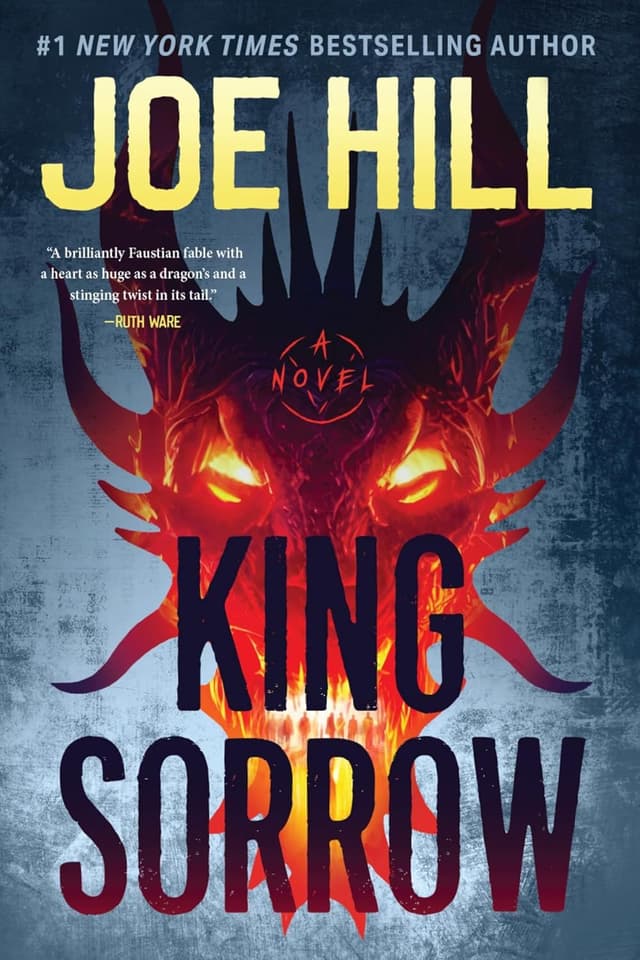
2King Sorrowby Joe HillHome Base: New England
Author’s Take: “It’s fashionable to make fun of the stuff that’s taught at liberal arts college — who needs to know anything about Arthurian legends when they could be learning to code? But I always kind of thought someday I’d put all that reading to good use and I was right. It only took 30 years.”
Favourite Line: “If there has to be evil in the world, then I’d at least like to be in charge of it.”
Review: Sometimes – all too rarely, really – when you start reading a new book, it feels like slipping into a warm bath: instantly welcoming, utterly comfortable and immediately immersive. That’s how I felt reading the opening pages of King Sorrow, the new novel from horror writer Joe Hill, his first in almost a decade. And, despite the fact that King Sorrow is, at its heart, a horror novel (and that it weighs in at almost 900 pages), that feeling never lets up. This novel is a glorious, archly self-aware, genuinely chilling and deeply funny read, which begins as something of a dark academic piece (with significant surface similarities to Donna Tartt’s The Secret History) before catapulting into an entirely different direction. Nay, an entirely different world. Beginning in 1989, King Sorrow follows a group of friends – most of them students at a small New England liberal arts college – who summon a dragon (yes, you read that right) to help one of their number, only to find themselves beholden to said creature, the titular King Sorrow, to provide a sacrifice for him every year. Or else. The novel follows the characters (and the dragon) through a quarter-century of American history (both real and imagined – the line gets blurry at times) and a series of almost self-contained episodes, many of which could be stand-alone novels in their own right. To say any more would be to give too much away – King Sorrow is a big, bold, home-run of a book, and a swift rejoinder to those who might say “they don’t make books like they used to.” Joe Hill does, and we’re all the richer for it. –Robert Wiersema
Home Base: New England
Author’s Take: “It’s fashionable to make fun of the stuff that’s taught at liberal arts college — who needs to know anything about Arthurian legends when they could be learning to code? But I always kind of thought someday I’d put all that reading to good use and I was right. It only took 30 years.”
Favourite Line: “If there has to be evil in the world, then I’d at least like to be in charge of it.”
Review: Sometimes – all too rarely, really – when you start reading a new book, it feels like slipping into a warm bath: instantly welcoming, utterly comfortable and immediately immersive. That’s how I felt reading the opening pages of King Sorrow, the new novel from horror writer Joe Hill, his first in almost a decade. And, despite the fact that King Sorrow is, at its heart, a horror novel (and that it weighs in at almost 900 pages), that feeling never lets up. This novel is a glorious, archly self-aware, genuinely chilling and deeply funny read, which begins as something of a dark academic piece (with significant surface similarities to Donna Tartt’s The Secret History) before catapulting into an entirely different direction. Nay, an entirely different world. Beginning in 1989, King Sorrow follows a group of friends – most of them students at a small New England liberal arts college – who summon a dragon (yes, you read that right) to help one of their number, only to find themselves beholden to said creature, the titular King Sorrow, to provide a sacrifice for him every year. Or else. The novel follows the characters (and the dragon) through a quarter-century of American history (both real and imagined – the line gets blurry at times) and a series of almost self-contained episodes, many of which could be stand-alone novels in their own right. To say any more would be to give too much away – King Sorrow is a big, bold, home-run of a book, and a swift rejoinder to those who might say “they don’t make books like they used to.” Joe Hill does, and we’re all the richer for it. –Robert Wiersema
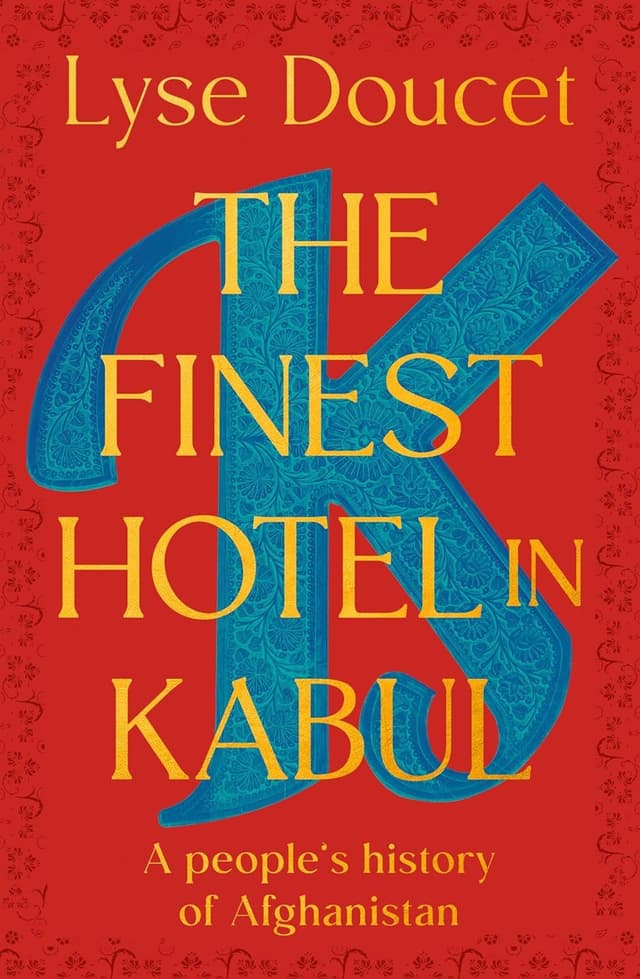
3THE FINEST HOTEL IN KABUL: A PEOPLE’S HISTORY OF AFGHANISTANby Lyse DoucetAuthor’s Home Base: London, England
Author’s take: “[The book] is about Afghanistan, but it’s also about very universal human experiences: people who live in times of huge flux, violence and change, and how their lives are disrupted as a result. It’s also about how people still get up in the morning and find an everyday courage to carry on.”
Favourite lines: “As Afghanistan lurched through decades of trial and terror, laced with bright but brief beginnings, the Inter-Con was an unbreakable constant.”
Review: Canadian-born Lyse Doucet, the BBC’s long-serving and very decorated chief international correspondent, gets top marks for conceptual originality with The Finest Hotel in Kabul, which chronicles Afghanistan’s recent history through the lens of the Hotel Inter-Continental which, when it opened in 1969, promised to link the nation to the wider world. Doucet, 66, – a hotel devotee since her first stay in 1988 – follows a roster of local employees who helped elevate the Inter-Con to legendary status among diplomats and jet-setters before a tsunami of coups, civil wars and invasions threatened to reduce the building, and its environs, to rubble. Though diminished, the Inter-Con still stands sentinel over a country rarely noted for producing good news. To say Doucet’s book is immersive is an understatement: in one instance, readers are offered a detailed description of the uniforms staff were wearing on Christmas Day in 1979 when the Soviets arrived. That same staff put a human face on the conflicts that continue to ravage Taliban-ruled Afghanistan. While it’s a lot to digest, Doucet’s storytelling captivates. –KH
Author’s Home Base: London, England
Author’s take: “[The book] is about Afghanistan, but it’s also about very universal human experiences: people who live in times of huge flux, violence and change, and how their lives are disrupted as a result. It’s also about how people still get up in the morning and find an everyday courage to carry on.”
Favourite lines: “As Afghanistan lurched through decades of trial and terror, laced with bright but brief beginnings, the Inter-Con was an unbreakable constant.”
Review: Canadian-born Lyse Doucet, the BBC’s long-serving and very decorated chief international correspondent, gets top marks for conceptual originality with The Finest Hotel in Kabul, which chronicles Afghanistan’s recent history through the lens of the Hotel Inter-Continental which, when it opened in 1969, promised to link the nation to the wider world. Doucet, 66, – a hotel devotee since her first stay in 1988 – follows a roster of local employees who helped elevate the Inter-Con to legendary status among diplomats and jet-setters before a tsunami of coups, civil wars and invasions threatened to reduce the building, and its environs, to rubble. Though diminished, the Inter-Con still stands sentinel over a country rarely noted for producing good news. To say Doucet’s book is immersive is an understatement: in one instance, readers are offered a detailed description of the uniforms staff were wearing on Christmas Day in 1979 when the Soviets arrived. That same staff put a human face on the conflicts that continue to ravage Taliban-ruled Afghanistan. While it’s a lot to digest, Doucet’s storytelling captivates. –KH