Getty Images
3 Buzzy Books About Crime and Punishment
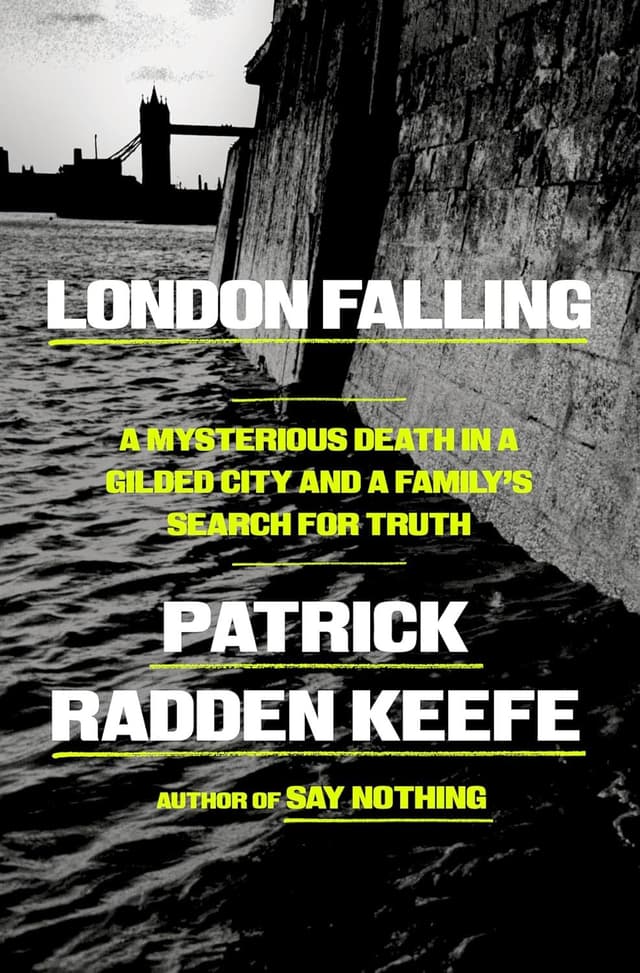
1London Fallingby Patrick Raddden KeefeHome Base: New York
Author’s Take: “Listen, I may not be part of the solution here in any fundamental way, but I’m not part of the problem. And that’s something.”
Favourite Line: “A vicious killer appeared to be stalking London: gravity.”
Review: The CCTV video isn’t particularly clear, but what it shows is incontrovertible. Filmed across the Thames by a surveillance camera at the headquarters of MI6 (the U.K.’s foreign intelligence agency) early in the morning of Nov. 29, 2019, the footage shows 19-year-old Zac Brettler, son of an upper-middle-class family, grandson of a celebrated English rabbi, leaping to his death from a fifth-floor balcony of an exclusive luxury flat overlooking the river.
London Falling, the enthralling and intoxicating new book from prizewinning journalist Patrick Radden Keefe (whose previous books include Say Nothing, a harrowing examination of the Troubles in Northern Ireland, and Empire of Pain, a scathing evisceration of the Big Pharma’s Sackler family over their craven role in the opioid crisis) begins with a somewhat unusual question: Why? The means of Brettler’s death are clear, but why did this young adult feel compelled to end his own life?
The answers are neither easy, nor satisfying, as Keefe’s investigation leads to a powerfully immersive journey into the dim, fragmented world of London’s criminal underground, from simple robberies to violent retribution, from fraud and street-level drug dealing to “London’s obsequious hospitality” when it came to the Russian oligarchs – whose economic contributions came with a long history of bloodshed – following the fall of the USSR in the early 1990s.
Keefe, who has become something of a celebrity journalist, in addition to a celebrated one – à la Bob Woodward and Carl Bernstein, though they never had a J. Crew ad campaign, even after All The President’s Men helped bring down Richard Nixon’s presidency – had intimate, ongoing access to the Brettler family for the writing of the book. They brought the story to him, and even joined him for the New York book launch in April.
The result is a shocking, fascinating journey into darkness, rooted in the tragic loss of one young man and his family’s ongoing quest for answers in the face of that tragedy.
Home Base: New York
Author’s Take: “Listen, I may not be part of the solution here in any fundamental way, but I’m not part of the problem. And that’s something.”
Favourite Line: “A vicious killer appeared to be stalking London: gravity.”
Review: The CCTV video isn’t particularly clear, but what it shows is incontrovertible. Filmed across the Thames by a surveillance camera at the headquarters of MI6 (the U.K.’s foreign intelligence agency) early in the morning of Nov. 29, 2019, the footage shows 19-year-old Zac Brettler, son of an upper-middle-class family, grandson of a celebrated English rabbi, leaping to his death from a fifth-floor balcony of an exclusive luxury flat overlooking the river.
London Falling, the enthralling and intoxicating new book from prizewinning journalist Patrick Radden Keefe (whose previous books include Say Nothing, a harrowing examination of the Troubles in Northern Ireland, and Empire of Pain, a scathing evisceration of the Big Pharma’s Sackler family over their craven role in the opioid crisis) begins with a somewhat unusual question: Why? The means of Brettler’s death are clear, but why did this young adult feel compelled to end his own life?
The answers are neither easy, nor satisfying, as Keefe’s investigation leads to a powerfully immersive journey into the dim, fragmented world of London’s criminal underground, from simple robberies to violent retribution, from fraud and street-level drug dealing to “London’s obsequious hospitality” when it came to the Russian oligarchs – whose economic contributions came with a long history of bloodshed – following the fall of the USSR in the early 1990s.
Keefe, who has become something of a celebrity journalist, in addition to a celebrated one – à la Bob Woodward and Carl Bernstein, though they never had a J. Crew ad campaign, even after All The President’s Men helped bring down Richard Nixon’s presidency – had intimate, ongoing access to the Brettler family for the writing of the book. They brought the story to him, and even joined him for the New York book launch in April.
The result is a shocking, fascinating journey into darkness, rooted in the tragic loss of one young man and his family’s ongoing quest for answers in the face of that tragedy.
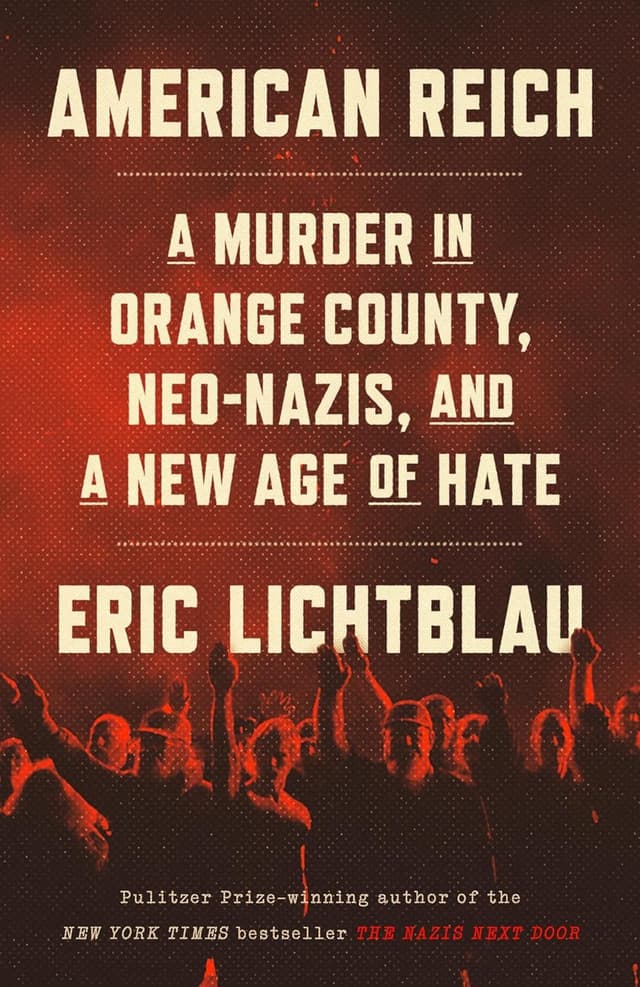
2American Reichby Eric LichtblauHome Base: Washington, D.C.
Author’s Take: “I wanted to try and document and better understand what the source of this violence was, and the tip of the spear, really, is the growing power and influence of the white supremacy movement, which has really been emboldened by Trump himself.”
Favourite Line: “Orange County, the sun-splashed home to neo-Nazi Sam Woodward and his old high school classmate, Blaze Bernstein, mirrored the surge in violent bigotry cleaving America, but in the extreme.”
Review: With his new book American Reich, veteran journalist and two-time Pulitzer Prize winner Eric Lichtblau takes an expansive and horrifying look at the rise of a new, more brutal class of neo-Nazism, largely following reality TV star Donald Trump’s 2015 announcement that he was going to run for president, a speech that included dog-whistle racism and xenophobia directed at purported Mexican rapists and immigrants in general. Lichtblau anchors the book in the 2018 Orange County murder of Blaze Bernstein, an Ivy League sophomore who was, critically, both gay and Jewish. Bernstein left his family home that night to meet up with a former high school classmate, Sam Woodward, who had flirtatiously approached him online.
Bernstein remembered Woodward as a dark, brooding figure, conservative and almost defiantly straight, and was somewhat skeptical about the outreach; his instincts were entirely correct. Woodward had, in the intervening years, become a “fully-fledged neo-Nazi,” with a hobby of posing as gay online to flirt and connect with other men, “then threatening them with violence as retribution.” Bernstein disappeared after that meeting; his body was found more than a week later.
Using that tragedy as a framework, Lichtblau creates an exhaustive overview of the interconnecting threads of the new neo-Nazi movement, from the far-right history of Orange County itself, through the white power music scene, the spiritual ancestors of the movement (including Oklahoma City bomber Timothy McVeigh) and online radicalization, to a grotesque and genuinely distressing analysis of recent mass murders rooted in this ideology.
It is not, needless to say, light reading. Rather, it feels essential. In our current age of fractured news and the dizzying rate of tragedies (which once would have been considered singular and shocking, and are now almost daily), it is valuable to have explicit connections drawn and contexts revealed. Valuable, but definitely not comforting. Reality seldom is these days.
Home Base: Washington, D.C.
Author’s Take: “I wanted to try and document and better understand what the source of this violence was, and the tip of the spear, really, is the growing power and influence of the white supremacy movement, which has really been emboldened by Trump himself.”
Favourite Line: “Orange County, the sun-splashed home to neo-Nazi Sam Woodward and his old high school classmate, Blaze Bernstein, mirrored the surge in violent bigotry cleaving America, but in the extreme.”
Review: With his new book American Reich, veteran journalist and two-time Pulitzer Prize winner Eric Lichtblau takes an expansive and horrifying look at the rise of a new, more brutal class of neo-Nazism, largely following reality TV star Donald Trump’s 2015 announcement that he was going to run for president, a speech that included dog-whistle racism and xenophobia directed at purported Mexican rapists and immigrants in general. Lichtblau anchors the book in the 2018 Orange County murder of Blaze Bernstein, an Ivy League sophomore who was, critically, both gay and Jewish. Bernstein left his family home that night to meet up with a former high school classmate, Sam Woodward, who had flirtatiously approached him online.
Bernstein remembered Woodward as a dark, brooding figure, conservative and almost defiantly straight, and was somewhat skeptical about the outreach; his instincts were entirely correct. Woodward had, in the intervening years, become a “fully-fledged neo-Nazi,” with a hobby of posing as gay online to flirt and connect with other men, “then threatening them with violence as retribution.” Bernstein disappeared after that meeting; his body was found more than a week later.
Using that tragedy as a framework, Lichtblau creates an exhaustive overview of the interconnecting threads of the new neo-Nazi movement, from the far-right history of Orange County itself, through the white power music scene, the spiritual ancestors of the movement (including Oklahoma City bomber Timothy McVeigh) and online radicalization, to a grotesque and genuinely distressing analysis of recent mass murders rooted in this ideology.
It is not, needless to say, light reading. Rather, it feels essential. In our current age of fractured news and the dizzying rate of tragedies (which once would have been considered singular and shocking, and are now almost daily), it is valuable to have explicit connections drawn and contexts revealed. Valuable, but definitely not comforting. Reality seldom is these days.
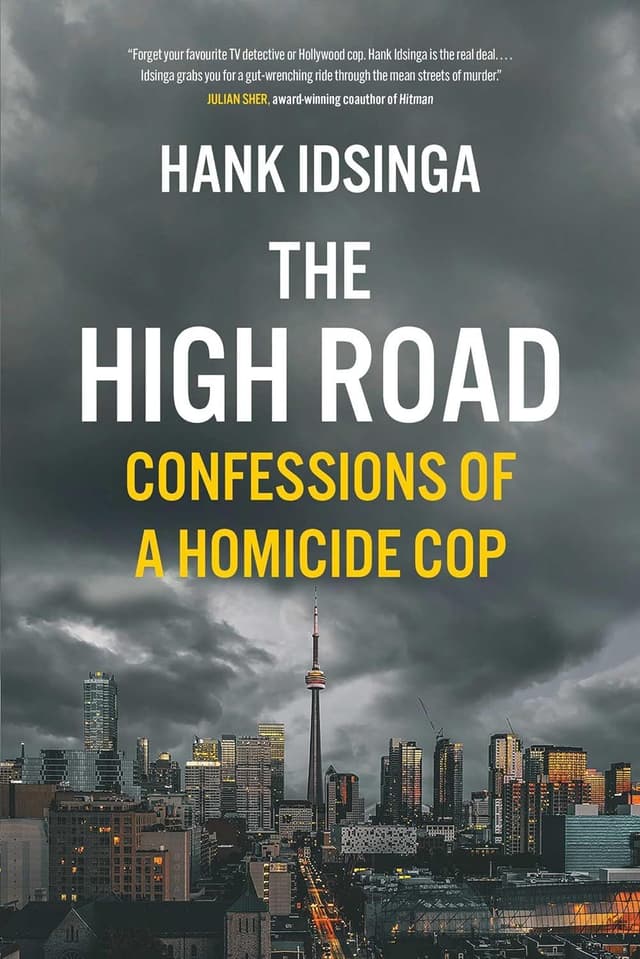
3The High Road: Confessions of a Homicide Copby Hank IdsingaHome Base: Toronto
Author’s Take: “Books are written, television shows are filmed and newspapers are filled every day with stories about the police. I spent 34 years doing exactly what it was I’d wanted to do ever since I was a young boy.”
Favourite Line: “My journey began decades before I was even born.”
Review: Despite the continued popularity of true crime and detective novels – not to mention all those TV procedurals – the voices of actual police officers are chronically underheard. The High Road, a memoir from Hank Idsinga, who served in the Toronto Police Service for 34 years, including five as the head of the homicide unit (before his retirement in 2023), goes a long way to addressing that imbalance.
The book, which traces his life and career in roughly chronological order, begins with the Holocaust murder of his grandfather. “The resulting generational trauma,” he writes, “is in large part what motivated me to pursue a career in policing – the closest I could get to understanding the damage caused and putting a stamp on a life spent pursuing answers for victims of crime and their loved ones through investigative work.”
It’s a birthright and responsibility that Idsinga took and continues to take seriously, from his early days in 14 Division, which he chose because it was the busiest division in the city, through his slow and somewhat unsteady rise through the ranks. The book primarily focuses on the Service’s many successes in which he was involved (including Project Prism, the investigation that resulted in the arrest and confession of serial killer Bruce McArthur), but also describes the cases that continue to haunt him (including the unsolved murders of Barry and Honey Sherman). It’s rarely self-aggrandizing, and Idsinga is very quick to shift any pride to the work of his fellow officers (as he did when he was named one of Toronto Life’s 50 Most Influential People two years running). Rather, it’s an illuminating glimpse into actual policing, the drudgery and painstaking work (and no little amount of luck) that result in arrests.
Idsinga is frank, if diplomatic, about his concerns regarding the TPS bureaucracy, including racism and corruption among the senior ranks, faulty leadership and rampant favouritism, and the inherent limitations (and systemic flaws) of the paramilitary management system in place in the Service. The book isn’t an attack (Idsinga is taking the high road, after all), but it does recognize the widespread concerns around the TPS and contemporary policing in general.
The High Road is not only a personal account of a career in policing, but also a stirring, street-level view of Toronto’s recent history and the massive social changes seen over those decades. The combination makes the book a surprisingly powerful read.
Home Base: Toronto
Author’s Take: “Books are written, television shows are filmed and newspapers are filled every day with stories about the police. I spent 34 years doing exactly what it was I’d wanted to do ever since I was a young boy.”
Favourite Line: “My journey began decades before I was even born.”
Review: Despite the continued popularity of true crime and detective novels – not to mention all those TV procedurals – the voices of actual police officers are chronically underheard. The High Road, a memoir from Hank Idsinga, who served in the Toronto Police Service for 34 years, including five as the head of the homicide unit (before his retirement in 2023), goes a long way to addressing that imbalance.
The book, which traces his life and career in roughly chronological order, begins with the Holocaust murder of his grandfather. “The resulting generational trauma,” he writes, “is in large part what motivated me to pursue a career in policing – the closest I could get to understanding the damage caused and putting a stamp on a life spent pursuing answers for victims of crime and their loved ones through investigative work.”
It’s a birthright and responsibility that Idsinga took and continues to take seriously, from his early days in 14 Division, which he chose because it was the busiest division in the city, through his slow and somewhat unsteady rise through the ranks. The book primarily focuses on the Service’s many successes in which he was involved (including Project Prism, the investigation that resulted in the arrest and confession of serial killer Bruce McArthur), but also describes the cases that continue to haunt him (including the unsolved murders of Barry and Honey Sherman). It’s rarely self-aggrandizing, and Idsinga is very quick to shift any pride to the work of his fellow officers (as he did when he was named one of Toronto Life’s 50 Most Influential People two years running). Rather, it’s an illuminating glimpse into actual policing, the drudgery and painstaking work (and no little amount of luck) that result in arrests.
Idsinga is frank, if diplomatic, about his concerns regarding the TPS bureaucracy, including racism and corruption among the senior ranks, faulty leadership and rampant favouritism, and the inherent limitations (and systemic flaws) of the paramilitary management system in place in the Service. The book isn’t an attack (Idsinga is taking the high road, after all), but it does recognize the widespread concerns around the TPS and contemporary policing in general.
The High Road is not only a personal account of a career in policing, but also a stirring, street-level view of Toronto’s recent history and the massive social changes seen over those decades. The combination makes the book a surprisingly powerful read.