For monarchies, the successful passing of the throne from one generation to the next is the most important part of the job, far more crucial than public engagements or foreign tours. For the House of Windsor, perhaps the most important relationship is that of the late Queen Elizabeth II and her heir, King Charles III. Yet, there hasn’t been a focused examination of the mother-son dynamic since Jonathan Dimbleby’s authorized biography of Charles in 1994, in which the prince famously revealed his unhappy childhood, distant relationship with his parents and his miserable marriage to Diana. (At the time, they had been separated for two years.).
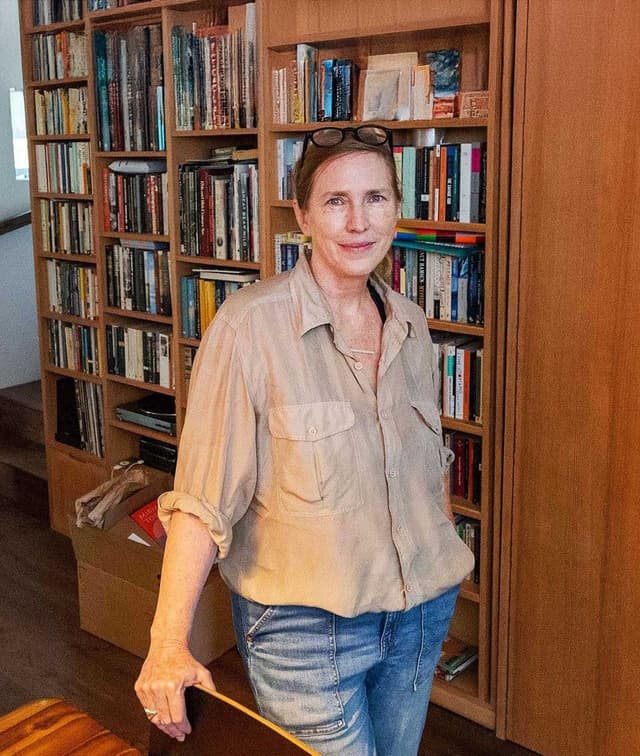
Now, veteran royal biographer Ingrid Seward will publish My Mother and I: The Inside Story of the King and Our Late Queen on Sept. 3. When Charles talked with Dimbleby, “he was in one of those anti-parent stages, which people go through,” Seward explains in a recent phone interview with Zoomer from her home in England. “He felt that he’d been brought up in this very cold childhood. And that all the love he had was really from his nannies, and not his mother.” After that book, “he never really talked about his mother again. So I thought we have to move on and encapsulate what a lot of people thought about the Queen as a mother and then what Charles said later on in her life.”
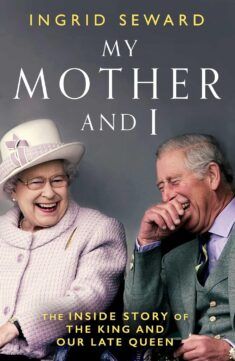
Her re-evaluation reveals a far more balanced view of Charles’s childhood. At around 300 pages, My Mother and I isn’t an exhaustive historical tome but rather an intimate peek at how Elizabeth and Charles were molded by their childhoods and how that affected their own parenting styles, as well as their relationships with their spouses and other family members.
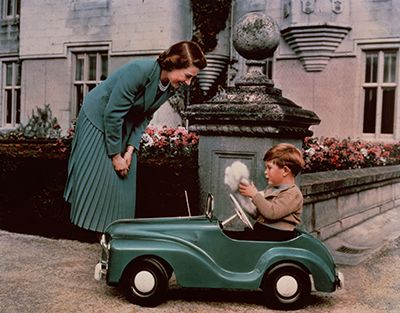
Since moving to California, Prince Harry has talked about the “genetic pain” in his family, but Seward argues the personalities of Harry’s father and grandmother reflect their generations and places within society more than inherited angst. “Remember, there is only 22 years between her [Elizabeth II] and Charles, so obviously the way she was brought up is the way she thought he should be brought up,” says Seward, who is also the editor-in-chief of Majesty magazine. “In the 1950s, all grand families brought up their children, if they could afford to, [with] many many servants. You left your children in the company of nannies, and you got on with your life.” In those far more formal post-war years, public affection among royals wasn’t a thing.
That method of child raising was compounded by Elizabeth’s accession to the throne in 1952, when Charles was just three years old. “He lost her,” Seward says. “You don’t see this from all the wonderful pictures, but she wasn’t a constant in his life any more and I think that they drifted apart.” That Cat’s in the Cradle relationship lasted until the last decades of the Queen’s life, when mother and son became very close.
These days, in contrast to how he was brought up, King Charles openly shows affection to his family in public – hugs and kisses are frequent, even at the most formal of events. Still, he’s very much the son of his mother, especially when it comes to avoiding conflict. As Seward writes in the book, “The Queen has sometimes been slow to act but has always lived by the mantra ‘This too shall pass.’ In the face of crisis, her response is stillness.” Her grandson Harry has recounted how unapproachable she could be, hiding behind private secretaries who shielded her from making hard personal decisions. Seward writes that even her daughter, Princess Anne, struggled to get her mother to act, and it took three weekends to “nail her mother down for a conversation” about her desire to remarry.
Anne, who was the “spare” to her older brother for 10 years before the birth of Prince Andrew, is everything Harry is not, according to Seward. “She is very strong, and very manner-of-fact, and she thought, ‘I’m the spare, I’m going to get on with it.’ And she’s never felt sorry for herself in her life,” explains Seward. She notes Anne is taking a big interest in the next spare, her grand-niece, Princess Charlotte, who reportedly loves spending time on Anne’s country estate.

Seward has been talking to royals, their friends and their staff for so long she notices threads and trends that can escape others. One is how the Marina Ogilvy scandal may inform current and future Windsor relations. In 1989, the 23-year-old daughter of the Queen’s cousin, Princess Alexandra of Kent, stunned the media and public by revealing she was both unmarried and pregnant. Then, she continued to spill Windsor family secrets, alleging her estranged parents ordered her to marry the father or get an abortion. She sold her story to a tabloid, publicized a letter she’d written to the Queen, a.k.a “Dear Cousin Lilibet,” and, in a TV appearance, begged her parents to reconcile.
The scandal and public haranguing so humiliated the royals that the Queen never forgave Ogilvy. As a result, Princess Alexandra’s daughter was “definitely not accepted back into the royal fold until after the Queen’s death. They are quite an unforgiving lot,” says Seward. That hard-hearted attitude may have been inherited along with the throne as Charles and his heir William appear to be adopting a similar perspective against Prince Harry, another wayward family member.
When asked how the Ogilvy precedent may hint at Harry’s fate, Seward draws in a sharp breath: “Harry has done much worse than Marina did. It doesn’t bode well for Harry at all, does it? I don’t think forgiveness really comes into it.”