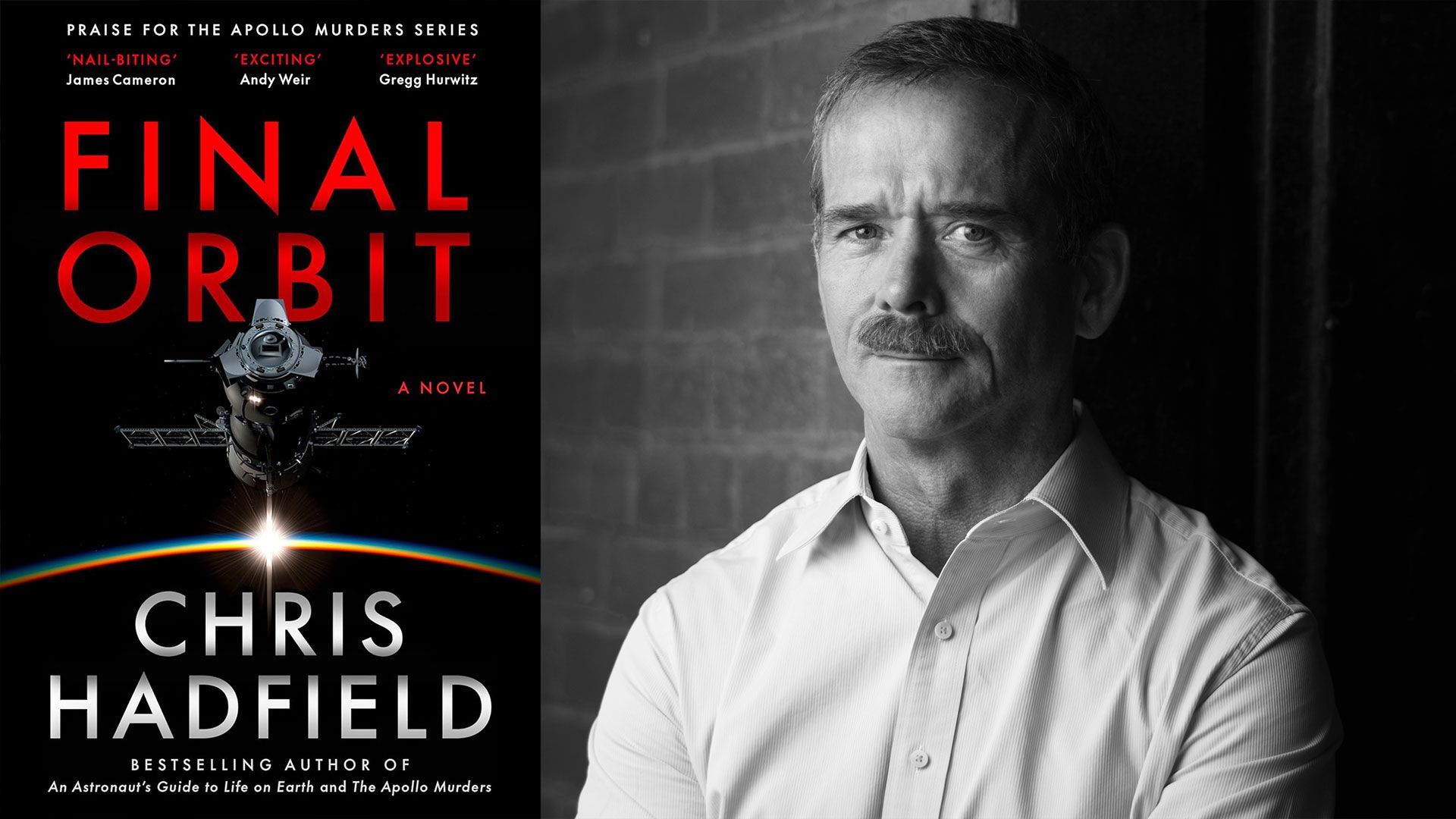
Chris Hadfield’s familiar face zooms in from his car on the way to his Ontario country home – the primary playground of his latest career burst as novelist. “I write in a small room,” he says, “facing the forest, in a cottage that was built in 1896.”
The past is quite clearly a wallop of inspiration for the storied astronaut in more ways than one. The latest bound-to-be-bestseller – from the first Canadian to ever walk in space – is called Final Orbit and lifts off in 1975: circling a new Apollo mission and consumed with China’s shadowy role in the so-called Space Race between the U.S. and the U.S.S.R.
“Many of these people are real. Much of this actually happens,” Hadfield writes in the forward, and emphasizes the point in conversation, saying. “If you are writing pure science fiction, then everything is made up. But this is recent enough history, it is in people’s cultural memory … I take it as a task to do a lot of research. I didn’t just want to guess.”
Where was he in 1975, curiously? “In the summer of 1975, I was in Prince Edward County, at a flying base there with the Air Cadets, 15 years old and taking my first steps toward becoming a pilot, and eventually an astronaut.”
Outside the realm of his own world, he remembers following the tremors of geo-politics then, including the Yom Kippur War and the morass in Vietnam: “I was a very curious boy.”
A curiosity that has turned into a boon for his readers – a fan club that even includes James Cameron. “Nail-biting” is the one-word thumbs-up from the famous director, seen on the cover of Final Orbit.
Books have long always helped Hadfield soar, long before he was writing his own. Here, Zoomer asks the Canadian icon about his reading life.
What’s the best book you’ve read this year?
It’s a book that was written about a decade ago. It’s called The Most Powerful Idea in the World: A Story of Steam, Industry, and Invention by William Rosen. It essentially tries to understand why the Industrial Revolution happened – and why it happened then and there. I found it really compelling. When I am reading a good book like that, the way I measure it is I am constantly telling people around me about the book and what I learned from it.
What book can’t you wait to dive into?
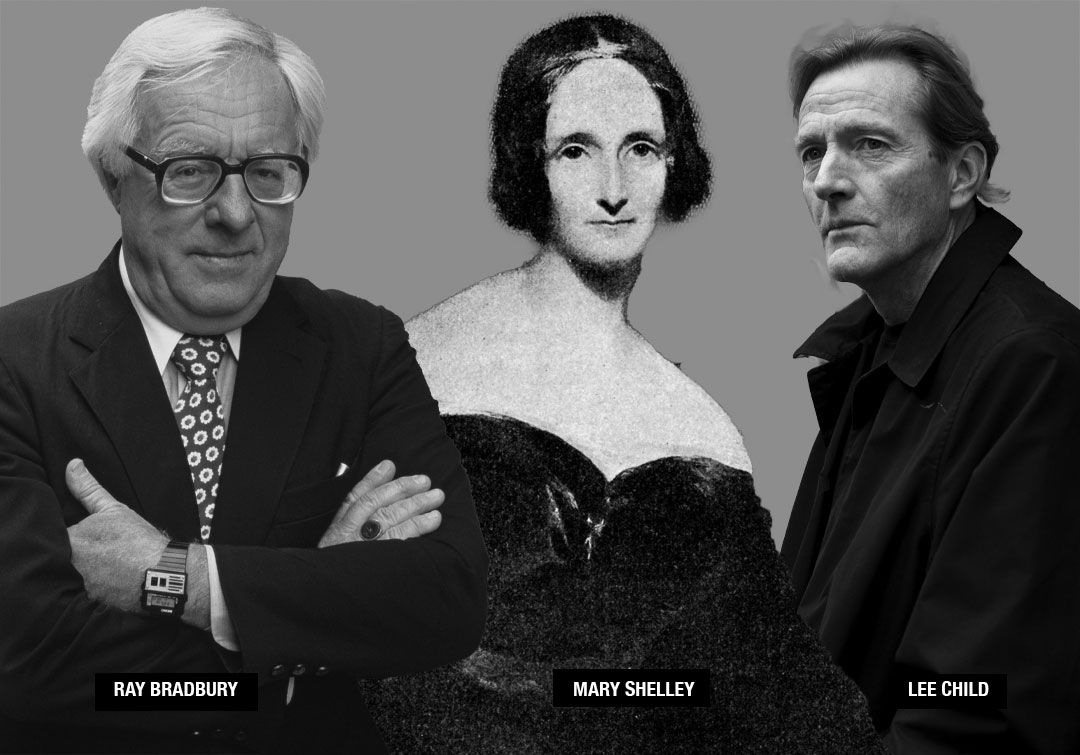
I love the Jack Reacher series. I love the way Lee Child writes. So I can’t wait to dive into his new one, Exit Strategy (co-written with younger brother Andrew Child). When I set out to be a thriller fiction writer, I held a few people in mind – people like Frederick Forsyth, Jonathan Kellerman and Lee Child. When I’m reading these guys, I’m not thinking about anything else. Their word choices! I’m just engrossed. They are not especially complicated books, but I’m very entertained.
What’s your favourite book of all time?
The one that comes to mind is The Martian Chronicles by Ray Bradbury. Written in 1949, I believe. It was an interesting moment in history where the Atomic Bomb had been used for the first time. The spectre and the brutish disregard for human life of the Second World War were rawly fresh, and seen in the way people approached life. And yet we had not launched a rocket into orbit at the time. It was that brief, interstitial period between Hiroshima and Sputnik. So, Bradbury wrote under those circumstances and what he wrote was just gorgeous. His word pictures! A real parable for the end of the world. When I really want to go back to the source of how to write well, I read Bradbury.
What book completely changed your perspective?
Factfulness: Ten Reasons We’re Wrong About the World – and Why Things Are Better Than You Think by Hans Rosling. It made me look at things anew. I found it very insightful – but also so simply clear about the lies we tell ourselves. Another is
Guns, Germs, and Steel: The Fates of Human Societies by Jared Diamond. Obviously, it’s flawed in some ways, but I found it very perspective-building.
If you could have dinner with any author, living or dead, who would it be?
Mary Shelley. She was on the shores of Lake Geneva when writing Frankenstein and was a hippie of a person of the time. She wrote such an unconventional and groundbreaking book for 1818! We have almost completely forgotten what life was like in 1818. But it was not that long ago. Only 200 years ago – two lifetimes ago! But there is practically no perception of what daily life was like then. I would be really curious to talk to her.