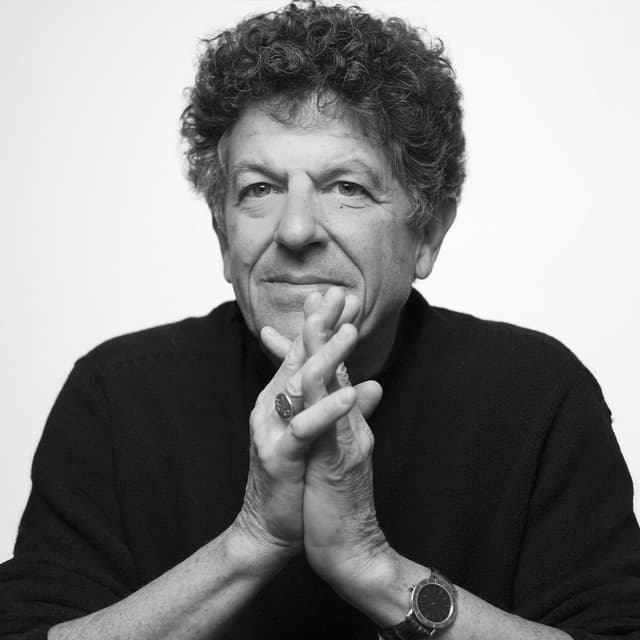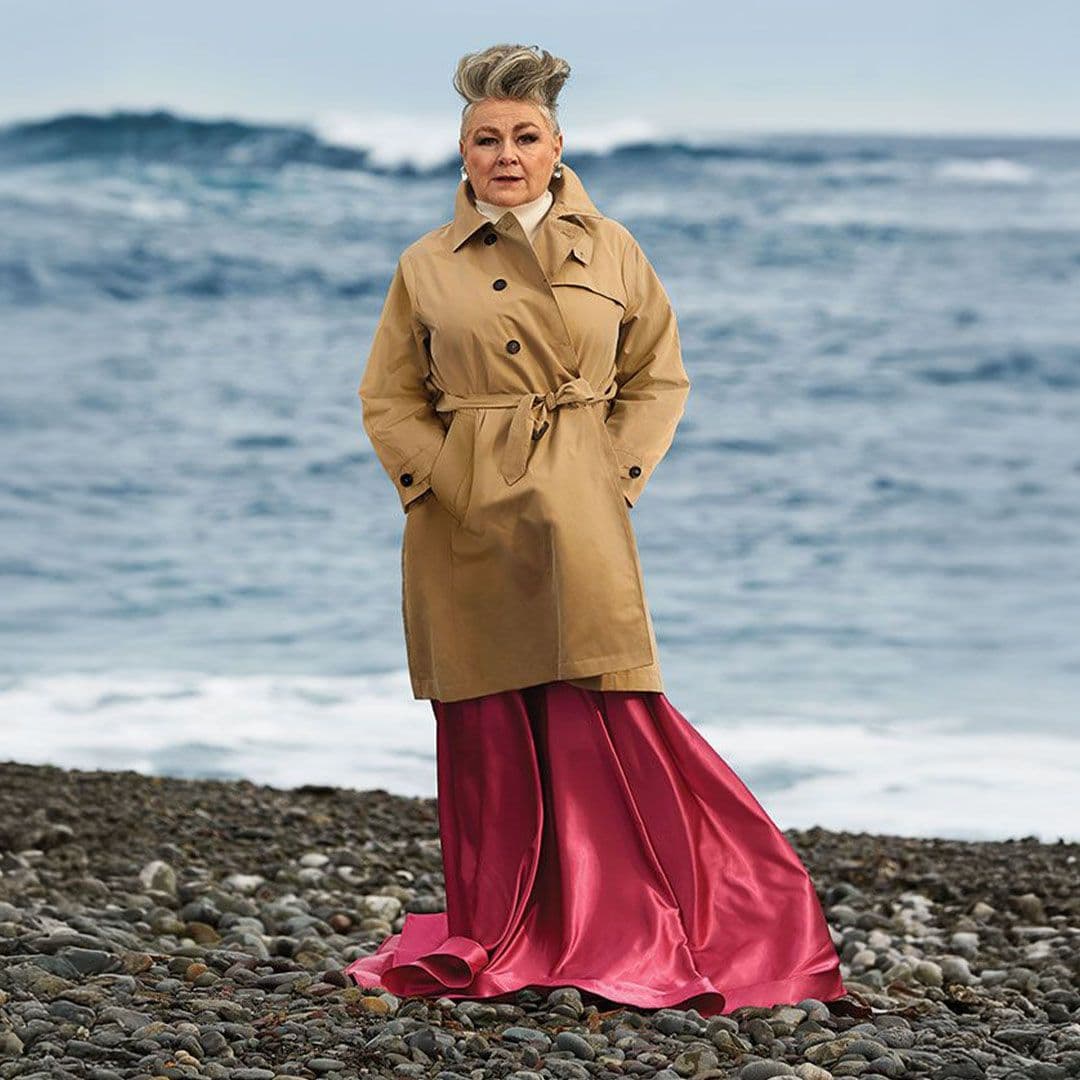
“I wasn’t going to write a memoir,” says Mary Walsh. “I mean, friends of mine – Mark Critch and Rick Mercer – have written five or six now. I think they’re only in their 50s. But it wasn’t something I really wanted to do.” The 74-year-old St. John’s comedian goes on to explain in our recent interview that when she imagined writing about her youth, including her “mean funny” Irish Catholic family (where she’s one of eight siblings), plus all her career highs and lows, not to mention alcoholism and sobriety, she thought, “It would be like, ‘I write an essay about how I saw through the glass darkly there. And then an essay on how I saw through the glass really darkly there.’ And I thought, ‘No, I really don’t want to have anything to do with it.’”
But she changed her mind – and all it took was for someone to ask. “After I wrote a novel, Crying for the Moon,” she says about her 2017 book about a girl growing up in 1960s Newfoundland, “I never heard from HarperCollins again, and I felt so abandoned. So when the publisher called [years later] and said that they were thinking that it would be good if I wrote a book of essays, a memoir-ish book, I immediately went, ‘They like me, they really like me.’ And then I said yes, even though I’d never written essays, and I did not want to write a memoir. I was just so delighted that they reached out.”
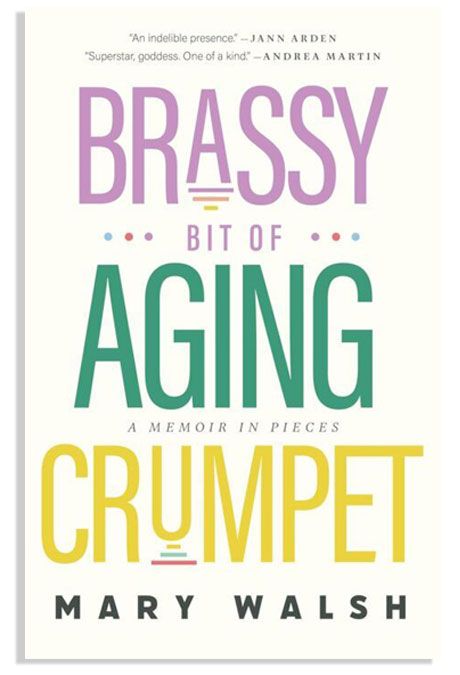
Now that the book, Brassy Bit of Aging Crumpet, has been released, she’s on the fence about the whole thing, “Oh, good, now everybody will know my deepest, darkest secrets and how petty and small and mean-minded I am,” she says. But readers will easily see where her insecurities come from and how now she lives by the mantra, “Be kind, be kind, be kind.” Walsh admits to liking some of what she’s written, including her essay on Canadian history and one on Newfoundlanders’ identity and humour: “God alone knows why we decided to stay on this inhospitable rock and hang on like limpets century after century,” she writes. “Maybe it’s because we’re an ornery, cantankerous, fiercely independent, generous, funny and lovely crowd, and we suit one another.”
Emphasis on funny, especially if you’ve seen Walsh’s decades of work with the East Coast comedy troupe CODCO and the CBC sketch show This Hour Has 22 Minutes. These days, she remains a prolific performer, from her recurring role on the MGM+ supernatural series The Institute (based on the Stephen King novel) to making her own four-season web series, The Missus Downstairs, to performing a one-woman show, A One Night Stand with Mary Walsh, which she recently toured throughout Western and Northern Canada. The stage show features some of her most memorable characters, including Marg Delahunty, Princess Warrior, who in the 1990s and 2000s was known for ambushing Canadian politicians and asking difficult and embarrassing questions. I’ve got to wonder if Marg wishes she could take on certain world leaders today? “What could poor old Marg do?” asks Walsh. “I have no idea what Marg would even say in the face of that [situation down south]. Very scary. I try not to think about it. It’s like when the pandemic was on, after a while I just had to stop listening to what was happening because I was just eating my own liver with worry and concern, and things I could do nothing about.”
To help keep herself on an even keel, Walsh hightails it home to St. John’s whenever she’s not on the road or on location – and settles into a relaxing routine. “I used to garden quite obsessively, starting at 8 o’clock in the morning and still be digging at the end of the day, but I don’t do as much anymore,” she says. “This year, I got in garlic and oregano – that’s really easy to grow. Otherwise, I read, I have my dog and I have my husband – or I should say my husband and my dog.”
Below, we asked the new memoirist to expand on what she’s reading, with our Shelf Life questionnaire.
What’s the best book you’ve read in the last year?
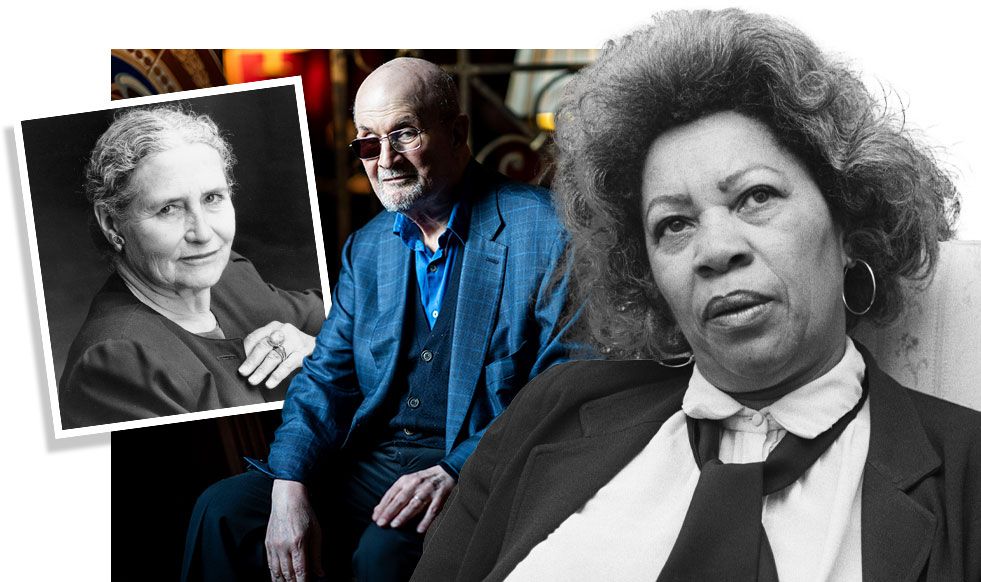
I listened to the audiobook of Salman Rushdie’s autobiography [Knife: Meditations After an Attempted Murder]. I met him at the Governor General’s Performing Arts Awards [when Walsh received the Lifetime Artistic Achievement Award in 2012] because he came to pay tribute to [filmmaker Deepa Mehta] who was also being honoured. This was after the Fatwa but before the attack. It was so alarming listening to the book and knowing all that he’s still facing. I mean, was anyone ever crucified [the way he’s been]? Near the very end of the book, he’s hit by a massive truck in Australia, where his wife and his son are fine, but he’s gotten quite a lot of injuries – so it just goes on and on and on. Anyway, I love his writing, and I hadn’t known that I would love his writing because I’d never read Midnight’s Children or The Satanic Verses. But I’m looking forward to reading those now.
What book are you excited to dive into?
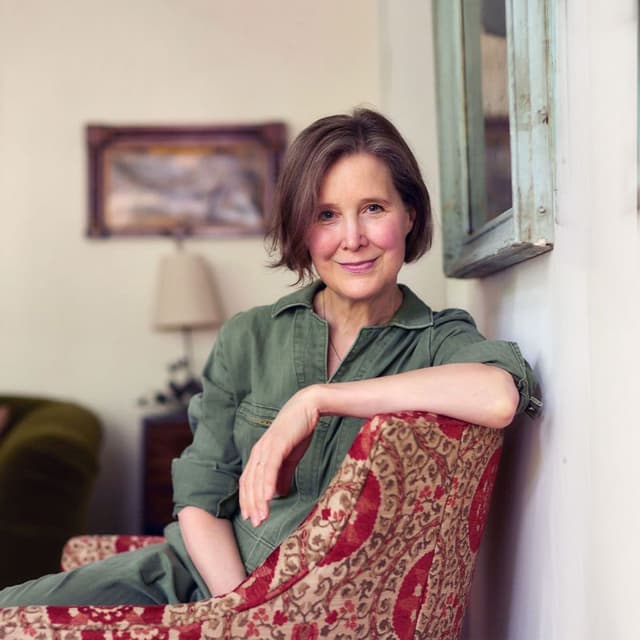
Anne Enright, who won the Booker for The Gathering [2007] has a new book of essays [Attention: Writing on Life, Art and the World] – that is what I’m looking forward to.
What book changed your perspective?
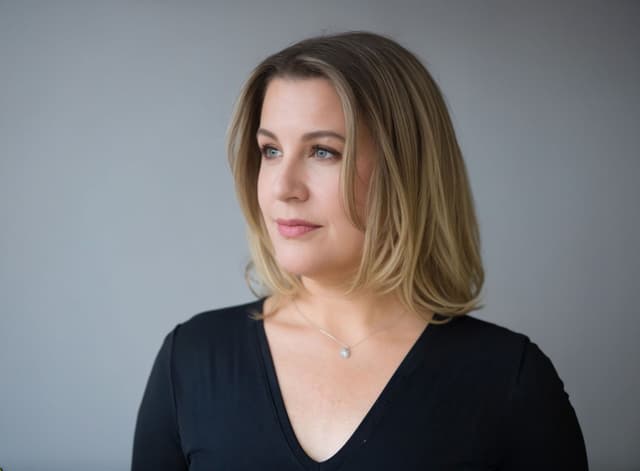
Anna Burns’s book Milkman [2018] which also won the Booker. She’s Northern Irish, and it was one of the most extraordinary books I’ve ever read. It didn’t change my perspective on my life, but it did change my whole understanding of Northern Ireland and what they went through – individually, family to family – the kind of massive life-changing effect the Troubles had on each person. In Milkman, the heroine is a young girl who reads as she walks along the street, which makes everyone very suspicious of her because it’s odd behaviour, nobody else does it – and in wartime circumstances, it was unsettling. Yet, these characters don’t seem to mind people getting plastic to make bombs – that feels kind of normal. When you get in the middle of Milkman, you understand the absolute unliveableness of that kind of sectarian violence, how the norms become different because you are always under threat, you are always in a wartime situation. It’s sort of like Gabriel García Márquez saying what was normal in the town of One Hundred Years of Solitude – how the railway seemed miraculous but little girls being lifted into heaven seemed just normal.
What’s your favourite book of all time?
That’s hard, but there was the The Children of Violence series [1952 to ’69] by Doris Lessing, which had a massive effect on me. I think there were five books in the series and it’s about a young girl, Martha Quest, growing up in South Africa. And by the very last book, she’d moved to London – very much what had happened to Doris Lessing. They are really great books and I don’t think anybody talks about them anymore. In our library in Newfoundland, there aren’t any Doris Lessing books. How can that be? She won the Nobel Prize for heaven’s sake.
If you could have dinner with any author living or dead, who would it be?
I think Toni Morrison before she won the Nobel Prize. She got all heady after that. She had written all these amazing books, you know like stories, and then she got very kind of intellectually … It was like Joni Mitchell after her first albums – not to stop Joni Mitchell from doing that – but she just got very heady too.