While most culinary students arrive fresh out of high school, dreaming of winning Michelin stars or opening award-winning food trucks, there’s often someone in the room with a little more life experience. Maybe they’ve come from a boardroom, a classroom or a construction site. Maybe they’re looking to learn something new after years in the same field. Or maybe they’ve always dreamed of working with food but never found the courage – until now. For these students, the goal of culinary school is different. It’s not just about learning to chiffonade herbs or perfect the mother sauces. It’s often not even about building a resumé – many mature students are retired and have no interest in turning their diplomas into a career. No, for this brand of culinary freshmen, it’s about rediscovery and reinvention. When they walk into the kitchen, they’re putting passion before purpose – sometimes for the very first time.
In the stories that follow, we meet three people who made the leap – leaving behind the familiar and the secure to try something deliciously different. Their reasons and approaches to culinary training may not be the same but one thread unites them: the joy of discovering that change is always on the table.
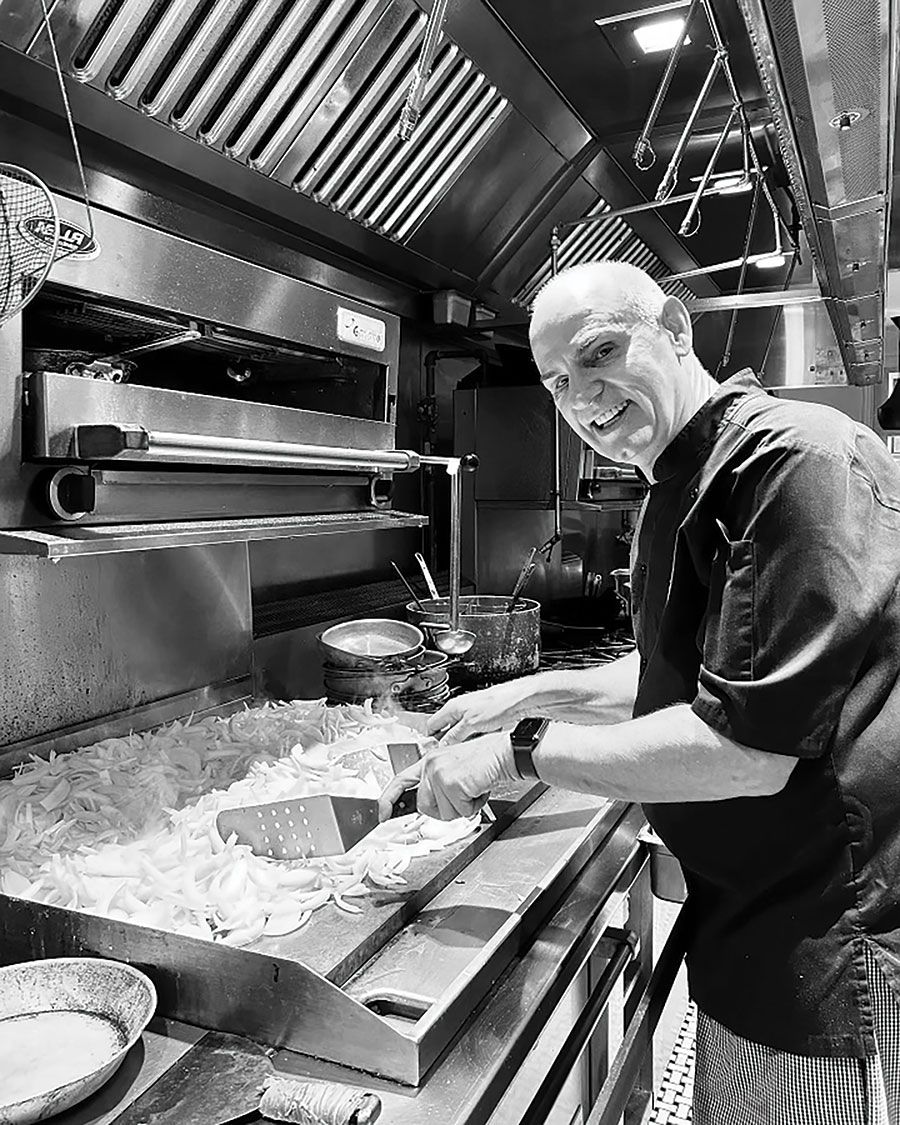
Peter Armstrong, 67
When Peter Armstrong retired at 60, he stepped away from a remarkable career as a senior bureaucrat. Over three decades, he’d led teams across a range of public sectors, including health, long-term care, libraries, archaeology, heritage preservation and the arts. He’d even served as dean of the School of Health Science at Cambrian College in Sudbury, Ont.
With such a full career behind him, you might expect Armstrong to welcome a slower pace – especially after the loss of his beloved Shetland sheepdogs, Maya and Paco. But instead of settling into the quiet of retirement, he chose to rewrite the script – leaning into a lifelong passion: cooking.
At 62, Armstrong enrolled full-time in the two-year Culinary Management program at George Brown College in Toronto – not to launch a new career, but simply for the sake of mastering something he loved.
“I was worried at first,” he admits. “I wondered how a guy in his 60s would fit in with teenagers.” Drawing on his experience in academics, he even brought his concerns to the administration. They advised him to start in May, when classes tend to include more mature students (at George Brown, mature students are age 19 or older and have not completed high school). The strategy worked: Armstrong found he was welcomed with open arms by his peers. “They saw me as their older brother,” he says. After completing his certificate, Armstrong dove even deeper, enrolling in George Brown’s graduate Italian culinary program. He capped it off with a semester in Costigliole d’Asti, a small town in Piedmont, Italy, where he trained at the Michelin-starred restaurant San Marco (that’s right, Armstrong was essentially a 65-year-old exchange student). While the language barrier posed the occasional challenge, the experience was rich with reward.
Though he’d never planned to work as a professional chef, a stage (cooking school speak for an internship) at the National Club – an elegant, historic private club for executives in Toronto – turned into a job offer. Today, at 67, Armstrong works five days a week in the National Club’s busy kitchen. To keep up with the physical demands, he maintains a regular walking and weight-training routine. “I’m not too tired to stand,” he says, “but when I get home? That’s it. I can’t do anything else.”
Favourite Dish: Gazpacho
“Gazpacho soup embodies everything I love about cooking – it’s vibrant, healthy and endlessly adaptable. I enjoy it for its refreshing, chilled profile that’s both nourishing and satisfying. The beauty of this dish lies in its simplicity and flexibility; it’s easy to create and adjust to suit your own taste. But the most rewarding part is gathering fresh herbs and vegetables – whether from local markets or straight from your own garden. It’s the perfect way to celebrate the flavours of the season.”
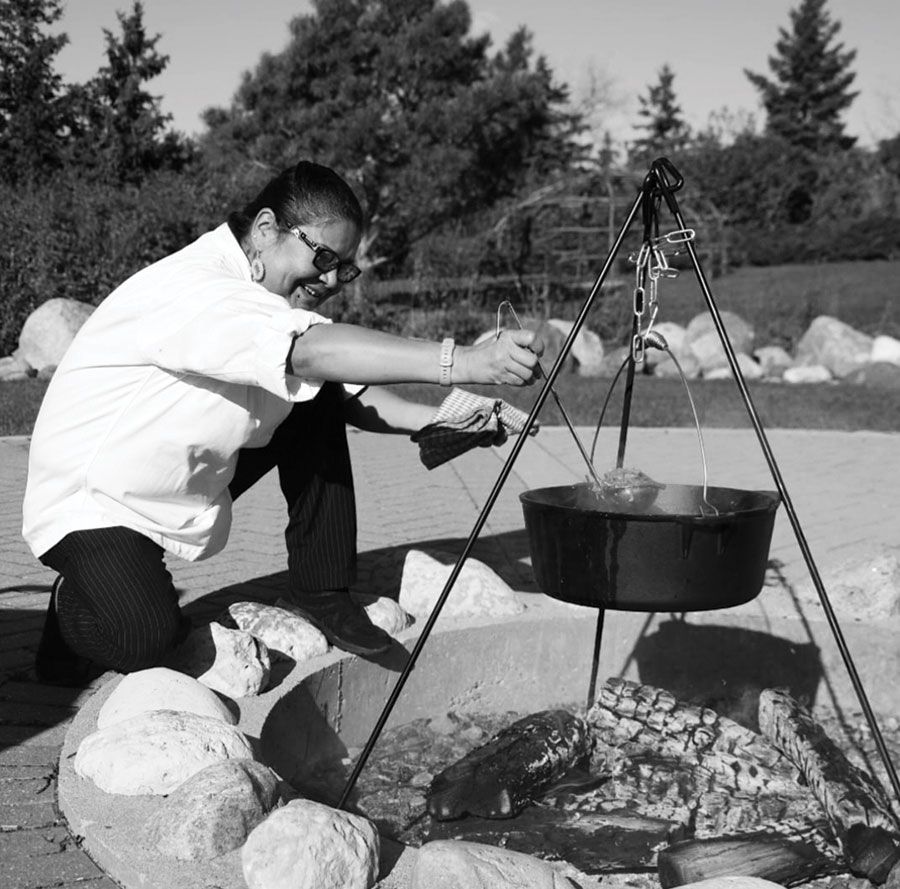
Belinda Johnson, 46
It seems Belinda Johnson has always wanted to take care of people. Case in point: By the time she was seven, she already knew she wanted to be a cardiologist. But life took her in a different direction. By 24, she had four children, and medical school had faded into the background. Instead, she focused on raising her kids and building a patchwork career – working as a receptionist, a teacher’s aide, a health-care aide, a social services support worker and even a licensed security guard.
But with her brood now in their 20s, Johnson has finally carved out time for herself – and for something that’s always grounded her and brought her happiness. “After a busy day with little kids, cooking was how I unwound. It calmed me down,” she says. “I’ve always liked it.”
That love led her last year to enroll in the Indigenous Culinary Arts program at Red River College Polytechnic in Winnipeg, Man. – a program designed not only to teach culinary fundamentals but to honour Indigenous traditions and food preparation. The program even offers Indigenous student navigators, who are like personal guidance counsellors, to help students feel seen and supported.
Once she was installed at culinary school, it didn’t take long for the people around her – friends, family, classmates – to start calling her “chef.” (We can probably thank acclaimed TV show The Bear for bringing that term into everyday vernacular.) “I kept saying, ‘I’m not a chef yet!’ But nobody listened,” she laughs. “They just kept introducing me that way.”
Johnson is from Roseau River Anishinabe First Nation, and when she returns home for the spiritual and healing Midewiwin ceremonies, she now takes charge of feeding hundreds each day – sometimes up to 600 people. The meals, rooted in tradition, are made with time-honoured ingredients like deer, fish and moose when it’s available. “As stressful as it is, it’s also relaxing,” she says of feeding such a large crowd.
Since culinary school, her cooking has evolved in every way – especially in how she feeds her family. “Before, I’d just put a roast in the slow cooker and go to work for the day. Now? I’m searing the meat and doing my reductions. I make so much from scratch. And anything I learn, I pass on to my kids.”
Johnson plans to open a catering business in her community, as a way to blend her training with her Anishinabe roots. But she’s also added a new dream to her bucket list. This fall, she’s heading back to school again – this time for a Bachelor of Nursing. “Being a cardiologist didn’t happen,” she says. “But I still love the medical field. And now I get to go to school with my oldest daughter. I just like to learn new things. It keeps life interesting.”
Favourite Dish: Wild Meat
“I have many favourites, but cooking with wild meat would have to be at the top of my list. Cooking with deer, moose and bear meat is something I have always done. When I learned new spices and different ways to cook the meat, it gave my family new ways to enjoy it. I often make stew with wild meat, and sometimes my grandson will help me season roasts.”
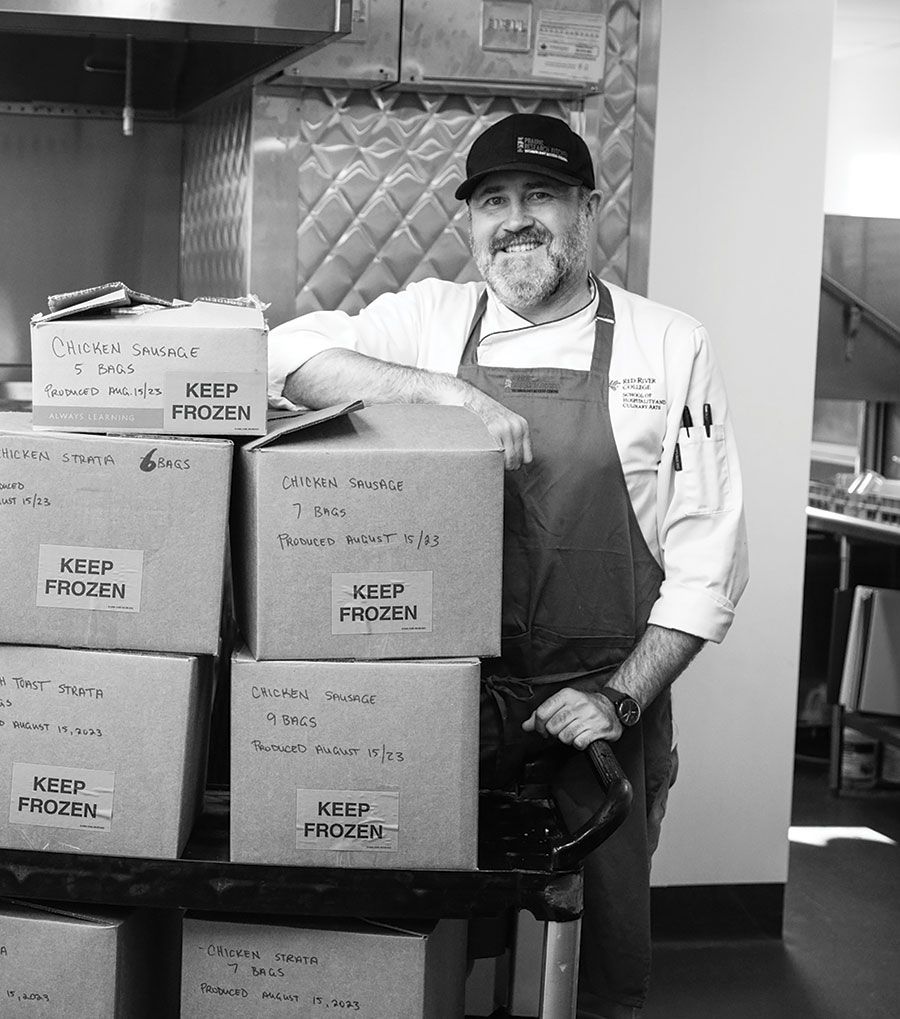
Liam Martin, 47
For two decades, Liam Martin worked in politics and other labour-related fields in Manitoba, ultimately culminating in his position as chief of staff to Wab Kinew – now the province’s premier. It was high-stakes work characterized by long days and shifting goals. Success felt like it came slowly, if at all.
But at home in his kitchen, things were different for Liam. “I’d come home to a pile of raw ingredients and an hour later, there was a nice meal,” he explained of how much cooking satisfied him. “I got that sense of accomplishment that I was lacking after a day of dealing with files and pushing paper.”
When the pandemic hit, and lockdowns kept him at home, Martin’s love of cooking deepened. Nightly dinners for his bubble of four – his partner and another couple – became a ritual that brought him real joy. He started taking online classes with Minneapolis chef Gavin Kaysen, whose restaurant Spoon & Stable was temporarily shuttered, and began imagining a future where food wasn’t just an outlet, but a career. Maybe, one day, he’d even open a restaurant of his own.
Worried about whether his body could keep up with the physical demands of kitchen life, he reached out to a chef friend and landed a trial shift on the line at a chain pub. To his surprise, he kept pace with the younger staff – and he loved the heat, the adrenaline, the cadence of service. Trading business suits for chef whites, he enrolled in Red River College Polytech’s Culinary Arts and Baking program (the same Manitoba school that Johnson, pg. 98, attended.)
Martin’s resumé, outlining 20+ years in politics, was amusing to his culinary instructors. In a sea of CVs that still listed part-time jobs and high school clubs, his track record stood out in a big way. But it was his intention that mattered most. He wasn’t just learning to cook – he wanted to lead. In group projects, he asked to be paired with students who needed extra support, hoping to better understand how to work with the next generation. “I knew if I was going to be a leader in a kitchen, I had to learn how to get the most out of kids who might have different attention spans or challenges with reading or comprehension,” he said.
In the end, culinary school turned out to be full of the unexpected: camaraderie, intense challenges, tough-love instructors who would quietly sabotage dishes – an oven turned off here, an intentionally broken sauce there – to help students learn to handle pressure. But Martin came from a world where missteps could land on the front page of the paper, so he appreciated these crucial lessons.
These days, Martin’s dream of owning a restaurant has evolved. Though he’s on track to earn his Red Seal certification (a national standard for skilled tradespeople in Canada), he’s now working with the hospitality division of a national restaurant group as a culinary specialist, developing menus and training staff. It’s a role that blends his love of food with his passion for helping others grow.
Favourite Dish: Grilled Salmon
“Cedar-planked salmon takes me back to my first favourite culinary memory. I grew up on Gabriola Island in B.C.’s Gulf Islands and every summer, the community would gather for a feast of grilled salmon cooked on massive makeshift grills made of cinder blocks and metal. Now that I live in Winnipeg, I usually substitute salmon with Arctic char. The smoke from the cedar plank imparts a lovely flavour, but the smell of the cedar also serves as a reminder of those memories on the island.”
A version of this article appeared in the Summer 2025 issue with the headline ‘The Second Course,’ p. 96.