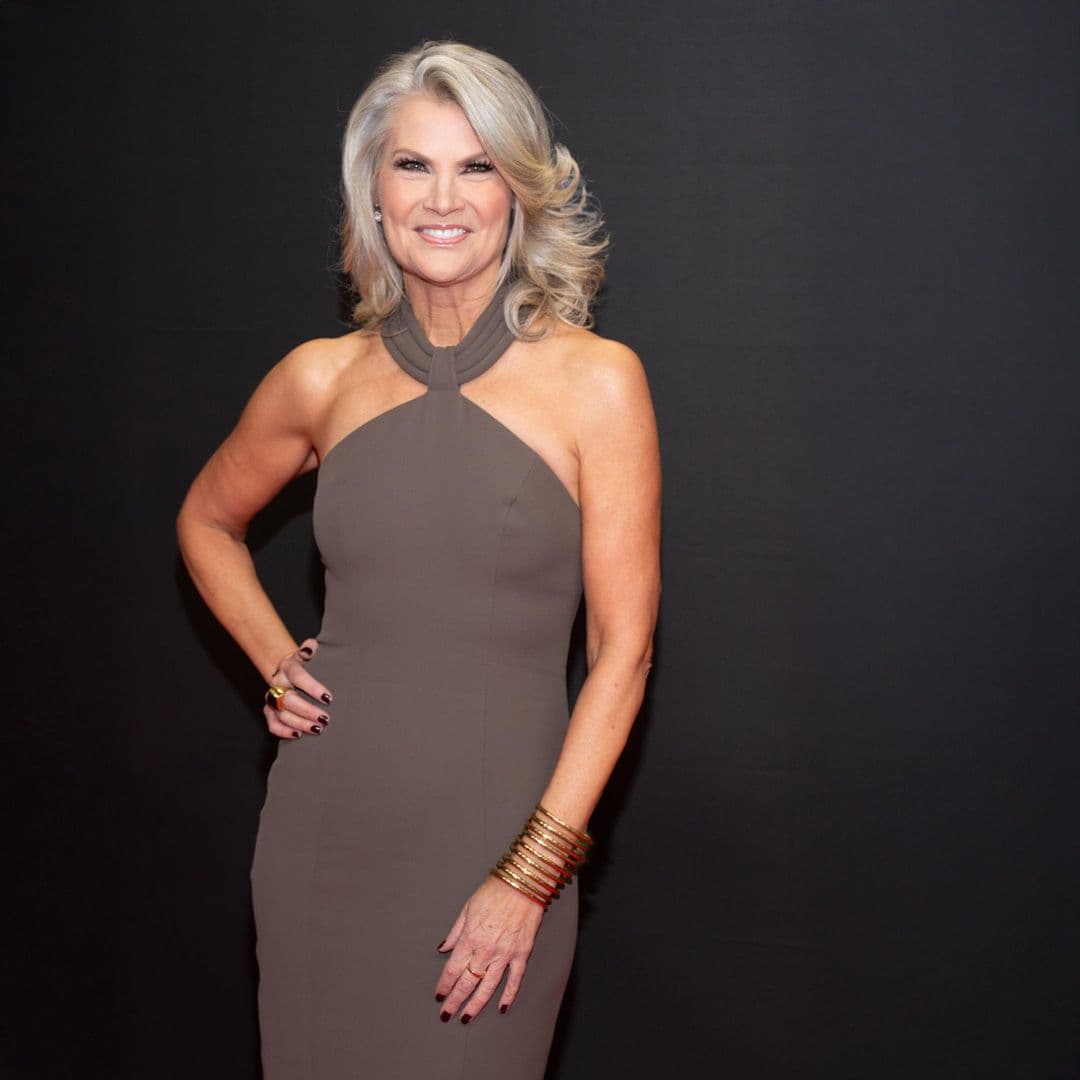
Christine Simpson has been a familiar face to hockey fans since the late 1990s, when she first broke into a TV broadcasting world that was still largely an all-boys’ domain. But by channeling her strong passion for hockey and relying on her exceptional ability as a storyteller – drawing out insights into players’ lives through interviews and features – she opened the door for the many women who followed in her path. Simpson was at Rogers Sportsnet on day one, in 1998, and remained with the network for ten years. After taking on other career opportunities, she rejoined the Sportsnet team in 2011 – a tenure that ended abruptly in 2024, after a quarter century of top-notch reporting (which included being part of the first all-woman hockey broadcast in 2020).
In the wake of Rogers letting her go, the Toronto Star ran an article describing her as a “unicorn,” “pioneer,” “trailblazer” and “idol in the industry,” and insinuated that her age may have played a role in Rogers’ decision. But Simpson wasn’t on the bench for very long. This year, she scored a new gig as features reporter on Prime Monday Night Hockey. And just as she’s done throughout her career – which includes stints in modelling, fashion PR, as marketing manager at the Hockey Hall of Fame and as an in-arena host – she’s facing up to new challenges and adapting to new roles, this time at the forefront of the lucrative sports-streaming wars waged by Amazon, Apple, YouTubeTV, Fubo and more.
Switching from interviewer to interviewee, Simpson tells Zoomer why, at 61, she’s thrilled to be back in the broadcasting arena, telling new stories to a younger generation of fans and pushing back against the notion that older TV presenters carry a best-before date.
Home Base
Toronto
Back Behind the Mic
It feels wonderful to be back in broadcasting – this is where I belong. I’ve often said that being at a rink and around hockey is where I’m most comfortable. I knew I wasn’t done yet [after Rogers let her go]. I felt like I was still at the top of my game.
An absolute legend of the game.
Cliff Fletcher joins @MsChrisSimpson to discuss classic moments from his career. pic.twitter.com/0sKP1KzNZS
— Sports on Prime Canada (@SportsOnPrimeCA) November 4, 2025
Count Your Blessings
I am so grateful to Prime for giving me this opportunity. They took a look at a 61-year-old woman and saw the experience and knowledge that I bring to the table, instead of saying, “Oh boy, yeah, she’s done.” They have an appreciation for the storytelling and features that I do. They feel it’s an important part of their content, and that it will expand their broadcast.
Love of the Game
My passion, my knowledge and my love for hockey – it really began when I was a little girl. I played baseball and volleyball, and I was on the track team, but girls didn’t really play hockey. There weren’t many girls’ hockey teams as there are now. But growing up in a hockey family [she’s the middle sister between hockey-playing brothers Dave, who had a highly successful junior career, and Craig, who won two Stanley Cups with the Edmonton Oilers and is now an analyst for Hockey Night in Canada] – my entire youth was spent at hockey arenas.
Changing on the Fly
The broadcast of the game really hasn’t changed: you have the play-by-play announcer and the colour analyst. From the viewer’s perspective, though, technology has changed things with the different cameras, the sounds and the replays. Nowadays, for people who watch the game – especially younger viewers – there is so much choice out there, and you have to find ways to keep them entertained. What can I do to keep viewers watching? Instead of people going to the fridge during the intermission, maybe they’ll stay to hear my feature on a popular player, or on a player they want to learn more about.
One Thing Led to Another
As a kid growing up in London, Ont., and watching Hockey Night in Canada every Saturday night with my family, there were no women on the broadcast. I just didn’t see an opportunity to play hockey, let alone broadcast it. So when I graduated from the University of Western Ontario, I moved to Toronto and became involved in fashion. I modelled for a while and then got into marketing and PR, ending up as the marketing manager for [Canadian designer] Roots.
But Hockey Kept Calling
In 1992, when I was hired as marketing manager at the Hockey Hall of Fame, my worlds collided: my love of hockey and my profession. At the Hall of Fame, we had media outlets from all over the world coming to do stories, and I would take them around, give them a tour and talk about the game, the displays and the Stanley Cup. The TV producers would say, “You really know your hockey and you seem comfortable in front of the camera. Have you ever thought about broadcasting as a career?” Then, in 1995, Bob Stellick, who was head of marketing for the Toronto Maple Leafs and worked closely with the Hall of Fame, asked me to take on the role of in-arena host at Maple Leaf Gardens. I didn’t audition for it – I didn’t even know that it was a job! But the game was changing. The Toronto Raptors had come to town and the NBA had a lot of in-game entertainment, so the Leafs realized they had to up their promotions and presentation.

Trial by Fire
In 1998, when Rogers Sportsnet was launching as a brand new network, so many people came up to me and said I should try it out. So I put together a VHS tape of my work on TV and as the in-arena host – and lo and behold, they gave me my shot. Learning the broadcast side of the game, trust me, was trial by fire. I had to figure out how to put a story together, how to write a script and how to cut it. It was definitely challenging at the beginning, but I always believed it was something I could do. Everything I did leading up to it all kind of made sense, and each stop along the way helped me to do that next job.
Last night we made history with the first all-female broadcast of an NHL game on Sportsnet and I couldn’t be more proud of @CassieCampbell & @leahhextall & the legion of women in our production & technical crew. It will forever be a highlight of my broadcasting career. pic.twitter.com/Ce5c4mbEoe
— Christine Simpson (@MsChrisSimpson) March 9, 2020
On Being a Role Model
I’m just so proud to be continuing to do TV, and if other women are inspired by seeing me, that’s just a nice bonus. When I started in broadcasting, I looked up to the women print sports journalists like Mary Ormsby or Christie Blatchford or Rosie DiManno and thought, “Good for them!” I realized when you’re around the dressing rooms, you need to have your elbows up – a lot. But because I’d been around the game so much, I wasn’t intimidated by being one of a few women – often the only woman – in a dressing room. It was a place that I felt comfortable. I’ll say that the players, coaches and managers have always respected me for what I do. There are so many women now in sports in all capacities, not just broadcasting. And when young girls and women ask me for advice on getting into the broadcasting industry, I always tell them – you are going to be living this job 24/7 and working every weekend of the hockey season. If you don’t have the passion, find something else to do.
Putting Ageism on Ice
I want to continue to do what I’m doing for, you know, as long as I possibly can. But we know there has always been a double standard when it comes to women of a certain age, not just in broadcasting but in many industries as well. I’ve just come back from Scottsdale, Ariz., where I interviewed Cliff Fletcher. He’s 90 years old, started in hockey 70 years ago, and is still a senior advisor for the Leafs. It’s important to show that there are people in sports and broadcasting who are working at an age that defies societal standards. And they’re out there doing a good job. I want to push back against the best-before date by showing people that you can do this for as long as you want, for as long as you continue to produce quality work.
—As told to Peter Muggeridge