
Employers are increasingly investing in training to prepare their employees for artificial intelligence (AI). Training budgets are growing, and “upskilling” has become a common response to rapid technological change.
AI adoption has moved quickly. In March, 36 per cent of Canadian workers said they had used generative AI tools as part of their main job or business in the past year, according to Statistics Canada. About half said they were familiar with how the tools are used, while 93 per cent were aware of generative AI.
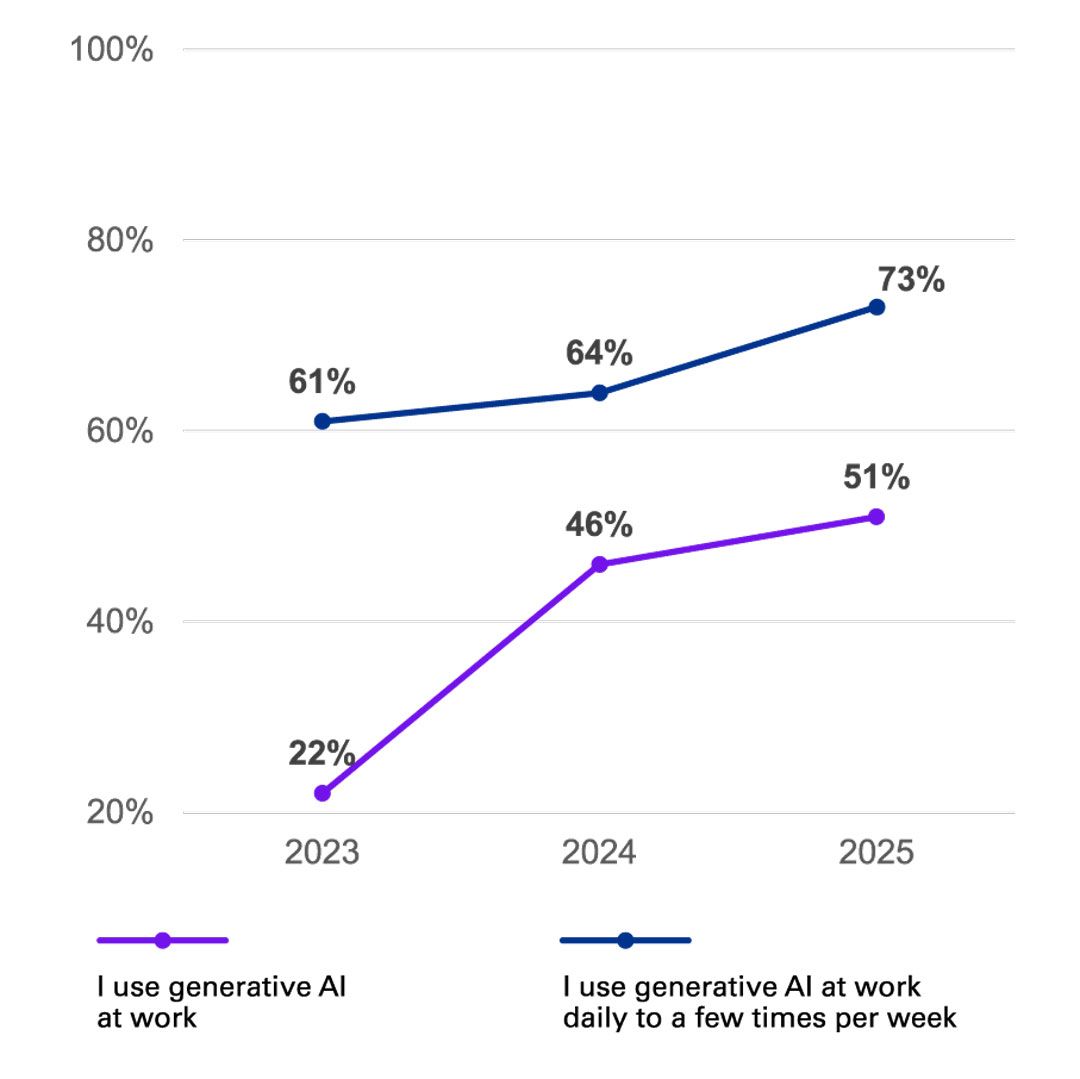
Workers are also signalling that they need help keeping up. A recent survey found that 83 per cent of Canadian workers want or need to upskill to use generative AI effectively.
Employers seem to be responding. A recent survey by the Canadian Federation of Independent Business found 78 per cent of Canadian businesses planned to maintain or increase training spending in 2026.
But for one large and growing segment of the workforce — workers over 55 — that approach might not work. My doctoral thesis on older workers suggests that for experienced employees who are already burned out, more digital training is not always the answer.
When training is poorly timed, overly complex or insufficiently supported, it can become an additional job demand. It erodes workers’ sense that they can keep doing the job and can push them closer to leaving it altogether.

Workers Employers Can’t Replace
Canada’s workforce is getting older. New Statistics Canada data show the share of workers aged 55 and older within the average organization nearly doubled between 2001 and 2022, from 9.3 per cent to 18.8 per cent.
As large numbers of experienced workers approach retirement and labour shortages persist across many sectors, retaining older employees with valuable skills and experience has become increasingly important.
Since 2000, the total number of mature workers in Canada — those aged 55 and older — has grown by 184 per cent, far outpacing growth in any other age group.
Experienced workers are vital human knowledge repositories in many organizations. Losing them early means losing institutional knowledge, mentorship and hard-won expertise that is difficult to replace.
What My Dissertation Found
I conducted two studies to understand how technological change shapes older workers’ experience on the job.
In the first, I carried out a systematic review of the existing research, analyzing 121 articles. That review identified 14 significant gaps in what researchers currently know about technology’s effect on aging workers.
In the second study, I surveyed 361 participants to test how burnout and perceived work ability interact to shape older workers’ intentions to retire. I built the analysis around job demands-resources theory, a widely used framework in occupational psychology that treats job demands and the resources available to meet them as the two forces that determine employee well-being.
I found that burnout weakens workers’ sense of their own work ability, which in turn pushes retirement intentions earlier. Technological training moderated that relationship; how and when it was delivered mattered as much as whether it happened at all.

When Training Can Hurt Instead of Help
Learning new systems is not effortless, even when the change is ultimately for the better. Employees must invest time and mental resources to learn new systems and incorporate them into established routines.
Researchers call the toll this takes “technostress” — a term coined by American psychologist Craig Brod to describe the anxiety and fatigue that come with adapting to new technology. When training adds to these demands rather than reducing them, it may contribute to burnout.
That anxiety isn’t unique to older employees. A TD Bank survey found only 37 per cent of Canadian workers said their employer had provided adequate training. What differs for workers nearing retirement is what’s at stake: burnout that erodes work ability feeds into a decision younger workers don’t yet face — whether to leave the workforce altogether.
Burnout, in turn, undermines the very training employers are counting on. Research on training transfer shows that whether employees actually apply new skills depends not just on the quality of the instruction but on their motivation and capacity to use it once they’re back at their desks. Workers running on empty have less of both.
That erosion feeds directly into retention. Employees experiencing burnout are more likely to consider leaving their jobs. For older workers, leaving may include retiring earlier than planned. A training rollout that ignores how stretched employees already are can end up accelerating the departures it was meant to prevent.
What Works Instead
Employers facing labour shortages and an aging workforce are right to invest in training; the mistake is assuming any training will do the job.
The difference between training that keeps older workers on the job and training that pushes them out often comes down to pacing. Effective training is designed around not just what employees need to learn, but what they can realistically absorb and apply given everything else on their plate. In practice, this means a few things.
Spreading instruction out over time, rather than compressing it into a single intensive push, keeps learning from competing directly with an already full workload.
Breaking complex material into smaller pieces, building in guided practice and giving employees room to experiment with new tools before they’re expected to perform all help training land on people who have the bandwidth to absorb it.
Easing the surrounding pressures — workload, deadlines, expectations — also gives employees the capacity to take the new information in.
When designed appropriately, upskilling can build on the knowledge and experience older workers already possess while helping them adapt to technological change.
Before rolling out a new digital or AI program, employers should ask not only what employees need to learn, but whether they currently have the capacity to learn and apply it. My research suggests that distinction determines whether upskilling becomes a tool for retention or, inadvertently, a nudge toward the exit.
Postdoctoral Researcher, Memorial University of Newfoundland. | This article is republished from The Conversation under a Creative Commons license.