

Remember the first time you read Anna Karenina…
For German ballet choreographer Christian Spuck it was on a Caribbean vacation more than 10 years ago. “I had to be dragged out of my room to go to the beach because I was so caught up with this book,” says Spuck, 55. “It’s amazing how ahead of its time it was.”
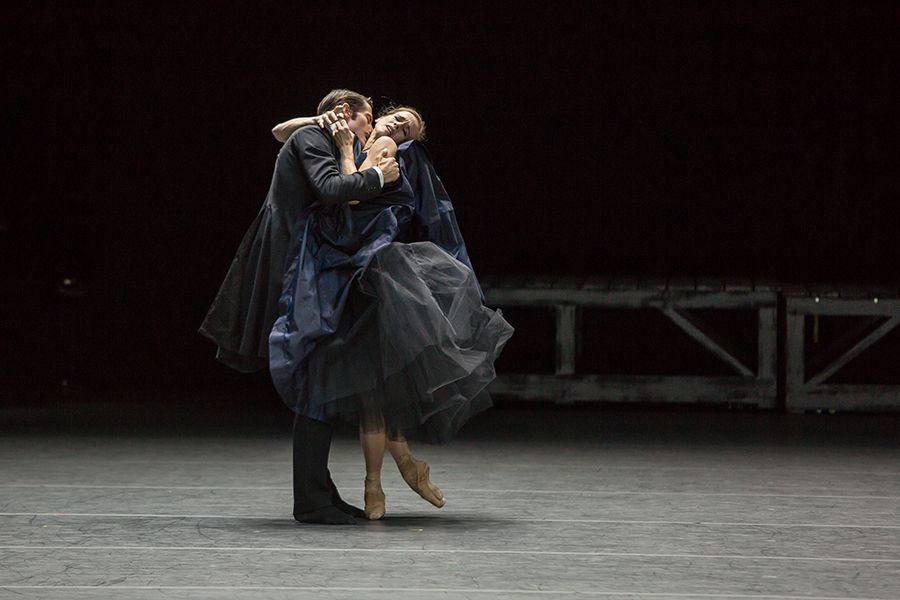
Soon after, in 2014, Spuck mounted his production of the classic Russian novel at Zurich Ballet, where he was artistic director at the time. (He currently heads up Staatsballett Berlin.) The success of Spuck’s Anna Karenina – a lushly costumed, dramatically staged two-hour adaptation of that door-stopper of a book – has been phenomenally received, with ballets in Moscow, Seoul and Munich inviting Spuck to relaunch it with their companies. And now it makes its North American premiere in Toronto with the National Ballet of Canada at the Four Seasons Centre for the Performing Arts from June 13 to 21.
The choreographer is known for his narrative ballets, operas and edgier dance productions like Winterreise [2018], an abstract interpretation of Schubert’s song cycle, as well as what’s been called an “audacious” un-Disney Sleeping Beauty [2020]. And he cites a particular Canadian dancer turned artistic director for believing in him.
“Reid Anderson was the director here at the National Ballet of Canada [from 1989 to 1996] but before that he directed Germany’s Stuttgart Ballet when I was there. He was my mentor, he was my father. He made me a Resident Choreographer and he supported me for 14 years in Stuttgart. I learned a lot from him.”
From his hotel room in Toronto, just days before the premiere of Anna Karenina, Spuck talked to Zoomer about finding the right music to bring this classic to life, the three dancers playing Anna and the beauty of older ballerinas.
ZOOMER: What has been your experience collaborating on Anna Karenina with this Canadian company of dancers?
CHRISTIAN SPUCK: We have now had five really, really long rehearsals, and I see them growing every day as they try to understand the slightly different approach we have with this production. They’re searching and they’re inspired, and I also get inspired by them. So we’ve adapted the choreography in ways that they can shine on stage. It’s a very nice dialogue happening.
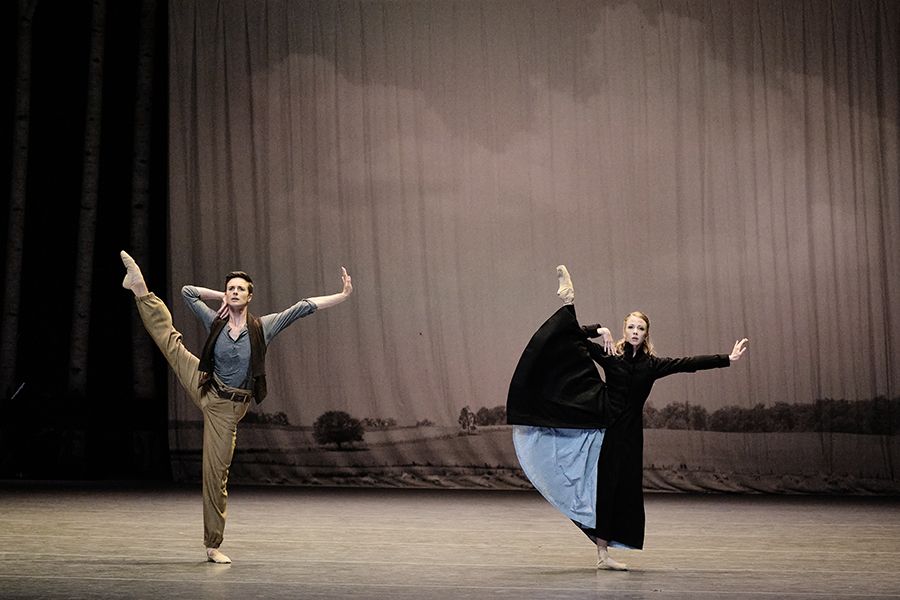
Z: You are working with three prima ballerinas for the lead role of Anna. How will that work?
CS: They are three beautiful ballerinas, but they are completely different. Heather [Ogden] has a lot of experience, and Genevieve [Penn Nabity] is very, very young, and Koto [Ishihara] is very dramatic. So if somebody likes the production, I can only recommend watching it three times.
Z: You speak of Heather’s experience. Now 45, she’s been a principal dancer for 20 years. What do mature ballerinas bring to the stage?
CS: In general, I like experienced dancers. When we create any kind of form of music theatre, whether it’s ballet or opera, it always says something about us as human beings. It raises a lot of questions about who we are. To be a little bit older and have more life experience allows you to dig a little bit deeper – those artists have something very personal to reflect on. I did a short dance movie and a full-length production with Marcia Haydée. She was a very famous ballerina from Stuttgart, and she was already way over 60. It was amazing to work with her because in such little gestures she could say so much – whereas young dancers have to work a lot to bring across that same thing.
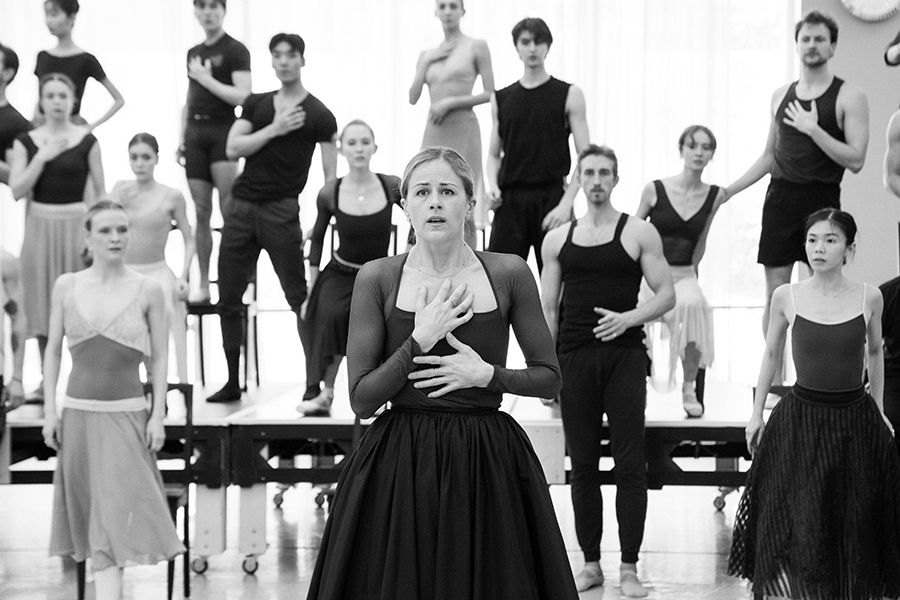
Z: You mentioned that you there’s “a slightly different approach” to your Anna Karenina. Can you explain what that is?
CS: I think it’s now almost 10 or 11 years since we first launched it at Ballet Zurich in Switzerland. And at that time I found that often in classical storytelling productions, like Romeo & Juliet or Sleeping Beauty, it’s all about the dancer and the technique. The story is just there to make the dance shine and to put the emotions on stage. We tried to turn this around a little bit. For us, what’s important is the story, the conflict and the issues the characters have on stage. We would like to use classical music and dance material in order to express this. So now in the rehearsal process, I often ask the dancers why they are doing this step. Normally in classical ballets, the answers would be it’s a key arabesque and I want it to shine, I want it to be as beautiful as possible. But here we’re trying to transport more of what the book is actually about, finding things that inspire us in the story that we can tell the audience with movement.
Z: Anna Karenina has been turned into ballet at least seven times. Does the story feel like a perfect match for dance?
CS: It is and it isn’t. To be quite honest, after reading this book for the first time I was so drawn to make a ballet creation out of it – and there were already several existing so it wasn’t a very original idea. But it’s very haunting and it’s very dramatic. It also has to do a lot with our times. We still see that women, especially, are caught up in rules which have been set by society, and they’re not allowed to actually follow their inner feelings or how they wish to live while men are much more allowed to do that – which I find absolutely shocking. But on the other side, the moment you decide you want to make a ballet out of this amazing book, it’s impossible. It has so many levels to it: it is so philosophical, it’s political, it has so many views about society, about how to live. And it’s basically an autobiography about Tolstoy as the character of Levin. So you can’t put this all on stage. A ballet production can only be inspired by the book.
Z: While some other choreographers have looked to Tchaikovsky to score Anna Karenina, you use early 20th-century Russian composer Sergei Rachmaninoff and late 20th-century Polish composer Witold Lutosławski. How did you come to this?
CS: When you decide to bring a new full-length production up, the most complex work is choosing the music. I believe when the music is on the right track then you have 50 per cent of the production already safe. I love the music of Rachmaninoff, so I worked through his entire oeuvre and especially his piano works. It’s immense, he composed so much. But I realized while it’s very beautiful, romantic music, it was missing a little bit of the pain and the agony and the despair – the fights the characters are going through in the story. So I found this music from Lutosławski, especially his piano concertos, and it almost sounds like Rachmaninoff got deconstructed and put together new. Together, the two artists’ works create a dialogue and a good contrast to show what Anna’s going through.
Z: And there will be a live pianist?
CS: Yes, we have a big orchestra and the solo concert pianist is going to be in the pit. Actually, at the beginning of the show the piano player is on the stage playing a little Rachmaninoff then goes down into the pit and then goes back on stage at the end. There’s a feeling that the pianist is also a character who plays this immense work. It’s quite a ride for the soloist.
Z: This production was one of your biggest successes and you’ve continued to push boundaries with your work. Does Anna Karenina still resonate with you, creatively?
CS: It’s great that other companies are still asking for it and that it continues to work well. So while my more recent work is a little bit more edgy, this production has made me proud. There’s a scene where Anna and her lover Vronsky are clearly making love for the first time and it’s kind of shown as the moment where her marriage to Karenin is destroyed – that’s very visible on stage. When we performed it in Moscow for the first time, the male audience members started to boo. They didn’t boo the production, they booed this woman making this decision. Then three years later, Ballett Zurich was invited to perform this production in Istanbul in Turkey, a Muslim country. We came to the same moment and I got really nervous. But that time, the women in the audience started to applaud. They were telling the performers and creators that yes that’s what we want – that a woman has the freedom to follow her love and follow her passion. That made me proud because suddenly I had the feeling that this production has something relevant and it’s really reaching people.
RELATED:
In Dancing With Diana Her Former Ballet Teacher Presents a Secret Friendship
Flamenco Dancer Maria Diaz, 65, Shares Her Fitness Secrets and Philosophy of Life