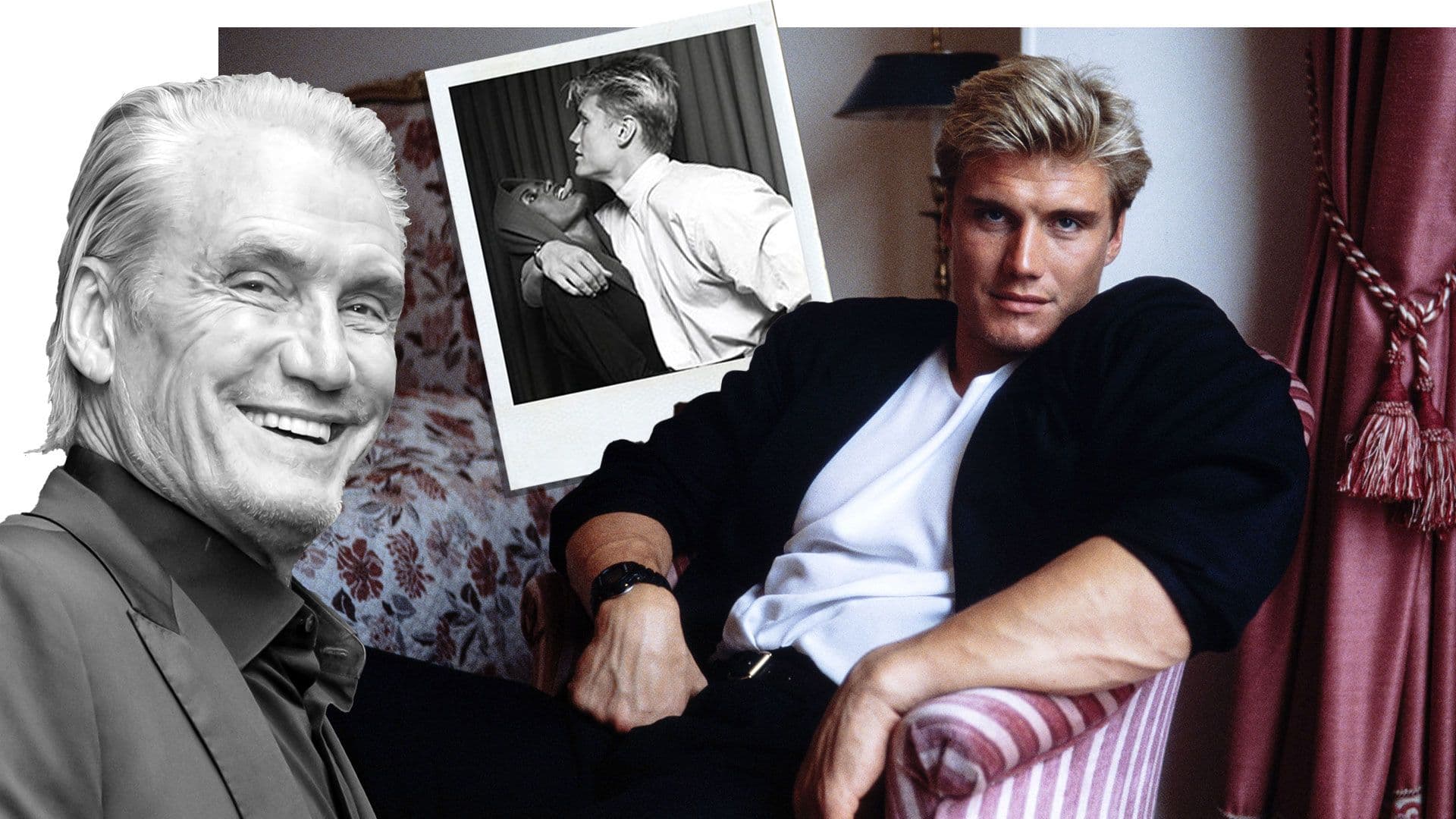
He was the “bodyguard” who was actually a Fulbright scholar; the dishy blonde “boytoy” who also happened to be a chemical engineer and something of a philosopher king.
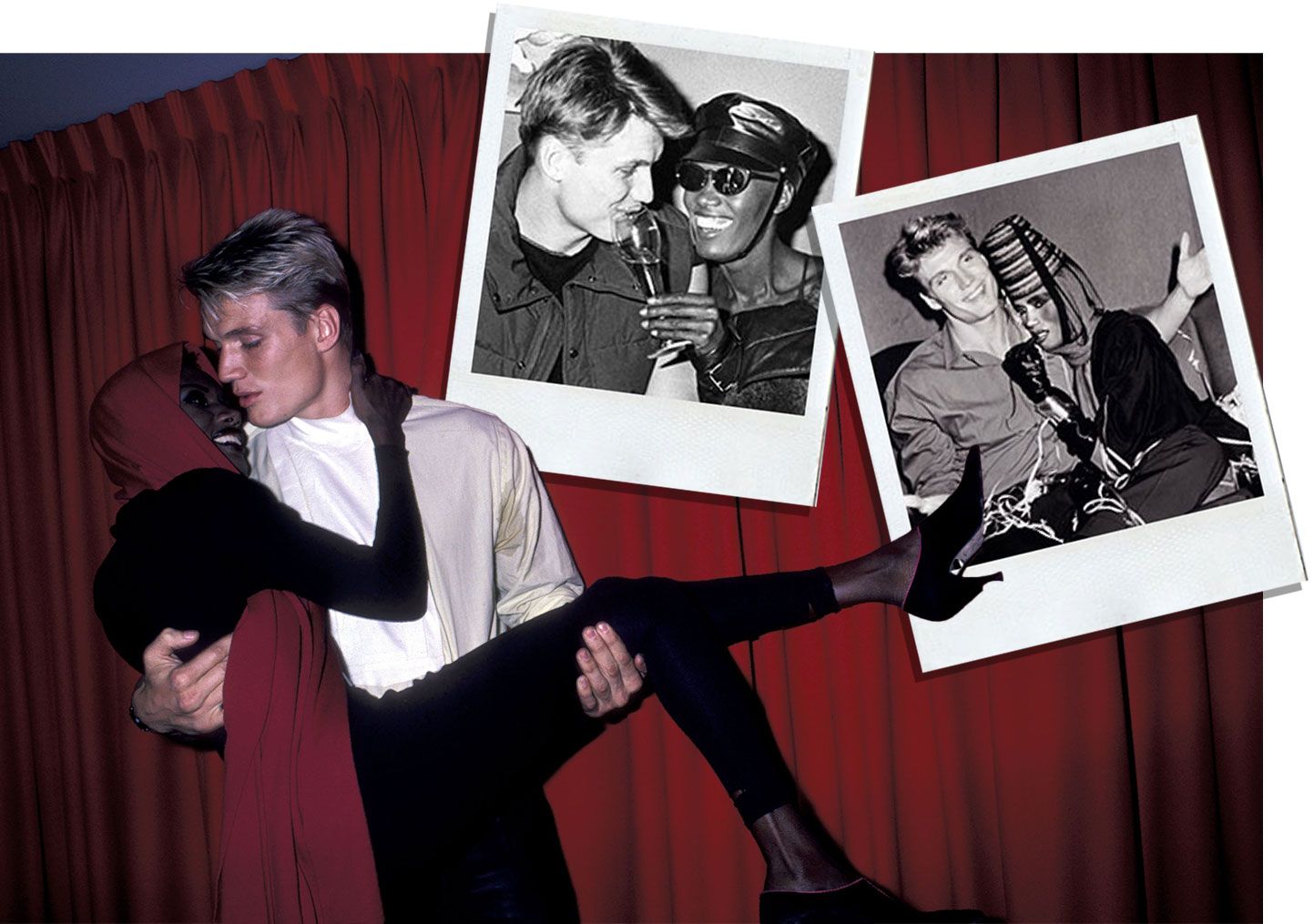
Dolph Lundgren has spent decades defying expectations and bridging different worlds. Emerging from his homeland of Sweden, he later erupted as one of the biggest action stars of the ’80s celluloid universe. But it’s his early New York City days that prompt the gauziest flashbacks for me, courtesy of superstar chanteuse Grace Jones. Her guard, first; then, her lover.
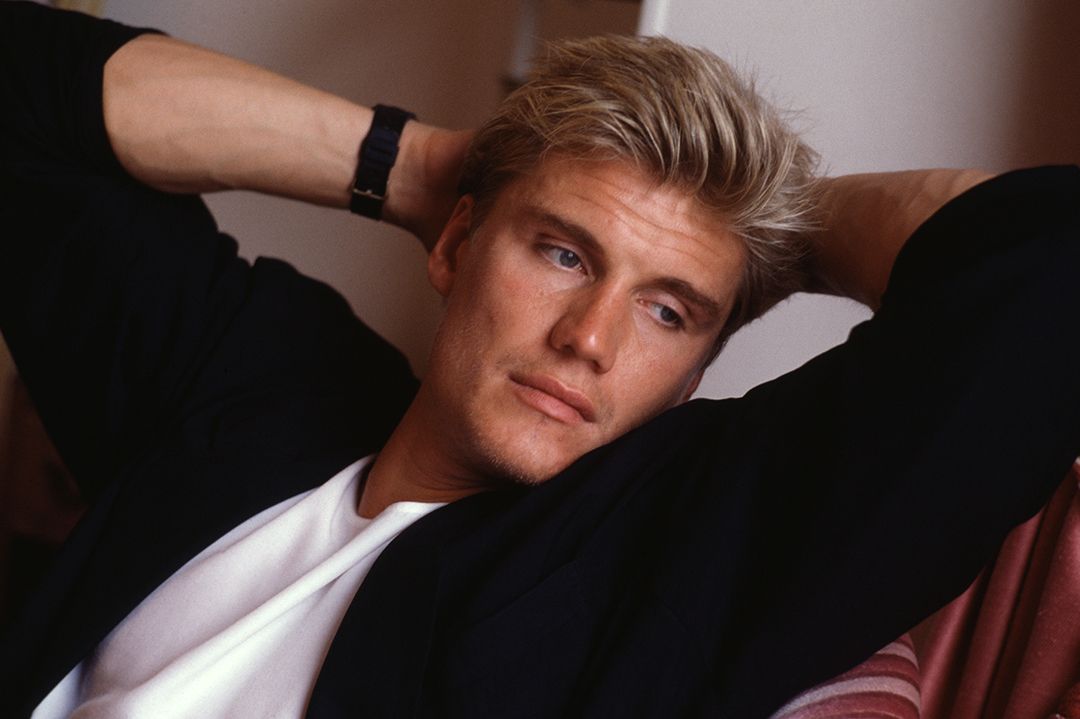
Together they absolutely formed one of the most glamorous twosomes of that decade’s fashion and nightlife milieu (right up there with the likes of Jack Nicholson and Anjelica Huston, or, say, Bruce Willis and Demi Moore). Both drop-dead gorgeous – whilst giving a dash of ebony and ivory – Dolph and Grace could certainly make a photo sizzle. By night, Lundgren was caught up in a swirl with the likes of Keith Haring, Bianca Jagger and Andy Warhol; by day, he was being immortalized, along with Grace, in an iconic series of Playboy portraits by legendary photographer Helmut Newton.
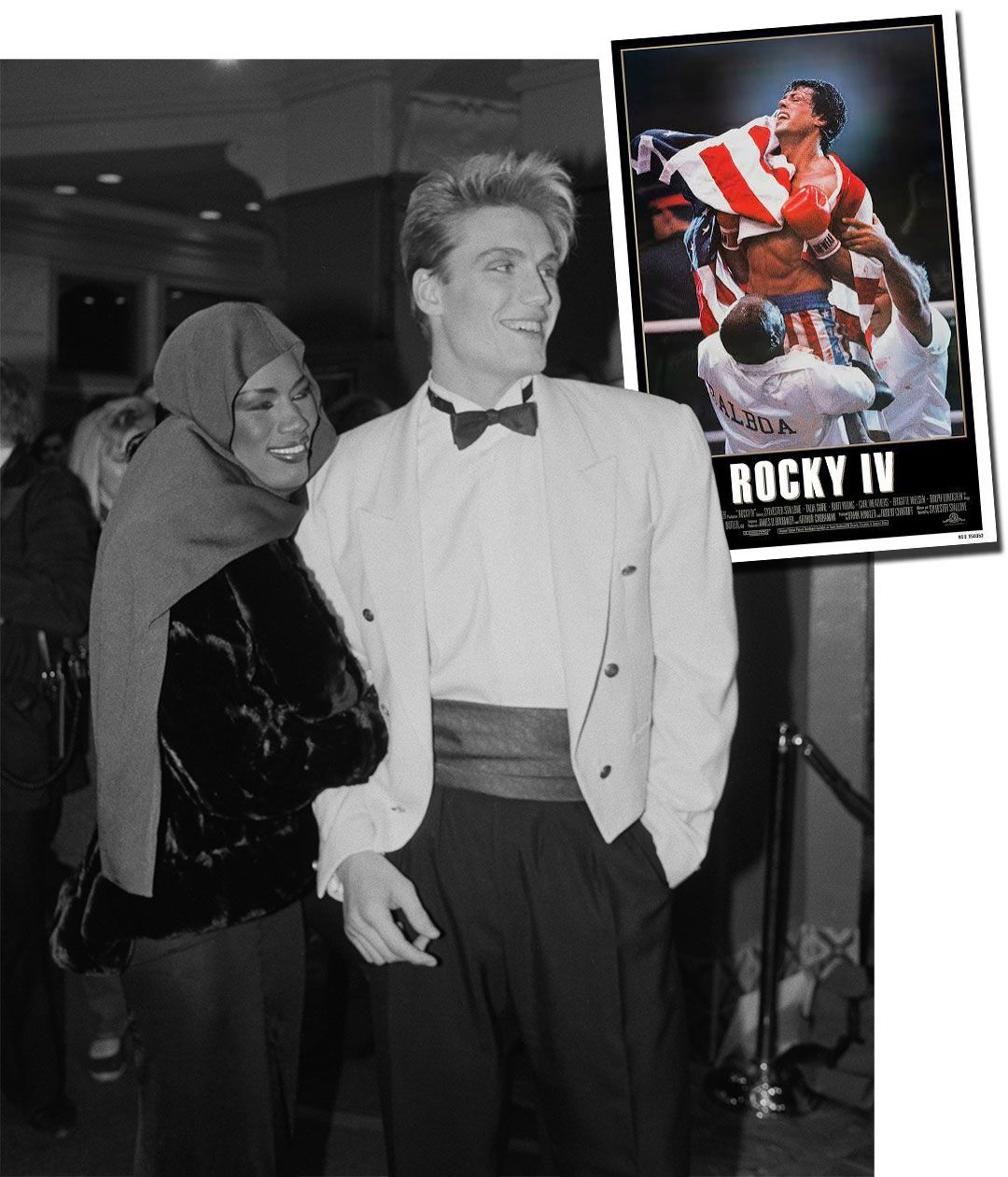
And this was all before he became best known as Ivan Drago, famously squaring off against Sly Stallone as Rocky Balboa in the 1985 movie Rocky IV.
Little wonder that in Dolph: Unbreakable, a moving new documentary about his journey, Lundgren quips: “I’ve lived five lifetimes in one.” In it, the 68-year-old talks about living “as a Viking,” but also gets more vulnerable than ever, taking us into his very personal battle with kidney cancer – initially, he was told in 2020 he had only three years to live.
Second chances, failed relationships and roads taken! He gets into it all, sharing, “I was a movie star, but I was miserable half the time.”
When in Toronto recently, the martial arts dynamo and thinking man’s stud opened up with Zoomer.
Zoomer: The title of your documentary is Unbreakable, yet this is only half-true because the story is clearly also about the cracks in your life. Ones we all carry and have. Tell me about how this project took shape?
Dolph Lundgren: I have always been pretty open about my life – especially since 2009 when I did an interview in Sweden about my dad [and the physical and emotional abuse Dolph experienced]. Then, later, I did a TedTalk. When I did this documentary interview, I decided to just put it all on the line. How it all happened! Being vulnerable? To me, it’s one of the reasons I became an actor – why I am not a chemical engineer. I like to be vulnerable; I like to share my emotions with other people.
Z: I understand, though, that even the filmmakers didn’t know about your cancer until sometime into the process – and that you and your wife discreetly shot your own footage from the hospital?
DL: About a year and a half into the project, I told the producers. My treatments were not going so well, and I didn’t know if I was going to make it. If I would even see this documentary come out. It was quite tough. A year later, I changed my treatment because I was misdiagnosed. Luckily, I got a second opinion. All those things were tumultuous for me in my own life, but I’m glad we got it for the film.
Z: I am curious how your relationship with karate and martial arts has helped you with your challenges and how does it connect with your more recent adoption of meditation as a regular practice? At one point in your film, you say that “real martial arts teaches you not to be aggressive.”
DL: I was 14 when I started karate. A teenager! I was drawn to the physicality of it, to feel strong and to defend myself because of the history of my dad. But also, the philosophical aspects of it. There was something about it that was vast. A kind of honesty and truth to it. Respect is part of it. Humility is part of it. And restraint, too. There are warrior aspects, if you think about it. If you want to be successful in a duel or in a battle, you have to have those qualities. I’m always fascinated by war documentaries – by men under fire. It became very helpful to me as an actor, too. And also in my medical adventures. That discipline and move-forward momentum – it teaches you to get back up and keep going. You have no choice. It doesn’t help to feel sorry for yourself.
Z: While you went on to appear in over 100 films, in the documentary you talk about your experience, specifically, at the Rocky IV premiere. How you went “into the premiere as one man” – the boyfriend of Grace Jones – and “came out another.” How everything changed that night. In an instant! That must have been exciting, but also discombobulating … no?
DL: It was strange. I had a little bit of fame as a martial artist and mingled with stars because of Grace. But I didn’t know what fame was, really. I didn’t understand motion pictures, what kind of power they have over people. Especially in those days, when everyone went to the theatre, sitting in the dark, looking at this huge screen, where a close-up of your face is 80 feet long. It’s very powerful. So, in 90 minutes, that night, I went from someone people didn’t really care all that much about to someone everyone wanted to take pictures with. It took me a couple of years to recover – or somewhat recover.
Z: It also changed your relationship with Grace, as you discuss. But yet, you’re also always quick to say that Grace was foundational to how your life unfolded. That if you hadn’t met her, you would not have likely had the life you have.
DL: For sure. It was meant to be. I was very much in love with her, but as has happened before, I didn’t know what fame was. And it came between us.
Z: Kind of like A Star is Born!
DL: It was exactly that! Sad, but that’s life.
Z: It strikes me how those ’80s action movies and ’80s action stars were authentic and pure in a way those kinds of movies are not today. It’s kind of a lost art, would you agree?
DL: To some degree. There are a few guys now who can still do it, but it’s different now. They don’t have to! They have CGI. There’s a slight tonal difference to an action sequence – compared to Stallone and me in the ring, bare-chested, duking it out. It’s more visceral.
Z: Someone in your film notes that building a fight is like building music, in some ways. I’m curious: do you have any musical abilities?
DL: Yeah, I used to be a drummer! I was a big fan of James Brown! I played drums in a movie called Command Performance, too. Doing a fight is very much like doing a beat in that it is rhythmical – like 1, 2, 3, 2, then 2, 3, 2, knee! A rhythm! It’s how you memorize it.
Z: Finally, I wanted to ask: for a guy whose career was built on a kind of masculine energy and brawn, it is striking to me that you went on to have two daughters. You’re a “girl dad.” What did having daughters teach you? And curiously, did any of them ever take up martial arts?
DL: Both have done some martial arts. My one daughter, Greta – she’s got a hell of a punch! Daughters and fathers, y’know … there is potential for a certain kind of conflict, but also maybe more of a pure love. You want to love them and you want to protect them as a father. For me, it was great to have daughters! I was crazy in my 30s and 40s – doing crazy stuff, crazy stunts, drinking too much. So I don’t think I would have been a good father to a boy. I was lucky.
Dolph: Unbreakable is available on-demand now via Super Channel in Canada