

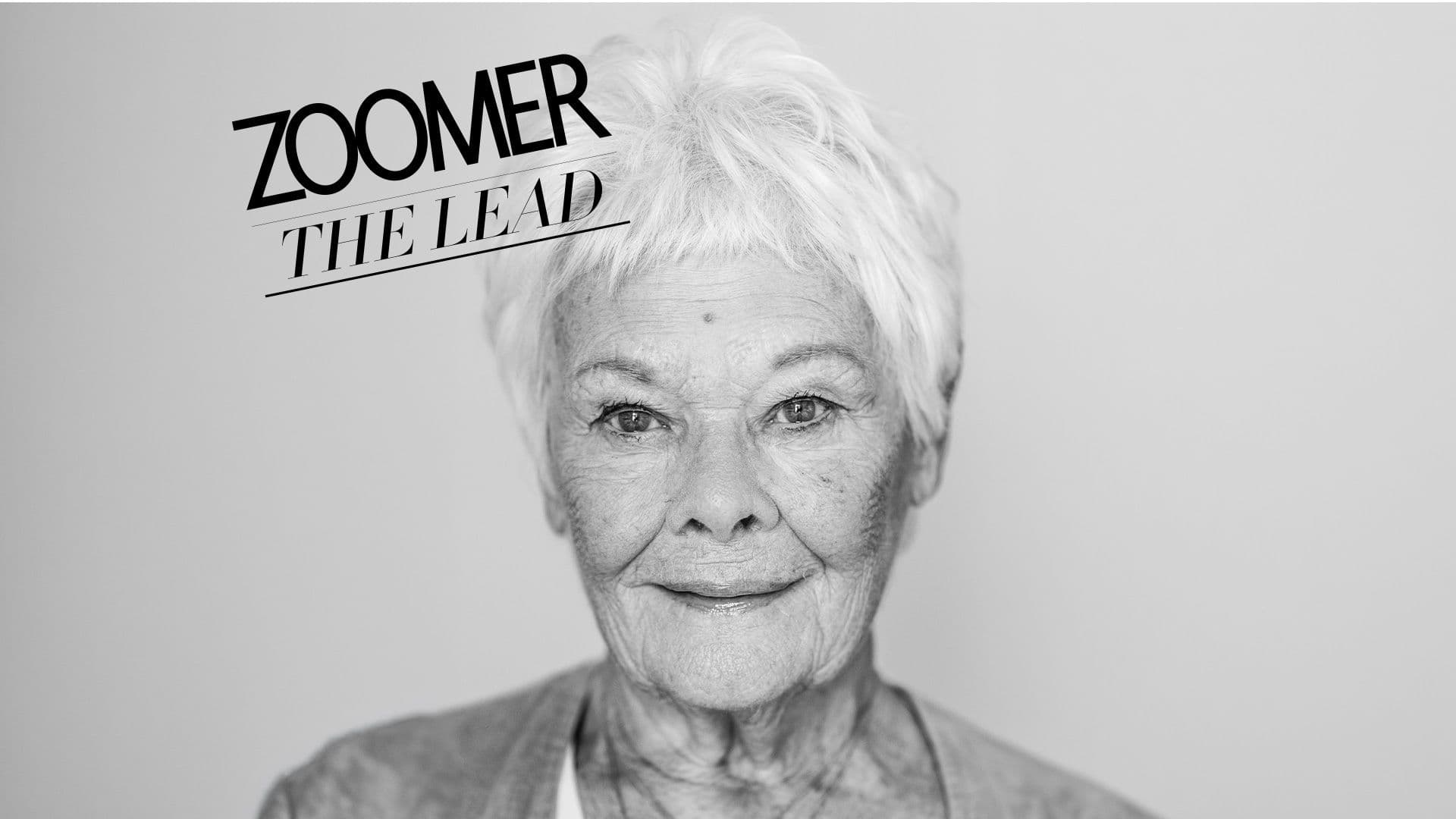
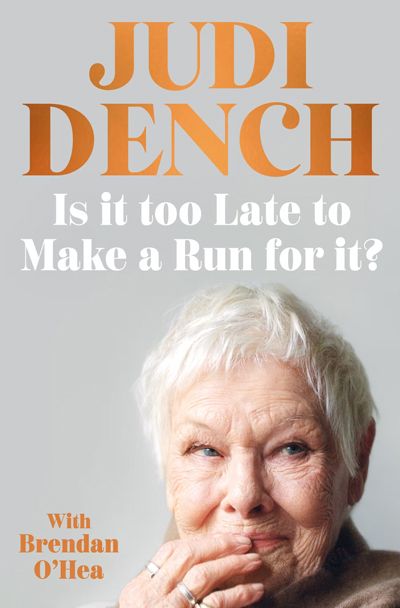
Judi Dench has spent her life surrounded by books and trees, but now, at age 91, she can’t read and struggles to make out the foliage. She recently admitted that due to age-related macular degeneration, she won’t be acting in any more plays or films – and in her new book, Is It Too Late to Make a Run for It?, the legendary thespian opens up about how she’s coping with losing the ability to see the things that bring her joy.
“Because of my poor eyesight, this is the first time in my life that I don’t have a cat, a dog and a goldfish in the house,” she writes, “in case I fall over them.” In her backyard, she’s long planted different varieties of trees for friends and loved ones she’s lost, explaining, “There’s something rather wonderful about being able to walk around the garden and check in on everyone.” But now, she can only see the outlines of her ginkgo bilobas and mighty oaks and must make do with the susurrus: “It means whispering or rustling, especially of leaves,” she says, explaining the word in her memoir. “So, even if I can’t see them as clearly as I used to, at least I can still hear the trees, and I can also smell the blossom and touch the bark. And just knowing they are there is comfort enough.”
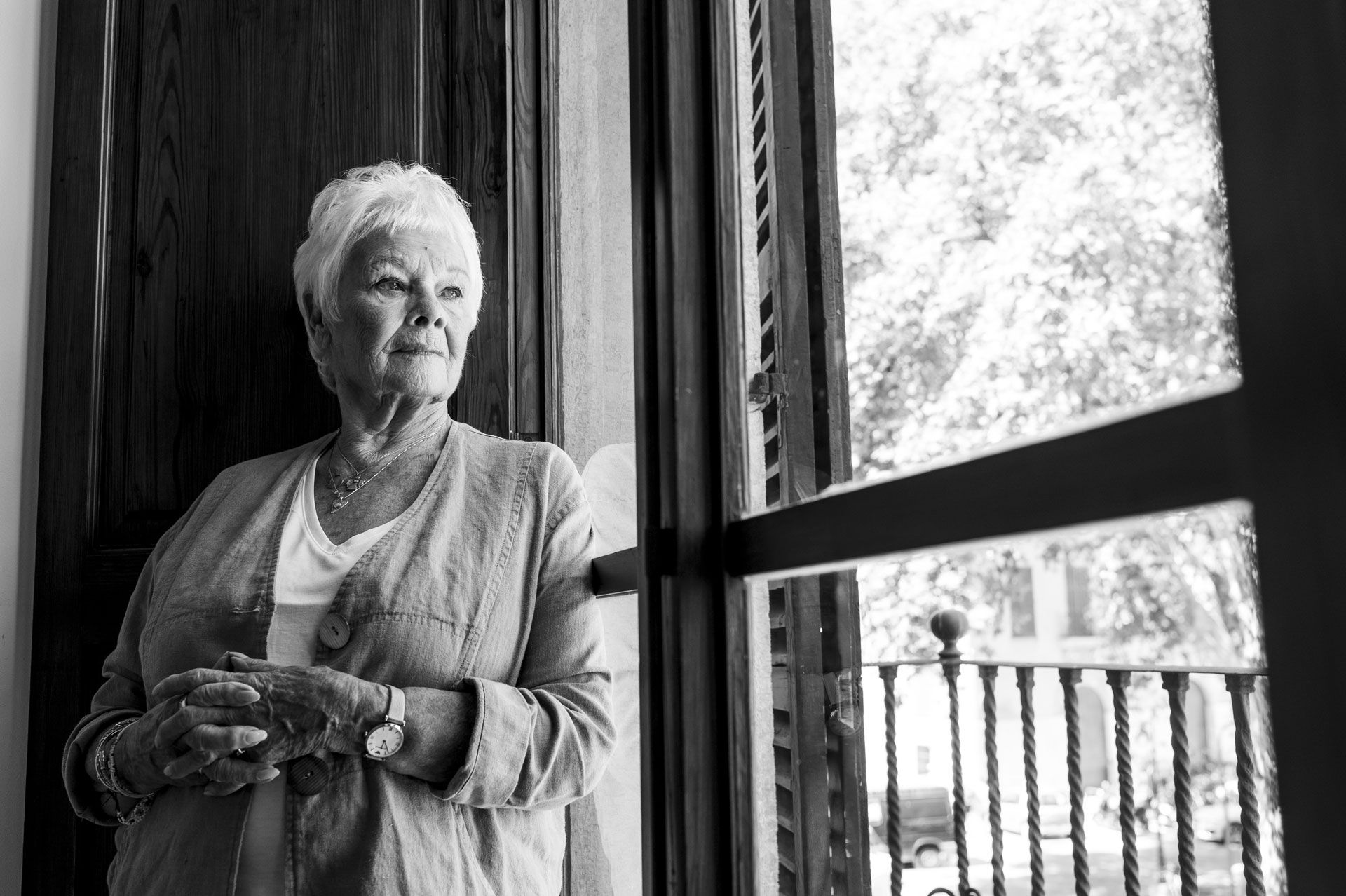
She feels the same way about the stacks of books that fill her home. “I can no longer read, but I love being surrounded by books,” she told the New York Times two years ago. “They’re snapshots of the past: first-night gifts, holidays abroad, memories of lost friends and loved ones. I still have my father’s individual copies of the Temple Shakespeare collection from 1903. They’re small, red-leather-bound copies with gilt lettering on the cover, and if I hold one I can be transported back to my childhood and family quizzes about Shakespeare.”
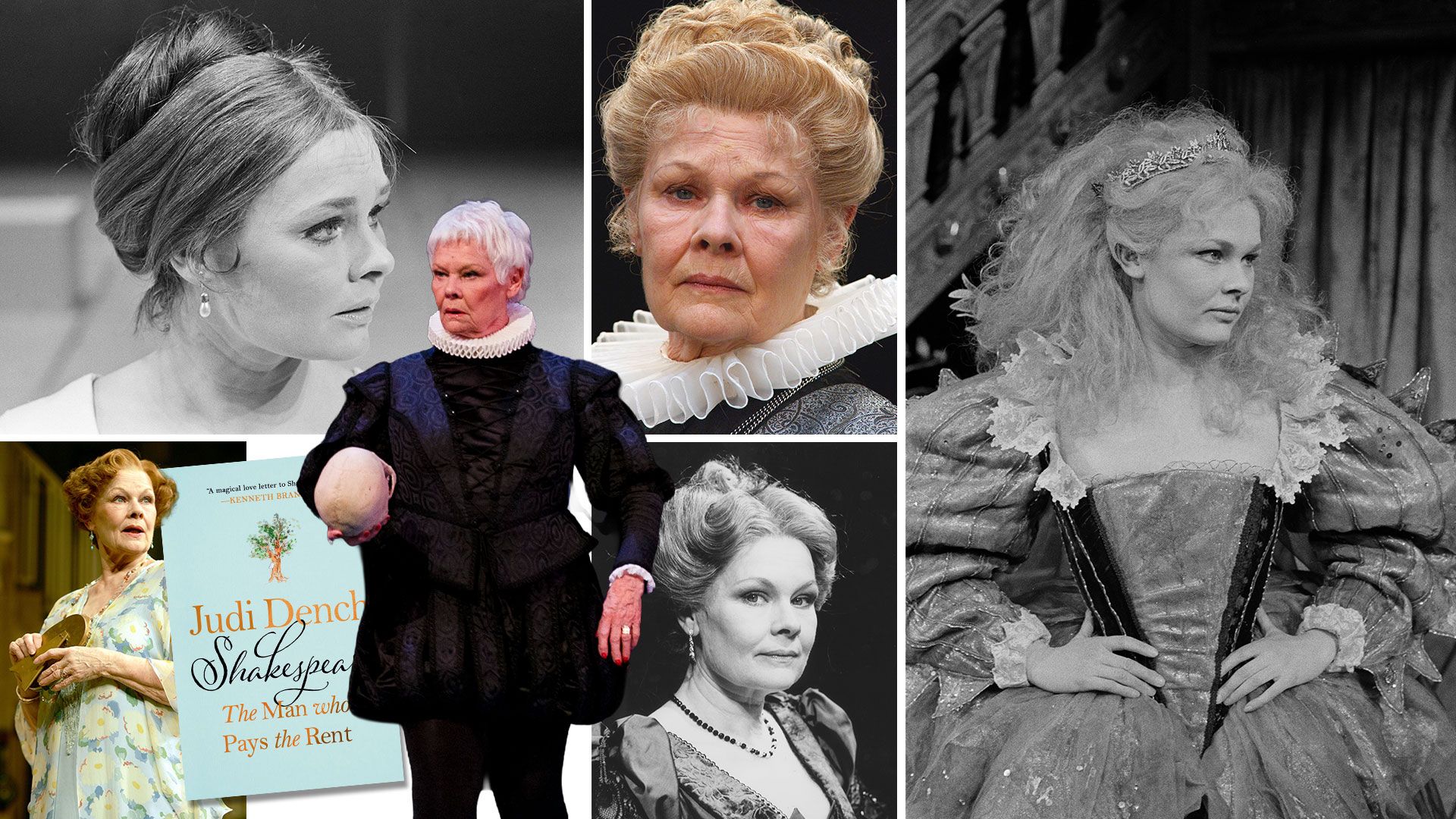
Dench is one of a select few contemporary British actors who we think of when talking about the Bard’s plays – leading her to write her 2024 book, Shakespeare: The Man Who Pays the Rent. In her seven-decade career, Dench has played everyone from Juliet to Ophelia, Titania to Cleopatra. Long before Hamnet, Dench was Anne Hathaway to Kenneth Branagh’s William Shakespeare in the 2019 biopic, All Is True; and she and Ian McKellen were legendary as Shakespeare’s most famous married couple, the Macbeths, in Trevor Nunn’s acclaimed 1976 Royal Shakespeare Company production of The Scottish Play. And, as part of Hamlet lore, Dench was matriarch Gertrude in the 1989 National Theatre run in London when star Daniel Day-Lewis left the stage mid-show, never to return to any theatre stage ever again. She kept on with the engagement as Chariots of Fire actor Ian Charleson stepped in to play the Prince of Denmark – which he did while terminally ill with HIV/AIDS. That story is about to be told in Elsinore (Dec. 4), a biopic garnering Oscar buzz for Andrew Scott, who plays Charleson.
Dench, it seems, is never far from the zeitgeist – like during COVID when she went viral on TikTok for dances and skits she did with her grandson, Sammie. People listened when she criticized The Crown because, besides knowing the Royal Family and being made a Dame and an Honour Companion by the Queen herself, Dench has also played a couple of monarchs. In fact, she enjoyed portraying Elizabeth II’s great-great-grandmother, Queen Victoria, so much that she did it twice (Mrs. Brown; Victoria & Abdul). And no one will forget Dench’s Oscar-winning six minutes on screen in Shakespeare in Love (1998), where she reigned supreme as the tightly corseted Elizabeth I in the fictional origin story of Romeo and Juliet.
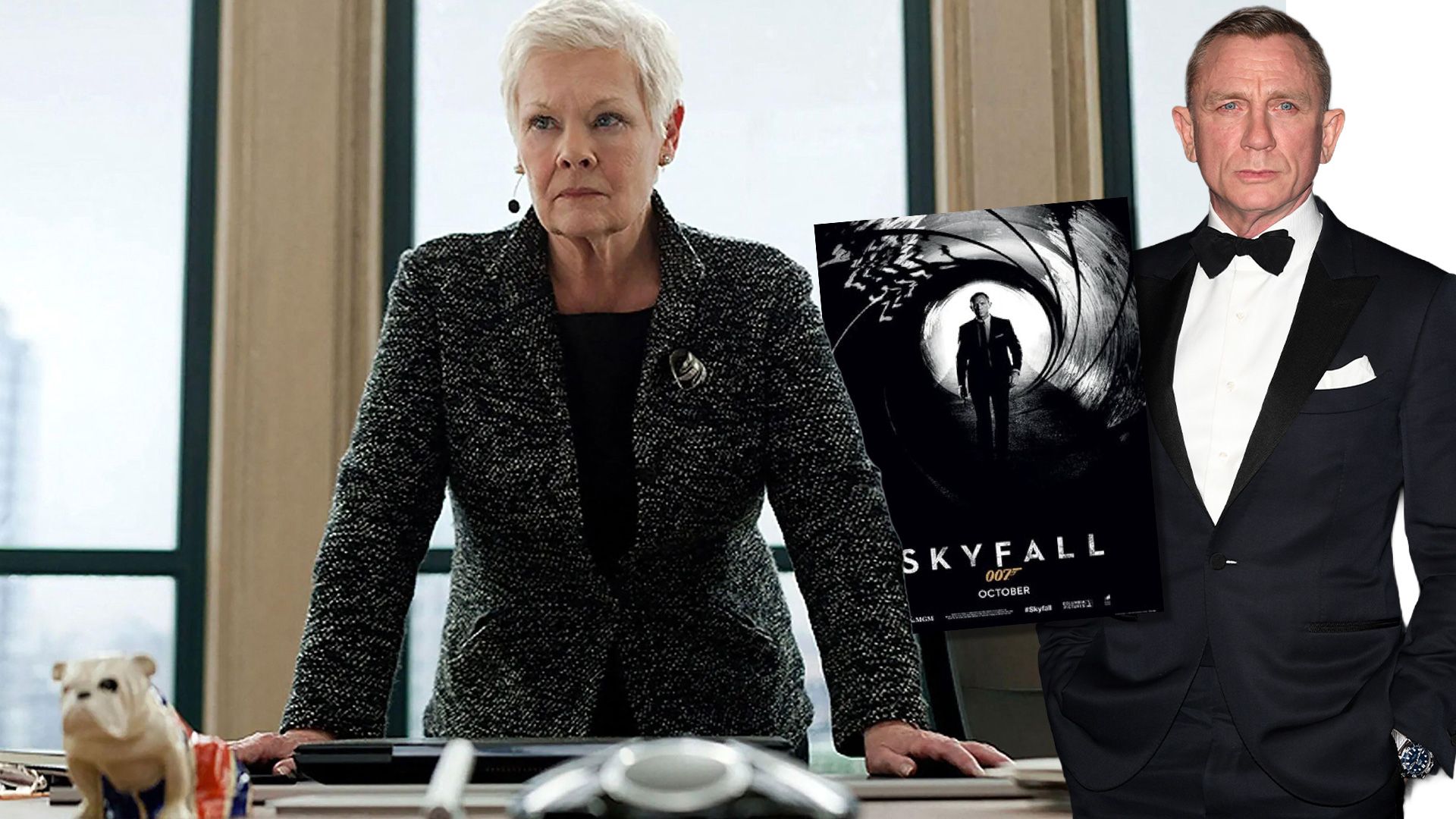
These days, Dench is holding court on the current state of the James Bond franchise, bringing gravitas to the discussion thanks to her tenure as M, which lasted for 20 years. “When I first played M, Bond was suave and elegant. He’d order his martinis and pass through fights almost effortlessly, emerging with hardly a scratch on his face or a mark on his Savile Row suit,” she says. “Then gradually – over the course of the eight films I did – Bond became dirtier, more realistic, less of a fantasy figure, I suppose. I don’t think the scripts are as witty as they once were, which is perhaps a shame, but then the character moves on – Bond reflects the times.”
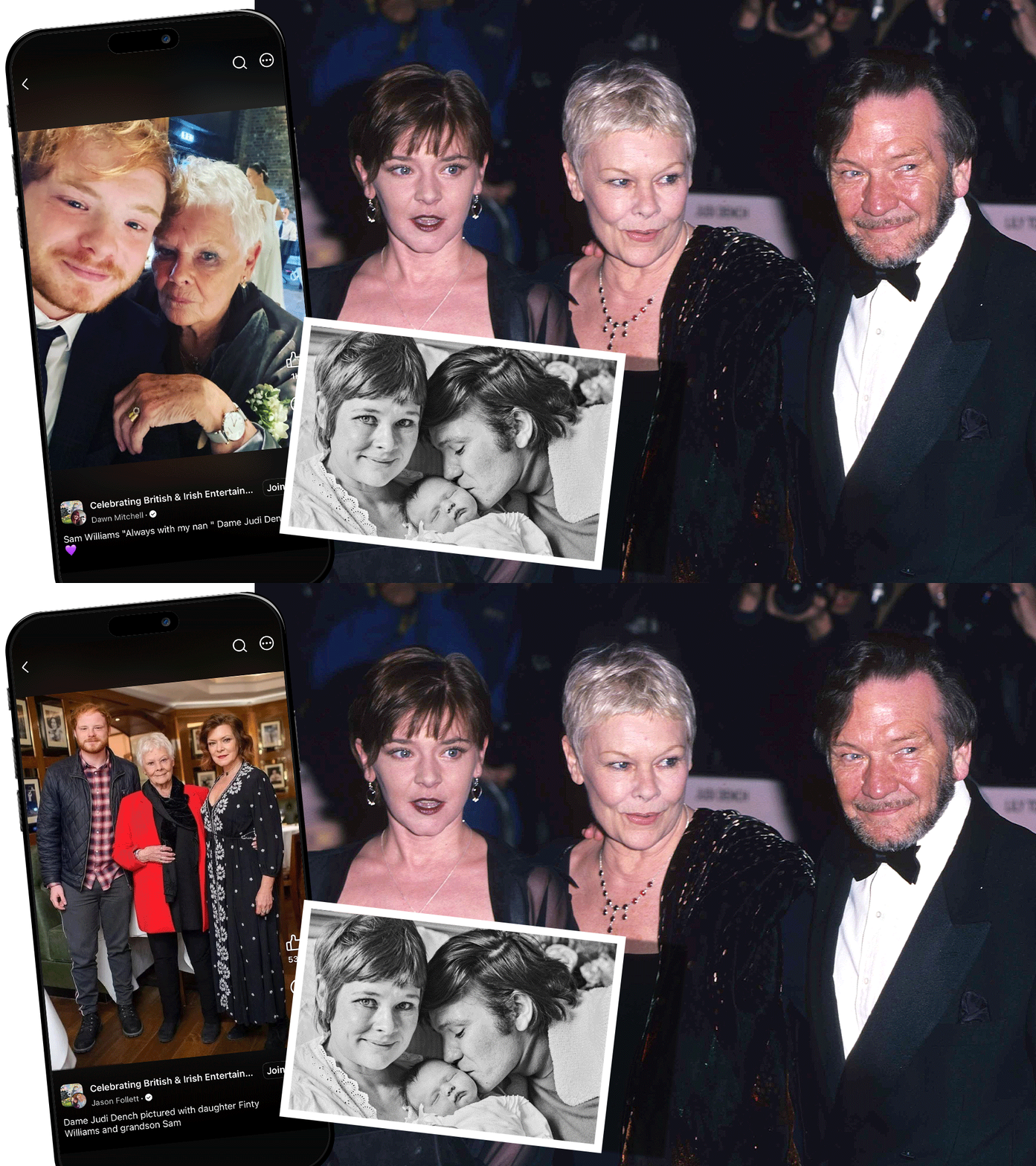
While we will see much less of Dench on screen, she’s giving us so much of herself with her literary side hustle. Her Shakespeare book and this latest one have both been co-authored by Dench’s longtime collaborator, theatre director and actor Brendan O’Hea, using a question-and-answer style. In Is It Too Late to Make a Run for It? O’Hea asks Dench about her childhood, early career, love story with her late husband, Michael “Mikey” Williams and her relationship with her daughter, Tara Cressida Williams, who is known as Finty, and grandson, Sammie. Plus, there’s plenty in there about famous friends, Royal connections, a lifetime in the arts – and even about her foul-mouthed parrot, Sweetie. Dench believes her close bond with O’Hea allows her to open up to him more than she would writing it on her own – a boon for readers. In the excerpt below, she addresses her experiences with aging. No holds barred.
– EXCERPT –
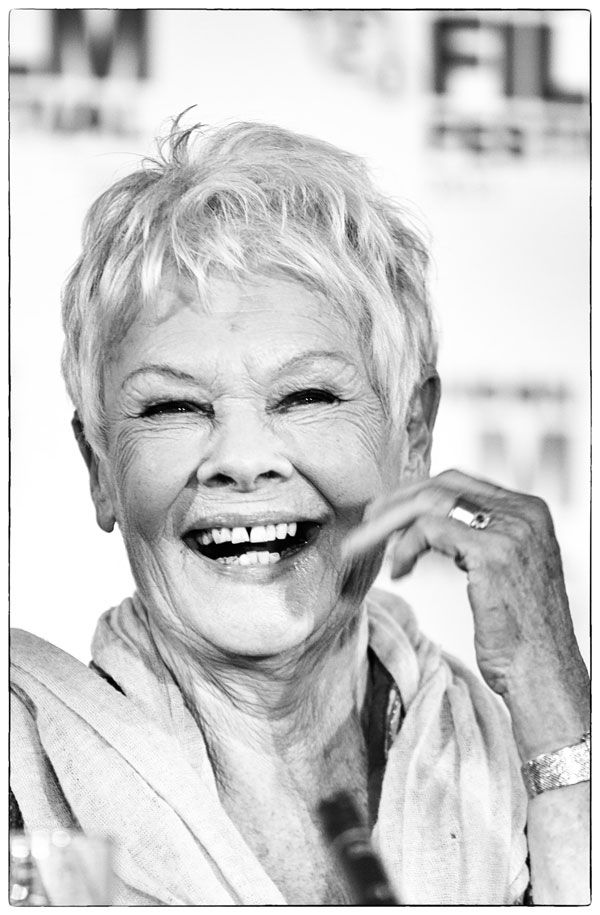
THERE’S NOTHING TO RECOMMEND AGING. It’s hell. People say, “Oh, but think of all the things you’ve learnt.” I’d rather be younger and dumber. How wonderful to have your whole life ahead of you. You’re also told “Age is a state of mind.” It’s bollocks. And it gets very lonely because all your old friends start falling off the perch. You lose all those shared memories and reference points. And the older you get, the more it seems to come in a great big rush. But I refuse to be beaten by it. I’m too much in love with life.
There must be some advantages to getting older?
Yes – one – they give you a dressing room nearer to the stage. Otherwise forget it. And you have to contend with people asking, “When are you going to retire?” or “Isn’t it about time you put your feet up?” No, it bloody well isn’t. “Retire,” “vintage,” “old” – let’s banish those words. I want to be like Newton Blick, who died in his dressing room after a performance. I don’t want to be told I’m too old to do something. I want to be one of those women who throw themselves out of aeroplanes when they’re a hundred. I’m also worried that if I stop I’ll never start again – take the keys out of the ignition and the car will conk out. So, no . . . Don’t retire, do not go gentle, and don’t even think about going quietly. The older you get, the louder you should sing – to paraphrase W. B. Yeats.
What about being called a ‘national treasure’?
Loathe it. Makes me sound like a dusty old relic that’s been stuffed away in the back of the cupboard, along with some dinosaur fossils and a broken Roman shield.
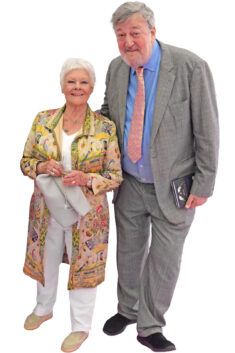
Stephen Fry said that you’re so extraordinary, railings ought to be put around you.
That’s very camp, and very funny. Although I’d say he’s the extraordinary one. He’s also incredibly tall: I’ve got a very good picture of us together.
Jude, you have to stop asking these tall men to have their photo taken with you.
Why do I have to?
Because it’s turning into an obsession. You’re in danger of becoming a pest.
You may be right. At Priory Farm last week, I saw this immensely tall man, and I said, “Excuse me,” and more or less elbowed his wife out of the way. She was livid. It all started with the American artist Mark Bradford. He’s six feet eight. You should see the photo – I don’t even come up to his armpit. I look like something you’d throw for the dog. And I’ve got a great one of me with Richard Osman. But I behaved so badly. There he was, standing around at an event, and I sidled up and said, “May I have my photograph taken please?” Only then did I realise he was talking to someone and I was so rude – no apology. It turned out to be Alexander Armstrong. I must send him a note. That’s what comes with not being able to see.
Your mother also had the same eye condition that you have: macular degeneration. How did she cope with losing her sight?
In the same way that I do, I suppose – by relying on other people and pretending she hadn’t got it. I’m quite good at acting like I can see. But then people think I’m cutting them dead when I don’t smile or recognise them. I hear myself making the same sound that my mother did – that sigh of frustration when I knock things over, or can’t find my diary when it’s sitting right in front of I spent five minutes this morning trying to pick up a shiny object off the carpet, only to realise it was a streak of sunlight. I once popped a Bananagram tile in my mouth thinking it was white chocolate, and unwittingly ate the parrot food (which is delicious, by the way). No idea why it says “Not for human consumption.” I bet a parrot insisted on that.
How does your eyesight affect your work?
I’ve had to find a different method of learning lines because even with the script blown up, I struggle. It’s made me realise I have a photographic memory, and so not being able to see the pattern of words on the page makes things really difficult. Friends now help and, provided I’m given enough time in advance to prepare, I can somehow muddle through. Then once I’m on the film set, as long as somebody warns me about the cables and points out the furniture, I’m able to cope. It’s just something you learn.
You’re very good at remaining positive.
What choice do I have? Besides, everybody’s fed up with me going on about my eyes, constantly asking if the room’s full of smoke. There are obviously things which I miss, like being able to read and having cats and dogs running around the place. They’re too much of a trip hazard. Seeing the TV is increasingly difficult. I still go to art class every Tuesday, but I’ve had to give up painting – which I loved – and have started learning how to carve objects out of soapstone: birds and bowls and that. Also, complaining takes up a lot of energy that you could be using elsewhere. I do what I can. It’s just one of those things that happens when you get older.

I tell you what I have noticed – your voice has got lower.
No idea what that’s about. Tonsils, probably. My hearing is also going. Goodness knows what I’m nodding and saying yes to on a daily basis. It’s quite exciting, actually. When you’re young you don’t mind if you have a twinge in your back. But when you’re older you think, Oh God, here’s something else I’ve got to get used to. You’re constantly on alert, wondering what’s going to pack up next. My teeth are agony.
You’ve been going on about your teeth for years. Didn’t you have trouble with them on Cranford?
I lost a crown during filming. I had to go and see an emergency dentist, and there was no time to change out of my costume because they needed me back on set as quickly as possible. There I was, lying in the dentist’s chair dressed as Miss Matty – full nineteenth- century gear: the bonnet, the wig, the lot – and the dentist said, “So, are you busy working at the moment?” I wanted to say, “No, I always go around looking like this.”
He must’ve been joking.
I really don’t think he was. Young chap; lovely. Quietly got on with the job. He probably assumed, This is just some mad old bird who likes to wander the streets of Lacock wearing a pin- tuck bodice and leg- o’- mutton sleeves.
From Is It Too Late to Make a Run For It?, by Judi Dench and Brendan O’Hea. Copyright © 2026 by the author, and reprinted with permission of St. Martin’s Publishing Group.