Fauja Singh, an extraordinary athlete who gained fame as the world’s oldest marathon runner, has died at the age of 114 in his hometown in India.
Singh was hit by a car on July 14 while crossing the road in his native village near Jalandhar in Punjab. He was transported to hospital and later died of his injuries.
India’s Prime Minister Narendra Modi paid tribute to the age-defying Singh, saying he was “extraordinary because of his unique persona and the manner in which he inspired the youth of India on a very important topic of fitness.”
At age 100, Singh – known as the Turbaned Tornado – made international headlines after setting an astonishing eight world records for the 95-plus age group at a Toronto meet in 2011. Amazingly, his record runs – ranging from 100 to 5,000 meters – were all completed over the course of a single day. Doug Smith, the co-chair of Ontario Masters Athletics who witnessed the performance, told the New York Times, “he rested between the events by sitting down and having a few sips of tea.”
Three days after setting these records, he earned his moniker as the Oldest Marathon Runner in the World when he became the first centenarian ever to complete the gruelling race at the Toronto Waterfront Marathon.
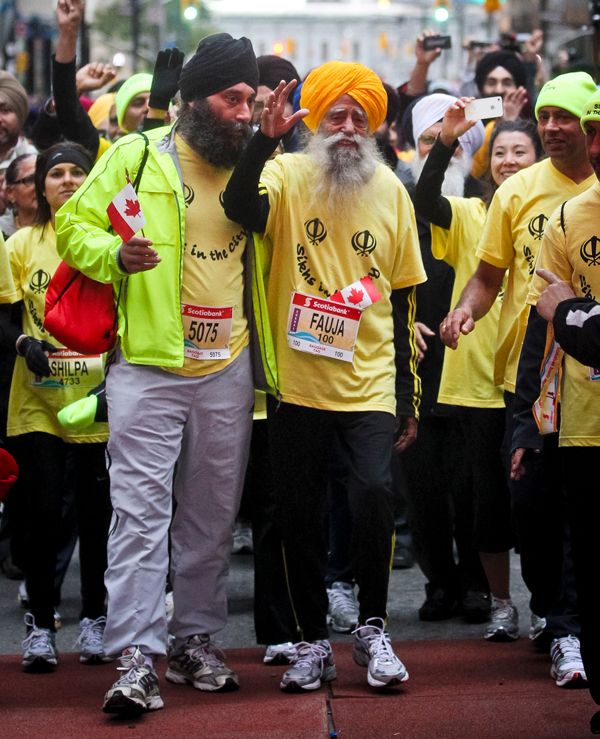
Unfortunately, Singh was never officially recognized for his distance-running marks. While his passport confirmed his birth date as April 1, 1911, The Guinness Book of World Records refused to acknowledge his records because he didn’t have an official birth certificate required by race officials. Nor could he – India did not keep birth records at the time he was born.
Coping With Tragedy
But setting world records wasn’t Singh’s sole motivation. Running helped distract him from the tragedies that beset his life. Having already lost his wife and daughter during childbirth, in 1994, Singh witnessed the grisly death of his son, Kuldip. Both farmers, the pair were tending to their fields in a severe storm when a piece of corrugated metal struck Kuldip in the head, killing him on impact.
The sudden and traumatic loss of his son left Singh inconsolable. Word of his troubling behaviour around his village soon made it back to his youngest son, who arranged for him to stay with him in his London home. While still battling the crippling loss and trauma, Singh discovered a group of Sikh marathon runners, who encouraged him to take up long-distance running.
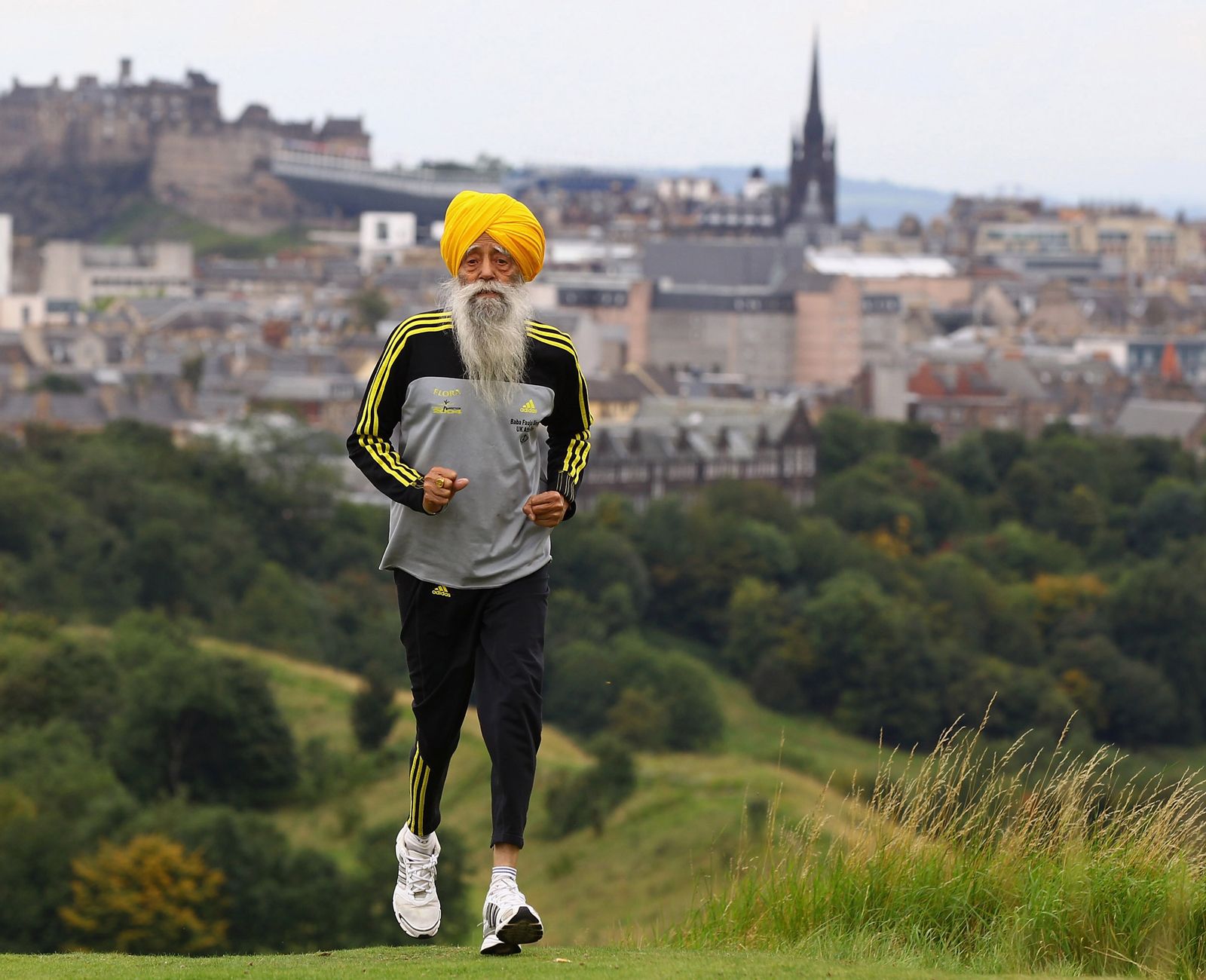
“Running showed me kindness and brought me back to life by making me forget all my traumas and sorrows,” he told CNN in an interview when he was 102.
In a 2013 ESPN profile, Singh explained that while running, his thoughts would centre only on his next step and, as exhaustion set in, his mind would go blank.
“I felt connected to God,” he said.
Crossing the Finish Line
Perhaps there was something divine at play. As a child, Singh didn’t walk until the age of five and still had issues with his gait up until the age of 10. Still, at the latter stages of a life marked by grueling, labour-intensive farming, he became well acquainted and perhaps even comfortable with exhaustion.
His running coach, Harmander Singh, would push him when that familiar feeling of fatigue would set in around the 20-mile mark of the 26.2-mile marathon. With six miles remaining, the coach would tell Singh there were only four miles left, and two miles when there were actually three – instilling in him the belief that he was nearing the finish line.
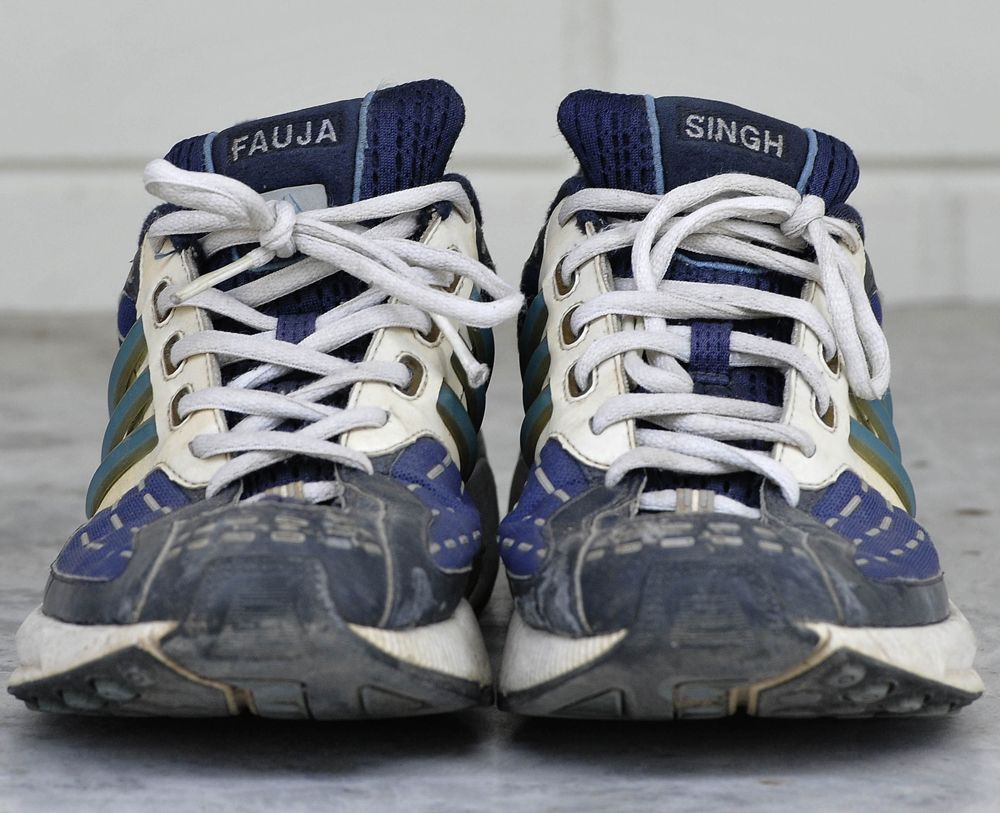
The strategy obviously worked. At 89, Singh ran in his first marathon, completing the London Marathon in six hours and 54 minutes. That was 58 minutes better than the previous best for the 90-plus age category and yet another record that would never make it into the books.
He went on to do eight more marathons, logging his best time of five hours and 40 minutes at the 2003 Toronto Marathon. Singh ran his last competitive race in 2013 at the age of 101, finishing the Hong Kong Marathon’s 10-kilometre race in one hour, 32 minutes and 28 seconds.
A Legacy Off the Books
Singh’s astonishing accomplishments as an older runner gained him global fame and recognition, from appearing next to icons Muhammad Ali and David Beckham in Adidas’ “Impossible is Nothing” campaign to meeting Queen Elizabeth. Yet he never let his newfound stardom go to his head. It was a platform he used unselfishly, with most of his earnings from endorsements going directly to charitable foundations.
“I was the same Fauja Singh before I entered the world of running,” he told the BBC in June. “But running gave my life a mission and brought me global recognition.”
As for his countless records that would never officially make it into the record books, Singh was unbothered by the snub. Instead, he was more concerned about the countless people he inspired each time he laced his runners up.
“I’ve done everything openly, nothing in secret,” he told The Times in 2016, with his coach serving as an interpreter. “If it makes some people happy to question it, it has made a lot of other people happier who believe it.”
RELATED:
Flex: Meet Fitfluencer Joan MacDonald, the Poster Girl For Late-in-Life Transformation
Flamenco Dancer Maria Diaz, 65, Shares Her Fitness Secrets and Philosophy of Life