What is Tennis Elbow?
It’s a condition that often affects tennis players, but it can happen to anyone. Tennis elbow is the common term for a condition called lateral epicondylitis, which Vancouver-based registered physiotherapist Alice Podmore explains is the medical way of saying there’s inflammation of the bony part of the outside of your elbow. “It’s when the muscles in your forearm, which control the wrist and finger extension, join together into a common tendon and attach to the bony bit of the elbow,” she says. “With repetitive strain, this tendon can become inflamed, which causes pain.” It usually starts with an aching sensation near the part where you bend the elbow before progressing to a sharp pain that can radiate down the arm and wrist.
What Causes It?
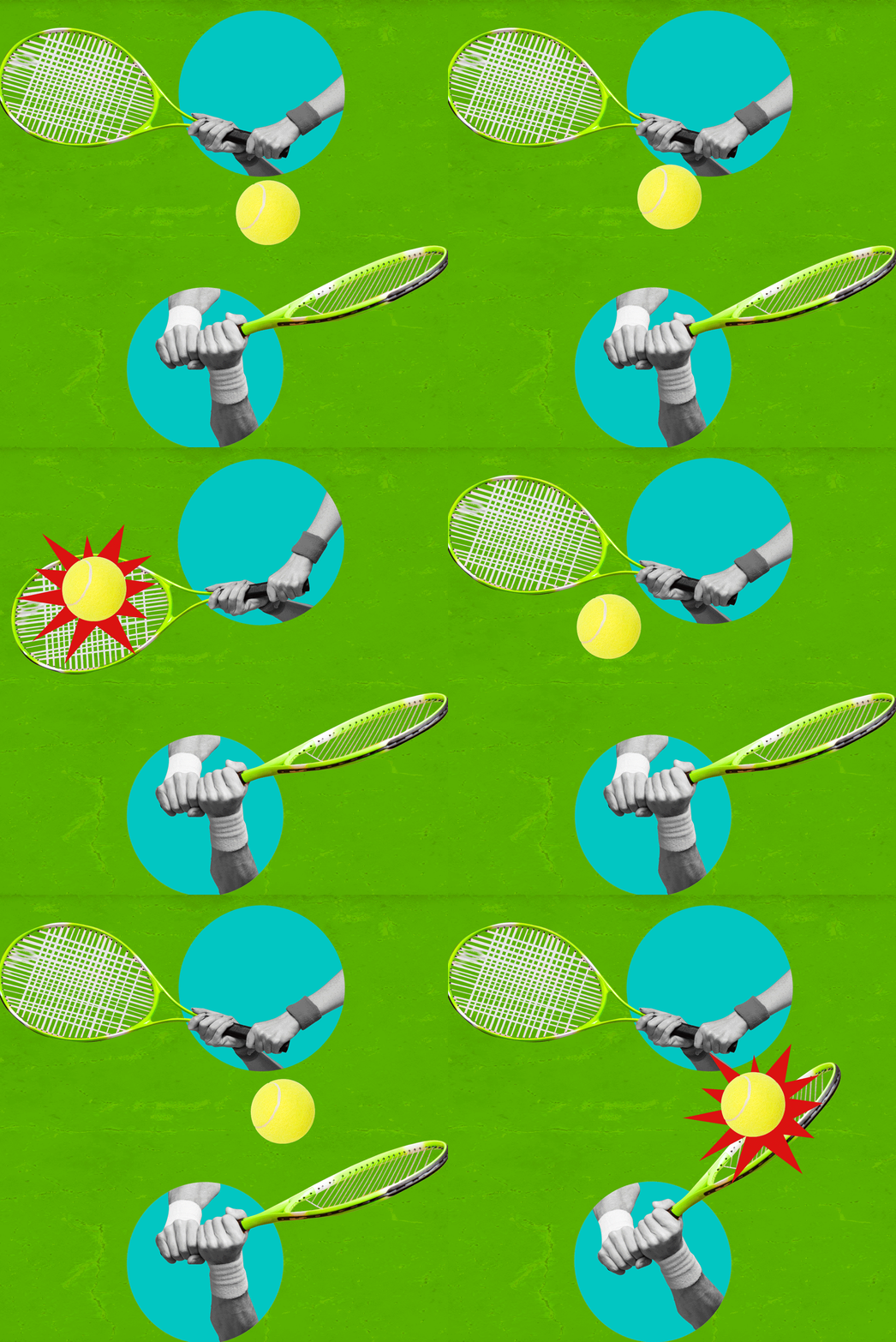
Repetitive use and strain on the tendon is often caused by overuse or muscles becoming overly tight. If you’re a tennis player, for example, Podmore says it can happen when you hit a backhand shot with your wrist bent instead of being straight. “In non-tennis players, it can happen in people who do repetitive tasks, such as painting, or whose jobs involve lots of gripping, like construction work. It can also be seen in office workers who don’t have an ergonomic setup of their keyboard and spend the day with their wrists in an extended position,” she says. “The small moments of strain on the tendon build up until it exceeds its capacity to repair the strains between events, and that leads to the inflammation and pain.”
How to Treat It
Start by figuring out the root cause so that you can prevent that repetitive strain, and limit activities that are causing pain. “If we just treat the condition without addressing what caused it in the first place, it’s likely to come back,” says Podmore. Try ice directly on the bony part of the elbow to reduce inflammation; use heat on the forearm to relax your muscles. Topical anti-inflammatory creams can also help. A tennis elbow brace will allow you to get on with your day and activities without added strain – these braces go around the forearm and put pressure just below the common tendon. If you can see a physiotherapist, they can advise on ways to ease muscle tension, improve your biomechanics to reduce risk of further injury or use electrotherapies for inflammation and pain. Meanwhile, stretching might help.
Stretch It Out
“Stretch out those extensor muscles in the forearm,” says Podmore. “Doing this helps to reduce the pull on the tendon, which can help to decrease the pain.” Here’s how to do it:
- Bring your arm with a straight elbow in front of you, palm facing down
- With your other hand, apply pressure to your hand to bring it toward your body until you feel a stretch on the top of your forearm
- Do this stretch with your fingers relaxed and pointing toward the ground or curled up toward your palm
She suggests this stretch should be held for at least 30 seconds and can be done several times a day.
PRO TIP:
“This is a very safe area to stretch, so there isn’t anything specifically to be cautious of when stretching the forearm,” says Podmore. “However, with all stretches, you should listen to your body and stop if you are worried that it doesn’t feel right.”