“Her only flaw is her perfection,” Truman Capote declares in Feud: Capote vs. the Swans, describing New York socialite Barbara “Babe” Paley. “She’s almost too beautiful to look at.” The description is just as fitting for Naomi Watts, who brilliantly brought Paley to life in the Ryan Murphy TV series. The 57-year-old, British-Australian, Oscar-nominated actress, best known for her breakout roles in Mulholland Drive and 21 Grams, earned her first Emmy nomination for this role – one that seemed tailor-made for her.
With piercing blue eyes, perfectly blotted red lips and every blond strand of her sleek bob in place, she sits across from me at a press event in downtown Toronto. Dressed in an oversized black blazer, straight-legged jeans and pristine white sneakers, she exudes a casual charm, as if to say, “I’m just like you.” But there’s an unmistakable grace and poise that set her apart, reminding me that, in many ways, she’s anything but ordinary.
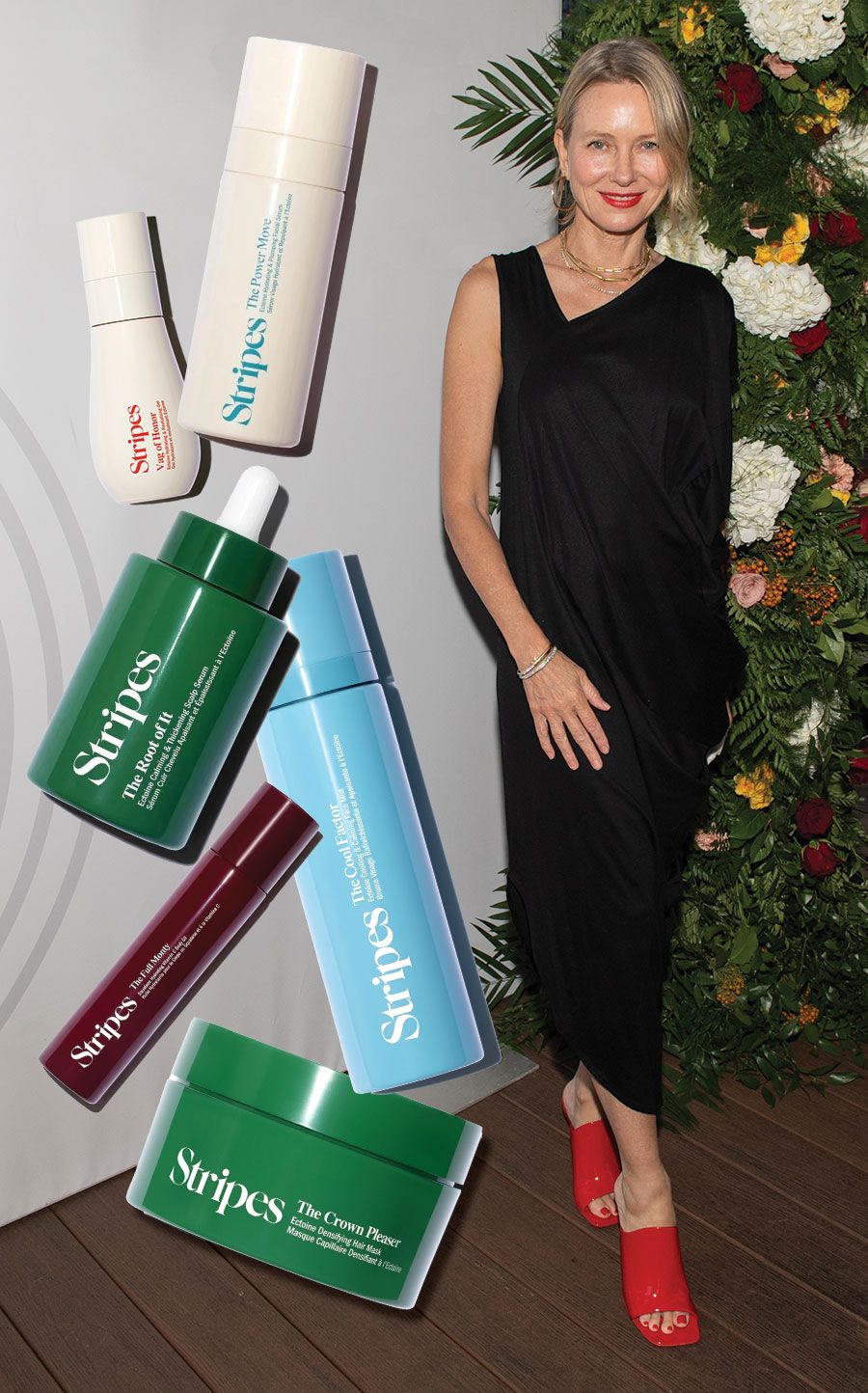
Beneath this polished exterior lies a vulnerability that Watts isn’t afraid to share. Recently, she’s been vocal about her experiences with menopause, which hit hard just after she had her second child, with her ex, Liev Schreiber (she is now married to actor Billy Crudup). With no one to turn to for advice on symptoms like irritable skin, migraines and night sweats, she decided to create her own support system. This led to the launch of Stripes Beauty, her wellness and beauty brand named for the stripes women earn as they navigate aging challenges..
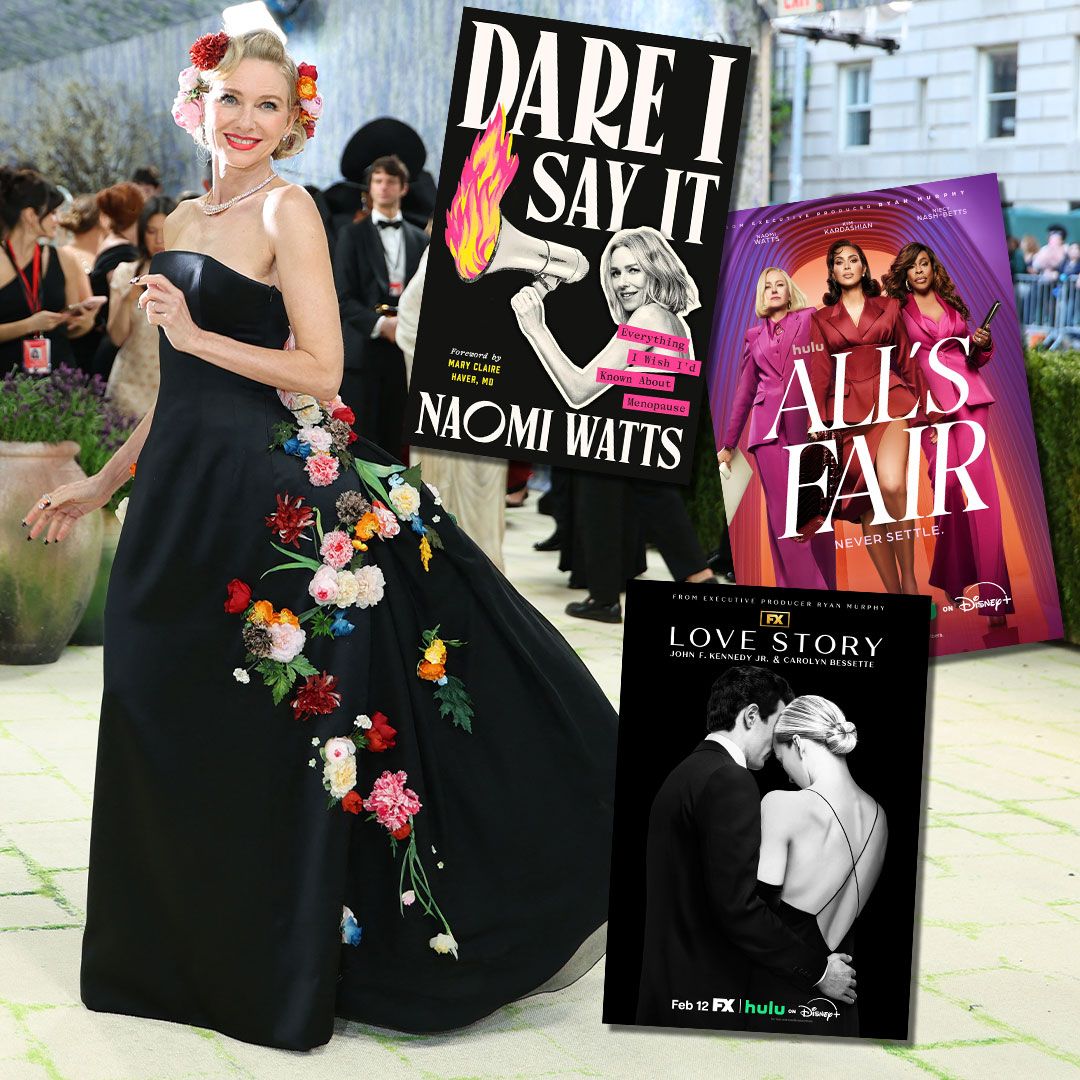
On top of that, Watts has written a memoir, Dare I Say It: Everything I Wish I’d Known About Menopause, released last year. As she talks, I notice the skin on her left palm is peeling and raw – for which she apologizes, explaining how she’s been juggling too much, including lighting all the birthday sparklers for her (then) 17-year-old son, Sasha, just a few weeks earlier. Her hand was badly burned. “I was doing too much. And rushing,” she admits. “You become aware of how many years you’ve lived and how many you have left, so you kind of charge up with life. But this is a reminder that you don’t have to do everything all at once or at such a high speed.” There’s no sign of Watts slowing down. After starring in Ryan Murphy’s glossy legal drama Fair Play, alongside Sarah Paulson, Glenn Close and the questionably cast Kim Kardashian last year, Watts returned to our screens as Jackie Kennedy Onassis in the nostalgic Love Story about Carolyn Bessette and JFK Jr. She has just wrapped The Housewife filmed in Montreal with Canadian director Ben Shirinian, based on the true story of a New York Times journalist who tracks down a potential Nazi officer secretly living in Queens.
In our conversation, the powerhouse opens up about the impossible pressures around aging, her surprisingly sexy and goofy Instagram posts and her changing sense of style.
Claire Sibonney: Can you recall when it hit you: “Wow, this is really happening. This is menopause?”
Naomi Watts: There was a very distinctive moment, which was when I was in my doctor’s office. I’d been trying to get pregnant and failing and he suggested we take blood work. The blood suggested I was close to menopause. I basically fell off my chair. I felt, Oh, my God, how is that possible? I’m 36 years old …
I panicked and felt flooded with shame. I thought, well, that’s probably just the end of everything, certainly my career and fertility.
CS: So, not just menopause, but early menopause. How did it influence your long view of aging?
NW: There’s great evidence that we are living longer – my grandmother is 101 – so that we’re looking at, kind of at a minimum, a third of our lives in perimenopause or menopause years. So we should optimize our health, and it starts with opening the conversation.
CS: Many women struggle with partners who don’t quite get what menopause is like. How did you bring your partner up to speed?
NW: I say, just get it out. It’s a great litmus test for who you’re around. Mercifully, I met my partner later in life, and I had a few weeks or so hiding it, and then it was just like, this is ridiculous. And he’s also my age, so [I thought] hopefully he’ll understand. He was very empathetic. It feels so good to own your vulnerabilities and make them into strengths.
CS: You were told your career might be over by your 40s. Instead, in your 50s, you were nominated for an Emmy for playing Babe Paley. You play her at a point in her life where she and her fellow “swans” – who had set the bar for societal beauty – were dealing with aging in public, which is parallel to aging as an actress. What parallels did you discover?
NW: We are made to feel invisible after a certain age and the fact that the conversation wasn’t available makes you feel like society is finished with you. You get chucked on the pile – you know, once your reproductive years are done – and it’s just absurd. We’re so much more than that. … I remember my mother speaking about feeling irrelevant and people not looking at her in the same way as they used to and it didn’t make that much sense to me when I was a young girl, but now it does. Shifting that narrative has been important to me.
CS: You clearly have a great understanding of fashion. How have you adjusted your style as you navigate this stage of your life?
NW: I feel fashion should represent my mood and comfort. Usually, if I’m put in something that looks great but doesn’t feel great, it doesn’t work. It’s happened a few times. I’ve gotten talked into something. I love it for a photo, but then you’re like, it’s just not comfortable, and you’re picking at the dress or something and it translates. I’m usually in jeans and a T-shirt.
CS: It looks like you’re having a blast promoting your vaginal wellness products. How have they affected your own sexuality and sex drive?
NW: Well – without getting too personal! – we wanted to create a one-stop shop from scalp to vag. We know that dehydration occurs at all of those points, but I was still nervous about speaking to the vaginal and sexual health component. Once you break the ice, it’s like, oh, well, sorry if it makes you uncomfortable, it’s just science. And I say, [Vag of Honor and Oh My Glide] are the perfect gifts for your next hostess gathering. For a lot of women, this is where marriages can get complicated. The research is there. People lose their libido, and it’s not always just because they’re not feeling horny, it’s because they’re dreading the pain. A man can go and get help and not even have that conversation with his partner, and go all night, but like, wait a second! I spoke to doctors about this, ad nauseam. I’ve sat in those conferences to hear these stories of women who were suffering and then shutting down and then not being able to communicate about it.
CS: But then you’re breaking these taboos on Instagram in a cheeky, fun way, like that “happy ending” post promoting vaginal lube.
NW: The cheeky part of it is to say, hey, it’s not all doom and gloom. We can own it and diffuse the pain and laugh at ourselves with a wink and a nod. God knows, suffering has been pretty gargantuan, so why not have some fun with it?
A version of this article appeared in the October/November 2024 issue with the headline ‘This is No Swan Song’, p. 48.
RELATED:
Is Thinning Hair Part Of Menopause?
Whoopi Goldberg Creates Comic Book Hero Who Gains Superpowers From Menopause