It’s hard to believe that it’s been 10 years since the country raised their voices together in one last sing-along with the Tragically Hip: “I left your house this mornin’ / About a quarter after nine / Could have been the Willie Nelson / Could have been the wine.”
To mark the milestone, on Aug. 21st the band will release a brand-new live album, The Tragically Hip: Live July 22 – August 20, 2016, from that farewell tour and the next day (Aug. 22), the CBC will rerun the Hip’s final momentous concert, which was televised live from Kingston, Ont.
Below, we revisit Zoomer‘s 2024 interview with Hip guitarist Rob Baker upon the release of their documentary, No Dress Rehearsal, in which he spoke about that last tour, life after frontman Gord Downie’s death and the band’s legacy.
ROCK STARS rarely use the R word, but Rob Baker of the Tragically Hip has come to embrace it. “I am fully retired,” he tells Zoomer. “I feel like I fulfilled what I wanted to do and I don’t really have a desire to get on stage. That’s it, it’s gone.”
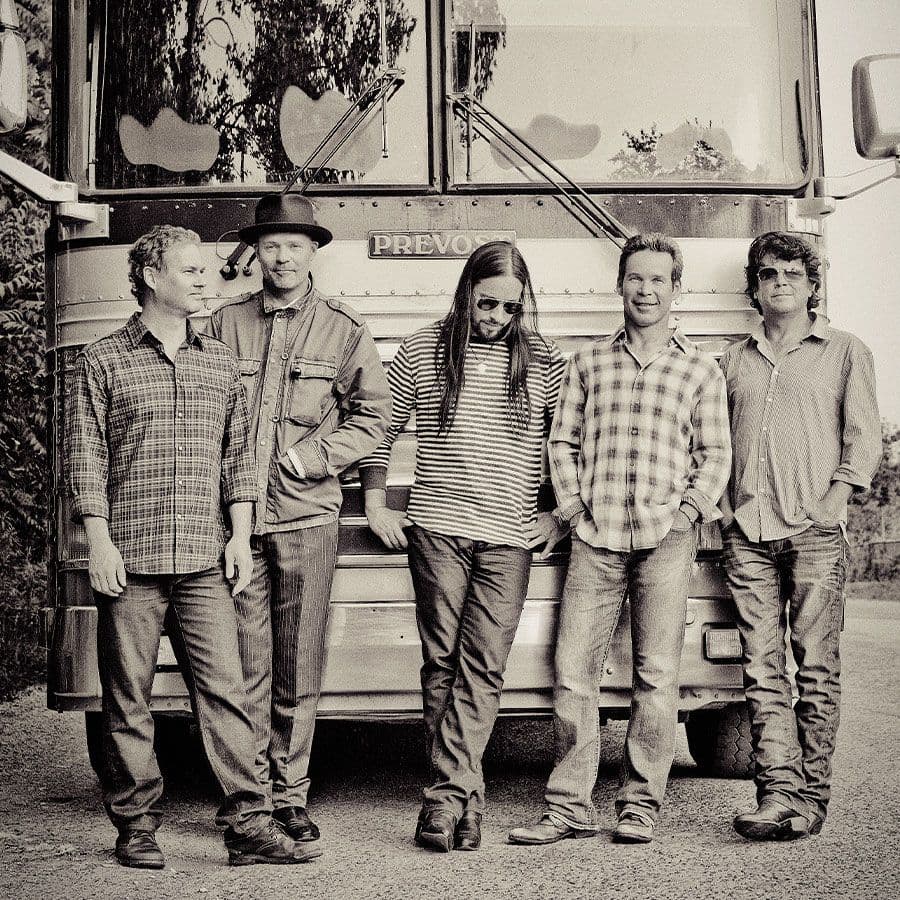
It’s been eight years since Baker and his brothers-in-arms, Gord Sinclair, Paul Langlois and Johnny Fay, stood behind their enigmatic and terminally ill lead singer, Gord Downie, at the band’s final concert in Kingston, Ont. You know the one, and you must remember where you watched it, singing along to Fifty-Mission Cap, Little Bones and Ahead By a Century, with tears streaming down your face.
Baker, 62, is shockingly honest about the fact that he didn’t even want to do that tour in the first place: “I was terrified that every night was going to be like a funeral, and I was terrified of Gord having a seizure on stage.”
It turned out to be both a heartbreaking and celebratory experience. And Baker knew that, after the last show, the Tragically Hip would never tour again – even if Downie (who had inoperable brain cancer) was urging the guys to find a new lead singer and carry on.

When the man they called “their voice” died 14 months later, the members of the Hip kept their distance from each other, mourning independently. “I lost my mind for a few years. I mean, grief will do that,” Baker says, adding he was still coming to grips with post-Hip life. “So much of my self-worth, my identity, was wrapped up in what I did. My father was a judge, and I had watched how, when he retired, it was like he’d been unplugged from the wall and no longer had a function. No one else felt that way, but that’s how he felt. And I said, ‘That’ll never happen to me. I’ll never make that mistake.’ And of course it happened to me.”

These days, you can find a more serene Baker strumming his guitar on his front porch in Kingston, producing an album for his son’s band Kasador or jetting off to Rome to take painting classes. His bandmates have also found their groove, he says. “Paul and Gord golf quite a bit and Johnny has lots of things on the go.” And after taking years to adjust to the culmination of their dream job, they are now ready to look back at their humble beginnings, fast track to fame, rarely talked about creative differences and lasting legacy. “There’s a certain point in life where you have to take stock,” says Baker about the decision to mark the band’s 40th anniversary this year by opening up in ways they never have before.
The remaining members spent long days being interviewed by Downie’s filmmaker brother Mike for a four-part docuseries, No Dress Rehearsal (Amazon Prime), which also features Gord’s family and famous Hip fans, including Dan Aykroyd, Atom Egoyan, Geddy Lee and Justin Trudeau. They’re following it up with a box-set re-release of their debut album, Up to Here, and a coffee table book, This Is Our Life, in which the band goes even deeper into its own story.
And what a story it is: Soon after high school, two sets of childhood best friends – neighbours Baker and Sinclair and ride-or-dies Downie and Langlois – came together with Fay, a 17-year-old whip-smart drummer. Their early shows in the mid-’80s – featuring raucous blues and rock covers – won over both Kingston’s biker and university crowds. Soon enough, their evolving sound, idiosyncratic original songs and hypnotic live shows caught the attention of Toronto managers Jake Gold and Allan Gregg, and a U.S. label. Over four decades, they put out 15 albums, sold out arenas across Canada and garnered a more than respectable following in Europe and the U.S. – all the while earning the admiration of bands like the Rolling Stones, Led Zeppelin and Pearl Jam. Downie’s poetic and brazenly Canadian lyrics, not to mention his barely-tamed-animal stage presence, cast a spell over a whole generation or two, seeping into the collective consciousness until there was no question about it – these raw and authentic rockers were Canada’s band.

“The songs resonated,” says Mike Downie. “You’re singing along to these words, you’re saying Bill Barilko, and you’re saying Bobcaygeon, and it’s almost like a church service, a sort of conjuring up of these feelings in you, this spiritual sort of feeling.” But the band itself never fully bought into its own national iconography: “We’ll never be forgotten until we are,” Baker jokes. “We’re Canada’s band until Canada gets another band.” But marvelling at the nearly 12 million people who watched the final televised concert, the guitarist couldn’t help but feel honoured. “If you’re going to be a band, if you’re going to be a family, if you’re going to be a nation, you kind of have to have some common bonds, agree on some things,” he says in the doc. “So if a third of the nation can agree on us, that’s pretty awesome.”
Gord Downie certainly knew what to do with the country’s goodwill and attention – using the last year of his life to educate the public and pressure the government into addressing Indigenous issues. Through his album (and accompanying graphic novel) Secret Path, the dad of four introduced Canadians to the story of 12-year-old Chanie Wenjack, who died in 1966 while running away from an Ontario residential school. This was what Gord hoped would be his true legacy.

Described by his brother Mike as complicated, sensitive, mercurial and a capital-A artist, Gord earned his place in the pantheon of Canadian musical storytellers alongside Neil Young, Leonard Cohen, Joni Mitchell and Gordon Lightfoot. But, unlike those musicians, he didn’t live long enough to give us his insightful golden-years poetry. In the documentary, we see how the tumour eventually took away nearly all of his words. Although, he found the ones he needed at the very end – softly and heartbreakingly telling his bandmates, friends and family, “I love you.”
With generosity, courage and grace, too, the Downie family shared with fans their intimate videos from those last days. “Gord was a private guy and that was on my mind,” Mike says about their decision to use the footage in No Dress Rehearsal. “But it was important to include the dignity with which he carried himself knowing that he had a very limited amount of time left.”

This interview with Mike was an emotional one. He worked through tears to conjure up memories of his brother, and the best ways to express who Gord was and what he meant to so many people. But, at a certain point, he just sighed and got to the heart of what we’ve all been thinking, “I still can’t believe he’s gone.”
A version of this article appeared in the October/November 2024 issue with the headline ‘Still So Hip It HurtsMusic’, p. 83.