More than a novel, more than a masterpiece, The Great Gatsby is a classic not only due to its writing – that elegiac prose and picture-frame imagery – but also because of the way the aesthetics of the narrative have clearly taken on a life of their own.
The biggest proof, perhaps, of just how much F. Scott Fitzgerald’s Jazz Age story has become part of the cultural CO2: the fact that it remains a perennial party theme, with celebrities often leading the charge. Kris Jenner famously marked her 60th birthday with a Gatsby-inspired soiree, as did Cruz Beckham, the youngest son of Victoria and David, when he turned 13. Adele, too, rolled in the deep, Gatsby-style, at a similarly themed home bash. And when Taylor Swift sings about “feeling so Gatsby for that whole year” – capping off a description of a 12-month stretch of sparkling parties – we know of what she speaks.
And you don’t have to be a star to imbibe. Just try googling “Gatsby-themed wedding” or “Gatsby-themed party” – aside from Studio 54, is there another endlessly in-vogue inspiration for galas, benefits and even personal milestones?
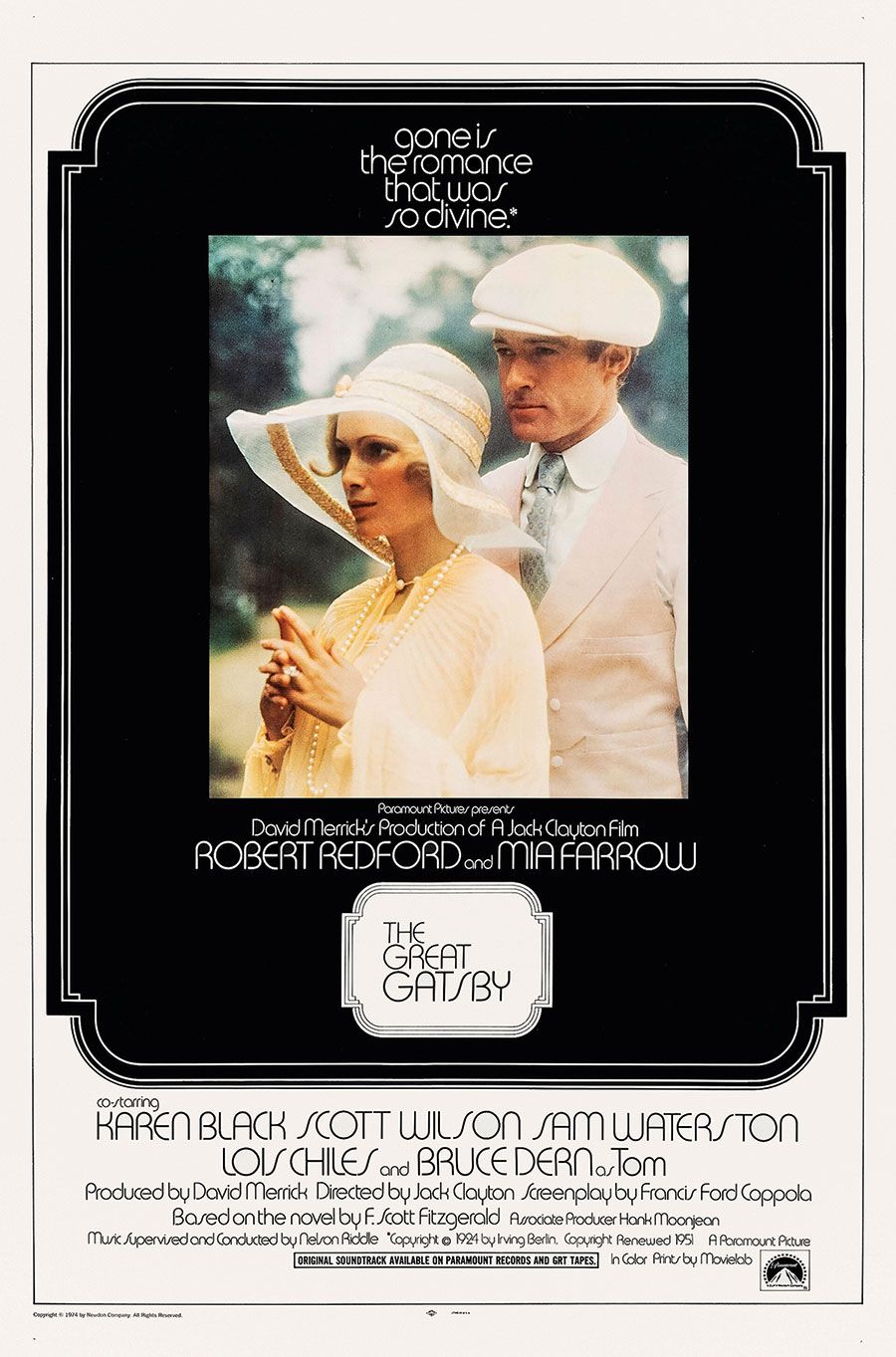
Meanwhile, on the big screen, the book has been adapted four times, with two offerings making it into the canon. First, the 1974 film that starred Robert Redford as Jay Gatsby – and was written by Francis Ford Coppola – seamlessly fit the auteur-fuelled artistry of the time. Lush and stylish, it cinematically evoked the novel’s symbolism through beacons of light, bringing to life Fitzgerald’s vivid lines like, “Gatsby believed in the green light, the orgastic future that year by year recedes before us.”
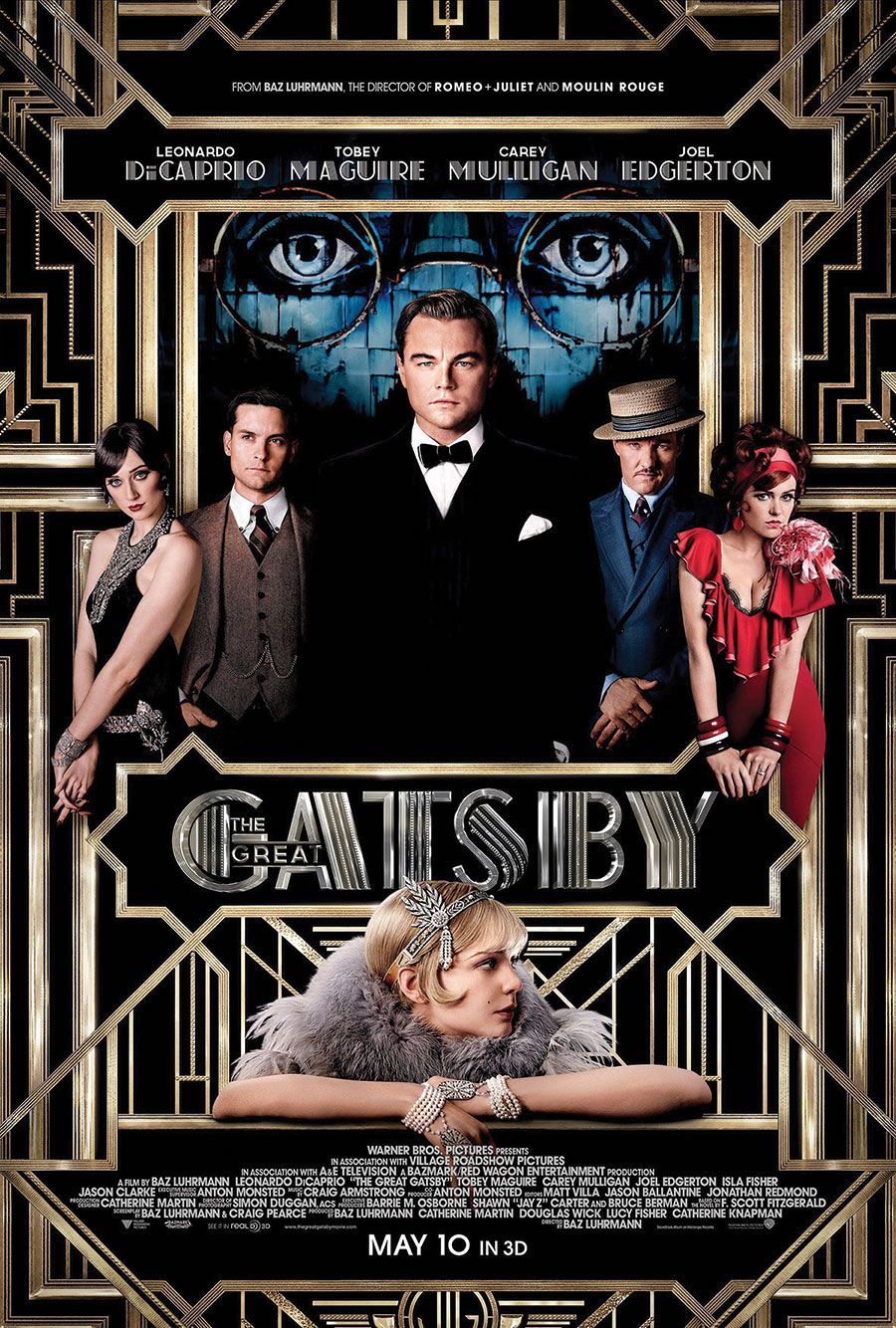
In 2013, Leonardo DiCaprio took the lead in Baz Luhrmann’s frenetic adaptation, a hip-hop soundtracked fever dream which mirrored the rap world’s blinged-out ethos of ascension in Gatsby’s fake it ’til you make it self-invention. Possibly foreseeing his novel’s far-reaching influence, Fitzgerald seems to have summed it up with one of his hero’s more idealistic beliefs: “Can’t repeat the past? … Why of course you can!”
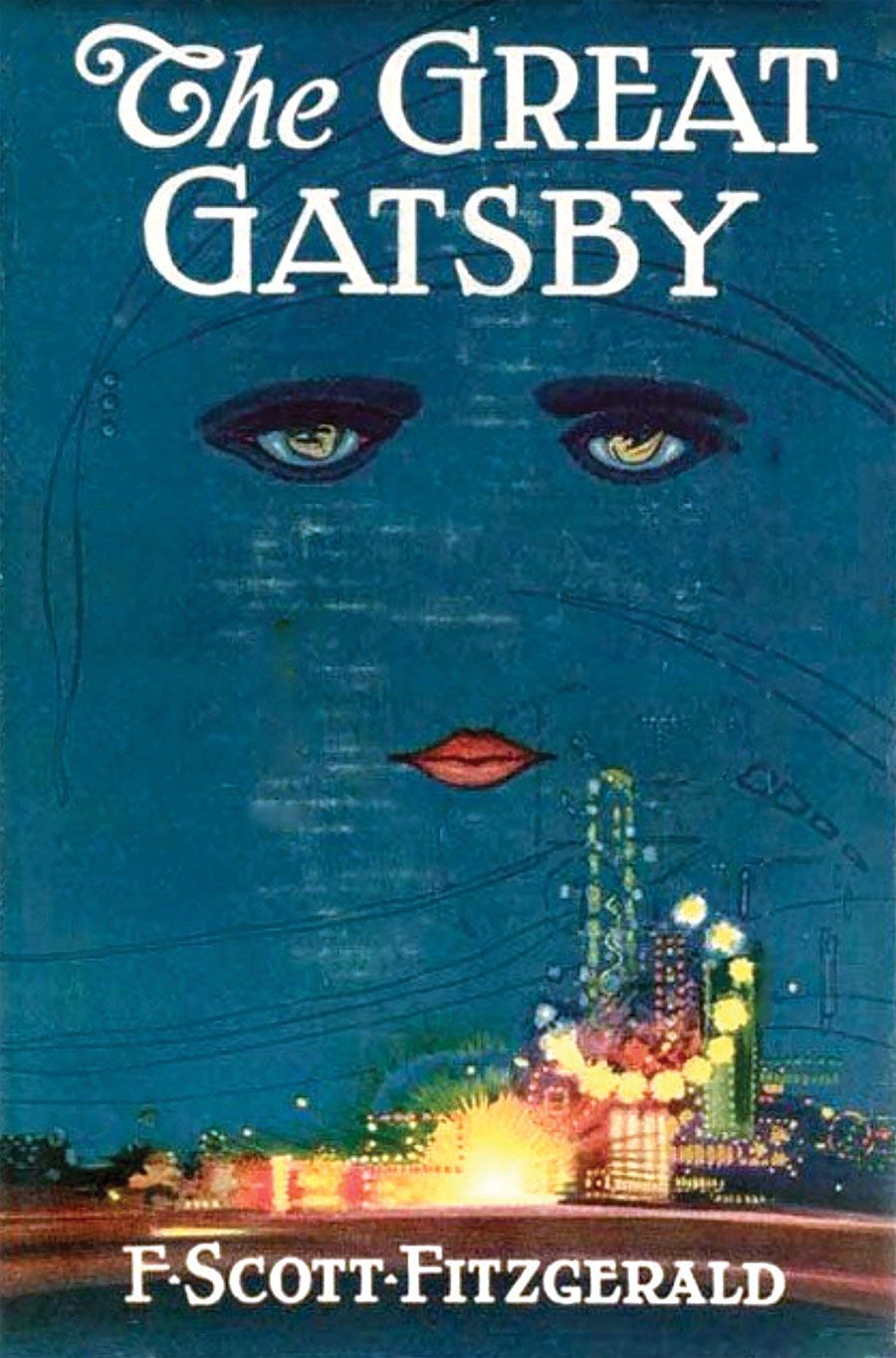
“Did I tell you about the books? They’re real” —Owl eyes
We couldn’t agree more with this minor character in the novel who’s obsessed with Gatsby’s library. But the literary legend surrounding this classic book feels almost surreal. Sales were only so-so upon its release and Fitzgerald died in 1940 before the book became a success. So what happened? The Second World War. The novel was selected as a giveaway by the U.S. military and thousands of copies were distributed in paperback – a new innovation – to homesick service men, who devoured the tale of flappers and bootleggers, decadence and decay.
In it, self-made millionaire Jay Gatsby longs for southern belle Daisy, who’s married to old-money Long Islander Tom Buchanan – the latter two being “careless people,” who hide behind their wealth, causing no end of destruction, including the death of the hero. “It’s become a defining document of the national psyche, a creation myth, the Rosetta Stone of the American dream,” said Bright Lights, Big City author Jay McInerney. He and other ’80s scribes, like Brett Easton Ellis, were inspired by the way Fitzgerald’s 1925 novel of excess resonated in their own decade.
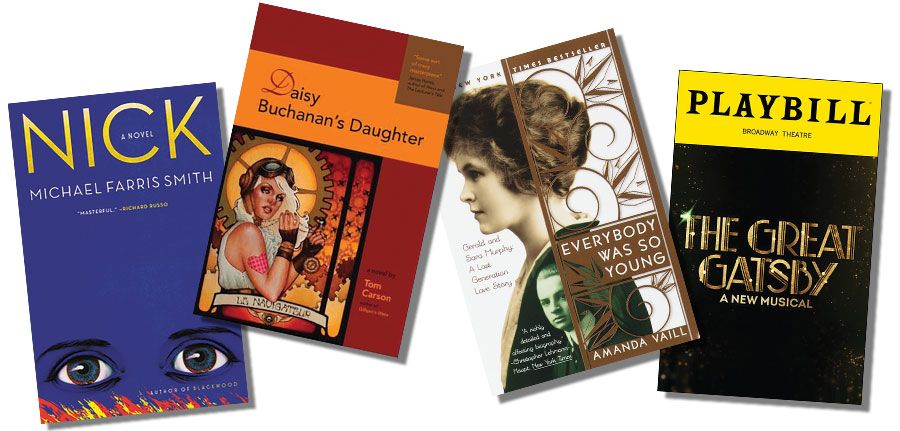
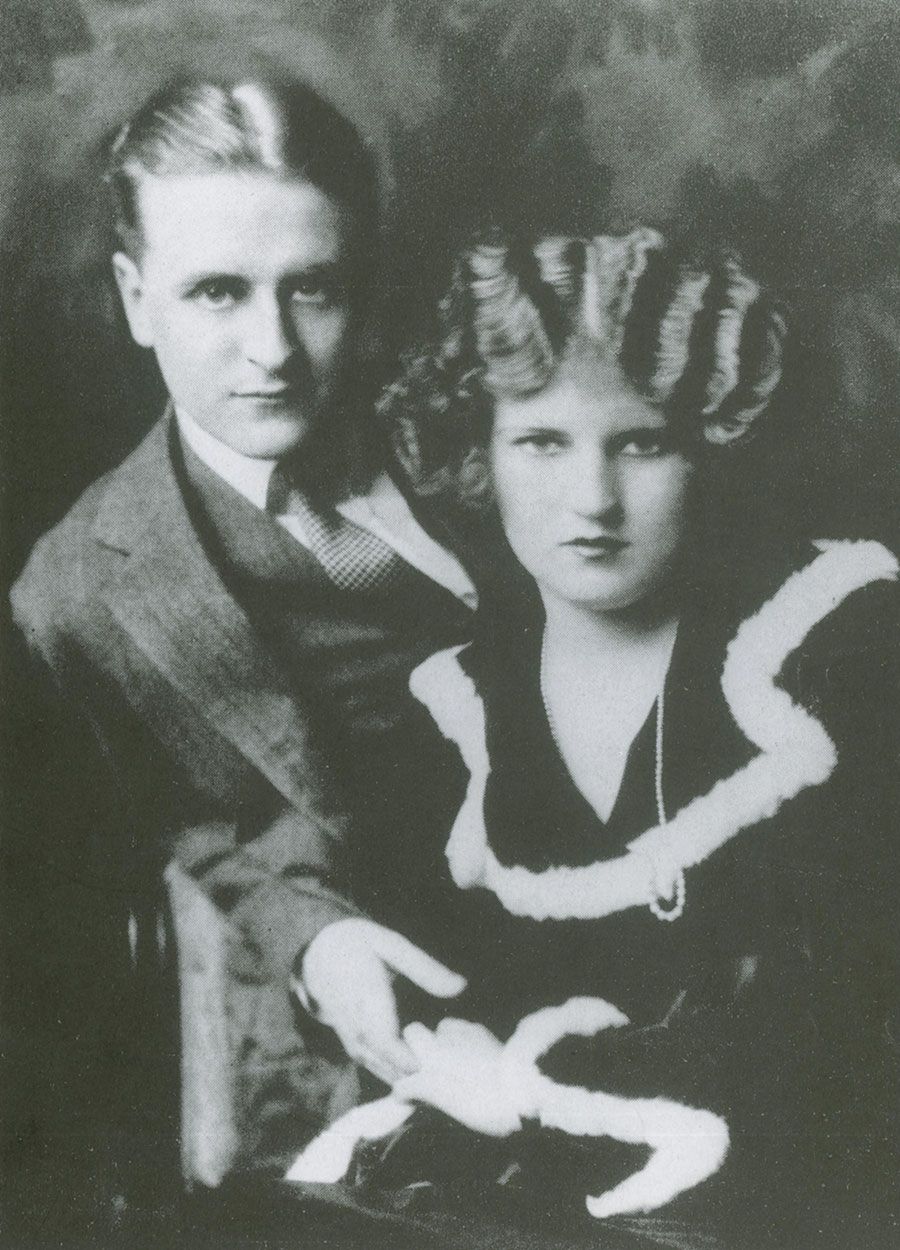
Literary spins on the book now make up an entire sub-genre, including Michael Farris Smith’s 2021 novel, Nick, which refers to Gatsby narrator Nick Carraway, who gets his own fully formed backstory. Likewise: Tom Carson’s 2011 next-gen novel, Daisy Buchanan’s Daughter. And what about the line with which the world of Gatsby begins and the real lives of Fitzgerald and his wife, Zelda, ends? Itself a porous one, given the swath of books devoted to the famous couple, like the splendid biography Everyone Was So Young, and the novel Zelda.
And off the page, the story continues to be “remixed” in multiple ways. The subject of numerous stage productions over the years, The Great Gatsby recently shape-shifted into a toe-tapping musical on Broadway with a second, moodier take coming soon.
“I could think of nothing except the luminosity of his pink suit under the moon” —Nick Carraway
If someone says they are throwing a Gatsby-themed party, the fashion directive is obvious – for both men and women. You think of flapper headbands and hemlines, insouciantly hung pearls; or of fedoras – the wider the brim, the better – and baggy, high-waisted trousers. You think fringe. Oxford shoes. A whole Ivy League style that’s become a recurring touch point in the lingua of American fashion.
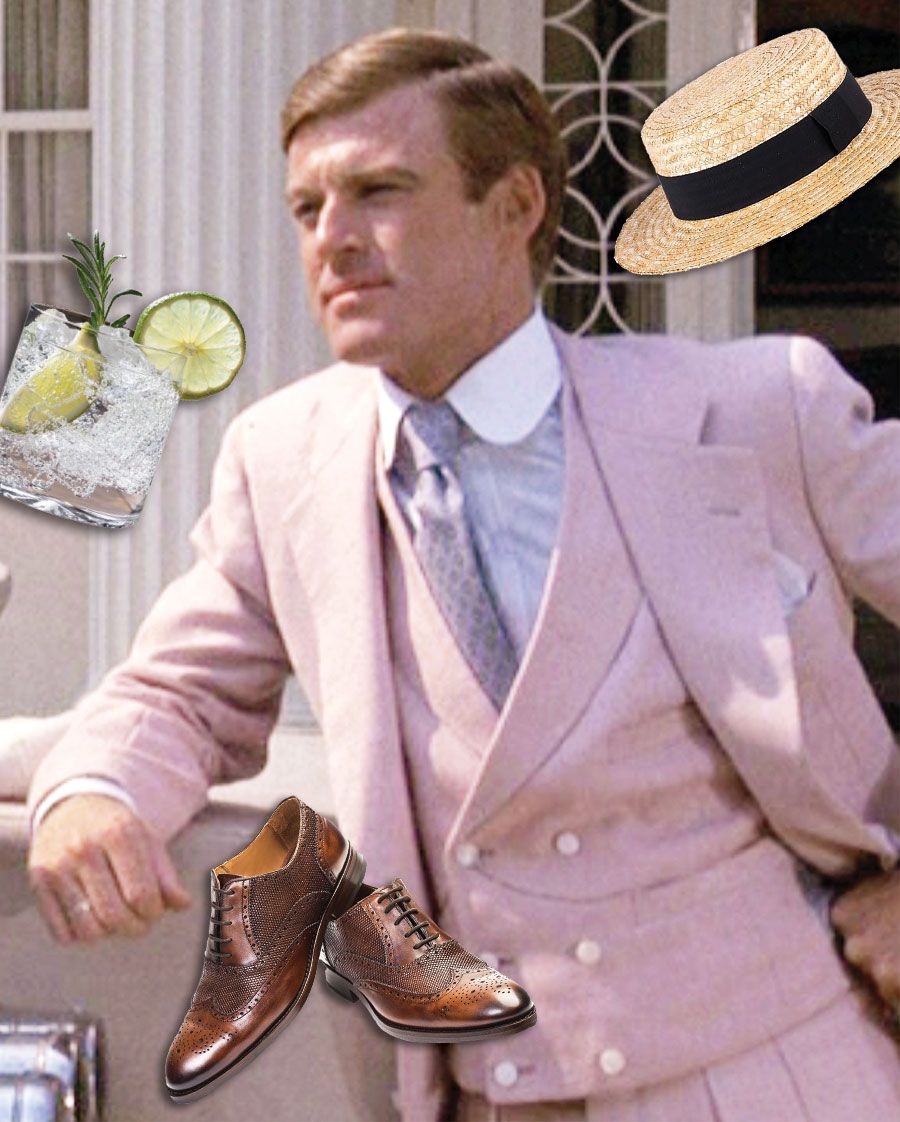
In the novel and on the screen, Jay Gatsby’s wardrobe is a scene stealer: “I’ve got a man in England who buys me clothes,” says the protagonist. “He sends over a selection of things at the beginning of each season, spring and fall.”
And the ensuing description of his shirts is so good it has to be read in its entirety:
“He took out a pile of shirts and began throwing them, one by one before us, shirts of sheer linen and thick silk and fine flannel which lost their folds as they fell and covered the table in many-coloured disarray. While we admired he brought more and the soft rich heap mounted higher – shirts with stripes and scrolls and plaids in coral and apple-green and lavender and faint orange with monograms of Indian blue. Suddenly, with a strained sound, Daisy bent her head into the shirts and began to cry stormily. ‘They’re such beautiful shirts,’ she sobbed, her voice muffled in the thick folds. ‘It makes me sad because I’ve never seen such – such beautiful shirts before.’”
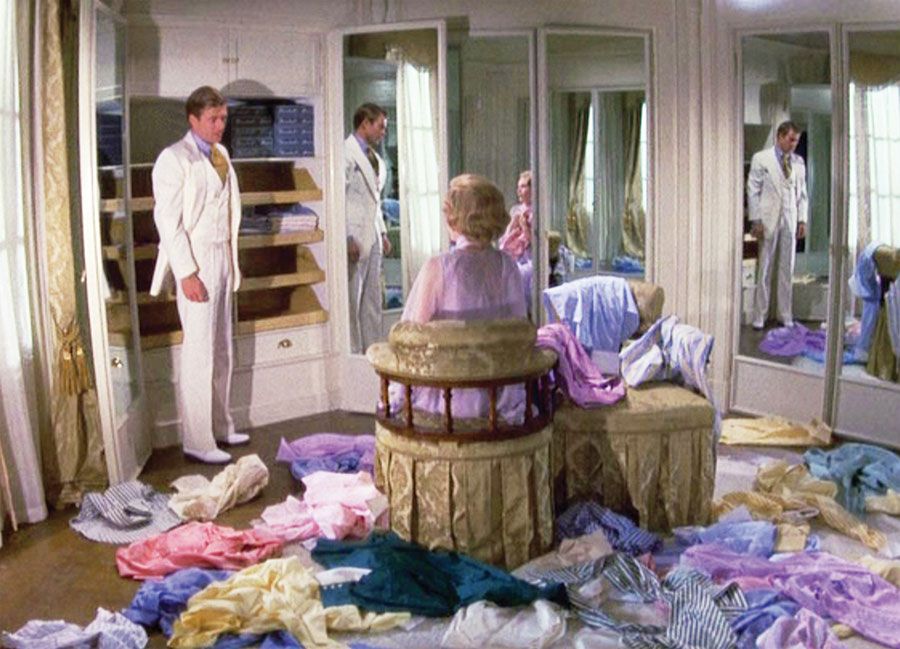
No wonder Ralph Lauren has called Fitzgerald one of his “heroes.” Like the character of Gatsby, the designer is known for his remarkable reinvention: Born Ralph Lifshitz to working-class immigrant parents in Brooklyn, this tie salesman would become the purveyor of an iconic style that signified the monied elite.
It was a match made in fashion heaven when he costumed the entire male cast of the Redford-led 1974 film. And, of course, the signature pink suit worn by Redford’s character is the pinnacle of the “Gatsby look.” A classic one that connotes a well-dressed man to this day.
“The bar is in full swing” —Nick Carraway
Gin-soaked is such a fitting descriptor for Fitzgerald’s most celebrated novel, which captures a deliriously tipsy period in American life, but also an oxymoronic one: a time of Prohibition, yet also an era of speakeasies, heightened liquor demand, plus a growing popularity for cocktails (deeply flavoured concoctions designed to disguise the taste of potent bathtub booze with juices, sweeteners and herbs). Is there, in fact, a single novel in history that continues to be an inspiration for mixologists – even now – more than The Great Gatsby?
Gauzy passages like, “A tray of cocktails floated at us through the twilight,” has given birth to modern-day books such as Gatsby Cocktails: Classic Cocktails from the Jazz Age, by libations expert Ben Reed. It features more than 20 classic drinks inspired by the 1920s, including Gatsby’s tipple of choice, the Mint Julep, and Fitzgerald’s favourite, the Gin Rickey.
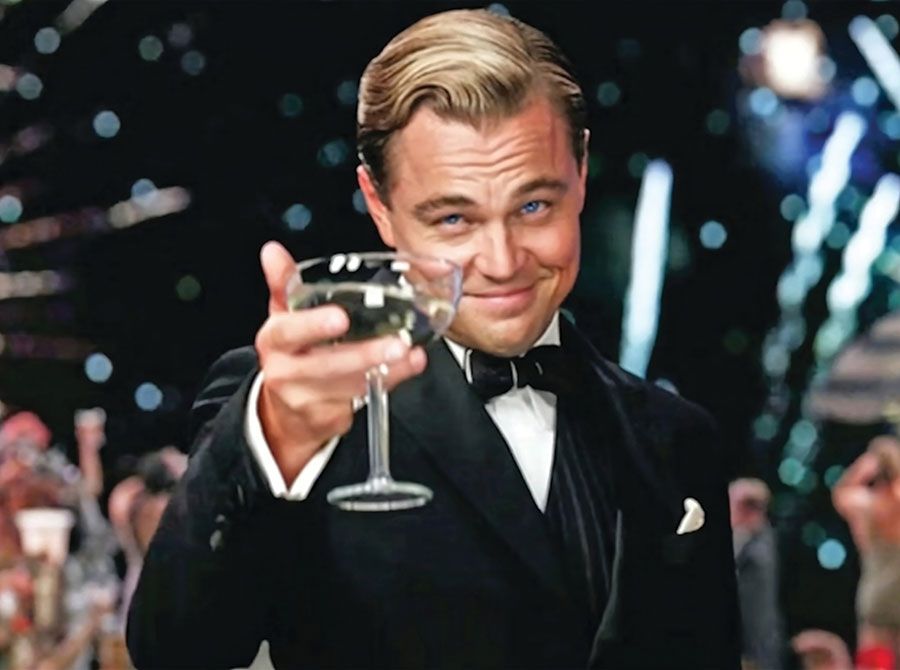
In the novel, highballs come and go throughout the story, as whiskey best quenches Tom Buchanan’s thirst. And champagne is ever-present. As a guest at Gatsby’s soiree, Nick witnesses that “Champagne was served in glasses bigger than finger bowls.” That’s how Moët & Chandon came to be specifically and prominently featured in the Luhrmann film – and, in part, why bubbly remains a lure for Toronto’s celebrity mixologist Frankie Solarik. “Champagne cocktails are the quintessential Gatsby-themed cocktails,” he tells Zoomer, sharing a recipe (below) that is both easy to make and “evocative of the era.”
A version of this article appeared in the April/May 2025 issue with the headline ‘So We Beat On’, p. 60.
RELATED:
Reel Drinks: From Bond’s Martini to Carrie’s Cosmos, Delicious Cocktails Inspired by Hollywood