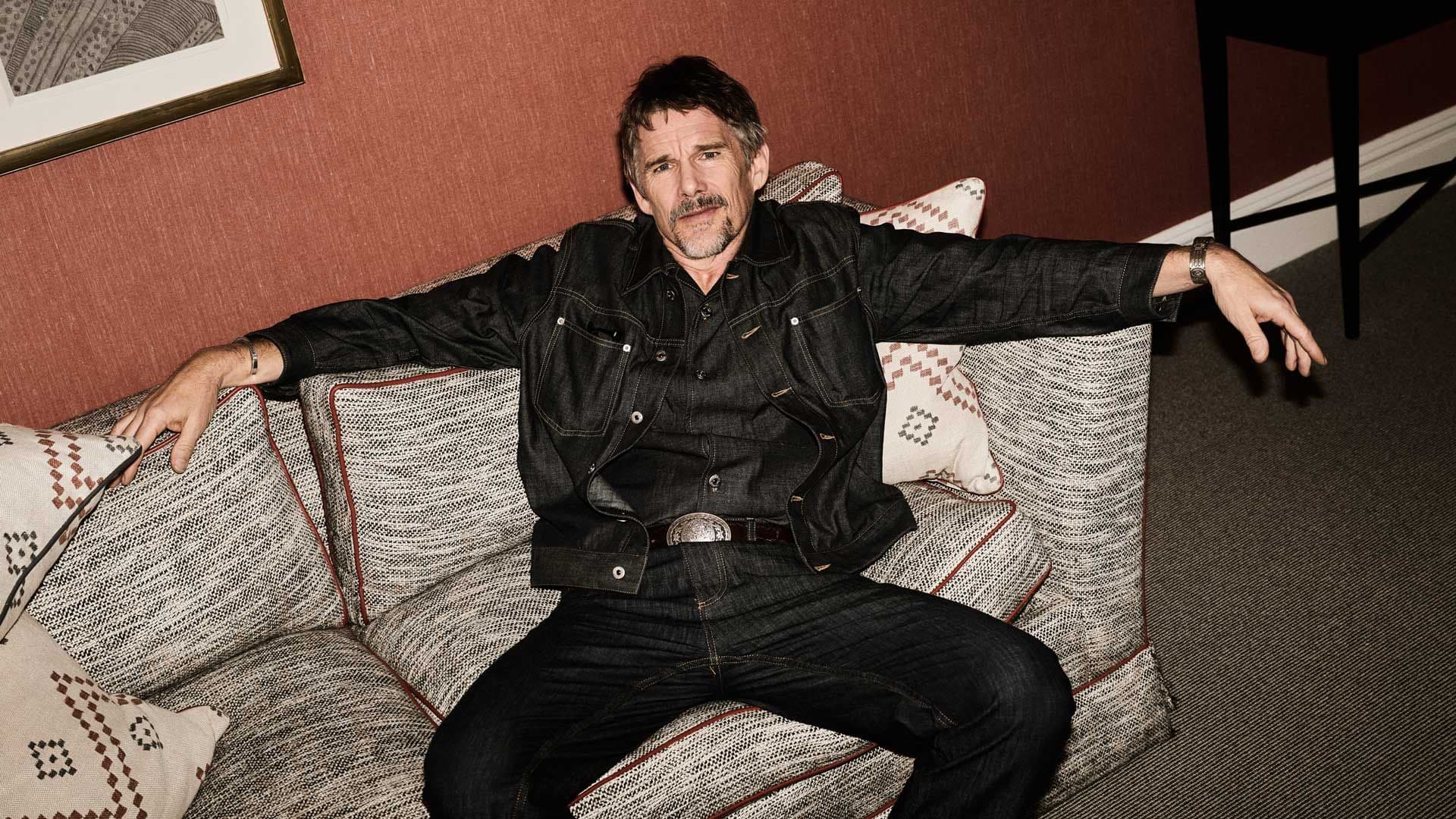
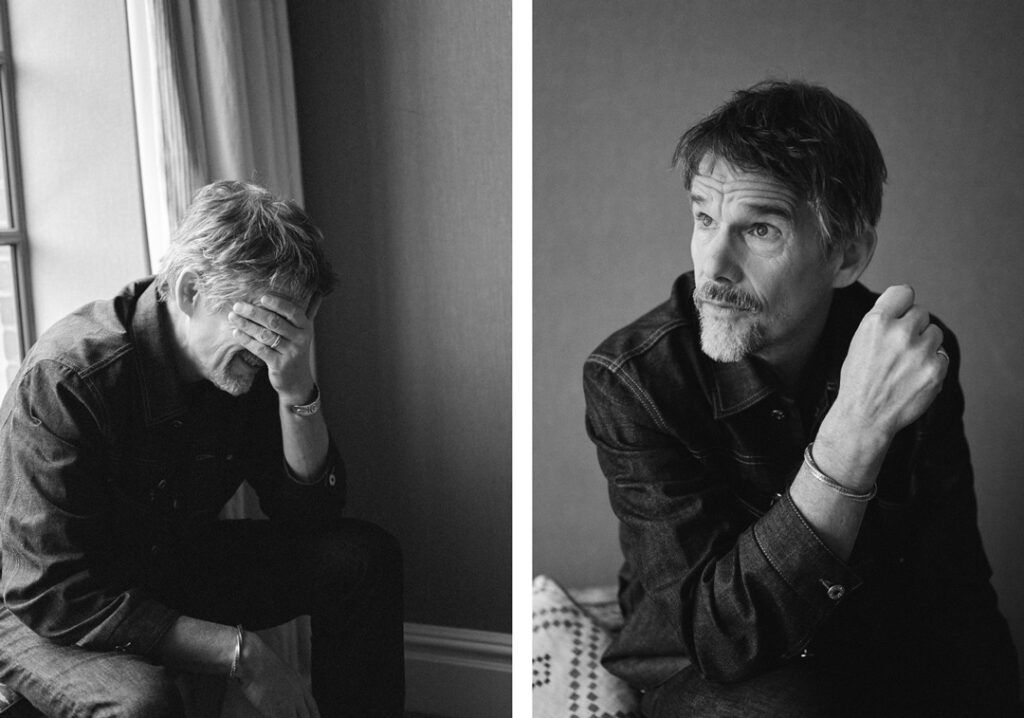
More than most actors of his generation, Ethan Hawke makes me think of words, poetry, soliloquies, philosophies – one poignant, albeit oft pretentious, line after another – delivered by someone who gives off the vibe of a cool older brother or a sexy-sensitive boyfriend, or a passionate but disheveled English prof or just that chill neighbour who has the most enviable collection of books and vinyl.
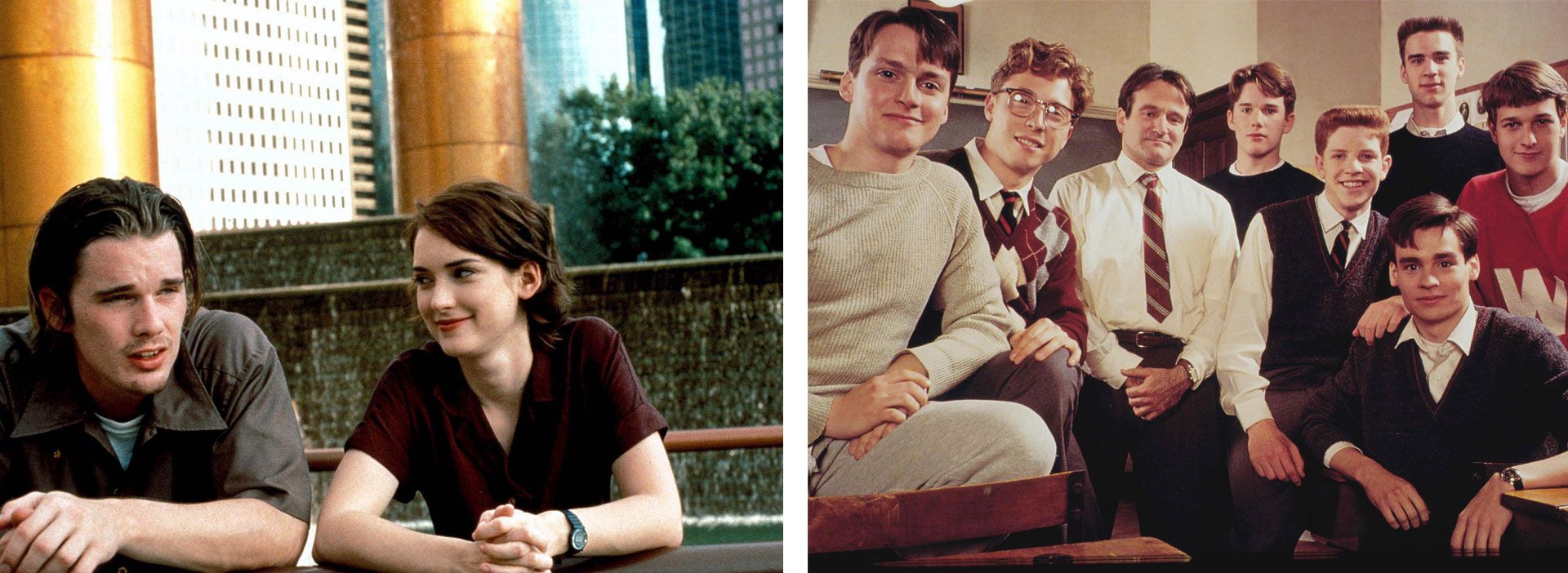
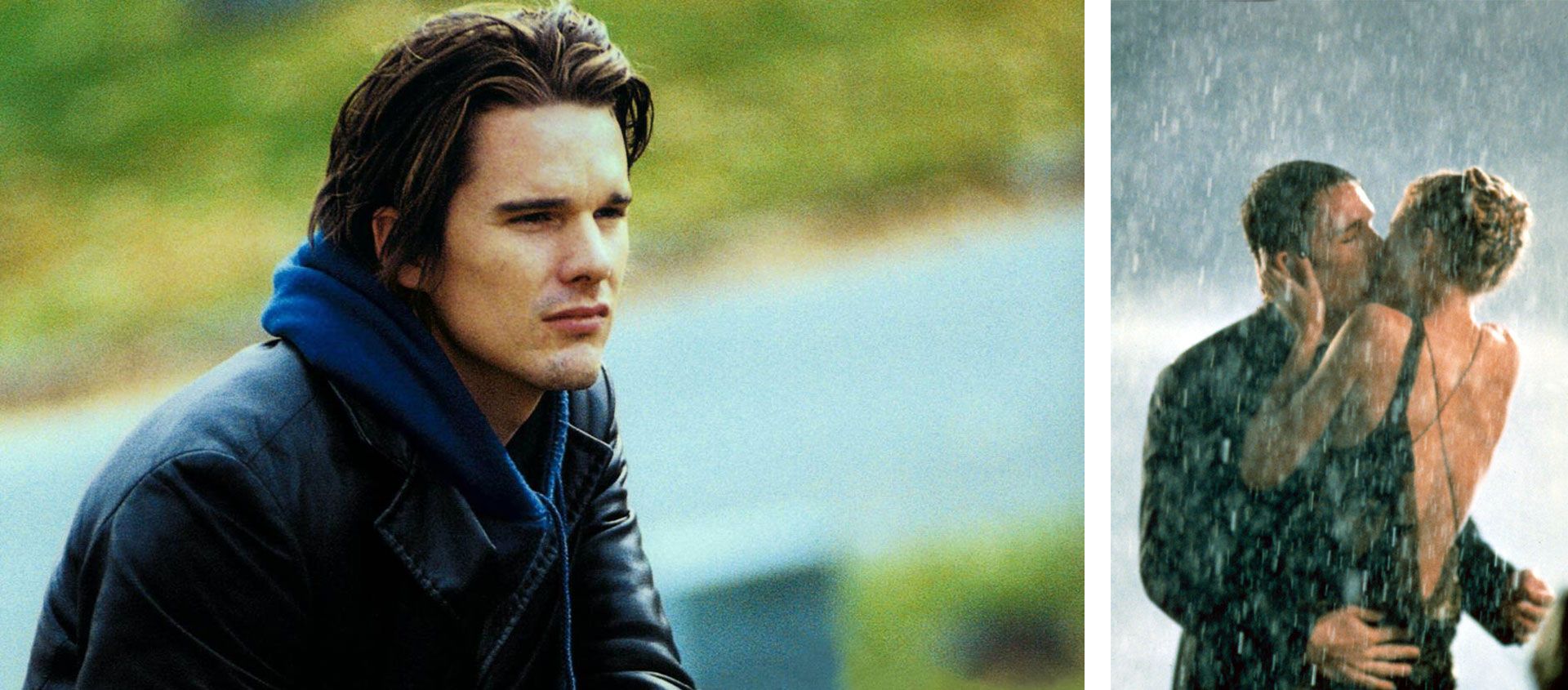
It all started with Dead Poets Society, when Hawke’s character Todd Anderson jumps on his desk to salute his ousted teacher (Robin Williams) with the Walt Whitman refrain, “O Captain! My Captain!” He could never have known then that almost all of his memorable roles to come would have some kind of poetic, lyrical, literary element. There’s Troy Dyer in Reality Bites, a coffeehouse poet and slacker musician who drops nuggets of wisdom in between sarcastic putdowns. Then there’s aspiring writer Jesse Wallace in filmmaker Richard Linklater’s all-talk two-hander Before Sunrise – and its two even-more-talk sequels – who makes a connection with French activist Celine (Julie Delpy) on a European train while expounding on love, time, aging, sex and again by dropping some of Whitman’s best lines. Follow that up with roles like Pip in Great Expectations (alongside Gwyneth Paltrow); Hamlet in a 2000 adaptation that uses Shakespearean dialogue in a modern New York City setting; and, most recently, as Broadway lyricist Lorenz Hart in Blue Moon (also directed by Linklater) and Hawke has cemented himself as the ultimate writer’s actor. It doesn’t hurt that he’s related to Tennessee Williams on his father’s side.
Sure, not every movie the Texas native has made is a prose masterpiece – he’s currently starring in the horror franchise The Black Phone 2. But Hawke makes up for the odd by-the-numbers flick with side projects that fit the word-nerd bill: launching a New York theatre company, writing four novels, creating a literary prize and even doing a TED Talk about the power of human creativity. “Most people don’t spend a lot of time thinking about poetry. They have a life to live and they’re not really concerned with Allen Ginsberg’s poems or anybody’s poems,” he says while sitting in a bar, where he filmed his talk. “Until… their father dies, you go to a funeral, you lose a child, somebody breaks your heart, they don’t love you any more. All of a sudden you’re desperate for making sense out of this life. ‘Has anybody felt this bad before, how did they come out of this cloud?’ Or the inverse, something great: You meet somebody and your heart explodes, you love them so much you can’t even see straight – and that’s when art’s not a luxury, it’s sustenance.”
The 54-year-old actor, though, wasn’t really thinking about all the ways he could bring a love of language to the world when he got his start – he just wanted a long, successful career. “When Dead Poets Society came out, I was 18 years old,” he recently told a Toronto International Film Festival audience at the premiere of his new TV series, The Lowdown (Disney+). “I asked myself, ‘Who was the child actor that really kept growing?’ I had read somewhere that Jeff Bridges was 18 when The Last Picture Show came out, and that’s probably still one of my all-time favourite movies. So from the time I’ve been 18, I’ve watched everything he’s done. And he just keeps growing, he just keeps being himself in the present moment that he’s in. He plays inside every genre – romance, comedy, horror – and he’s always working with good directors. He can be the Starman, he can be the Fisher King. He’s hysterical, intense and brilliant – and has been a north star since I started acting.”
How thrilled Hawke must have been when Bridges also co-wrote a book, The Dude and the Zen Master, inspired by his cult character in The Big Lebowski. “It’s not overtly a book about acting, but it can be read as one,” Hawke told the New York Times. “They get at what I love most about my profession: that in the endeavour to be a better actor – more present, more awake, more compassionate, more spontaneous – you are actually teaching yourself to be a more fully realized version of yourself.”
In The Lowdown, a comic noir drama set in Tulsa, Hawke takes on his most Dude-like role yet – scruffy as hell, cool, flawed and relatable. But where “the dude abides” – as Bridges’s character says about his laid-back persona – Hawke’s Lee Raybon charges into the fray over and over again. Lee’s a rare book store owner (natch) and a gonzo journalist, who bills himself as a truthstorian: “I read stuff. I research stuff. I drive around and find stuff. Then I write about stuff,” Lee says in the pilot. “Some people care, some people don’t. I’m chronically unemployed, always broke. Let’s just say, I’m obsessed with the truth.”
Lee trips people up with his language skills, while also being beaten to a pulp over and over again by guys who don’t really go in much for talking. The series, made by Sterlin Harjo (the creator of Reservation Dogs), gives the audience a chance to really see Hawke simmer in a role over eight episodes – much longer than the course of a film. In spending this much time with the actor, you see why Linklater made a trilogy out of Before Sunrise, giving Hawke’s character more and more topics to philosophize about and spent 12 years shooting Boyhood with Hawke, capturing the way he progressively seeped into the role of a father over time. (In real life, Hawke is a dad of four and his oldest, Maya, who he shares with Uma Thurman, has a successful acting career herself.)
In many of his roles, Hawke can start out as grating and then grow on you until you’re hopelessly attached. That’s certainly the case in Blue Moon. The movie unfolds over one night, March 31, 1943, when Oklahoma! is premiering on Broadway. It’s the first musical that Hart’s longtime partner Richard Rodgers made without him (instead pairing with Oscar Hammerstein). Hart, the lyricist of My Funny Valentine, The Lady Is a Tramp, Isn’t it Romantic? and the titular Blue Moon, is sitting in Sardi’s bar awaiting the opening night afterparty, where Rodgers and Hammerstein will be flooded with adoration and great reviews. But until then, Hart is the most famous – and loneliest – man in the room, holding forth on beauty, love and punctuation for just a handful of people, including a bartender, the piano player and fellow wordsmith patron, New Yorker magazine writer and author E.B. White.
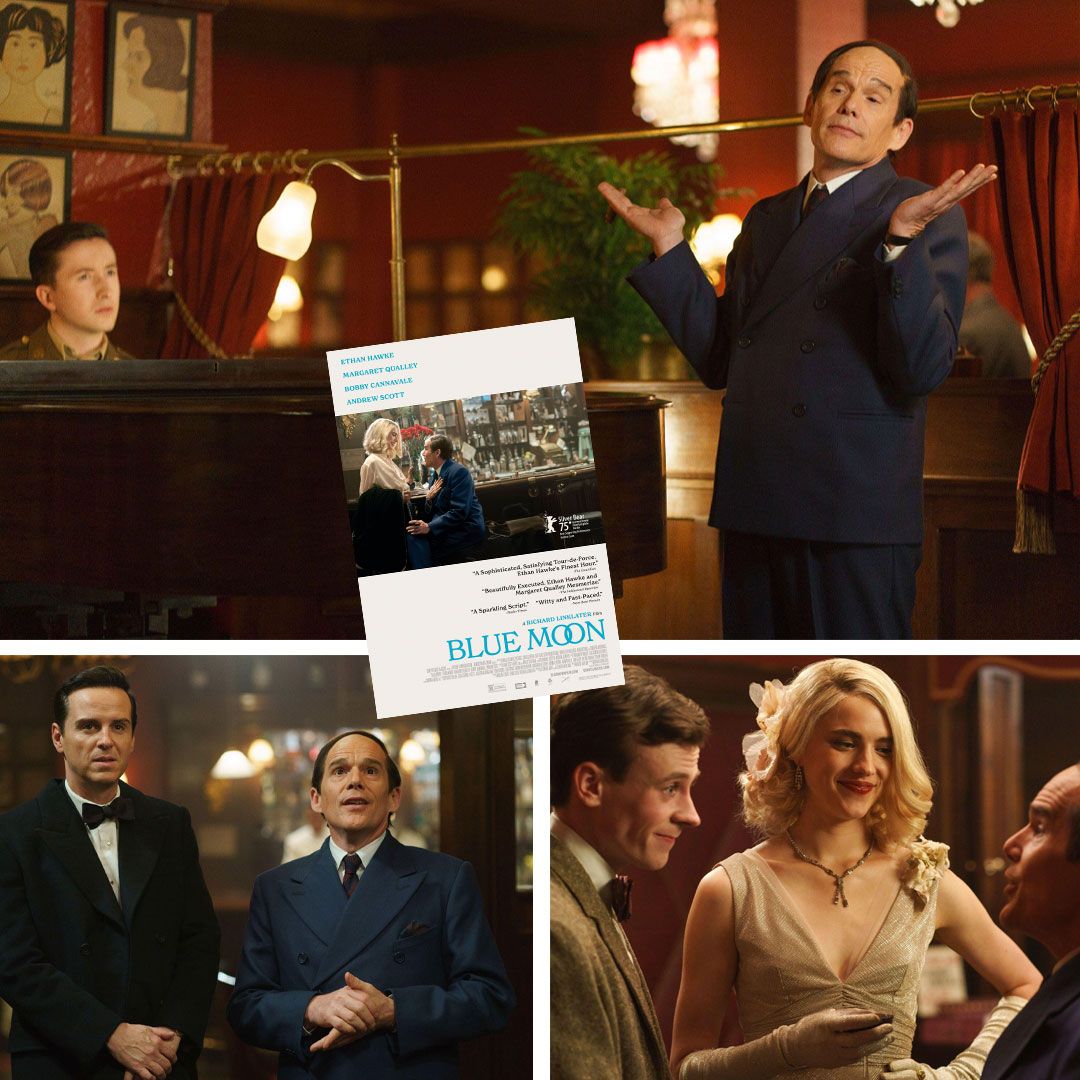
Playing someone 10 inches shorter than himself and with an awful comb-over, this is Hawke like you’ve never physically seen him. But still, the passion for language is front and centre. “There are moments in my work when I have made something bigger than myself,” says Hart. “The words were bigger than the music, bigger than the characters who sang them. And they approached for maybe one-half-second something immortal. Excuse my limitless self-regard, but they did and if nobody else is going to say it then I’m going to: I’ve written a handful of words that are going to cheat death.”
Like many of Linklater’s movies, this one is all talk. And it’s as close to a one-man show as you’ll see on the big screen – taking place in real time, shot in one location and stacked with monologues. But don’t call it theatrical. “People generally associate language with the theatre, they make that jump,” says Hawke while at TIFF for Blue Moon. “But one of the things that I love about Richard’s movies is an embrace of language as a part of a toolkit of what cinema can do. There’s nothing theatrical about the intimacy that’s happening at this party. It’s an extremely intimate situation. The cinematic quality to me is that in real time we’re going to watch a person’s heart break so much that they’re going to die. There’s something about cinema that captures that beautifully.”
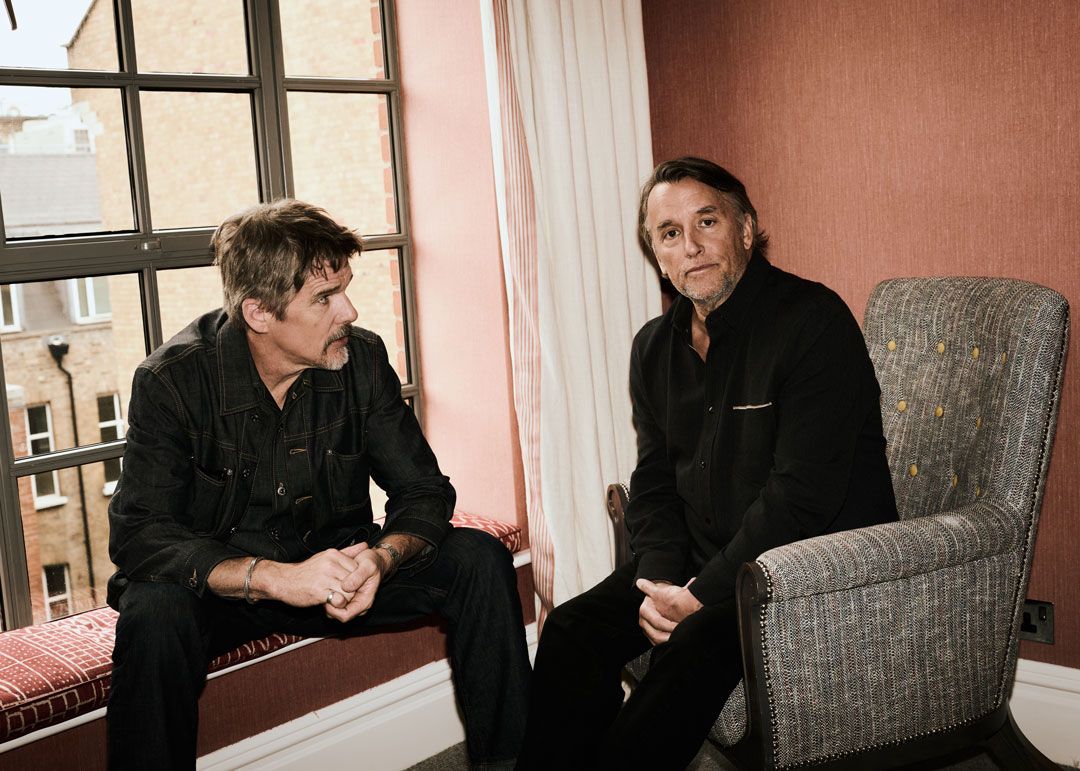
And something about Hawke’s performance that captures it beautifully as well. In fact, it might just win him his first Oscar. He’s been nominated twice for contributing to the original screenplays of Before Sunrise and After Midnight. And he’s earned two supporting actor nods for Boyhood and Training Day – the latter, of course, being more introspective and talky than your average cop drama and co-starring fellow thespian Denzel Washington.
With Blue Moon, Hawke has made around 75 movies and this is easily the pinnacle of his wordy oeuvre. So what does his cinematic future hold, I ask Hawke when I meet him at the festival. We talk about how June Squibb was feted for her starring role in Eleanor the Great at age 94, while her director Scarlett Johansson said she could never work that long, considering she started so young. “Well, first off, I bet Scarlett’s wrong, I’ll bet she’ll be here in her nineties,” Hawke says (having worked with eight-year-old Johansson in the 1993 play Sophistry). And him? “God willing and the creeks don’t rise,” he says. “There were times in my life when I couldn’t imagine that I would be in love with acting that long. Like when I was 40, I thought, I’ll do this for maybe 10 years, then I’ll do something useful with my life, like not-for-profit work or something like that. But then I realized that one lifetime is not enough to excel at this profession. I find it so much more interesting now, the machinations of the game, how to create opportunities for yourself, how to see a good opportunity when it presents itself, what hard work translates into and the benefits of failure. I started to see the whole fabric of it differently than I did when I was 21.”
And let’s not forget the joy that comes with devoting your life to words. “I saw Patrick Stewart and Ian McKellen do Waiting for Godot on stage in London,” Hawke says. “The place was packed, totally sold out because all these kids wanted to see Gandalf and Captain Picard. These old dogs were grabbing these young people’s attention, and they were delivering them some first-class Beckett. People walked out with the roof of their heads taken off. It was staggering. The quality of the acting was really, really high. It was a lifetime of studying. You realize there are other rooms to get to that require a lifetime. I would love to be here at 94. I’ll see you then.”