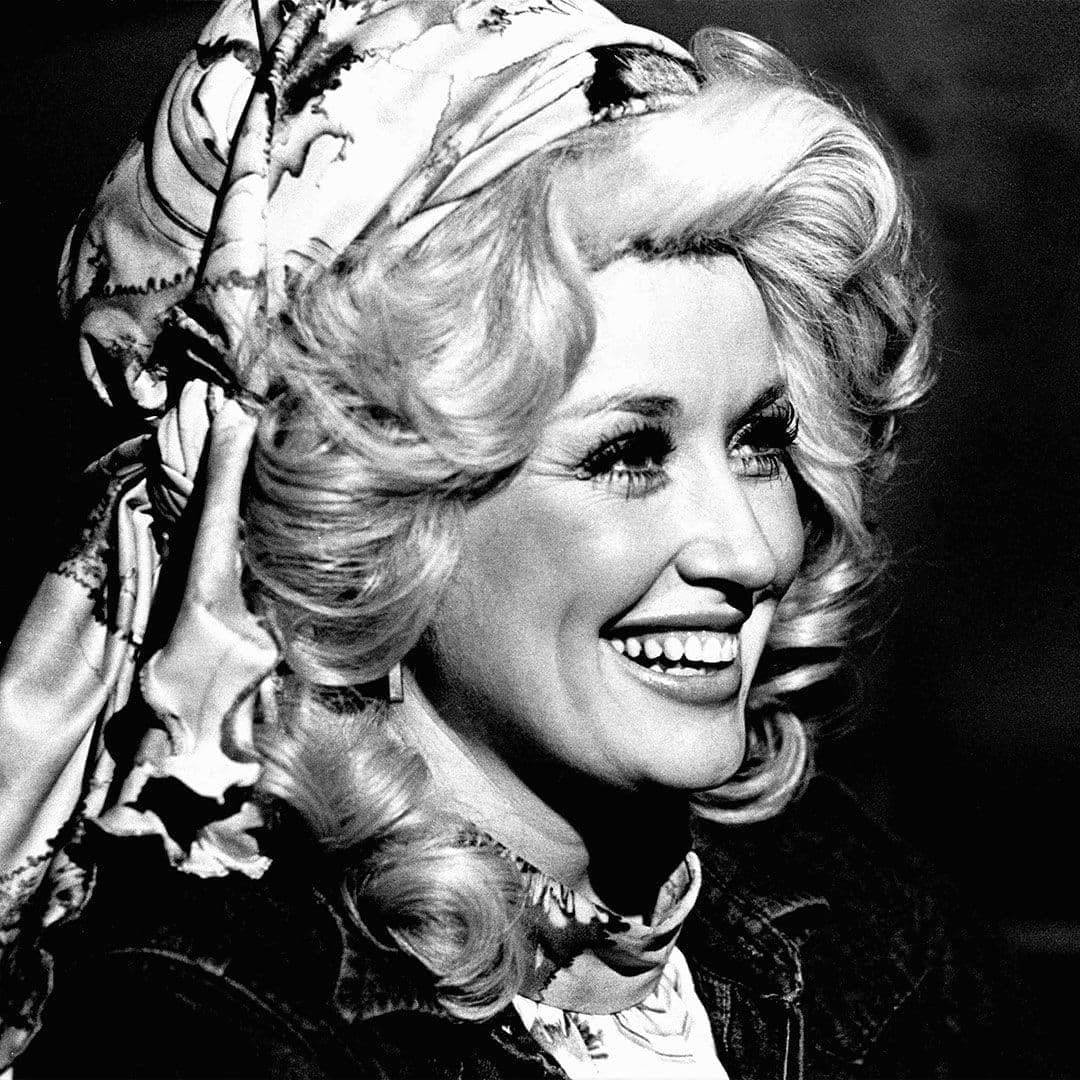
Upon hearing the news that Dolly Parton died on Aug. 25, at 80, only a year after her husband of close to 60 years, Carl Dean, passed away, everyone likely had their own image of Dolly come to mind. And, inevitably, she would have been smiling. In 2016, the brightest light of Tennessee was named to Stanford University’s Happiness Hall of Fame, for advancing the cause of happiness throughout the world – alongside the likes of Muhammad Ali, Oprah Winfrey and the Make-A-Wish Foundation. Never one to take herself too seriously, the queen of country music – and all-around Renaissance woman – made a joke of it: “I’m often told I look so happy, but to be honest – that’s the Botox.” Humbleness aside, Parton was a woman of action, ensuring that those in every corner of the world and every walk of life felt the blessings that she received. The little girl who grew up in a one-room house without heating, plumbing or electricity on Little Pigeon River, about four hours from Nashville, used her wealth and fame to help wildfire survivors; start a bald eagle sanctuary; and distribute free books to millions of children around the world. She also invested her royalties from Whitney Houston’s cover of I Will Always Love You (from The Bodyguard soundtrack) in Black communities in Nashville; funded the Moderna COVID-19 vaccine; and so much more. Giving defined her. And, as she told Zoomer in 2017, she did have personal philosophy when it came to happiness. “We need to stay young at heart, young in spirit. And we need to be active, and we need to think more like children. We need to remember what it was like when we were young.” Rest in power, Dolly Parton.
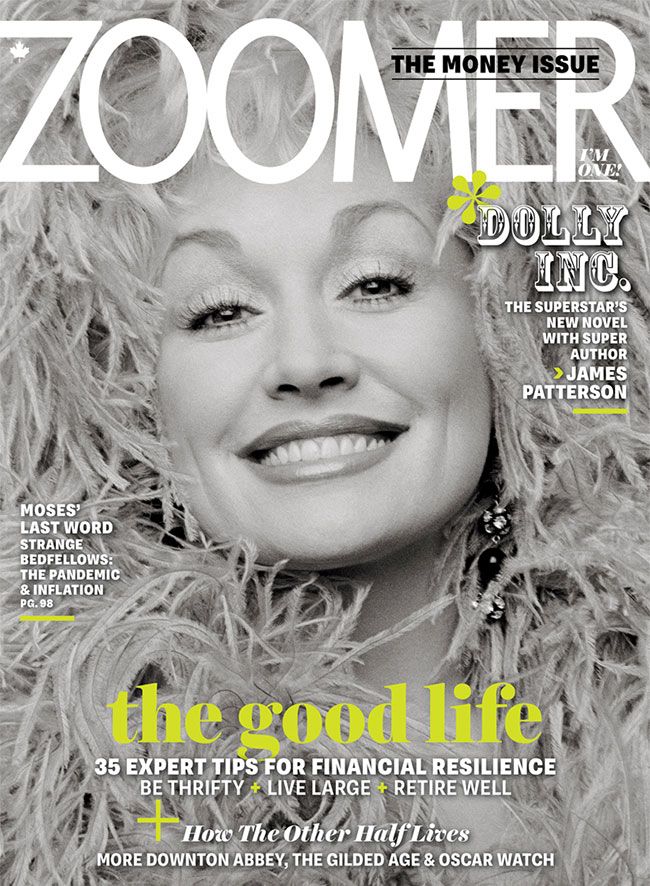
– FROM THE ARCHIVES –
Feb/March 2022
Welcome to the Dollyverse: Exploring the Many Dimensions of Country Queen Dolly Parton, the Original Influencer
by Rosemary Counter
An old television clip recently made new rounds on social media. Barbara Walters, having just “made it” as on-air talent in the old boys’ club of broadcast journalism in 1977, is perched on one stiff leather couch opposite Dolly Parton. Tresses teased tall and an oversized blue rose tucked behind her ear, she is being bombarded by questions, with undertones varying from condescension to disdain. “Dolly, did you look like this when you were a kid? Is it ‘all you’? Do you ever feel that you’re a joke?”
Even if she would have rather sucker-punched Walters, Parton — the Nashville, Tenn., singer-songwriter then on the cusp of superstardom — smiles sweetly and answers with grace. “It’s certainly a choice,” she begins, before dealing out a trademark Dollyism. “I would never stoop so low as to be fashionable.” And then, as if she could see the future in a crystal ball, she delivers a telling take in her soft Southern drawl. “All of these years, people have thought the joke was on me, but it’s actually been on the public. I know exactly what I’m doing, and I can change at any time.”
And she has transformed: from country queen to pop star, singer to actress, business tycoon to philanthropist. Still rocking big hair and big boobs, she’s also exactly the same — thanks to impeccable makeup atop a wrinkle-free face — as if she’s kicked up her six-inch stilettos and waited patiently for the world to embrace her trademark, country-glam look and laud her third-wave feminism, business acumen and big heart.
All I know for sure is that, when the world went to hell in 2020, Parton emerged as an unlikely hero. While the pandemic turned most people’s lives upside down, she promised light at the end of the tunnel with a US$1-million donation to Vanderbilt University Medical Center’s COVID-19 research fund, which proved critical in the early stages of the Moderna vaccine’s development. The day she received her first shot in May 2021, she wrote a viral take on her 1973 hit “Jolene” to raise awareness. “Vaccine, vaccine, vaccine, vacciiiinnne,” she sang. “I’m begging of you, please don’t hesitate.”
If there were one earthly being we could all rally around, it might be Parton, who after a half-century in the spotlight has proven to be all things to all people: gay icon, good Christian, third-wave feminist and Black ally. In 1997, she sparked the revitalization of a historically Black Nashville neighbourhood when she used royalties from her songwriting credit on Whitney Houston’s version of “I Will Always Love You” to buy a commercial complex in 12 South for her office. In 2020, just months after George Floyd was murdered by a police officer, Parton did not mince words when she told Billboard magazine: “Of course Black Lives Matter. Do we think our little white asses are the only ones that matter?”
One of America’s richest self-made women, she is loved by grandmas who tune into her songs on the radio and younger generations who discover her by refreshing their feeds on social media, where Parton has 5.2 million followers on Twitter and 4.3 million on Instagram. This is thanks, in part, to her goddaughter, Miley Cyrus, whose cover of “Jolene” went viral, again, most recently when she performed it with her sister Noah on her New Year’s Eve television special.
At 76, it is safe to say Parton, the original influencer, is having the time of her life. Just read the headlines: Time named Parton one of 2021’s most influential people; People chose her as a 2021 Person of the Year; the New Yorker dubbed the nation “The United States of Dolly Parton” and the New York Times summed it up nicely by asking: “Is there anything we can all agree on? Yes: Dolly Parton.”
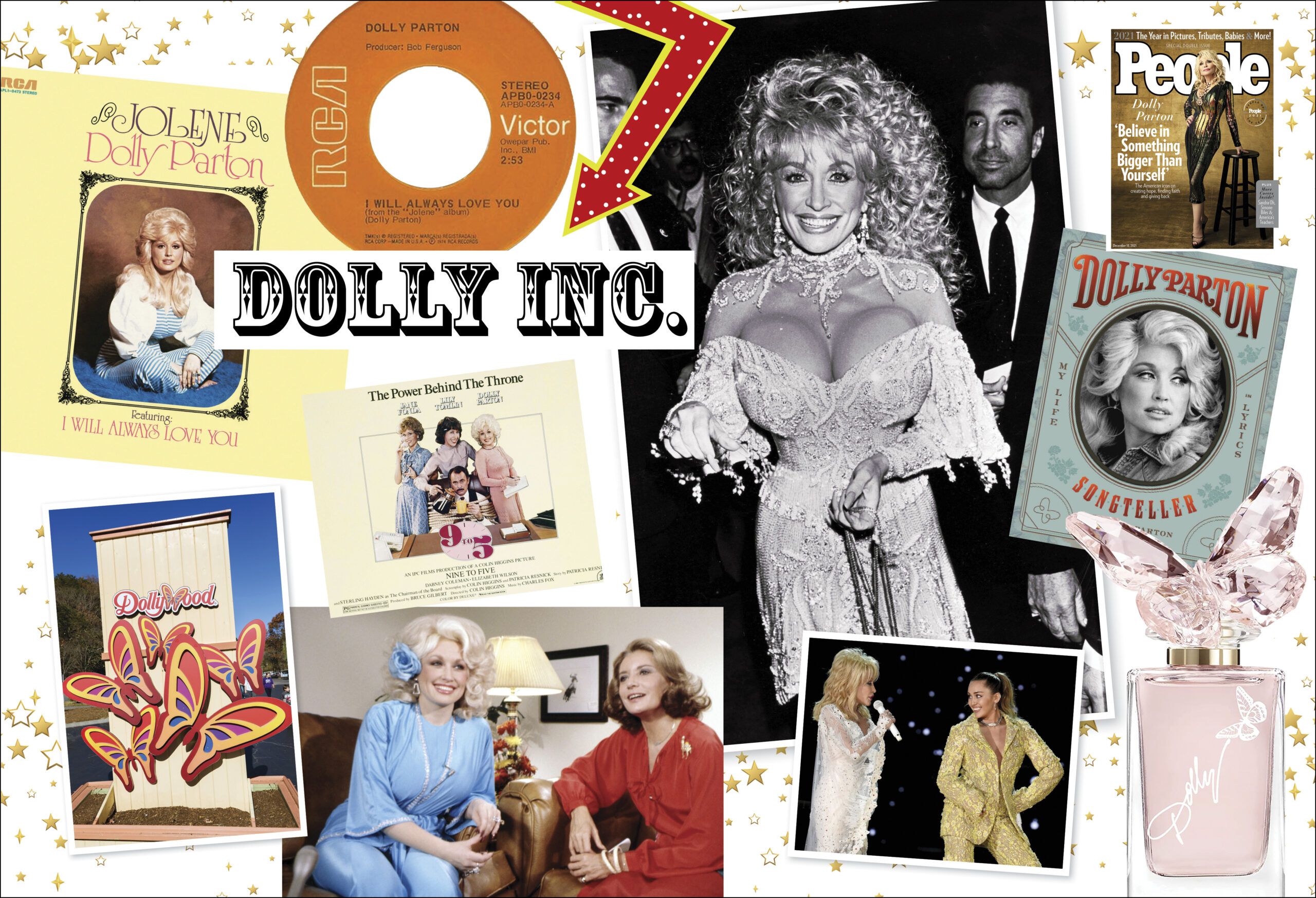
As for me, I’ve been fan-girling since Parton played can’t-get-a-break secretary Doralee Rhodes in the 1980 career-revenge fantasy 9 to 5. Just typing the film’s title has the song playing on a loop in my head: “9 to 5, for service and devotion/You would think that I would deserve a fair promotion/Want to move ahead but the boss won’t seem to let me/I swear sometimes that man is out to get me!”
It was ironic, considering I’d never had a job at that point, but no matter. While members of my high school feminist club painted posters of inspirational quotes for International Women’s Day, I skipped Eleanor Roosevelt and Mother Teresa in favour of this Dolly Parton gem: “I’m not offended by dumb blonde jokes because I know I’m not dumb. And I also know I’m not blonde.” I was instantly sold on whatever brand of feminism Dolly was selling.
These days, Parton’s smarter-than-I-look shtick is the calling card of many self-branded, pop-culture personas-turned-empires — Kim Kardashian, Paris Hilton, Drew Barrymore, Reese Witherspoon — but Parton did it first and has been at it for decades longer. Her sparkly brand of “Dumb Blonde” (also the name of Parton’s 1967 debut single), has never wavered, nor has her sense of humour. “It costs a lot of money to look this cheap!” she often declares.
Of course, if you think Parton’s anywhere near dumb or cheap, then her strategy to disarm has worked. If she looked like Warren Buffett, we’d probably give her way more credit for being business savvy. Among her many, many, many endeavours are Dollywood, where Parton’s official title is Dreamer in Chief; Sandollar Productions, the company behind the much-loved ’90sTV series, Buffy the Vampire Slayer; and Dixie Pixie Productions, her newest company, which is currently collaborating on Netflix specials.
Then there are the brand partnerships, which include everything from her “Scent from Above” perfume to holiday bakeware at Williams Sonoma. Consumer branding is tasked to Gary Krakower — a graduate of Toronto’s York University, who was born and raised in Montreal — the vice-president of licensing for IMG, a New York-based global events and talent-management company. His first meeting with Parton was unforgettable.
“She mentioned that she really loved red shoes,” recalls Krakower. “She said, ‘I can’t express it, but I can sing it,’ and then, off the top of her head, she sang a two-minute song about red shoes.” So can we expect Dolly-brand red pumps any time soon? “Stay tuned,” he teases.
Naturally, Parton is very, very busy, starting many days at 4 a.m., when she meets with her team to tackle a daily “ask Dolly” to-do list. Her manager has said they turn down 90 per cent of requests for her time, with the winners offering “minimal Dolly time and maximum exposure.” It makes me absolutely giddy that I’ve made the cut. And very nervous.
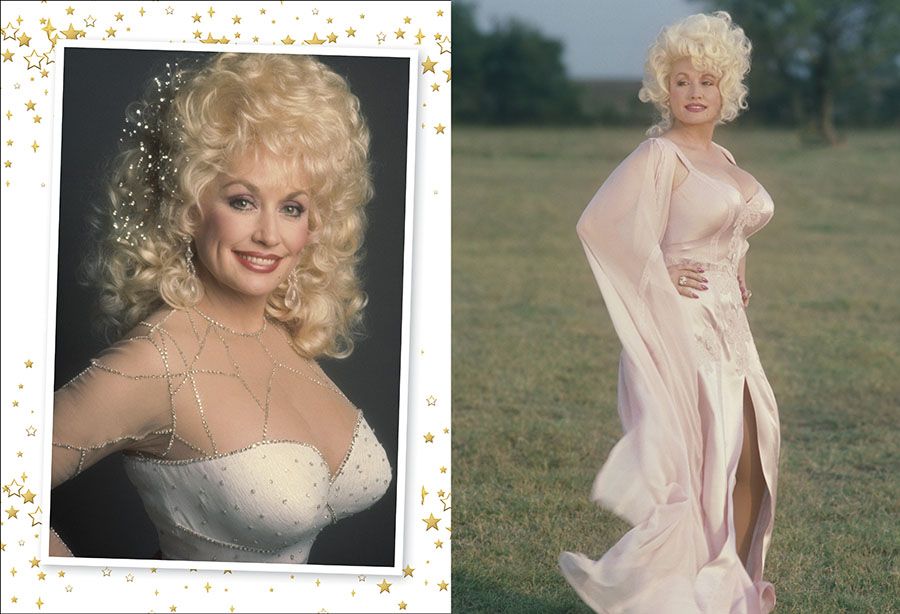
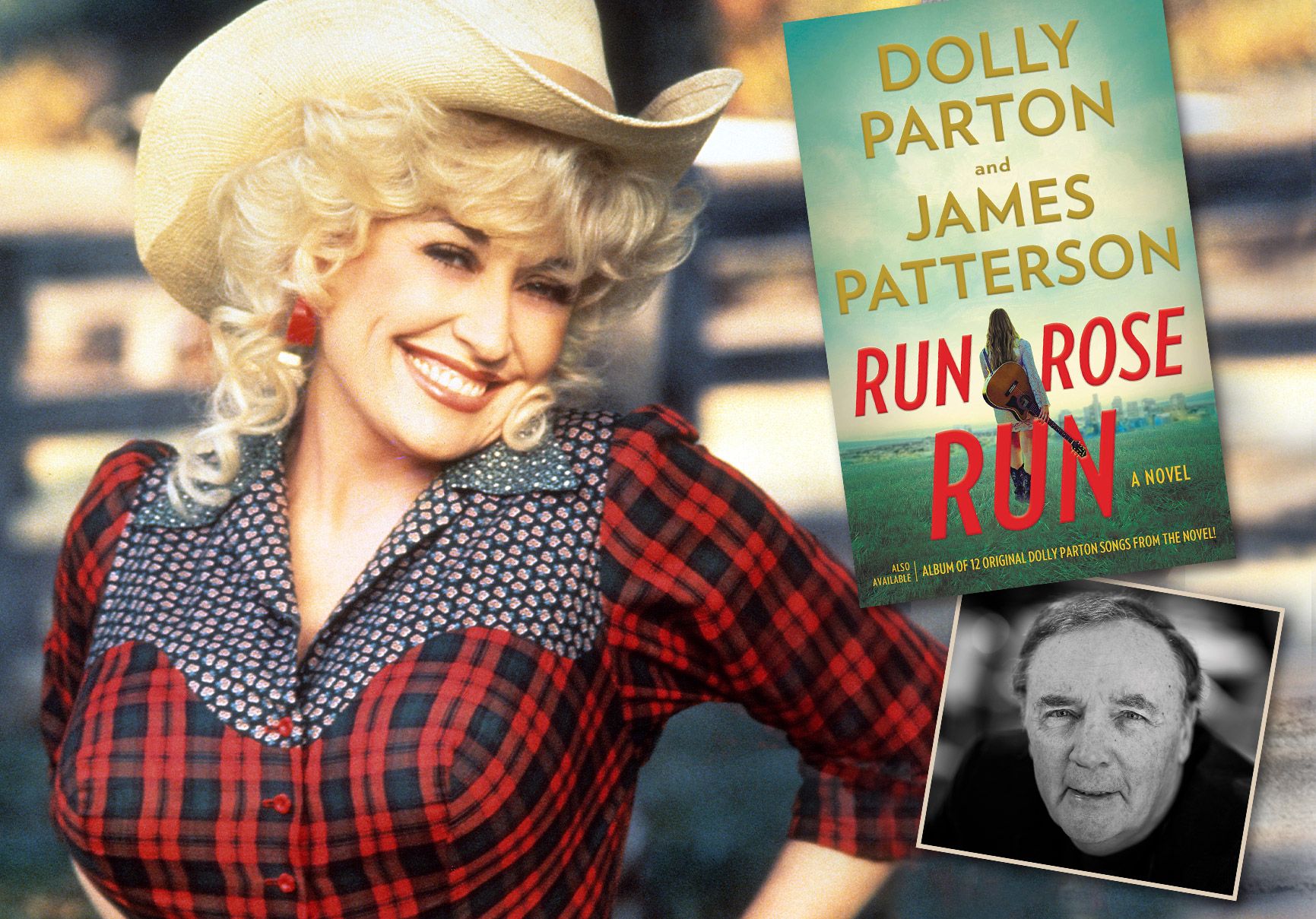
“Please call me Dolly!” she giggles, when I mumble hello over the phone. I have 20 minutes and not a second more to try to understand a woman that Cyrus described as “the world’s most impeccably purposeful walking contradiction.” Her goddaughter also said, “There’s a theory that you shouldn’t meet your heroes, but I wish everyone had the chance to meet Dolly Parton, because she’s even better than your sparkliest dreams.” We’re chatting about the newest endeavour in the ever-expanding Dollyverse, her first novel, Run, Rose, Run, co-written with another business dynamo, bestselling author James Patterson. Dolly and Patterson are old friends who found success and superstardom doing what they’d probably be doing anyway. “I don’t work for a living, I play for a living,” Patterson says about his literary career as the world’s bestselling author of — no, this is not a typo — more than 200 novels. “We like each other because we’re proud of our success,” Parton says. “But we don’t have big heads,” Patterson interrupts. “I have big hair!” she counters. “I used to have it,” he says. No worries there. “You can borrow one of my wigs!”
If this banter’s any indication, writing Run, Rose, Run must have been an absolute blast. Patterson pitched the collaboration, Parton was “terribly flattered,” and together they fine-tuned the plot about wannabe country singer AnnieLee Keyes and grand ol’ Nashville queen Ruthanna Ryder. “He knows how to tell a story and I can write a song, but once we started writing we had a wonderful face-to-face,” Parton says. “We had a good time!” Patterson confirms. Before they knew it, they’d invented a whole new genre that you might call a “musical novel,” where songs are written into the story and vice versa. “It’s a novel with a soundtrack,” says Patterson, “I don’t think anyone has ever done this before.”
They’re clearly in sync, but their trajectories couldn’t have been more different. Patterson took the conventional route and got a degree, while Parton hated school, and couldn’t wait to finish. The day after she graduated high school, she hopped a Greyhound to Nashville to find the country superstardom she’d been chasing for as long as she could remember. (It’s where Dolly met Carl Dean, her husband of 55 years, at the Wishy-Washy Laundromat.) By then, the seeds had been planted for Parton’s over-the-top, hyper-femme signature style. An ample-bosomed early bloomer, who was bullied for her (undeserved) bad reputation, Parton subverted the gossip mill by beating everyone else to the punchline. Eschewing prim and proper late-’50s fashions, she famously said she modelled her outrageous look on the “town tramp” (said lovingly, with admiration), spending her humble paycheques from radio jobs on short skirts, high heels, lipstick and peroxide.
Parton’s glam-up was noticed by country star Porter Wagoner, who offered her a gig as musical sidekick on his syndicated weekly TV show at a starting salary of US$60,000 a year. Though the pay was well beyond her wildest dreams, Parton acted cool and told him she’d think about it. So began a legendary seven-year partnership Parton likened to a marriage, a “love-hate relationship, all mangled up with business.”
If Wagoner wanted a pretty little work wife to stay in his shadow, he chose poorly. When her first music contract with Monument Records expired, she co-founded the Owe-Par Publishing Company with her musically minded Uncle Bill. Parton retained a controlling interest — 51 per cent to Bill’s 49 — in her songs, which, much to Wagoner’s chagrin, increasingly outsold his. As her star power grew, Wagoner became increasingly jealous, competitive and possessive.
While her country contemporaries preached “Stand By Your Man,” Parton decided to stand on her own, leaving Wagoner in what the press dubbed a “hillbilly divorce.” He didn’t make it easy, later suing her for a million dollars, but Parton paid up and left anyway. She commemorated their parting with “I Will Always Love You,” which she penned in one day, along with another No. 1 hit, “Jolene.”
Forgive me if you’ve heard this story before, but a profile of Dolly Parton just isn’t complete without it. Nearly 20 years before Houston covered “I Will Always Love You,” which would become the fifth best-selling single of all time, and drop a cool US$10 million into Parton’s pocket, the song found favour with the King himself. “Elvis loved the song and wanted to record it,” she wrote in her 2020 book, Songteller: My Life in Lyrics. “But his manager demanded half my publishing rights. It broke my heart, but I couldn’t give up my copyright.”
How does a 28-year-old up-and-coming songwriter say “thanks, but no thanks” to Elvis Presley? In Songteller, Parton credits her business savvy to her father, an illiterate tobacco farmer. “He knew how to barter; he knew how to bargain. … He knew exactly what everything was worth, and how much he was going to make from that tobacco crop.” What her father might have achieved, given the opportunity, would later inspire Dolly Parton’s Imagination Library, a philanthropic literary initiative that has given 170 million books to children across five countries in 27 years. Parton has long insisted she’s neither proud nor ashamed of being born poor, and interestingly the same seems true for being rich. “I always wanted to be a success,” she tells me, “but to me success entails a whole lot of things. It’s not until you’ve made the money or made it big, it’s until you’re able to enjoy it.”
It’s all too easy to plot Parton’s accomplishments on a graph headed up, up, up. After shutting Elvis down, Parton topped the charts five times and earned her first Grammy Award before the end of the ’70s; she won the Country Music Association’s highest honour, Entertainer of the Year, in 1978; she signed a three-picture deal and transitioned seamlessly in 1980 into film with my old favourite, 9 to 5, collecting an Oscar nomination and a Grammy for Best Country Song. On the surface, all was swell.
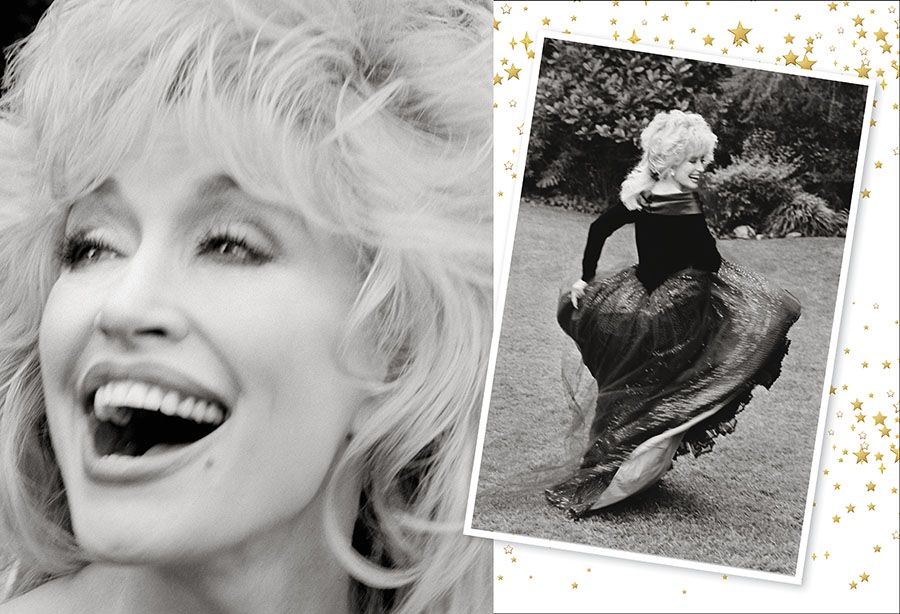
Behind closed doors, monetary success made little difference and Parton fell into a deep depression in the mid-’80s. Physically, she was suffering from severe endometriosis that eventually required a hysterectomy and meant she’d never have a biological child. Emotionally, she pulled away from her husband and family, some of whom resented Parton for her success. Having received death threats — and with the pain of John Lennon’s 1980 assassination still raw — Parton cancelled her 1982 tour, retreated from public life and briefly considered suicide. “For about six months there I woke up every morning nearly dead,” she told Ladies’ Home Journal.
Then Parton packed up and went home again. Though her vast real estate holdings included a beachside Malibu house and apartments in Los Angeles and New York, the songstress chose Willow Lake, her secluded 25-hectare (63-acre) estate outside Nashville, to heal her soul. Parton spent weeks on end swimming, reading self-help books and strumming her guitar. She daydreamed of simpler times, specifically her childhood in the foothills of the Great Smoky Mountains near Pigeon Forge, Tenn.
In 1986, just 26 kilometres (10 miles) down the road from the house, where her family once lived, she built a meticulous re-creation of their one-room log cabin that would become the heart and soul of Dollywood, the theme park Parton had long imagined despite naysayers who opposed the grandiose idea. “I am prepared for success and braced for failure,” Parton once said, although the failure of Dollywood would have cost her an estimated US$50 million.
But you can’t win if you don’t play, so Parton rolled the dice. On opening day in May 1986, 12,000 fans filled Dollywood’s Main Street. Later that month, traffic queued for 10 kilometres (six miles) along the highway. Even today, Dollywood attracts more than 3 million pilgrims annually and employs more than 4,000 workers in Pigeon Forge.
I like to think the unlikely success of the fantastical Dollywood — which has a butterfly in flight as its logo, a wink to the power of transformation — is the moment Parton proved she was a businesswoman with vision. In 2021, she made Forbes magazine’s list of America’s richest self-made women, with an estimated net worth of US$350-million. “Just because you’re famous doesn’t necessarily mean you can build a brand around you,” Krakower explains. “There needs to be talent, personality, authenticity, resonance across multiple categories and with a wide demographic.”
Although Parton prefers to say she is grateful for her good fortune, glimpses of her business strategy are there should you seek them. For a Squarespace ad during last year’s Super Bowl, for example, Parton reimagined her famed “9 to 5” song with a little ditty designed to encourage those who want to turn side hustles into legitimate businesses. “Working 5 to 9, making something of your own now/And it feels so fine to build something from your know-how/Gonna move ahead and there’s nothing that you can’t do/When you listen to that little voice inside you.” Parton alluded to the power of that inner voice in the 2019 Netflix special Dolly Parton’s Heartstrings. “Other people didn’t always believe in me, and in those times I had to believe in myself,” she says. Then, realizing she’s being pretty saccharine, she pivots devilishly: “Plus nothing’s better than proving people wrong.”
This is the thing about Parton. Every time I think I understand her, the script flips. For example, as I gush over a list of accolades and accomplishments — 25 No. 1 singles on Billboard’s Country chart, 10Grammy Awards, and soon-to-be six-time bestselling author — she begins with a canned celebrity response. “It’s all a great compliment any time I get honoured for anything.” The minute I buy this familiar phrase, she yanks the rug from under me. “But I don’t think I’m all that.”
In the Dollyverse, everything is itself and also its opposite. Parton is at once an open book and notoriously private, somehow both rich and poor, and claimed by both Republicans and Democrats, even though she’s never publicly picked a side. She’s AnnieLee Keyes and Ruthanna Ryder from Run, Rose, Run. Her whole persona is over-the-top performance art and completely authentic. As the old Dollyism goes, “a rhinestone shines just as good as diamond.”
I haven’t even told her how “I Will Always Love You” is the only song I can play on the piano, and I’m just getting around to asking Parton about “9 to 5” when the Dollyclock dings and Dollytime is up, having passed at warp Dollyspeed. I still have so many big questions and no clear answers, but I do have a memory I will cherish of my brief time with the enigmatic superstar. As promised, it’s been minimum Dolly time, maximum Dolly exposure.
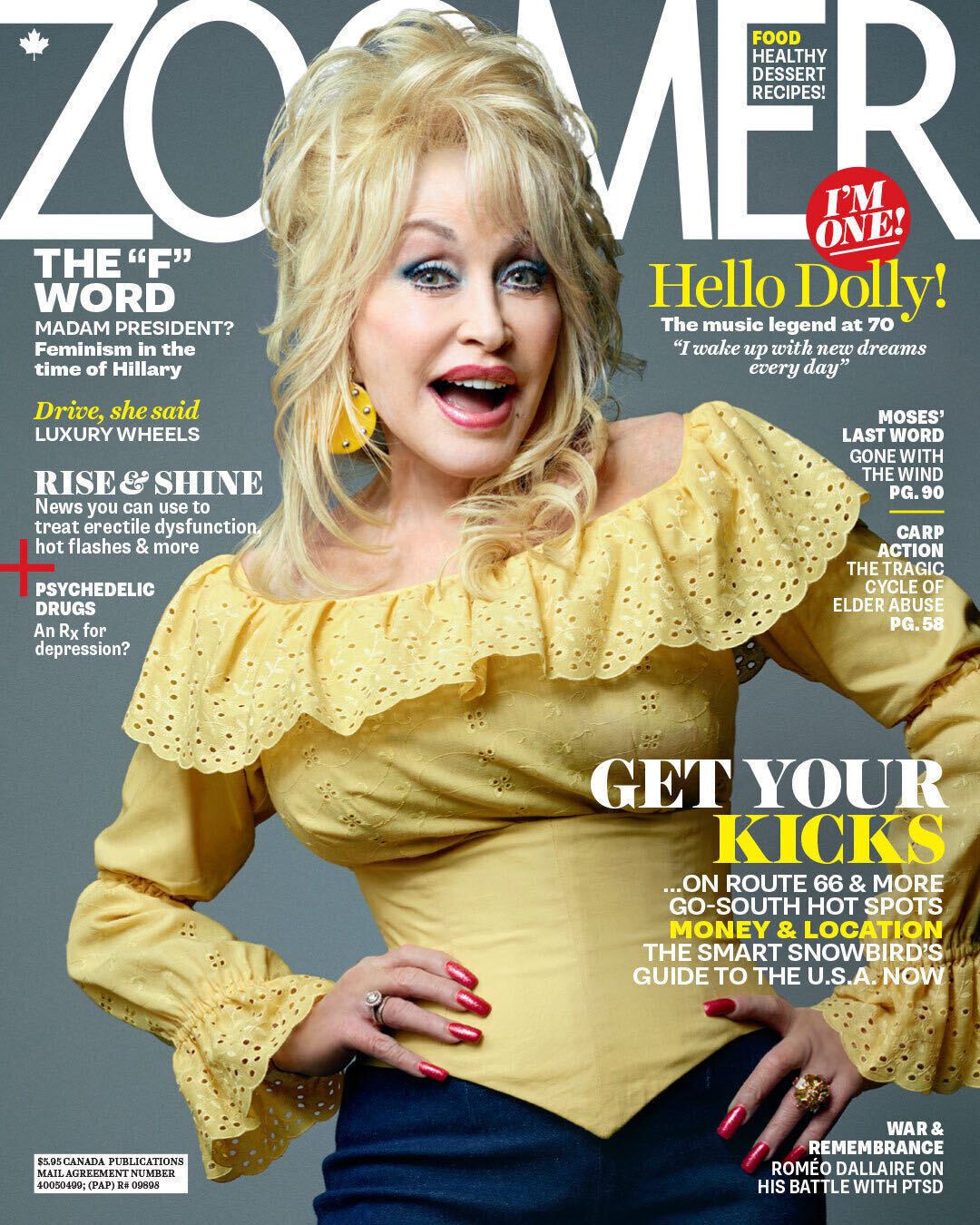
– FROM THE ARCHIVES –
November 2016
Hello Dolly!: Talking Life, Love and Aging With Dolly Parton
by Mike Crisolago
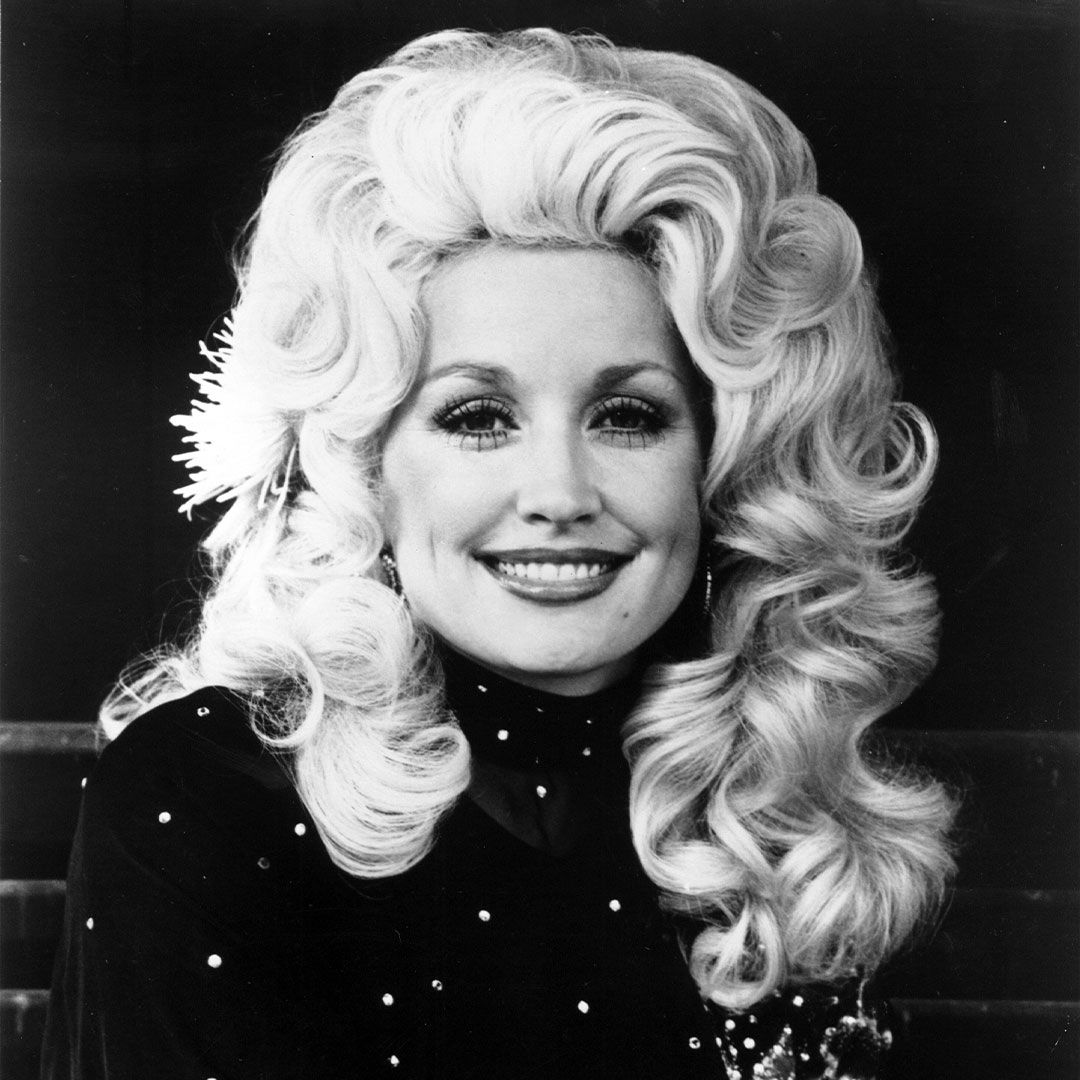
A dairy farm in southwest England seems an odd locale for the resurgence of a musical megastar but, in 2014, on a stage beyond fields where black and white bovines roam, then-68-year-old Dolly Parton captivated a crowd of 100,000 partygoers—some young enough to be her grandchildren—during her set at the famed Glastonbury Festival, held annually at Worthy Farm in the village of Pilton.
The festival, conceived in 1970 as a counterculture celebration more suited to indie acts, only began regularly attracting major commercial stars like the Rolling Stones, U2 and Beyoncé in recent years, with country headliners proving even more rare. Decked out in white, Dolly performed on the trademark Pyramid Stage, known as the showcase of legends. The crowd sang along in unison, imploring Jolene to leave Dolly’s man alone, and her performance drew the highest television ratings of the five-day event—an achievement only slightly marred by a British journalist’s assertion that the country legend was lip-synching.
The accusation raised the ire of fans and celebrities alike, including singer Boy George, 55, who tweeted emphatically, “Leave our Dolly alone!” A defiant Dolly declared to the U.K.’s Sun newspaper: “My boobs are fake, my hair’s fake, but what is real is my voice and my heart.”
The real triumph of the performance became evident in the days that followed, however, when news of Dolly’s set spread. “I didn’t think that people were that interested because usually the big artists making money touring, they’ll have hot records, No. 1, on the radio, played all the time.” Without an album or even a full band at the ready, the demand for a long overdue North American Dolly tour took root.
“We’d done so much publicity and got such worldwide press,” Dolly recalls, “that folks said, ‘Why don’t you give it a try? I think you’ve got a lot of people who’d like to see you.'”
On a Monday morning, almost two years to the day of the Glastonbury performance, Dolly breezes into a downtown Toronto hotel mere hours after an evening show in upstate New York. Despite the early hour she’s everything you expect her to be, from the eruption of golden locks to the tight-fitting dress to the humble attitude and quips she’s delivered for decades — like the one about how it costs a lot to look that cheap. Whether strutting across the stage or sitting down for an interview, she serves up charm as warm as fresh-baked Tennessee cornbread and fans continue to eat it up. She’s ready with responses to questions about her music and, with her trademark wit, deflects heavier subjects—from the presidential election (“We’re going to have PMS either way in the White House—Presidential Mood Swings”) to the issue of transgender bathrooms (“I always joke about our waterpark in Dollywood—everybody’s free to pee in that”).
But her humility and self-deprecating style belie her success. Dolly is, with apologies to Loretta Lynn who’s still going strong at 84, country’s reigning queen, a singer-songwriter who’s outperformed, outsold or out-lasted every artist of her generation.
“It baffles me because I’m supposed to be old but I don’t feel old,” Parton chuckles when I ask her what being 70 feels like. “I really can’t tell you how I love to [perform] now and how important it is…I haven’t got as much time as I used to have so I want to make the most of every single minute.”
And she’s not kidding. Dolly’s post-Glastonbury resurgence has so far seen her perform her classic “Coat of Many Colors”—about her impoverished childhood in Tennessee—on the hit singing competition series The Voice last December to promote the NBC TV version based on it, while this past September she made a surprise appearance on the show to implore a contestant to team with her goddaughter, pop star Miley Cyrus. “You can’t mess with Dolly,” a proud Cyrus exclaimed after the contestant ultimately agreed. The appearance may have been Dolly repaying a favour, given Cyrus was spotted on Instagram last year belting out the Dolly classic “9 to 5”, following her cover of “Jolene” in 2012.
“I’m supposed to be old but I don’t feel old…”
Within days of The Voice appearance, Dolly appeared in a video alongside the hit a cappella group Pentatonix, performing a reimagined version of “Jolene,” which went viral. And the Country Music Association (CMA) called on her for their new single “Forever Country” to celebrate their 50th anniversary in November. Performed by a who’s who of country stars and legends, it debuted at No. 1 on the charts and is actually a medley of three country standards—John Denver’s “Take Me Home, Country Roads,” Willie Nelson’s “On the Road Again” and, to close out both the tribute and accompanying music video, Dolly’s “I Will Always Love You,” a trademark tune made even more famous by Whitney Houston’s cover for her 1992 film The Bodyguard. It became the bestselling single ever by a female artist to that point, while earning a Grammy in the process.
“She’s a perennial. She’s someone who’s beyond a Top 10,” asserts Bee Gees legend Barry Gibb, 70, who produced Dolly’s hit duet “Islands in the Stream” with Kenny Rogers. “There’s a Top 10, and then there’s Dolly and Barbra Streisand, Sinatra, the Beatles, and Elvis and Michael [Jackson]. Dolly has achieved that kind of status.”
And to top it off there’s Dolly’s current 60-city Pure & Simple North American tour—her largest in decades—the end game of the Glastonbury performance and in support of her 43rd studio album of the same name. In an industry that doesn’t look kindly on women over 40, let alone septuagenarians in high heels, Dolly’s proving that female artists of an advanced age can still pull in major crowds and tour dollars. Robert Oermann, music journalist, historian and co-author of Finding Her Voice: The Saga of Women in Country Music, notes, “You can count on the fingers of one hand the number of people who are 70 who are out there selling out big shows like she is. Dolly is one of the few songwriters who continues to turn out quality material this long into her career.”
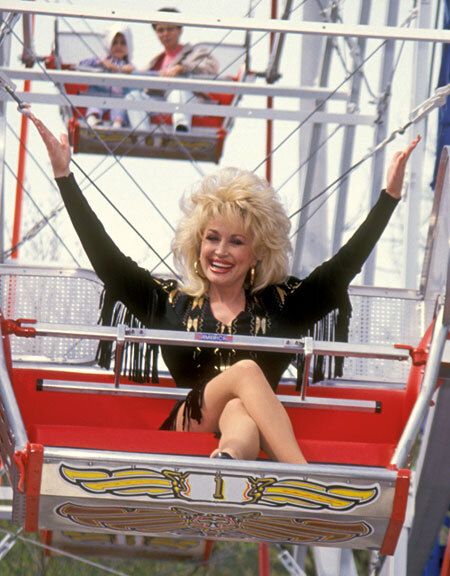
Striking Out On Her Own in the Old (Cow)boys Club
In an age where the transition from country darling to pop princess is almost an exact science—trade in your cowboy boots for heels and the rodeo for Rodeo Drive—it’s easy to forget that the move was once considered controversial. Stars from Shania Twain to Faith Hill to Taylor Swift and Miley Cyrus have all made the crossover, in some form, expanding their fan bases and album sales in the process. But it was Dolly—whose first single to ever chart was, ironically, a pop tune, “Happy, Happy Birthday Baby” in 1965—who was among the first to blur the line between pop and country with hits like 1977’s “Here You Come Again” and the 1980 smash success “9 to 5,” though she never fully abandoned the country genre.
“As she famously said when she was accused of leaving country music behind, ‘I’m not leaving country. I’m taking it with me,'” Oermann says. But, “she’s been very sensitive to the shifting waters of people’s tastes.”
That sensibility took root early in her career when, in the 1970s, she jumped ship from The Porter Wagoner Show—her first big break—to strike out on her own in the old (cow)boys club that was Nashville.
“I’ve never felt like I’ve been held back because I was a woman,” Dolly says. “I grew up with six brothers, and my dad and my uncles so I never was intimidated or thought that I didn’t have my place in the world.”
Dolly toppled barriers with a barrage of self-penned hits but, with the second wave of American feminism, including the publication of The Feminine Mystique and the rise of capital F feminism, some felt the blond, big-chested country girl who went on The Tonight Show in 1977 and laughed when Johnny Carson quipped that he’d “give a year’s pay” to peek under her shirt was little more than a stereotypical pin-up. Her ongoing cosmetic surgeries—which she jokes openly about—didn’t help.
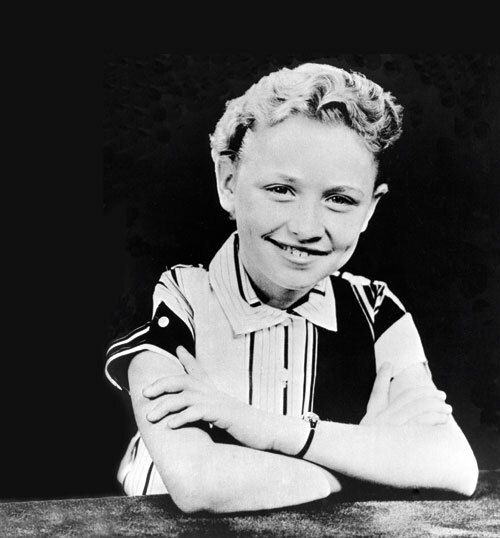
Still, many of Dolly’s songs included pro-female messages about anything from sexual double standards to teenage pregnancy to equal rights for women in the workplace. She also turned down Elvis Presley’s request to cover “I Will Always Love You” because the King wanted half of the song’s publishing rights while, in 1987, Gloria Steinem herself wrote in an issue of Ms. magazine that Dolly “has turned all the devalued symbols of womanliness to her own ends.” Oermann adds, “You will not find a woman in this genre who does not bow her head at the mention of Dolly Parton’s name.”
“I am proud that I’ve got all these women saying that I have been a trailblazer,” Dolly notes, “because you want to feel like you’ve been a help and that you’ve been inspiring somebody. Ever since the 9 to 5 movie, we’ve been trying to promote women getting equal pay for equal work and we’ve come a long way.”
Dolly’s penchant for reinvention paid off again in the early 1990s, when the achy-breaky juggernaut known as “new country” threatened to put her “old country” contemporaries out to pasture. “I’d already won every award and I already had one after another hit record so I didn’t resent the new country coming in,” she says. “I had hoped at the time that I’d be one of those that might survive it.”
She did. Following successful turns in front of the camera in the 1980s in The Best Little Whorehouse in Texas, Rhinestone, Steel Magnolias and 9 to 5, her production company, Sandollar Productions, produced ’90s hits like the first two Father of the Bride films and Buffy the Vampire Slayer TV series. She also had her own short-lived TV variety show and scored “the most money I ever made in my life” after Whitney Houston released her cover of “I Will Always Love You.”
The new millennium brought two more Grammys—the Best Bluegrass Album award for the 2000 disc The Grass Is Blue, and the Best Female Country Vocal nod for her cover of the Collective Soul song, “Shine,” on 2001’s Little Sparrow. Then the 2006 Academy Awards saw Parton deliver an impassioned rendition of her Oscar-nominated tune “Traveling Thru” from the film Transamerica, about a transgender woman who embarks on a road trip, only to lose to the hip-hop track, “It’s Hard Out Here for a Pimp” from the film Hustle & Flow. This, along with a lack of significant radio play, seemed to signify that Dolly’s years as a major headliner were over. She continued to record and perform, mostly touring overseas, where new country hadn’t taken such a stronghold. Cue Glastonbury.
Celebrating 50 Years of Marriage
Dolly’s new album and biggest North American tour in decades happen to coincide with another milestone—her 50th wedding anniversary to her husband, Carl Dean, a publicity-averse retired road paver whom she first laid eyes on outside of Nashville’s Wishy Washy Laundromat.
“One of the reasons we’ve lasted 50 years [is] because we have a very private life. Our time together is precious to us,” she explains, before cracking a smile. “It doesn’t hurt that I’ve only been home about 40 of those 50 years that we’ve been together.”
An admitted hopeless romantic, Dolly marks her anniversary year with an album of songs about “love of all colours,” including the song “I’m Sixteen,” inspired by her sister who, in her 60s, found love after years of failed romances. “It goes to show you’re never old unless you choose to be and…how love is so rejuvenating.”
“I think she’s one of the most beloved musical stars that has ever been,” Oermann says, “and the reason is the brilliance of her writing, the sensitivity of her singing and her empathy for people. When you think ‘star,’ you think glittery and shiny and fabulous, and she’s all of that and more.”
Last December’s TV movie, Dolly Parton’s Coat of Many Colors, received such high ratings that a sequel, Dolly Parton’s Christmas of Many Colors: Circle of Love, which tells the next chapter in the Parton family story, airs Nov. 30.
“I still want to see my life story on Broadway as a musical. I want to do a feature film of my life. I might possibly even do a Life of Many Colors TV series. I want to have a line of wigs, cosmetics, I want to write some more books,” she explains, taking a breath. “I’m going to run out of time. That’s what I hate the most about getting older.”
One more thing Dolly has time for is her Imagination Library initiative. Her father’s and brothers’ illiteracy inspired her to start the charity, which delivers books to children once a month, from the time they’re born until they enter kindergarten. The non-profit began in her Tennessee community and spread throughout North America, the United Kingdom and Australia, delivering more than 74,000,000 books to date.
Last month, Parton released her own children’s book based on the Coat of Many Colors and titled just that. But when asked about what her favourite kids’ book is, she answers without missing a beat: “The Little Engine That Could. I love that book because I am a prime example. I am a little engine that did. I thought I could and I did, and thank God for that.”