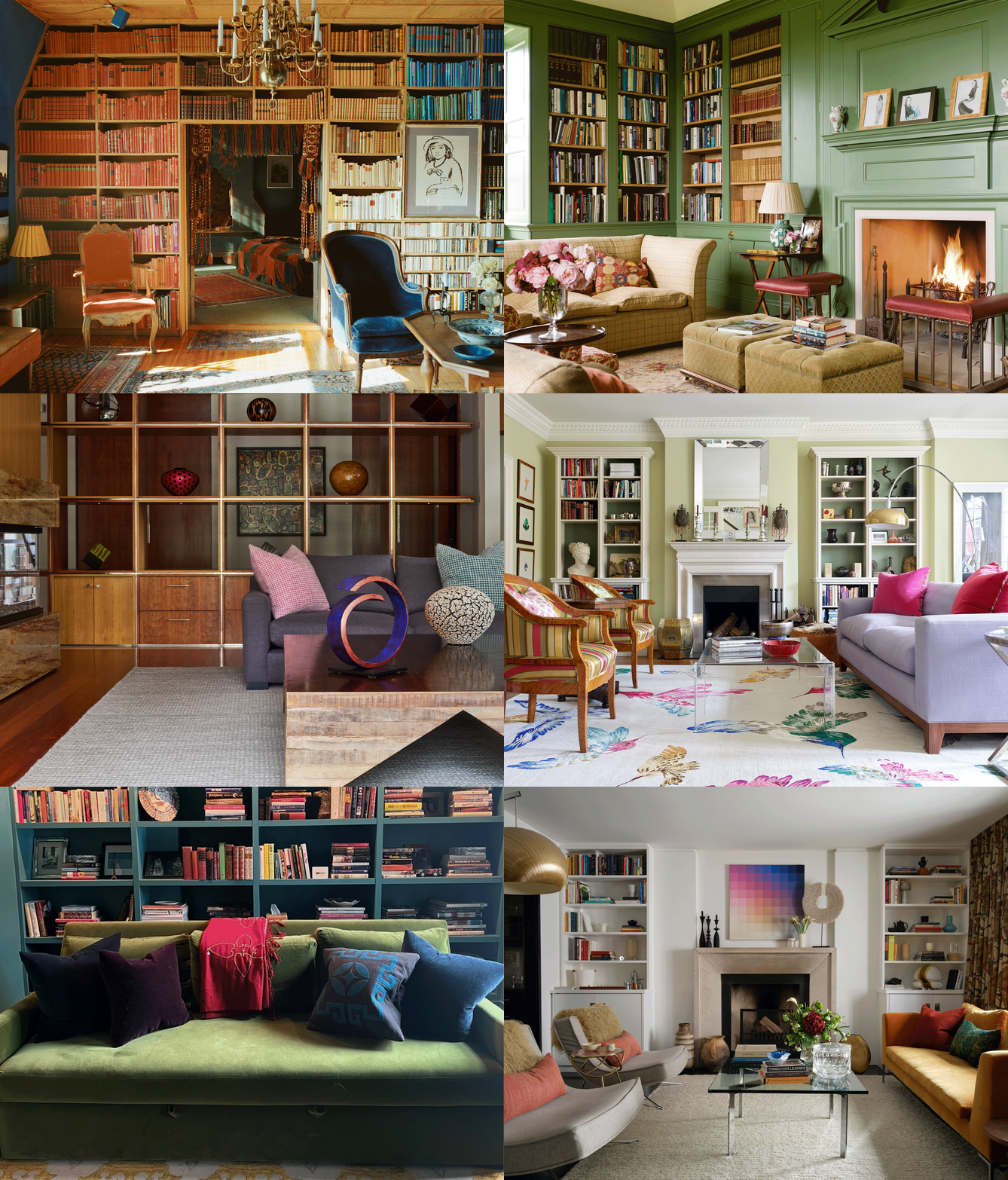
The décor category of social media has been awash with dreamy English manor-worthy bookshelf displays. Dubbed #bookshelfwealth and chronicled by Architectural Digest, Elle Decor and House & Garden, a flood of library porn – Ralph Lauren-esque deep, broad leather club chairs; fainting sofas in plush velvet or shabby chic faded florals; Anglophilic, dark, monochromatic colourscapes and brooding wallpapers; masses of superfluous throw pillows; and of course volumes upon volumes of ponderous tomes—has invaded our feeds this tumultuous year.
Why are bookshelves cool again? This is aspirational nostalgia, promising to transport you far, far away in time and place from the chaotic now. This is the ultimate glorification of analogue culture, where record turntables spin again and pages are turned one at a time, releasing the crisp scent of paper warmed by hands. It’s a place where AI is banished to the furthest corners of your peripheral vision, and you have no need for 5G or a wi-fi signal.
Zoomer’s resident book expert, Nathalie Atkinson, talks about the urge to shelve. Nota bene: her partner is a bookseller. “As a child, the idea of a living space lined with books seemed the height of intellectual glamour to me,” she says. As a result, their three-storey house “has floor-to-ceiling shelves lining at least one full wall of every room.” Even then, space is finite, about 90 percent of the 200-plus books she reads a year are digital, library loans or publisher’s galleys. So, what do they keep? “It’s a delicate equilibrium to maintain,” she says. “I only keep beloved books I expect to re-read or reference, or love enough to lend or press on a like-minded reader in future.”
The editing of one’s belongings is something interior designers spend a great deal of time on. Kate Thornley-Hall and Jennifer Young, of Toronto interior design firm Thornley-Hall and Young, say they are being asked to design, and curate, more bookshelves than ever these days. “It is a desire for warmth,” says Young. “A reaction to computers and endless phone culture.” Yes, it is ironic that the scrolling of pictures of bookshelves is actually driving people back to installing bookshelves. Thornley-Hall also talks about the return to warmer colours that naturally cocoon a library space: “We are tired of all of those cream and white interiors. Cozy, darker colour tones, like an English country house, are popular now,” she says. “Walking into a library is an emotional feeling. Lying down on a sofa surrounded by books is like landing on a psychiatrist’s couch. You pause, reflect, look at the spines and remember the books you have and love.”
The duo first worked together for Ralph Lauren in the ’80s, stocking the designer’s house in rural New York. “I had no business buying paintings at Christie’s,” says Thornley-Hall. “Or buying antiquarian books by the yard in a little town in Shropshire. We bought hundreds and hundreds of books, sometimes to exacting colour standards when he [a.k.a, Ralph Lauren himself] wanted an exact colour on the spine.” They remember a particularly beautiful series of Dutch medical journals.
Young is the bookshelf curator for clients today, channeling each person’s vibe. “By the time you get to setting up bookshelves,” she says, “after the reno mess is cleared, you know what makes them tick.” There has to be dimension and texture in the bookcases, Young says. “It is a window into your client’s narrative. It requires a level of intimacy to translate what the bookcases say about them.”
Bedrooms in general, they say, are where most people put novels, current reads and favourites. Young remembers her mother’s cottage bedroom bookshelf, designed just for paperbacks. “She was a serious reader,” Young says, “but she also loved trashy paperbacks. They were displayed like candy, ready to take her away in a fantasy.” Thornley-Hall’s daughter still has a shelf of Nancy Drew mysteries in her childhood cottage bedroom (a concept near and dear to my heart).
More public rooms, says Young, can incorporate a balance of carefully chosen personal items – a bronze or ceramic or stone bust, or a buddha head pops to her mind. “I’m also a firm believer in organic items. For a client in Bayfield [on the shores of Lake Huron], we incorporated elements of nature like driftwood, rocks and shells. Plus, pieces from the client’s travels, like coral.”
Playing with depth is another designer trick to steal. “Push the art books back, put some family photos, or decorative objects in front of it,” she says. “You don’t want just books there all standing up, in a bad wallpaper kind of way.” Thornley-Hall also personally adds in the occasional piece of kid’s sculpture into the mix.
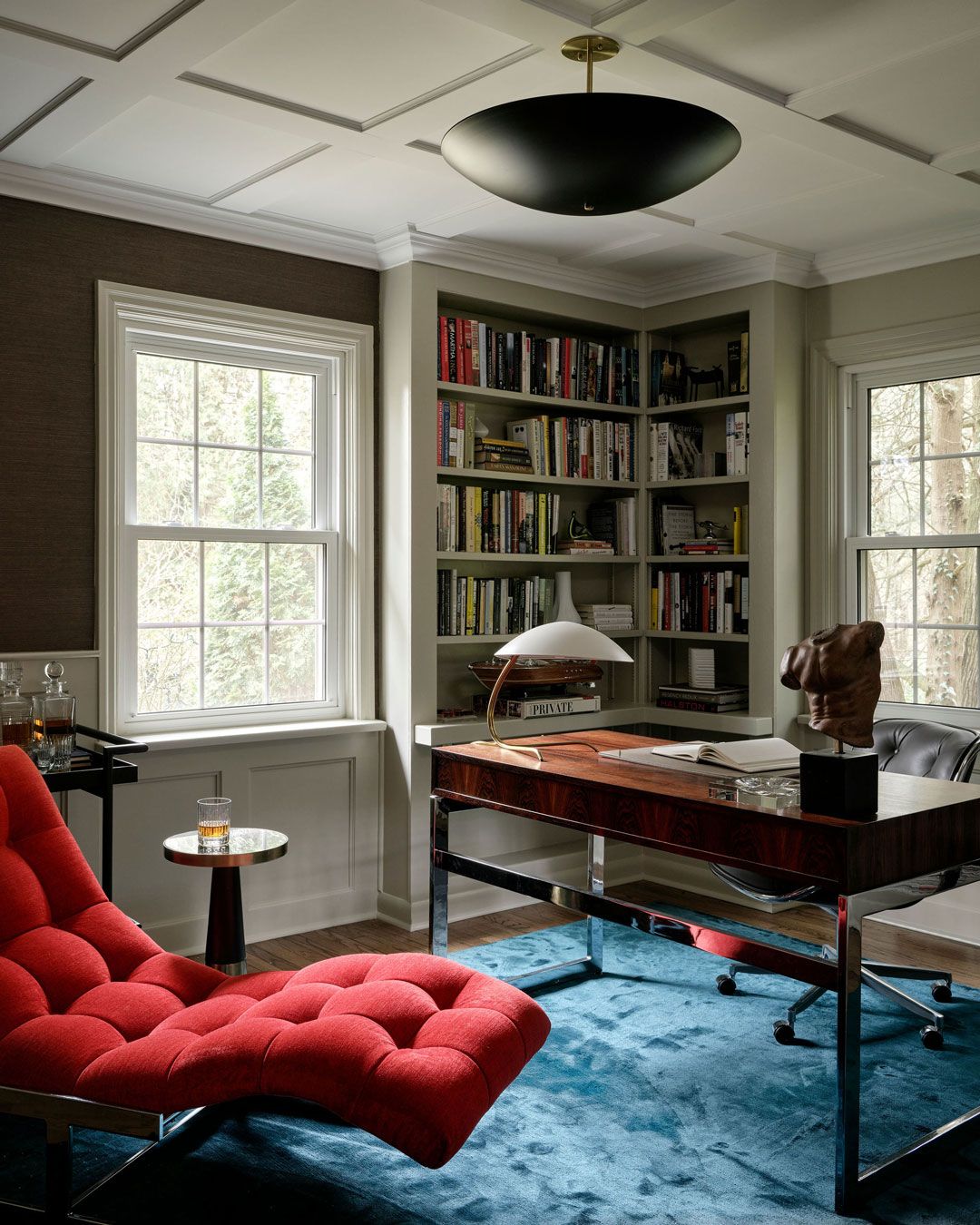
Sometimes wooden shelves are perfect. Atkinson has a mix of built-ins and IKEA Billy bookcases. But for dedicated library spaces, say the Thornley-Hall and Young team, monochromatic and deeper tones can help lend that tone of gravitas. The Farrow & Ball paint range is fantastic for that English manor house feel – the colours Young is liking now are Tanner’s Brown, Eating Room Red and Treron Green.
So if you are curating your own bookshelves, how do you decide what to keep? We tapped Atkinson again for this insight. She says she and her husband prioritize “beautifully produced books as objects, and titles that are not easily replaced.” More and more shelves, she says, “are devoted to my growing collection of handsome paperback re-issues, and especially neglected and forgotten hidden gems, which I’ve written about – from the likes of Persephone, Virago, McNally, the British Library, NYRB Classics and Furrowed Middlebrow.”
And, if you make the space cozy and enticing enough, you might be able to help your nearest and dearest fight back against increasingly enfeebled attention spans and cuddle up and crack a cover. What could be chicer, really?