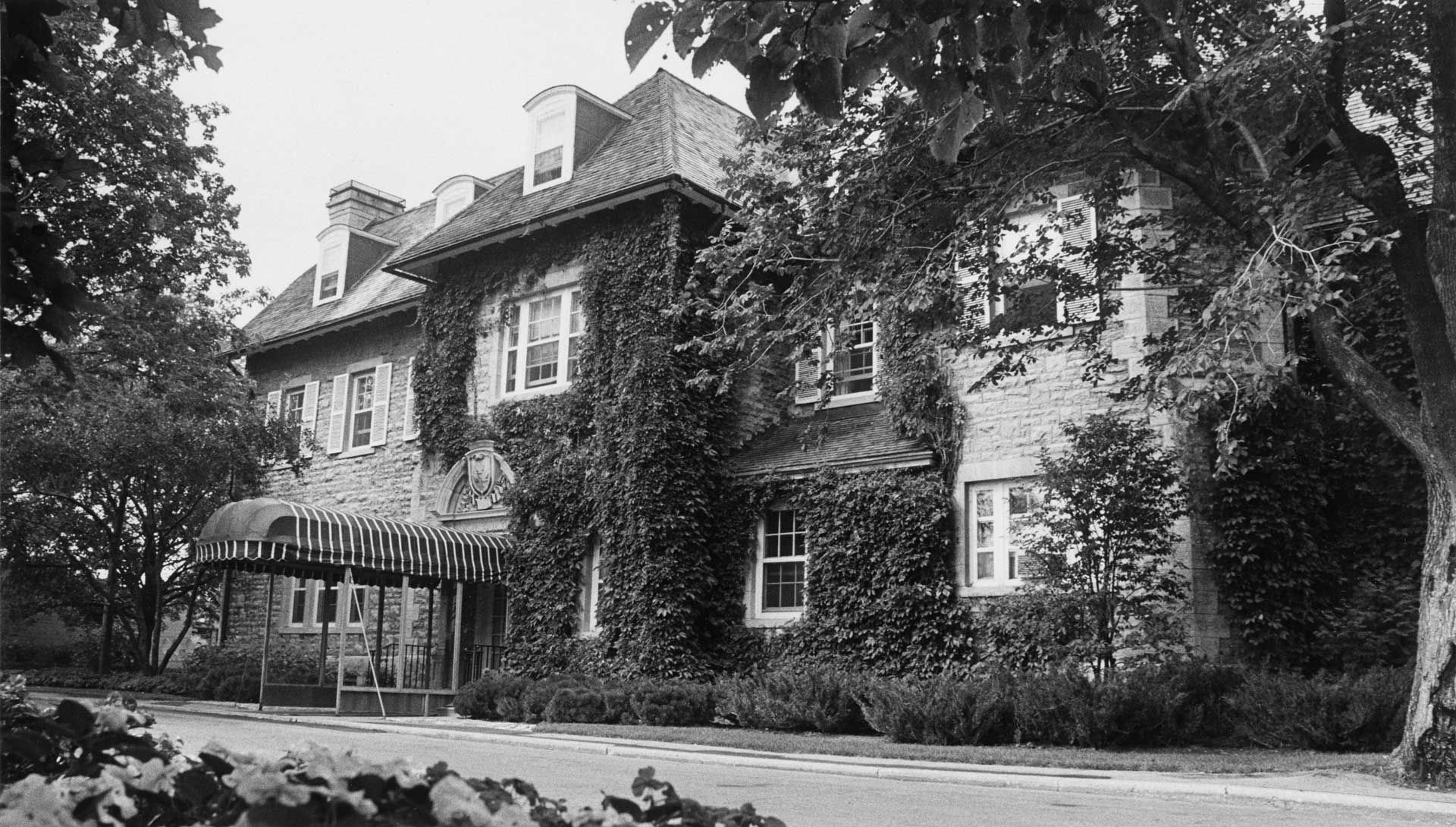


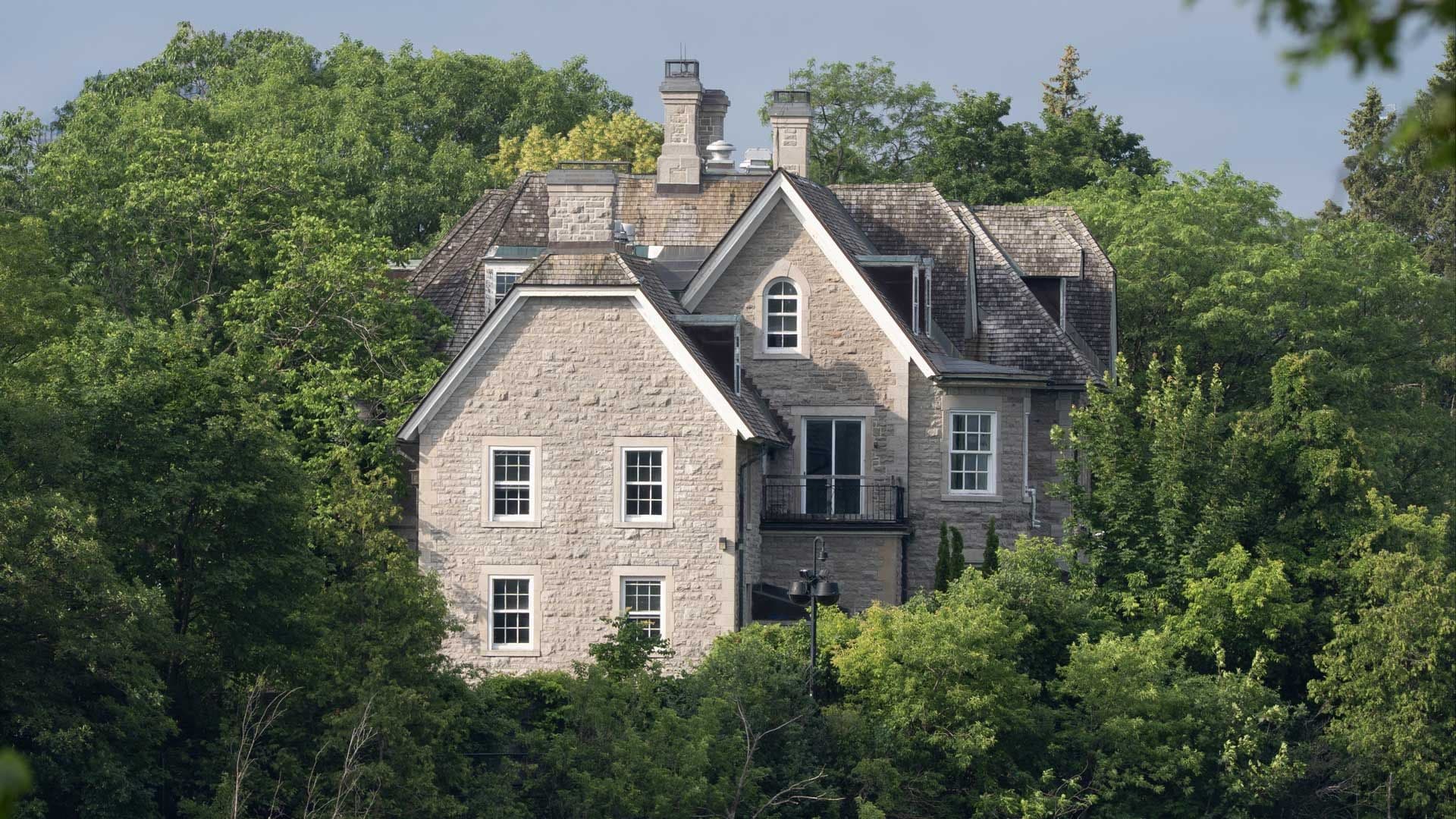
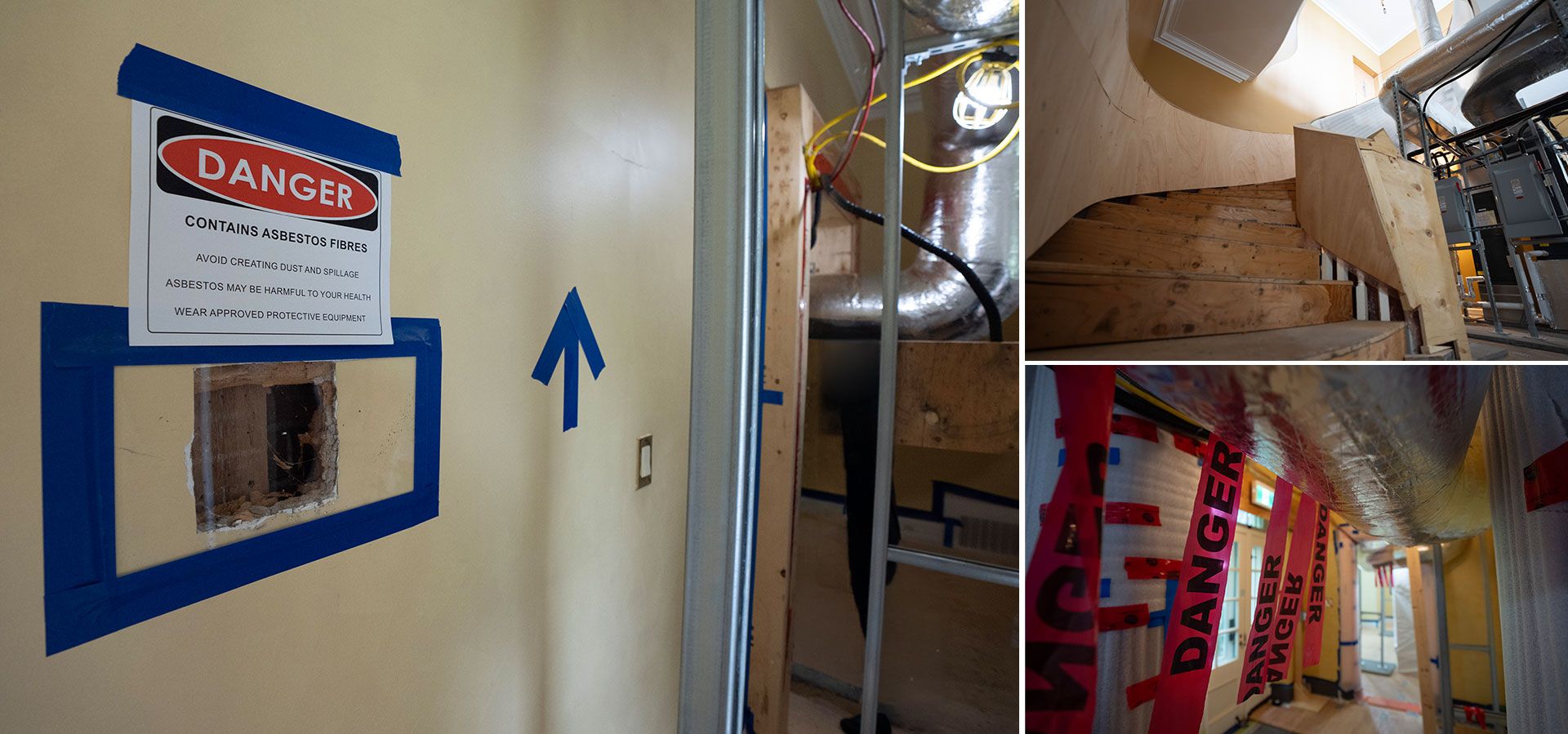
We have an incredible opportunity right now in Canada, as we re-orient our outlook beyond our neighbours to the south, to truly claim our place on the world stage and, with the same confidence, re-envision our leader’s official residence. The beleaguered 24 Sussex Drive, which was finished in 1868 and first housed our 12th prime minister, Louis St. Laurent, in 1949, has infamously become too run-down to live in, and has sat vacant since 2015. Now, it is finally going to get a much-needed renovation and reconfiguration.
In the meantime, first Justin Trudeau and now Mark Carney were relegated to “the cottage” – a somewhat fitting considering the global excitement of the Heated Rivalry episode of the same name. However, in this case, it is Rideau Cottage, which sits on the Rideau Hall estate where the Governor General lives and works. With 22 rooms, Rideau Cottage is substantial enough for a family, however, our head of government and head of state should each have an official residence befitting their constitutional roles.
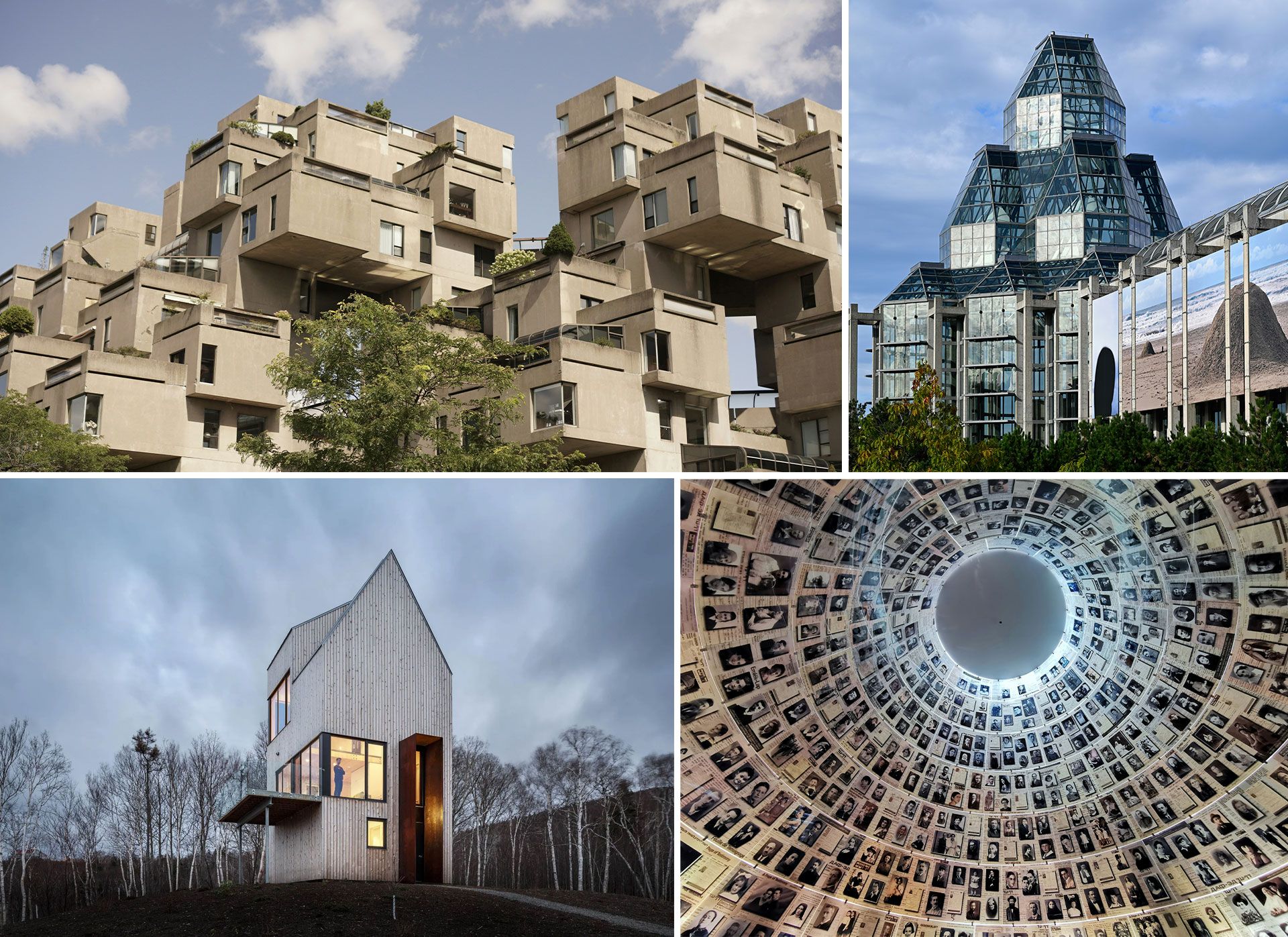
A competition to restore 24 Sussex was launched in June this year and is open to Canadian-led architectural teams, with an independent jury chaired by renowned Canadian architect Moshe Safdie – famous here for Montreal’s Habitat 67 and Ottawa’s National Gallery of Canada and abroad for Jerusalem’s Yad Vashem Holocaust memorial and Singapore’s Marina Bay Sands resort. Other vaunted members of the judging panel include Brigitte Shim, the architect behind Toronto’s celebrated Integral House and her renewal of Massey College, as well as Halifax-based Omar Gandhi, known for his work in Nova Scotia on the Governor General’s Medal-winning Rabbit Snare Gorge in Cape Breton, and the sensitive redevelopment of Peggy’s Cove. The brief asks architects to restore 24 Sussex as a “secure, accessible, sustainable and functional official residence.” In other words, retrofit a 19th-century house for the realities of the 21st century without erasing what makes it worth preserving. The jury will recommend the strongest proposal, with the winning design expected to be announced on Canada Day, July 1, 2027.
•••
What should it be? One thing is certain: it has to embody the psyche of a nation, not just now but far into the future. Little wonder that the redesign of the residence has become a hot topic. My stepson, who just graduated from architecture at Carleton University in Ottawa, was asked to tackle the design challenge of 24 Sussex for his final project; focusing in particular on choreographing the circulation of very different users – politicians, diplomats and the general public – simultaneously. His professor framed the importance of architecture in a way that stood out to me: “Given architecture’s immense health/safety/social requirements, it’s not a coincidence that becoming an architect requires approximately the same time frame as becoming a medical doctor . . . by the end of your training you are rewarded by having the skills to shape shelter for the body, but also the souls, of many others.” And this is, ultimately, what we’re talking about for 24 Sussex: whatever is created has to feed our nation’s soul, and that requires a creative leap.
But what is it about the Canadian mentality that, to date, hasn’t allowed the PM’s residence to even be brought up to spec, let alone become a place that could truly showcase our country’s creativity? The U.K.’s 10 Downing Street has gone through numerous transformations, including Boris Johnson’s 2020 cosmetic fix-up of his living quarters that cost around a quarter of a million pounds. And let’s not even discuss the glitzy new ballroom U.S. President Donald Trump is smashing onto the White House, after demolishing the East Wing to accommodate it.

I wondered what designer Tommy Smythe thought about the 24 Sussex renovation. He is uniquely qualified to comment, not only because of his design skills – his interiors have adorned the covers of Canadian House & Home magazine – but because of his very sharp mind and his sense of our political and architectural landscape. Smythe’s family is part of the country’s fabric: his great-grandfather, Conn Smythe, was the driving force behind building Maple Leaf Gardens and turning the Maple Leafs into an institution.
If 24 Sussex is to become a “living museum,” all created without public funds, it could potentially hold a collection of the best of Canadian art and design within one building
When I asked Smythe if he would like to take the project on, he almost choked on his Pellegrino. “Every time somebody has even suggested it should be possible to renovate that building and make it fit for human habitation, the country goes into a frenzied uproar. Unfortunately, because the public has such disdain for the idea of change regarding 24 Sussex, any designer or architect – or consortium of both – who takes this project on will be vilified for it,” says Smythe. “The only way you could do it is with zero public funds, at least for the elements that will be criticized.”
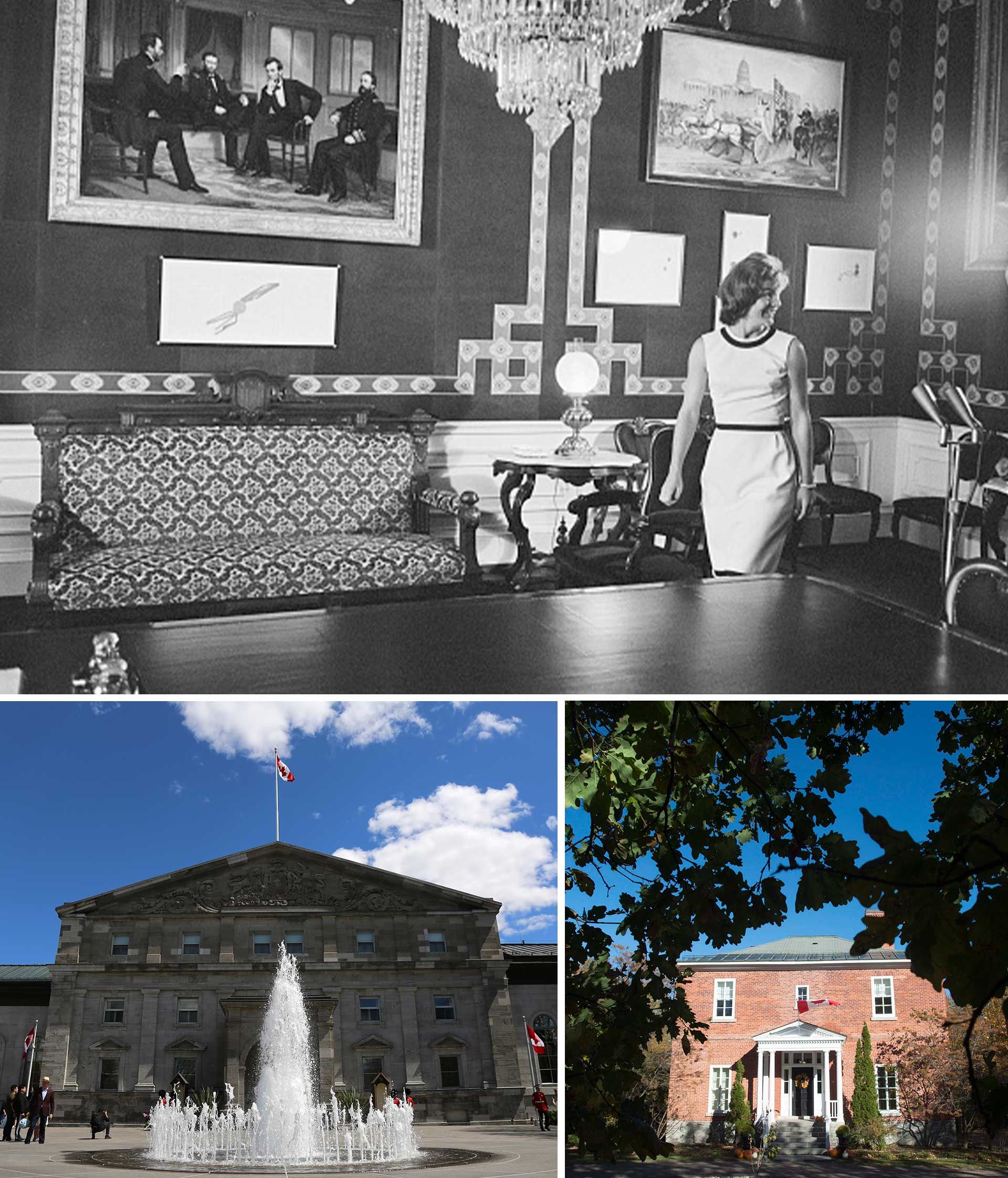
He points out that when Jacqueline Kennedy undertook her pivotal 1961 redecoration of the White House, completed in the second year of her husband’s hopeful presidency, “She went to private collectors of American furnishings and artwork to ask for donations. That’s when the White House went from being a residence to a museum,” says Smythe.
The First Lady didn’t simply set out to make an old building prettier; she reimagined the residence as a cultural nexus, a tangible expression of JFK’s ambitious New Frontier program, where the best elements of modern American style, fashion, art, technology and sport could converge. She hunted down authentic furniture that had belonged to earlier presidents, brought in experts and collectors, established a Fine Arts Committee and appointed the White House’s first curator. She also pushed Congress to protect historically significant furnishings so they could no longer simply be sold off. The result was a national residence that balanced private life, public ceremony and historic preservation.
•••
A young country like Canada would do well to draw on this example. The Prime Minister’s Office said in their announcement of the national competition, “To minimize the cost to government, the Rideau Hall Foundation (RHF) will lead a national, non-partisan fundraising campaign, with the goal of raising all or most of the cost of the project. The campaign will give Canadians and philanthropic organizations an opportunity to contribute to the renewal of this important national landmark.” This seems to reflect the First Lady’s approach and should mean the restoration doesn’t have to rely on public funds or, crucially, public opinion. “As soon as you start paying for artwork and furniture with taxpayer dollars, you’re dead in the water,” says Smythe. “They will run you out of town with torches and pitchforks and you will never be able to work again. It is a vicious world out there when it comes to criticisms of art and decor.”
If 24 Sussex is to become a “living museum,” all created without public funds, it could potentially hold a collection of the best of Canadian art and design within one building. The interiors could contain the scope of our history, from Indigenous culture and the dual colonial influences from Britain and France, through to contemporary furniture and art. “It has to blend the past and present in order to become something that moves into the future,” says Smythe.
Smythe has never been inside the building, although his friend and fellow TV presenter, Rick Mercer, has been to 24 Sussex many times, and even had a sleepover there in Stephen Harper’s day. As anyone who has seen his Rick’s Rant on 24 Sussex knows, “He doesn’t have a lot of great things to say about it.”
So, all fears of pitchforks aside, Smythe has compiled his dream team for the restoration. He would turn to ERA Architects, for their skill at restoring old buildings. The firm is known for Ottawa’s Senate of Canada Building and The Distillery District, Evergreen Brick Works and Union Station in Toronto. Smythe envisions a completely modern addition that would house the prime minister and his family. “I would work on these quarters with Todd Saunders and Alex Josephson of Partisans (Union Station, Bar Raval and Windsor’s Festival Plaza). They explore ideas about shape, lines, vistas and sightlines. Alex is to curves what Todd is to straight lines. He’s a brilliant mind and an incredible innovator,” says Smythe.
As anyone watching the boring glass boxes going up in our major cities knows, there’s a lot of very utilitarian architecture and not much creativity in our contemporary buildings. “If we’re going to invite the world to 24 Sussex to experience the greatest of Canadian talent, there needs to be a creative element – an element of beauty – and it has to have a sense of awe and wonder.”
Smythe is passionate when it comes to the interior of 24 Sussex. Illumination would come from Zac Ridgley, a “really creative” Canadian lighting designer. Contemporary furniture would have to include Mary Ratcliffe who “works beautifully with wood and has an incredible eye. I’d like to put Mary and Zac and a couple of other great makers in the same room and say, ‘We need to come up with a collection of furniture.’ You could get something really interesting,” says Smythe. “Then you would plumb the past. You need a little bit of Quebec pine, some Georgian antiques. I don’t want it to be a stuffy old-looking museum, I want it to be a home.” This creative mix, as well as the blending of public and private spaces, is what will give 24 Sussex its presence.
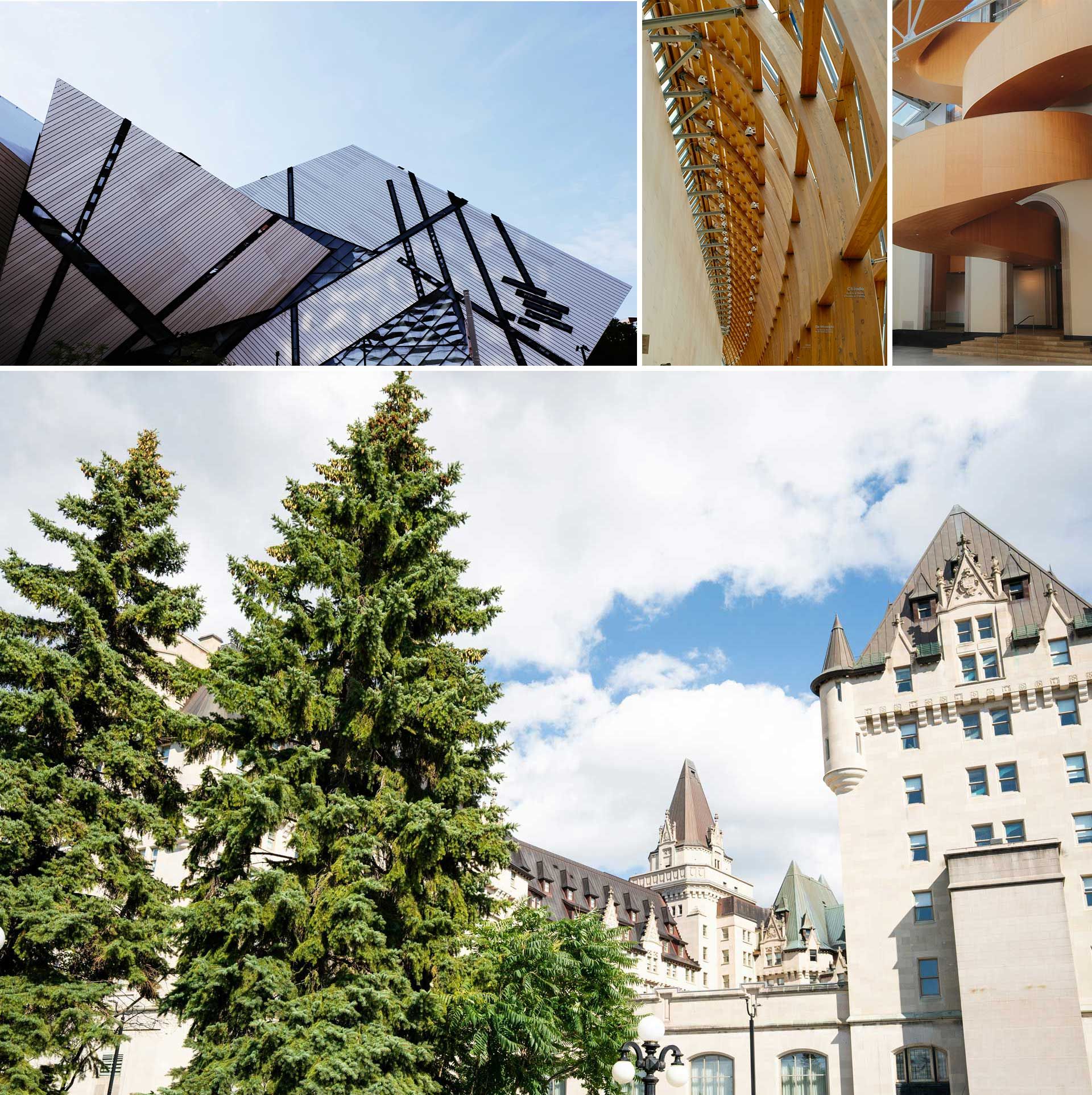
Unfortunately, Canada has a recurring pattern: we hate ambitious architecture when it is proposed, then eventually claim it as part of our identity. Daniel Libeskind’s jagged Crystal at the Royal Ontario Museum (ROM) was derided as an eyesore when it opened; Frank Gehry’s transformation of the Art Gallery of Ontario (AGO) likewise provoked anxiety about what would happen to a beloved institution – yet both are now firmly woven into Toronto’s architectural identity. Ottawa’s Château Laurier addition produced an even more visceral backlash, with critics recoiling from the very idea of a contemporary building beside a heritage icon – a reminder that, in Canada, the battle over what is new can be almost as fierce as the battle to preserve what is old.
“Everyone will hate [24 Sussex] when it is finished, but in 25 years it will be universally recognized as a great triumph – that’s what happens with everything good that has ever been created,” concludes Smythe. “I’m aged out because I probably won’t live another 25 years – if I’m going to do it, I want to live long enough to be vindicated.”