On average, they say, independence from Britain is celebrated somewhere in the world nearly every seven days in any given year. Bermuda is not one of those places. One of the outliers in a once-brawny global empire, Bermuda – a dozy island in the North Atlantic Ocean that clings to its colonial roots as much as it does it famous pink shores – remains a “British Overseas Territory” (along with Gibraltar and a handful of others).
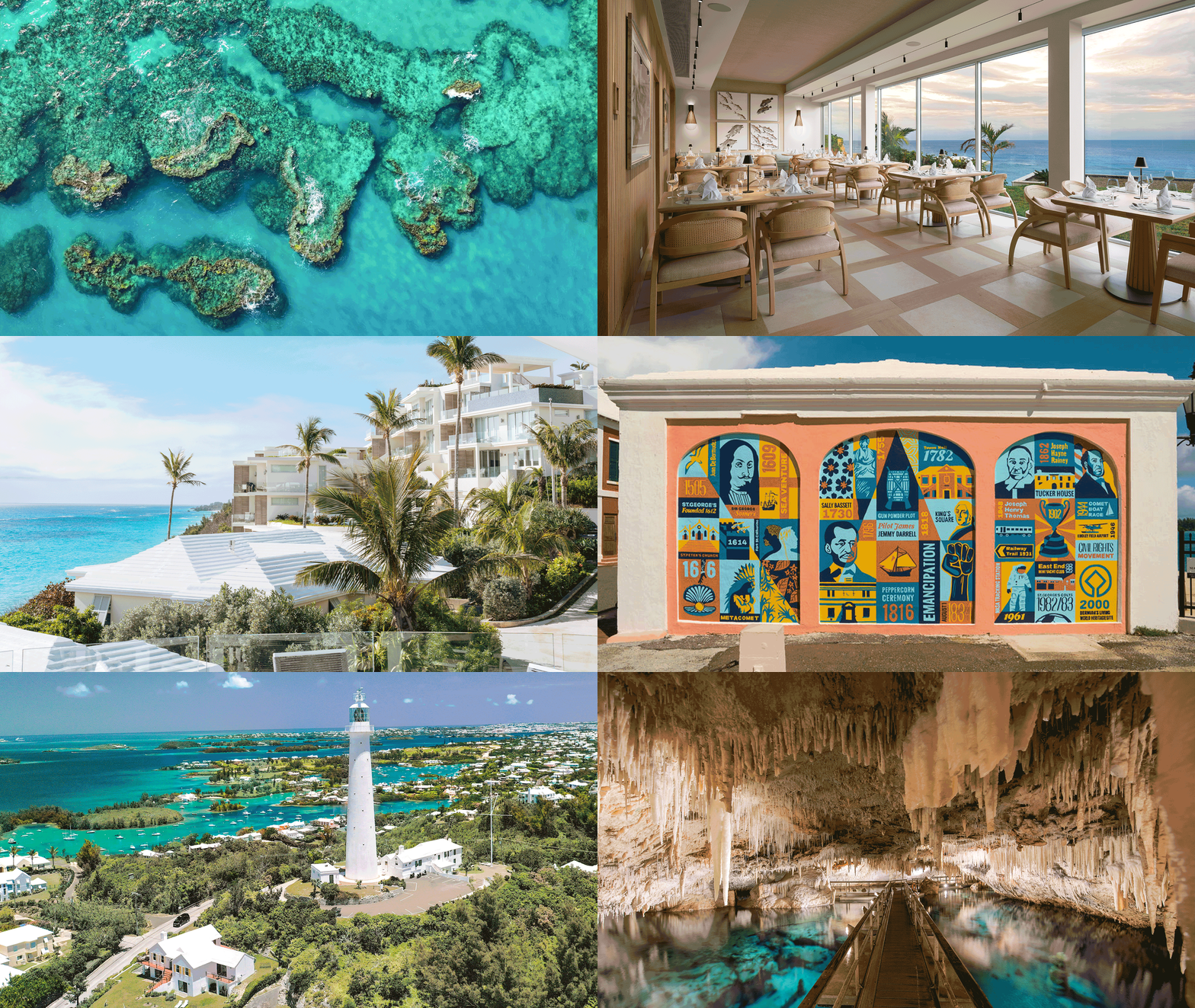
The largest island of an archipelago, 956 kilometres due east of North Carolina, the area is also known for the Bermuda Triangle (a.k.a. the Devil’s Triangle), as it has a fearsome reputation for shipwrecks and other unexplained disappearances. Theories abound, including that there lies the mythical city of Atlantis, though science tells another story: according to the National Oceanic and Atmospheric Administration (NOAA), these are not supernatural forces but a confluence of factors involving the majority of Atlantic tropical storms and hurricanes passing through the area just west of Bermuda, which can spur sudden changes in weather, when meeting the surrounding vast reefs. Additionally there’s some evidence to suggest that it is a place where a compass sometimes points toward true north versus magnetic north.
Supernatural or not, I was there to partake in the main national holiday that comes mid-summer in the form of a two-day hoot known as Cup Match.
We’re talking cricket.
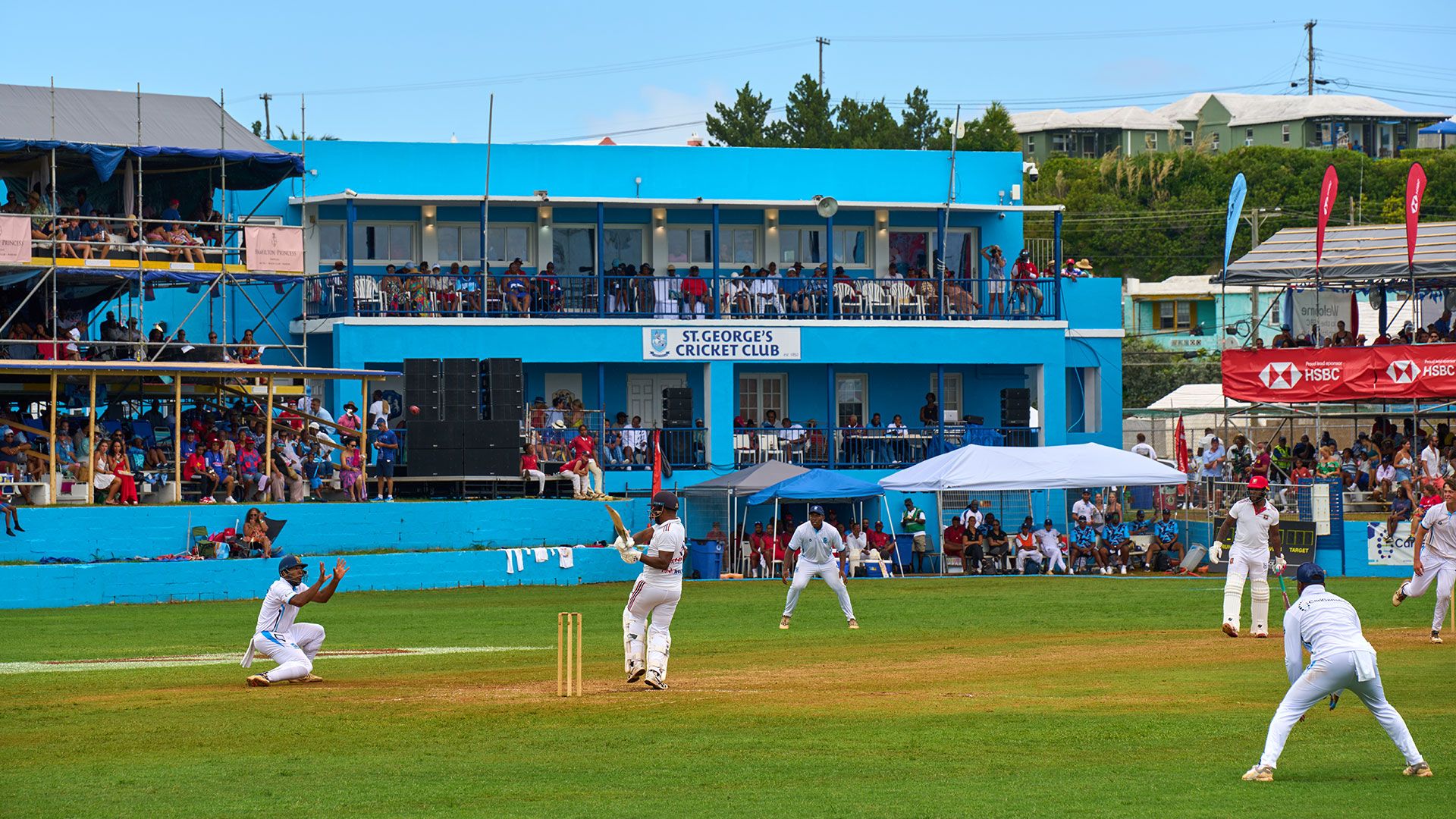
“The match goes back almost 125 years,” is what Bermuda’s beaming premier, E. David Burt, told me when I was introduced to him inside one of the livelier viewing areas at St. George’s Cricket Club. I had ventured to the island to see what the fuss was about – an event that, at first glance, is like their Super Bowl crossed with a country fair. It has also been described as “a working man’s Ascot.”
Enjoying the fevered atmosphere around the cricket oval, and several Rum Swizzles – the national tipple – I was trying to follow the more arcane rules of the sport when a born-and-bred Bermudian (the population here is tiny, only 64,000) schooled me while she ostentatiously fanned herself with one of those electric mini-fans. Like, for instance, she explained the meaning of a “full-toss” (when a ball reaches the batsmen without bouncing). This is not to be confused with a “yorker” (a ball aimed at the batsman’s toes) or “out for a duck” (when a batsman is dismissed after scoring no runs).
Like a seat-filler for a big-time awards show, I zealously clapped and stood to ooh and ahh any time the rest of the stadium did, even though I had no idea, frankly, what was going on. “Those balls are heavy – that is why they wear those knee pads,” another new friend chimed in, explaining that cricket is a bat-and-ball game like baseball. But not.
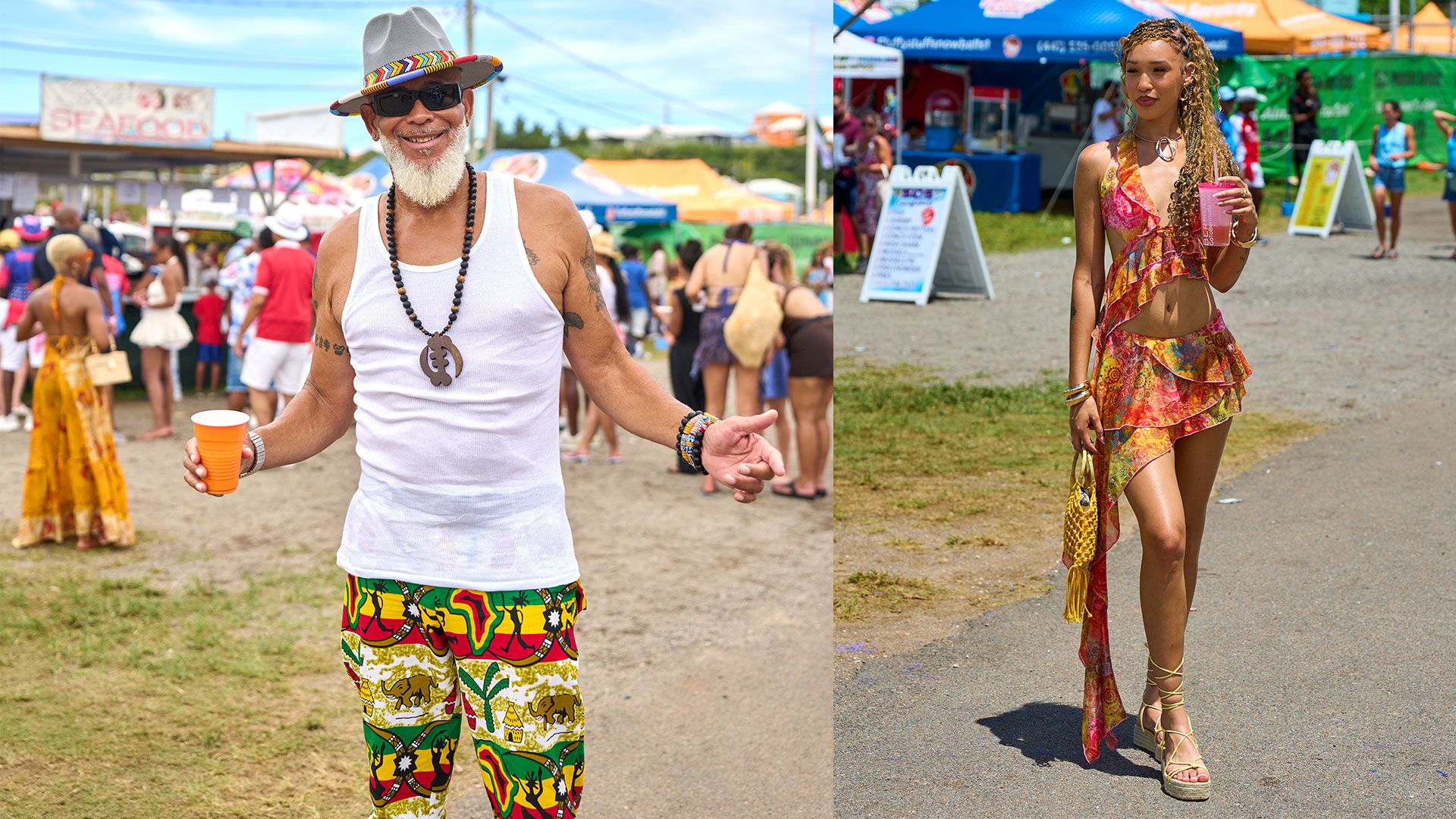
Outside the circumference of the stadium, some people found other ways to make the most of the sweltering holiday. Oodles of concession stands offered an array of options, including “mussel pie” and “shark hash.” A man took out his own beach chair and played the tuba. Various knockouts – men in designer shades and board shores and ladies in barely-there island-wear – were reflective of the casual attire of the event.
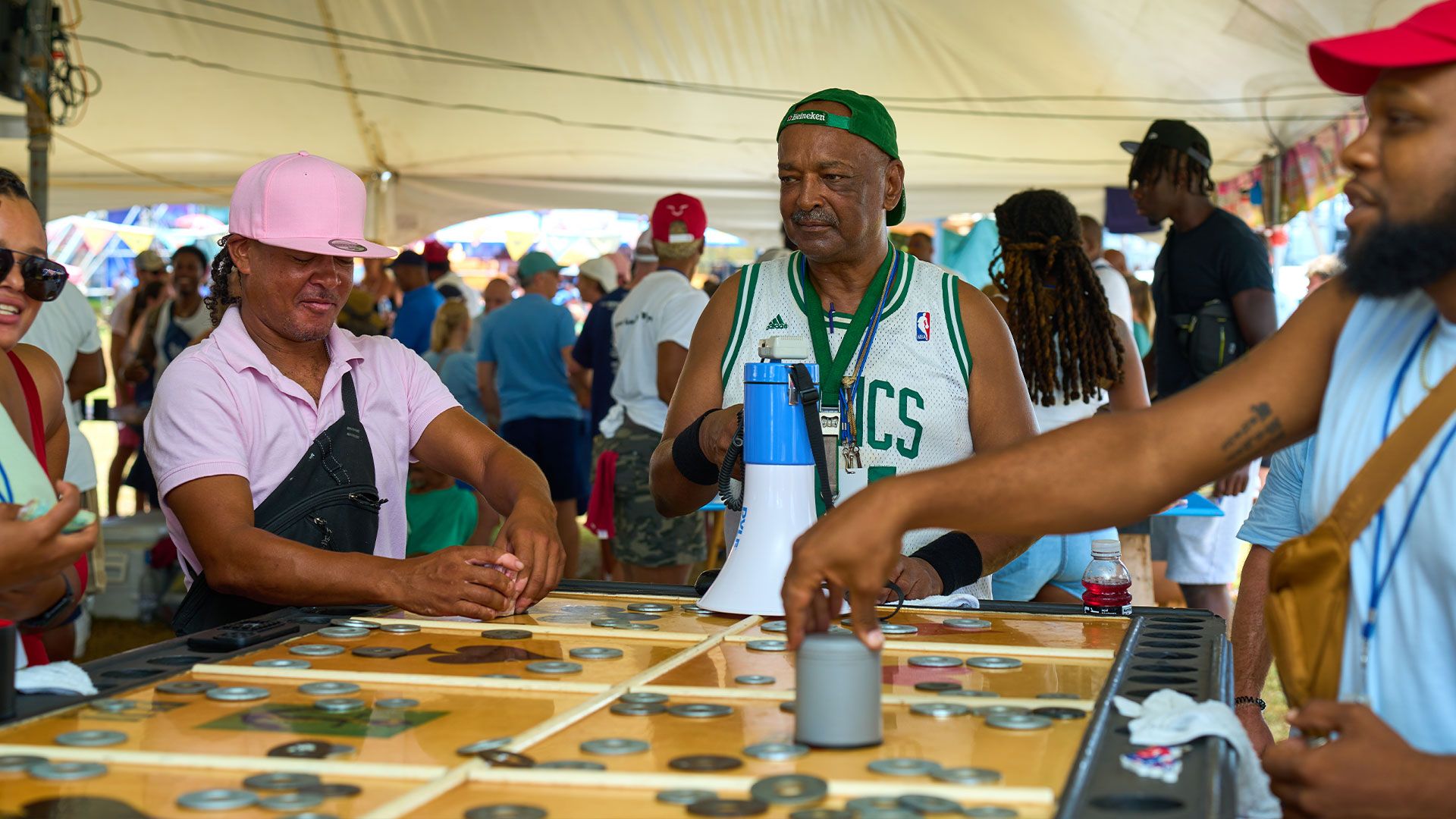
Under a giant tent on the same grounds, a heaving mass wove around myriad tables in what appeared to be a make-shift Vegas: everyone was here to play a dice game called Crown and Anchor. Gambling is only permitted in Bermuda during these two days, and this game – like most things in these parts – has British roots. Traditionally played by sailors in the Royal Navy, Crown and Anchor originated in the 18th century and is now an island rite.
Have dice. Will roll.
Coming here mid-summer reminded me what makes Bermuda so much more than just another surf-and-sun destination: it’s a peculiar place that revels in its history, and continues to extend it by nurturing its traditions. The first Cup Match was introduced by British soldiers in 1902. However it also happens to coincide with what’s called Emancipation Day – a day that commemorates the anniversary of the Slavery Abolition Act, which ended slavery in Bermuda on August 1, 1834.
A marker of liberation – decades before the end of slavery in America – Emancipation Day now also precedes Mary Prince Day, occurring on the final day of Cup Match. It’s the only national holiday in the world named after a Black woman, incredibly. Prince, as one of my hosts from the Bermuda Tourism Authority, Kiwan Anderson, told me – was born an enslaved person in 1788 in Brackish Pond, Bermuda. Significantly, she was the first woman to publish an autobiography of her experience, The History of Mary Prince: A West Indian Slave. “To be free is very sweet.” One of her many quotes – words that fronted Anderson’s T-shirt.
Prince’s story was not widely known, even amongst islanders, until about 20 years ago, when scholars rediscovered it and her place in history solidified. They read her first-hand description of the brutalities of enslavement (reprinted twice in 1831, the year it was published) and how it had a galvanizing effect on the British abolitionist movement at large. A Google Doodle in honour of her birthday came in 2018, and Bermuda’s Parliament proclaimed Mary Prince Day in 2020, replacing what had been hitherto called Somers Day, held in honour of Admiral Sir George Somers, who founded the colony of Bermuda after becoming shipwrecked on the island on his way to Jamestown, Virginia.
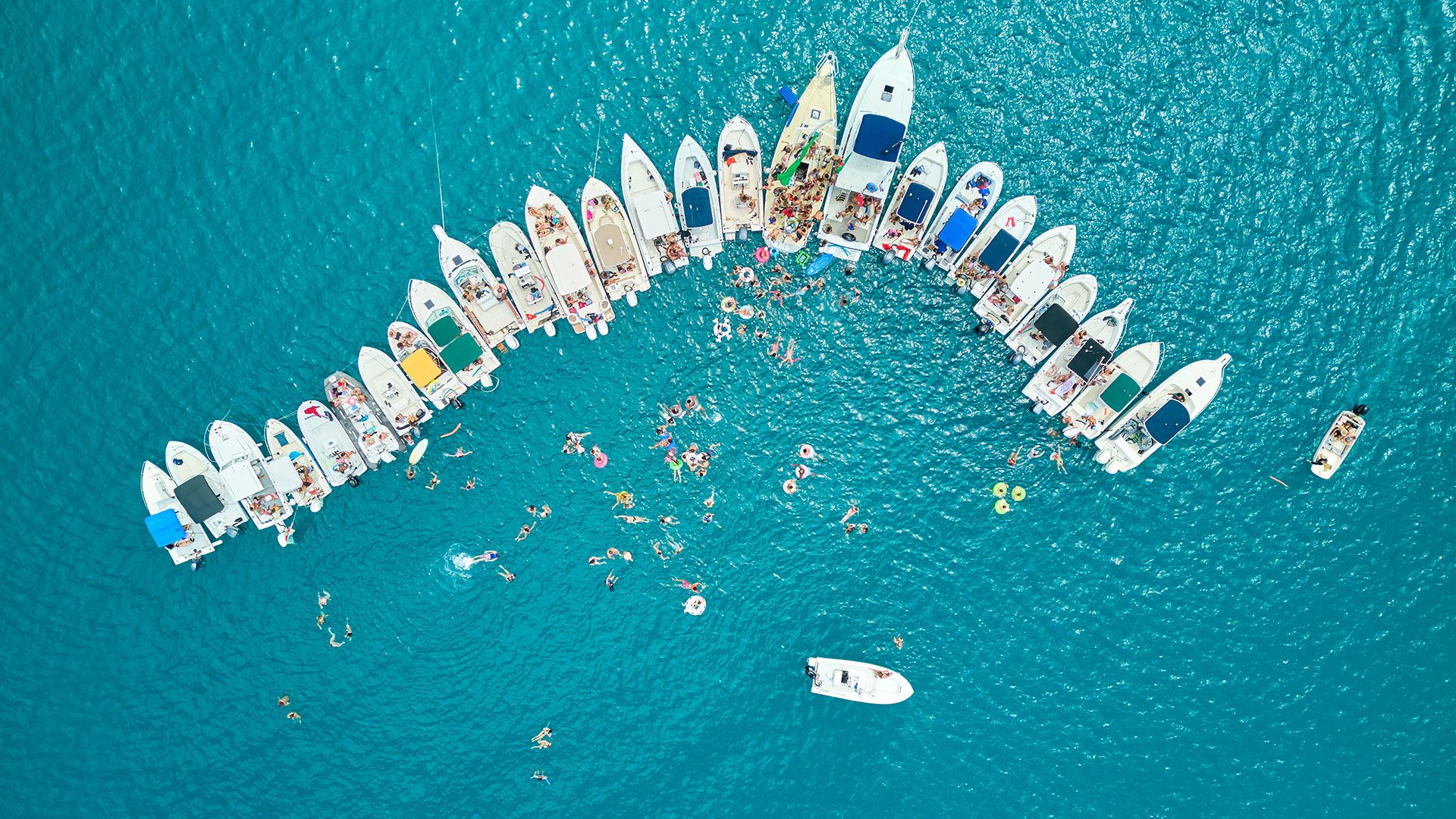
These days, freedom comes with a right to party, with events spreading out over the holiday. The weekend culminates with the annual Non-Mariners Raft Up, where boaters head to Mangrove Bay and rope up for a party at sea. Too fun!
I asked many locals during my visit if there was any significant groundswell desire for independence, since a referendum held back in 1995 went overwhelmingly for the nays. Turns out no. Most Bermudians like having the privileges they get with the British connection – including defense. Plus, it’s part of their “brand,” tourism-wise.
This “brand” also includes a seascape that is the rarest of blues – a blue that actually verges on cyan, a combination of green and blue, owing perhaps to a location in which the exceptionally clear Atlantic Ocean water dances with the white sands of the island’s vast reefs. It was what struck me most about Bermuda – plus the fact that perhaps thanks to it being only 21 square miles – this hook-shaped island has a kind of intimacy. A gauzy kind of island glamour where past meets present, and I found it irresistible: those limestone houses, the Bermuda shorts, its every-hour-is-Happy-Hour culture of rum.
Stay calm and bat on: the takeaway I ultimately left with. Liberty, cricket and mystique.
BERMUDA DIARY
Stay
Rosewood Bermuda
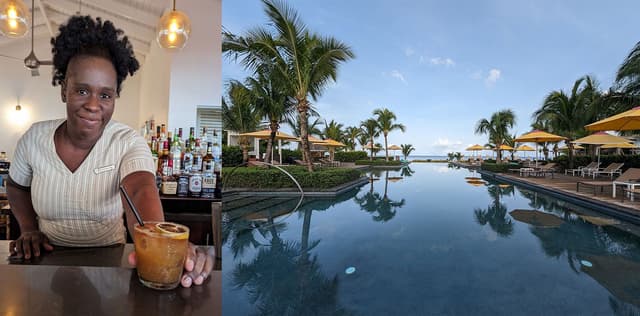
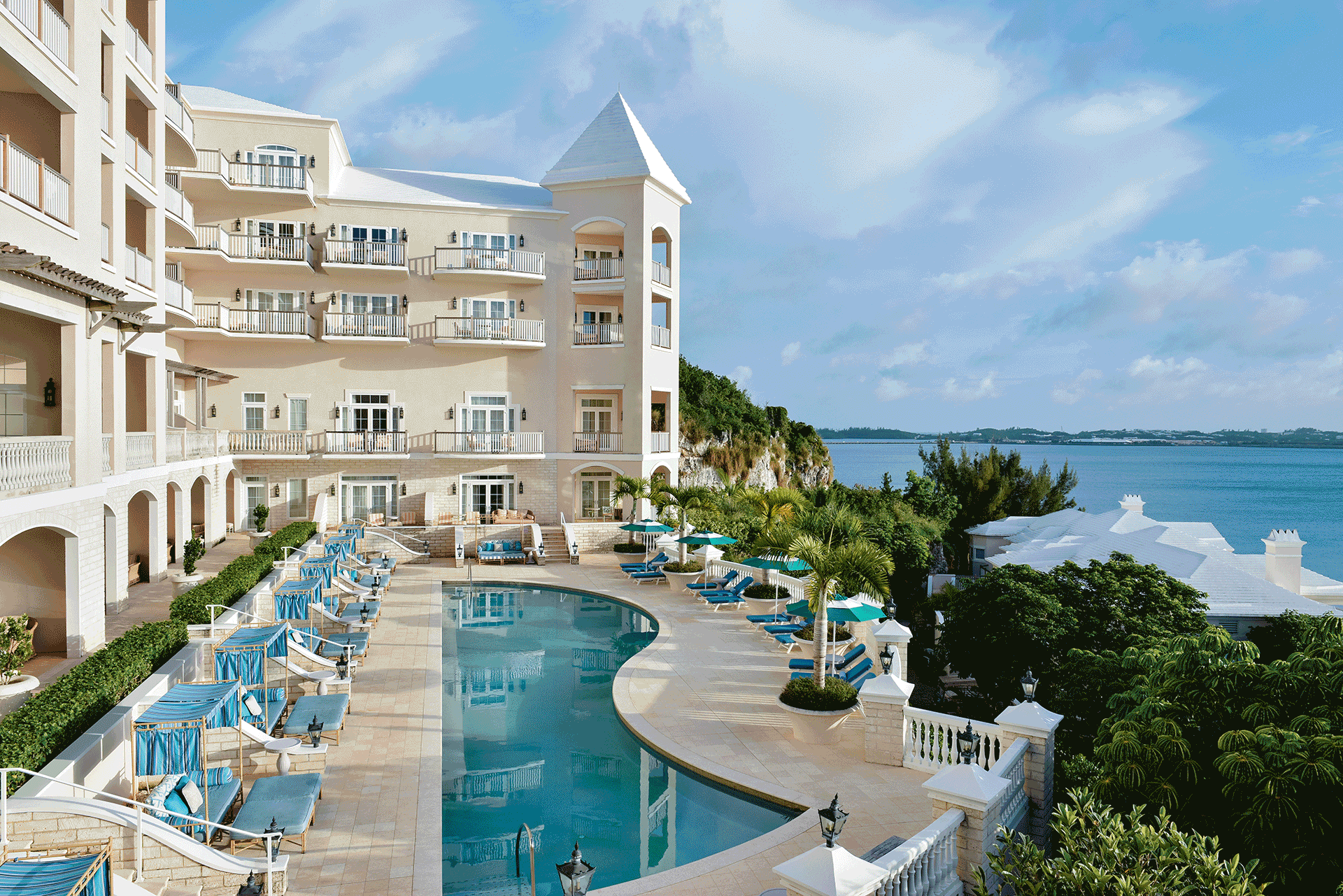
The ultimate splurge hotel, the setting alone distinguishes the 88-suite Rosewood, which is situated on chi-chi Tucker’s Point, amidst one of the world’s most stunning golf courses, and also the island’s largest private pastel-pink beach. The aesthetic? Colonial grandeur to the max – sun yourself by the Palm Court Pool, with regal views of Harrington Sound.
Eat
Huckleberry
Named after Huckleberry Finn, and a nod to Mark Twain who called Bermuda his “happy little paradise,” this restaurant sits inside the Rosedon Hotel, formerly a private manse in Hamilton, Bermuda’s capital. Tip: Take a seat on the restaurant’s wraparound porch, where you’ll enjoy the brasserie-meets-local dishes created by chef Damien Griffith, who worked at London’s Michelin-starred Le Gavroche.
Drink
Sunken Harbor Club
A dash of dark humour to go with your many libations: the so-named Sunken Harbor Club is set on an island known as the shipwreck capital of the world. The Bermudian establishment is an outpost of the renowned cocktail bar of the same name in Brooklyn, NY. Some of the specials included the Sunken Swizzle, a blend of dark rums, sherry, citrus and spice, and the island’s classic Dark ’n’ Stormy, traditionally made with Gosling’s Black Seal rum and spicy ginger beer. The interior? Decorated with knick-knacks c/o Teddy Tucker, the late, great ocean explorer who also discovered many artifacts now housed at the fascinating Bermuda Underwater Exploration Institute.
Go
The Bermuda Railway Trail
With so much of a place defined by the sea, this is a breathtaking way to experience Bermuda by land: a scenic, 18-mile path that runs from one end of the island to the other, and is built on the former route of the Bermuda Railway, which operated from 1931 to 1948. Walk, hike or bike along the trail and pack your swimsuit – it is the perfect way to discover the island’s many hidden beaches.