Author’s Home Base: New York City
Author’s Take: “For some people, the years between when they learn how to read and, say, leave home, consist of reading. To others, that idea is perplexing.”
Favourite Lines: “Snow is falling down around both of them. A jangle of bells. There is nothing more beautiful, said Frank O’Hara, in a poem whose name she cannot now remember, a poem with long lines, like telephone wires, than the lights turning from red to green on Park Avenue during a snowstorm.”
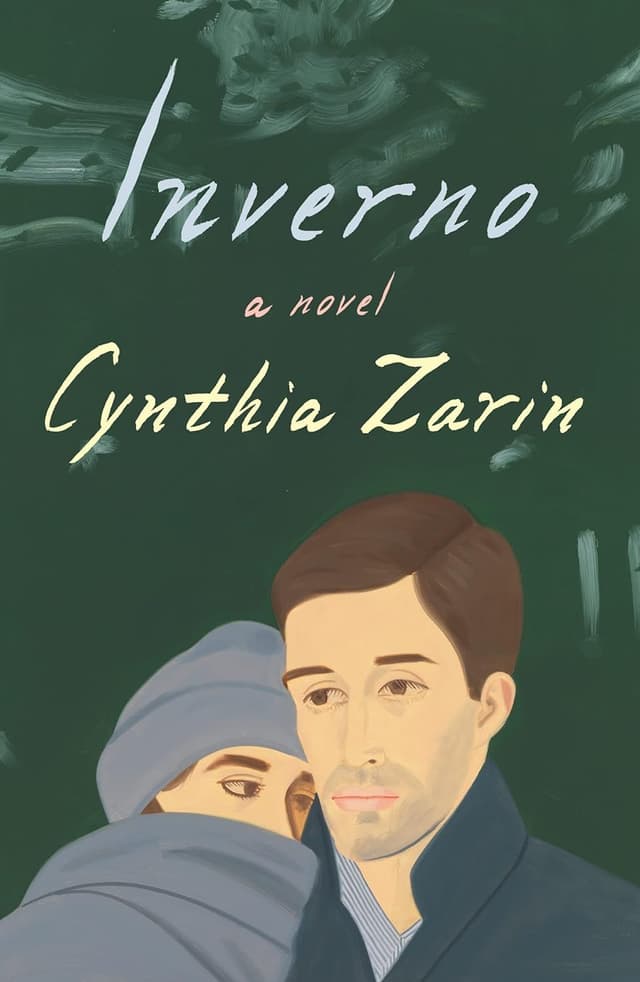
Review: Inverno is the first novel from Cynthia Zarin, author of An Enlarged Heart: A Personal History, a New Yorker contributor since 1983 and award-winning poet. She also writes children’s books (What Do You See When You Shut Your Eyes?), and so she is similarly invested in (addicted to?) children’s stories and fairy tales. Inverno, Italian for “winter,” throws to the overarching mood of the book – cold, bleak, but magical.
The story opens, and continually references, the main character Caroline waiting in Central Park for Alastair: as an adult, aching for a tryst, and 30 years earlier, when they were children, and he was hiding from his mother in the woods. Caroline continually tries to connect with Alastair, a thematic play on the supreme fairy tale The Snow Queen. Hans Christian Andersen’s story tells the tale of an evil mirror shattering and, after a piece lodges in a young boy’s heart, he is stolen by the Snow Queen and turned into an icy creature, cut off from warm family affections. Like Caroline with Alastair, Kai’s young companion, Gerda, wants to save him.
The novella is an ice storm of feeling wrapped in a snowglobe. Emotionally flattened by her early, abusive family life, Caroline yearns for the man she has loved for decades – the one who was once her childhood companion, and also struggled with an unhappy home life. As an adult, he is not necessarily a kind man; an alcoholic, he self-sabotages himself, and by extension, Caroline. Alastair, a journalist, is constantly on the move, while Caroline, a mother of two, marries unhappily twice.
The tale of broken love is strikingly original in style and approach: not remotely conventional in its narration. Zarin’s poetic instinct is front and centre in Inverno, whose themes – broken telephone lines, knives, mirrors, snow, trapped children – are interwoven throughout. This book, which enchantingly conveys its message, is one to savour, not rush through. Magnificently crafted sentences take the reader forward and backward in time, through the prism of snow. A perfect read, for a winter’s day; a book to think upon. – S.G.