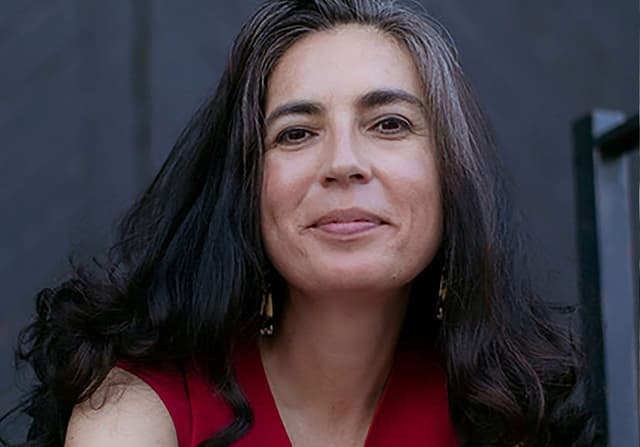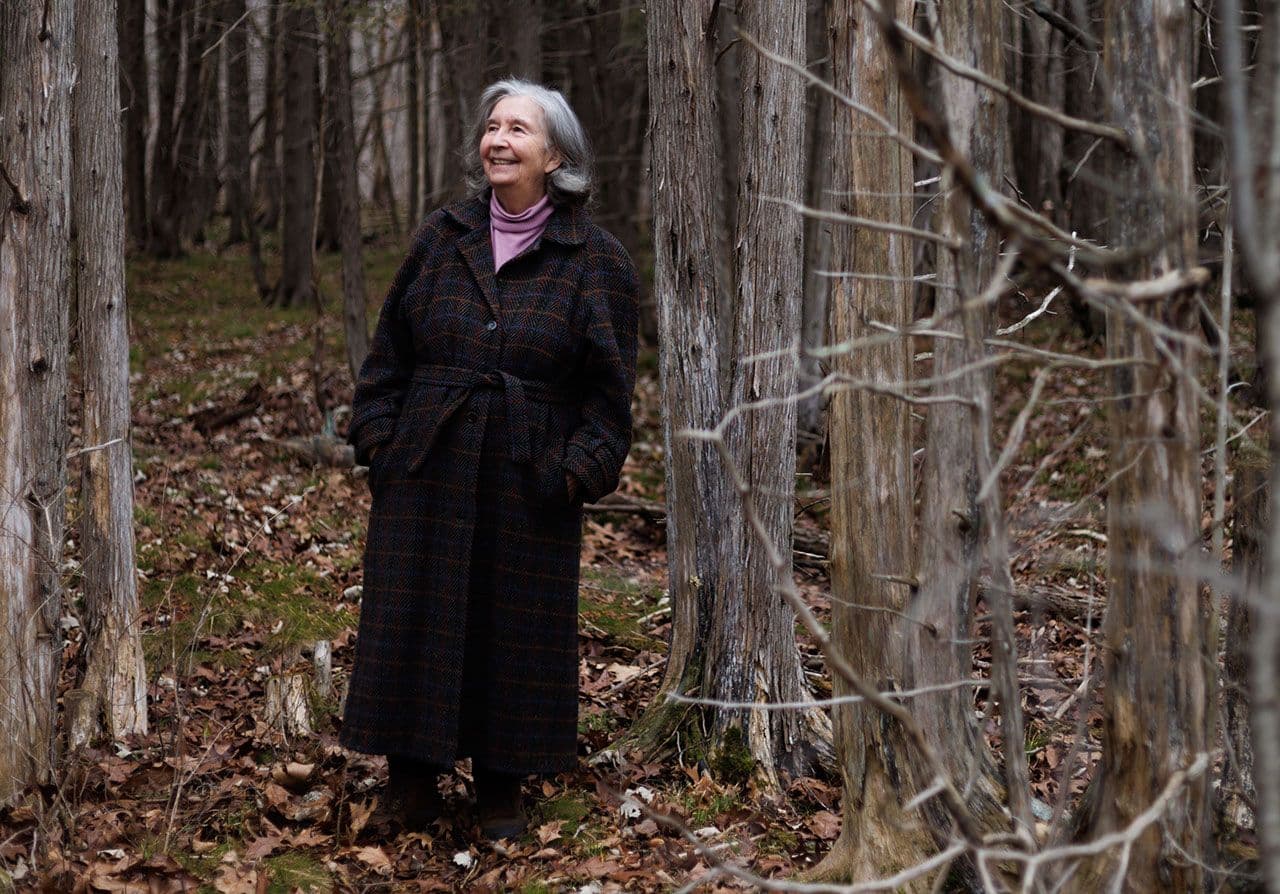
The world’s forests may lack a voice of their own, but they have a powerful ally in Diana Beresford-Kroeger, 80. The globally renowned botanist, medical biochemist and self-described “climate-change visionary” – who describes forests as “molecular green machines, just like the brain” – has dedicated her life and career to tree advocacy. At every opportunity, she has sounded the alarm about why threats to trees imperil the planet.
With the release of her eighth book, Our Green Heart: The Soul and Science of Forests, Beresford-Kroeger eloquently makes the case that trees do much more than simply suck up harmful carbon dioxide and nurture pollinators. “The idea here,” she says, “is to get into people’s hearts and souls and say, ‘We cannot destroy the planet that we have.’”
In this book of essays, the bestselling author of To Speak For The Trees advocates for better stewardship and preservation of existing trees, widespread replanting of new ones, continued study of what trees contribute to our ecosystems and a general attitude adjustment about why trees matter and must be protected.

“This book is a reminder of all trees do for us,” she writes in her introduction. “It is a reminder of their central role in the healthy functioning of everything — everything. It is a reminder that the only way out of this mess we have made is to protect the forests and plant new ones.”
Since the mid-1970s, Beresford-Kroeger and her husband Christian have been running an experimental farm and arboretum in the village of Merrickville-Wolford, north of Brockville, Ont., where they plant and nurture rare and vulnerable trees, from trembling aspens (p. tremuloides) to experimental Hogge pears. “We did all of it ourselves,” she laughs. “We bought the land and built our house so all our money could go into this research project.”
Beresford-Kroeger has been researching all her life. In addition to completing her masters in botany and two PhDs – one in biochemistry, the other in biology – she has been central to important studies in both humans and plants, including genetic smearing (which changed the way scientists studied microcosms under a microscope) and cathodoluminescence, a sophisticated (and hard-to-describe) lab technique used to detect cancer.
But science isn’t the only thing powering Beresford-Kroeger’s climate-protection arguments in Our Green Heart. There is also a mix of the mystical in her backstory, which helps explain her profound connection to nature.
Orphaned as a child in Ireland, she was raised between the Cork home of her bibliophile maternal uncle Patrick and the valley of Lisheens, where her great-aunt Nellie “and the rest of an older generation of subsistence farmers taught me the ancient Druidic knowledge of the Celtic culture,” schooling her in an understanding of flora and fauna that dates back millennia.
“Rather than give me money or land, I was given wisdom,” she says. “And it was very important that I was a woman and orphaned, so all these 90-year-old people got together and educated me in the old ways. They told me that knowledge would be needed in the time of now.”
She recalls this in a phone call just days before the respected journal Nature reported the wildfires that ravaged Canada’s boreal forests in 2023 produced more planet-warming carbon emissions than the burning of fossil fuels everywhere but China, the United States and India.
Interestingly, Beresford-Kroeger – who says “sexism and harassment, petty bullying and backstabbing” drove her from academia in the early ’80s, where she was once told to “go home, get married and have children” – insists women might hold the key to solving the world’s climate calamity.
“Women are, for the most part, the caretakers of the family. They are the worriers,” she explains. “We are in a unique situation because, in the western world, we have women with voices. Elsewhere in the world there are women without voices. They must lean on us. And [change] is going to have to happen from North America and Europe.”
Our Green Heart is the latest tool in Beresford-Kroeger’s arsenal for galvanizing people to combat climate change by supporting trees. In addition to seven previous nature-themed books and contribution to The International Handbook of Forest Therapy, an anthology published by Cambridge Scholars Press in 2019, she wrote and featured in the 2016 documentary Call of the Forest. On her website, she offers deeply researched online tutorials for tree planting and care specific to geographical areas.
When asked if she hopes politicians, say, or philanthropists read Our Green Heart, Beresford-Kroeger says, “I want the general public to read this book.
“The politicians have enough to go on what they have been told, though they’re not moving even a big toe about climate change. Maybe this can help people hold political feet to the fire.”
She speaks publicly about the crucial importance of trees, with events to promote the new book scheduled in cities from Toronto to Calgary. “I want people to know there is an answer, we have the answer, and we can do it. Even in the city, you can plant trees. That’s all we have to do. Make sure they’re looked after and object when they’re not,” she says, noting with pride that, last year, she was one of 11 “inspirational alumni” honoured by University College Cork, where she was fêted alongside an Oscar-nominated sound engineer and two Olympic gold medalists, among others.
“There are few people in Canada battling hard for the environment and it’s such a tremendous country,” Beresford-Kroeger says. “We have such biodiversity here and it is being knocked down bit by bit, block by block, on a daily basis. The insect populations are going down. So are the birds. And we will go with them if we’re not careful.”