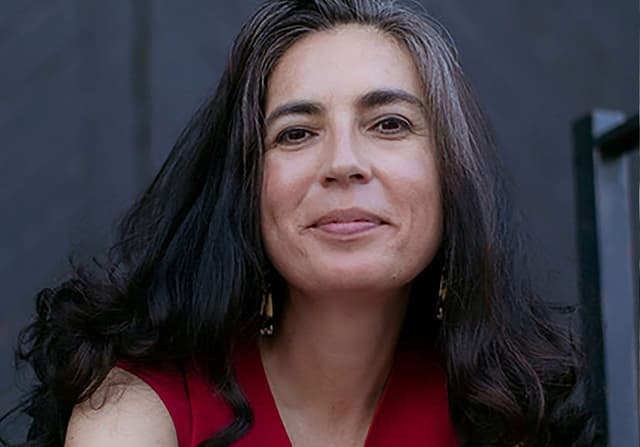
Here’s a shocking statistic from What She Said: Conversations About Equality by Elizabeth Renzetti: The UN estimates it will take 300 years for women to achieve gender parity. The former Globe and Mail journalist builds on three decades of reporting from the frontlines of feminism to trace “the paradox of our condition right now – powerful and demeaned.” Renzetti explores issues like pay equity, violence against women and aging with intellectual rigour. In the following excerpt from Chapter 1, What’s the Price of Silence?, she talks to a trail-blazing Canadian who took on the government and won.

I’m determined to find hope in all these chapters. So let me start this redemptive episode by reeling back to 1977, in North Bay, Ontario, an unlikely setting for revolution if ever there was one. And yet this is where we find our heroine, Bonnie Robichaud, a young mother of five who landed a job as a cleaner at a Canadian Forces base. For the next two years, as she proved exemplary at her job, Robichaud was also being subjected to gruesome sexual violence at the hands of her boss. Robichaud reported the abuse; nothing happened. In fact, as she pursued her claims against him, for years he remained her supervisor.
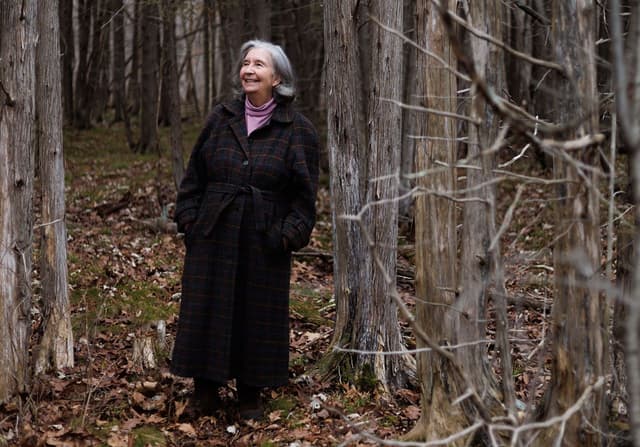
Robichaud is nothing if not feisty – “You don’t want to make me mad,” she told me in an interview from the Ottawa seniors’ residence where she lives with her husband of fifty-five years, Larry. Although she was left devastated and depressed by the abuse, she doggedly pursued justice for herself and other workers, first through the Department of National Defence and later through the court system. In 1987, Bonnie’s case was the subject of a landmark decision by the Supreme Court of Canada, which ruled that an employer could be held liable for the “discriminatory acts” of an employee.
The battle that Bonnie began in the 1970s, which paved the way for so many other survivors of workplace violence, is told in her searing memoir, It Should Be Easy to Fix. It would have been so easy to quit, to drop her pursuit for justice. No one was in her corner – not the defence department, not even her union (one union rep told her, “a guy had the right to chase a woman if he wanted to”). Only her husband and kids stuck by her. When I asked her why she kept going, Bonnie sounded almost surprised at the question. “I had a right to that job,” she said. “I had a right to that job without the behaviour of the sexual harasser. And I had a right to be protected from it by the employer, who did not want to know about it.”

Almost fifty years later, you could tell that Bonnie had made peace with the past. She’d fought a long fight, and while it had taken a toll, she’d still won in the end. All the pain – the depression, the lack of money, not being available for her kids – had faded with her victory. It had been worthwhile. One thing, though, caused her voice to rise in distress. The non-disclosure agreement she’d been made to sign by the Department of National Defence, which had been used to buy her silence.
“I didn’t realize how difficult that would be, for me to have a non-disclosure clause. The employer will beat you up for years or whatever length of time you can survive. And then they tell you, you can’t tell anybody this has happened. That is so wrong. They should be illegal. They’re evil.” I told Bonnie about the work being done to ban NDAs around the world, and she took a deep breath. “I’m so happy to see that. If I were younger, and had more energy, I’d be there with them.”
Excerpted from What She Said by Elizabeth Renzetti. Copyright © 2024 Elizabeth Renzetti. Published by McClelland & Stewart, a division of Penguin Random House Canada Limited. Reproduced by arrangement with the Publisher. All rights reserved.
This article appeared in the October/November 2024 issue of Zoomer magazine with the headline ‘Women Talking,’ p. 94.