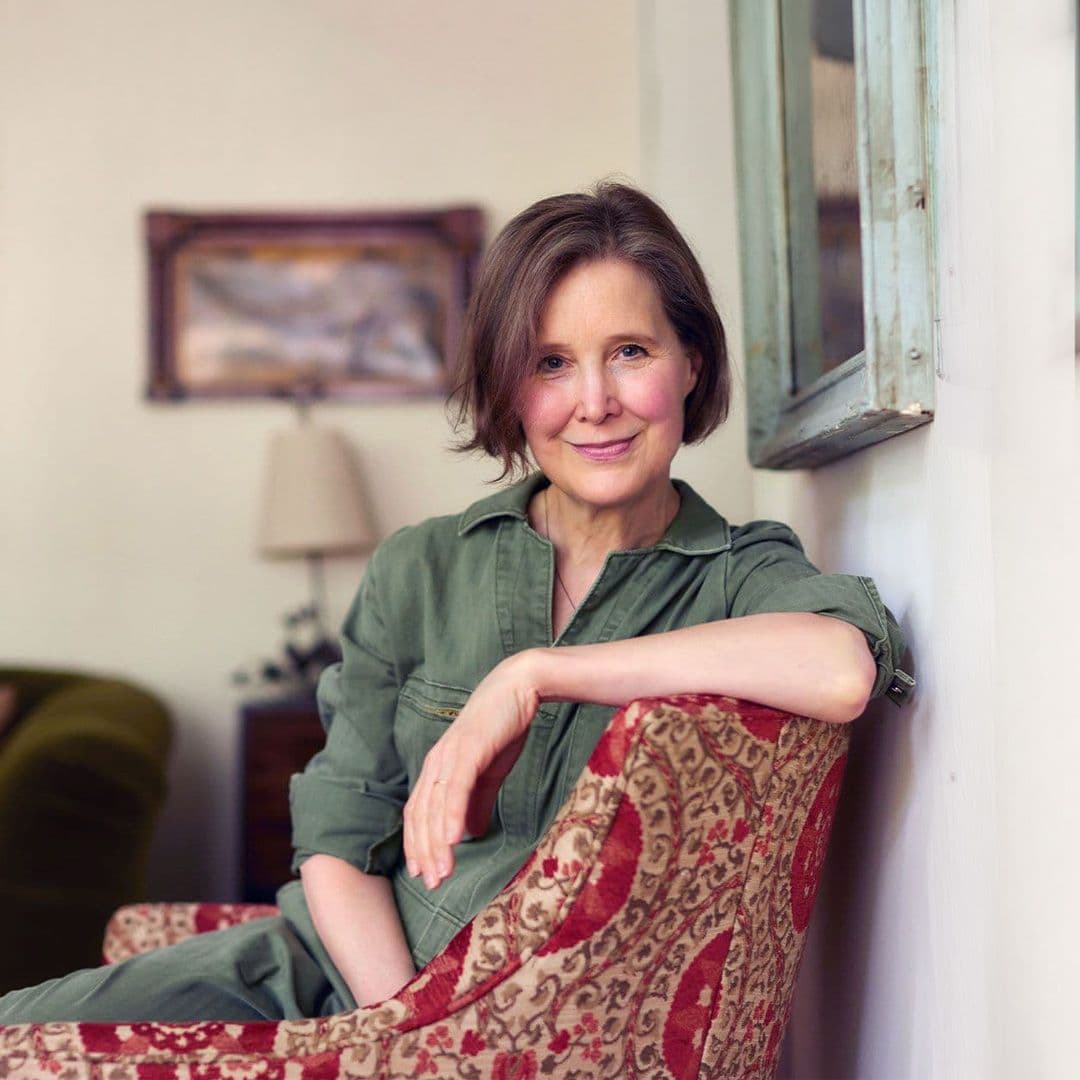
When Ann Patchett reflects on how she’s changed as a writer as she’s gotten older, she brings up one of Canada’s most famous authors – but in an unexpected way: “There’s a Margaret Atwood quote that I’ll slaughter,” she tells me. “It’s something like, ‘The only piece of writing advice that is applicable to everyone is posture.’”
Practical and pragmatic, Patchett, 62, has risen to fame as an award-winning novelist, memoirist and children’s book author – and the owner of a successful independent bookstore, Parnassus, in Nashville, Tenn. And in order to keep herself up to the tasks physically, she now uses a treadmill desk for writing. “I used to sit at a desk, like a nesting hen with my legs up under me, and I had so much pain in my neck, shoulders and wrists. When I started writing on the treadmill, it was all gone.” She adds, it’s also good for plot. “There are all sorts of studies about how people are more creative when they’re walking: It doesn’t matter if you’re walking through the woods or if you’re walking on a treadmill. I have this sense when I go to work in the morning that I am stepping into my novel.”
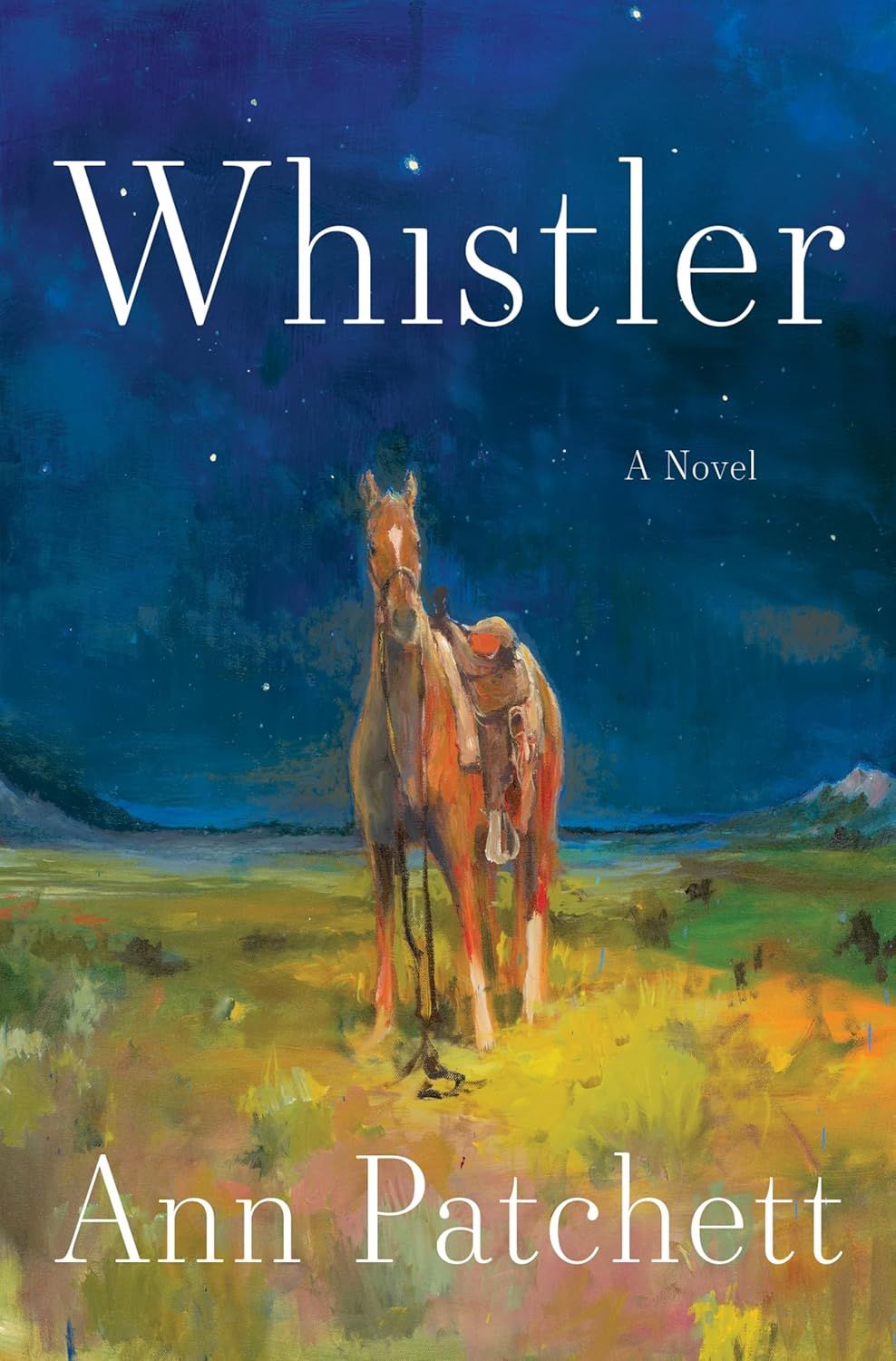
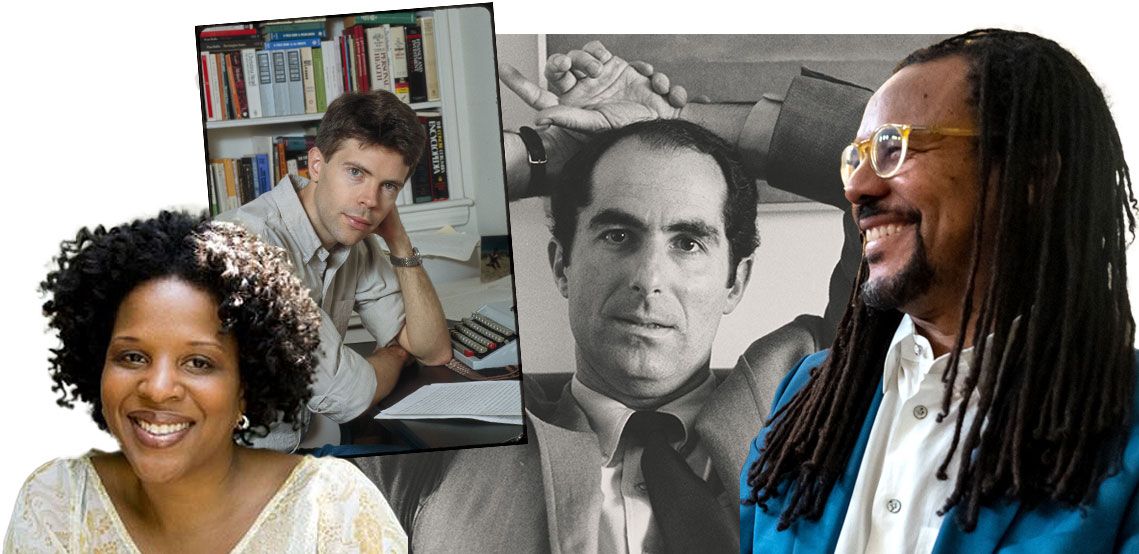
Patchett’s latest, Whistler, starts with a 53-year-old high school writing teacher running into an older gentleman – who was once briefly married to her mother – in an art gallery. Even though there’s a horse on the cover, the story is a very human one, about reunion and the exploration of family connections. Patchett herself had two stepfathers growing up – and put a fictional one in her 2016 novel Commonwealth and one at the heart of this book. “I had stepmothers in The Dutch House, and in Run it was adopted siblings. Family is very interesting to me, and I think I’m at a point in my life where I’m just going to write about what I’m interested in, even if I’ve written about some aspect of it before,” she says. “Elizabeth Strout [author of Olive Kitteridge] has been such a great influence on my thinking about writing. She says, ‘You want to go back to these people again and do this again? Go ahead.’” Patchett also points to Philip Roth and John Updike, who often returned to the same characters. “I’m not doing that,” says Patchett, “but I’m going back to a lot of the same terrain because digging makes you want to dig more – in an archaeological sense. You could spend your life excavating one large dinosaur, all the little bones. You put what you find back into place and then you go back and find another leg or find the tail or whatever.”
One of the reasons why readers dig Patchett is that she’s a contemporary literary great who isn’t excavating trauma, but rather processing light and love. “The darkness is really well represented – some of the greatest writers have it covered,” she says. “But the kindness – which, frankly, I see every single day of my life – in real time – is not. If I’m looking at the news, at the computer, I see the horror. But if I go to the grocery store, the bookstore, walk the dog in my neighbourhood, people are nice, really nice. So, if I was the only person in the world writing novels, I would think, ‘Oh, well, you know, maybe it’s my responsibility to talk about serial killers.’ But since I’m only writing one novel in the hundreds of thousands of novels that come out every year, I feel like it’s okay for me to say, ‘This has its moments.’”
We asked Patchett to answer our Shelf Life questionnaire, hoping to find the light and dark in her reading life.
What’s the best book you’ve read in the last year?
Yiyun Li’s Music Against the Night is a book coming out in October, but I read it ahead of time. This has been a fantastic year of fiction with Kin by Tayari Jones, Vigil by George Saunders and the new Colson Whitehead, Cool Machine. And Music Against the Night doesn’t have just one element to pull out. It has every element. It’s beautifully written, funny, moving, profound and wholly original.
What book are you most excited to dive into?
Because I’m always reading way ahead to find new books for our bookstore’s First Editions Club, I rarely get to experience reading older ones. But I was just looking at Philip Roth’s The Plot Against America. I wanted to check a couple of things in the book, but couldn’t stop reading – especially in this time period.
What is your favourite book of all time?
Well, Music Against the Night is up there. But I would say Independent People by Halldór Laxness, which is also a favourite of Jonathan Franzen and Barbara Kingsolver. It was written in 1934 and is about an Icelandic sheep farmer. The characters and the setting were all unfamiliar to me. It’s such a strange and striking novel. I always tell people, if you don’t like it by page 30, you’re not going to like it. It’s a very strong taste, like black licorice. I actually wanted to name the bookstore Independent People, but my partner wanted Parnassus, which I resisted. Someone had to give in … But then she moved on, and now I have a bookstore with a name I don’t like.
What is a book that completely changed your perspective?
Who Is Government? The Untold Story of Public Service by Michael Lewis. It’s the perfect book for this moment in American history. It’s a genuine appreciation of the people who serve this country in different ways.
If you could have dinner with any author, living or dead, who would it be?
Lucy Grealy [a close friend and fellow writer who died in 2002 of a heroin overdose and is the subject of Patchett’s 2004 nonfiction book Truth & Beauty: A Friendship]. Wouldn’t that be wonderful?