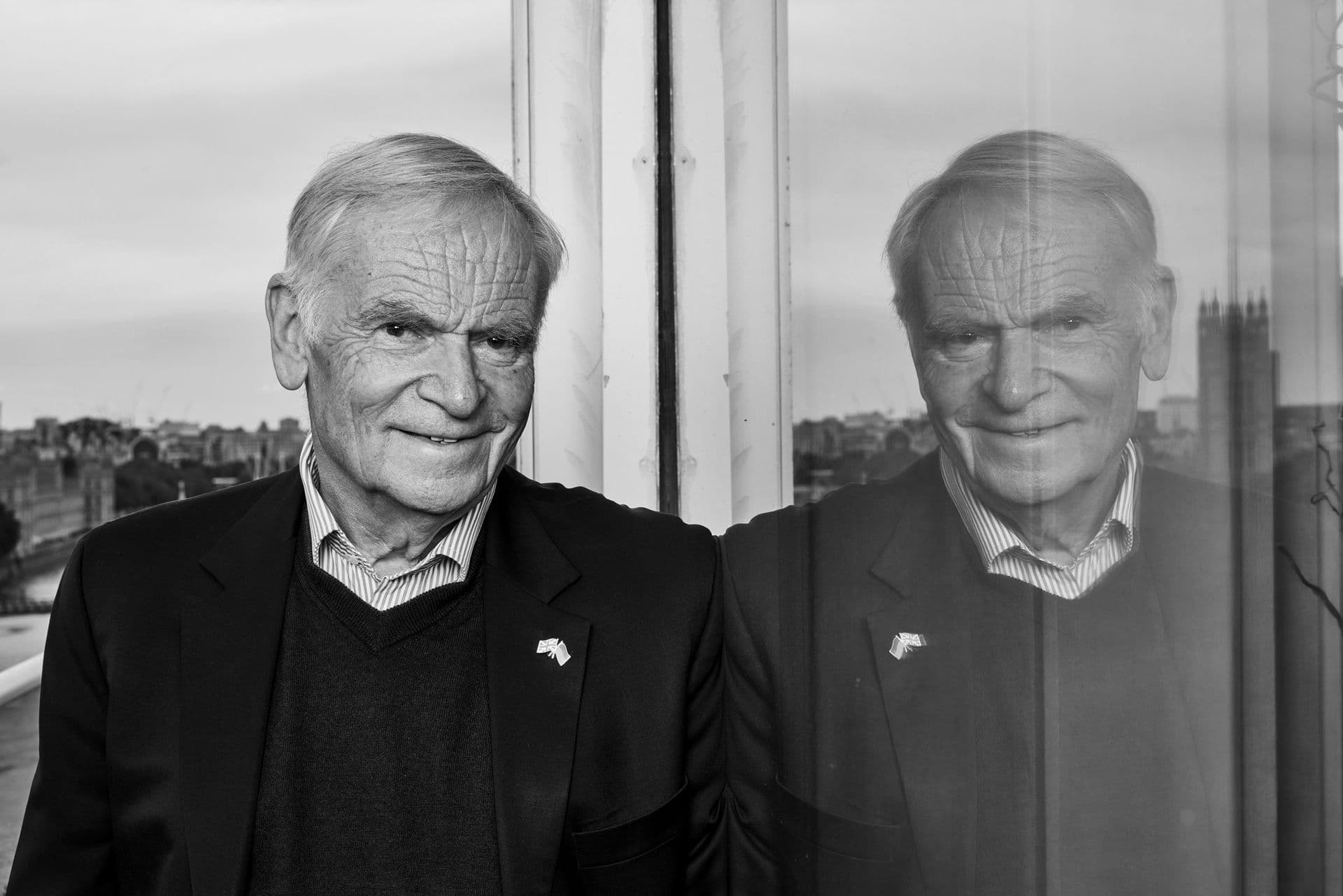
Who is Lord Jeffrey Archer if he is not writing a novel? That was the question I posed to the prolific author just a week ago when I interviewed him for his latest, Adam & Eve. It was an idea he hadn’t wrestled with until now. “This is my last novel,” he hedged slightly on a call from the U.K., clarifying that he wasn’t entirely putting down his pen – and, yes, he did always write longhand, with a Pilot pen. “I have a novella in my mind, a play in mind … but remember, I’m 86. So who knows?”
And just a few days later came the announcement from Archer’s publisher, HarperCollins, that he had died “suddenly and peacefully at his home between writing sessions” on Oct. 5, the day before Adam & Eve hit the shelves. Now, the question took on more ethereal echoes. A crescendo, arriving right on the eve of his swan-song.
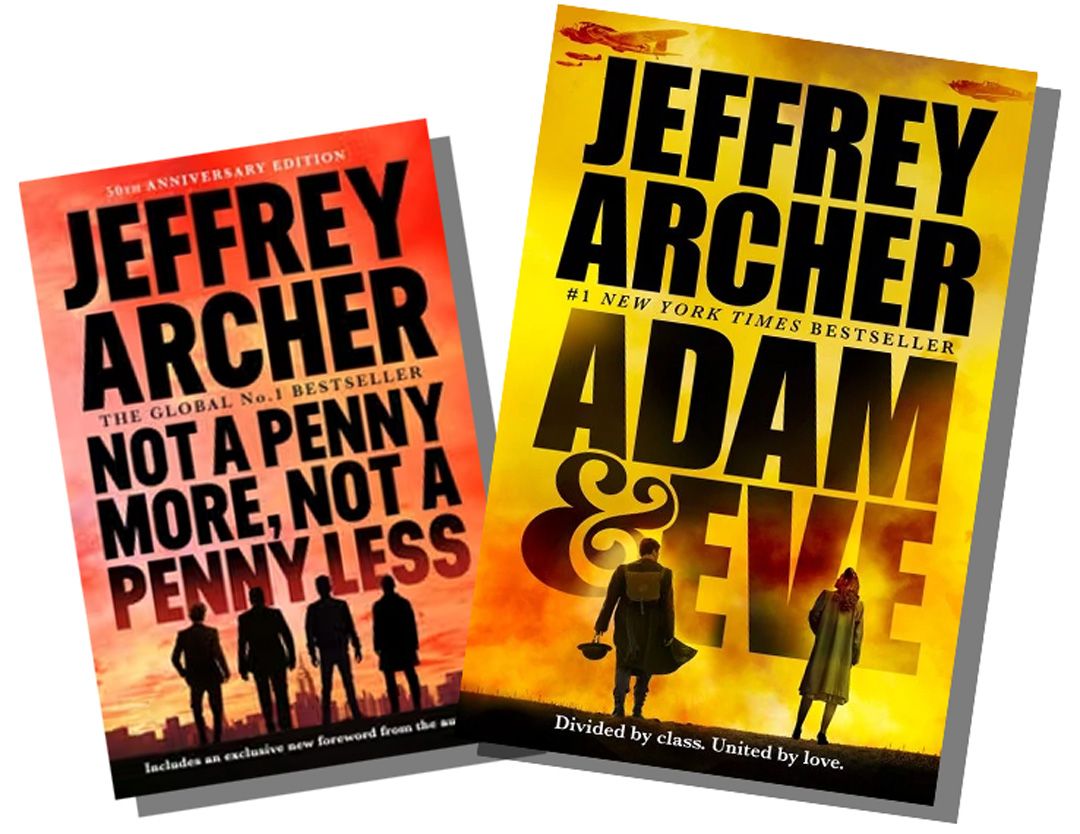
Fifty years after Archer’s first book, Not a Penny More, Not a Penny Less – a half-century during which he would go on to sell a combined 300 million copies in 119 countries – the master storyteller had, indeed, declared that this would be his last. He was more prescient than even he hinted at.
“My last novel,” he hedged slightly on a call from the U.K., clarifying that he wasn’t entirely putting down his pen – and, yes, he did always write longhand, with a Pilot pen. “I have a novella in my mind, a play in mind … but remember, I’m 86. So who knows?”
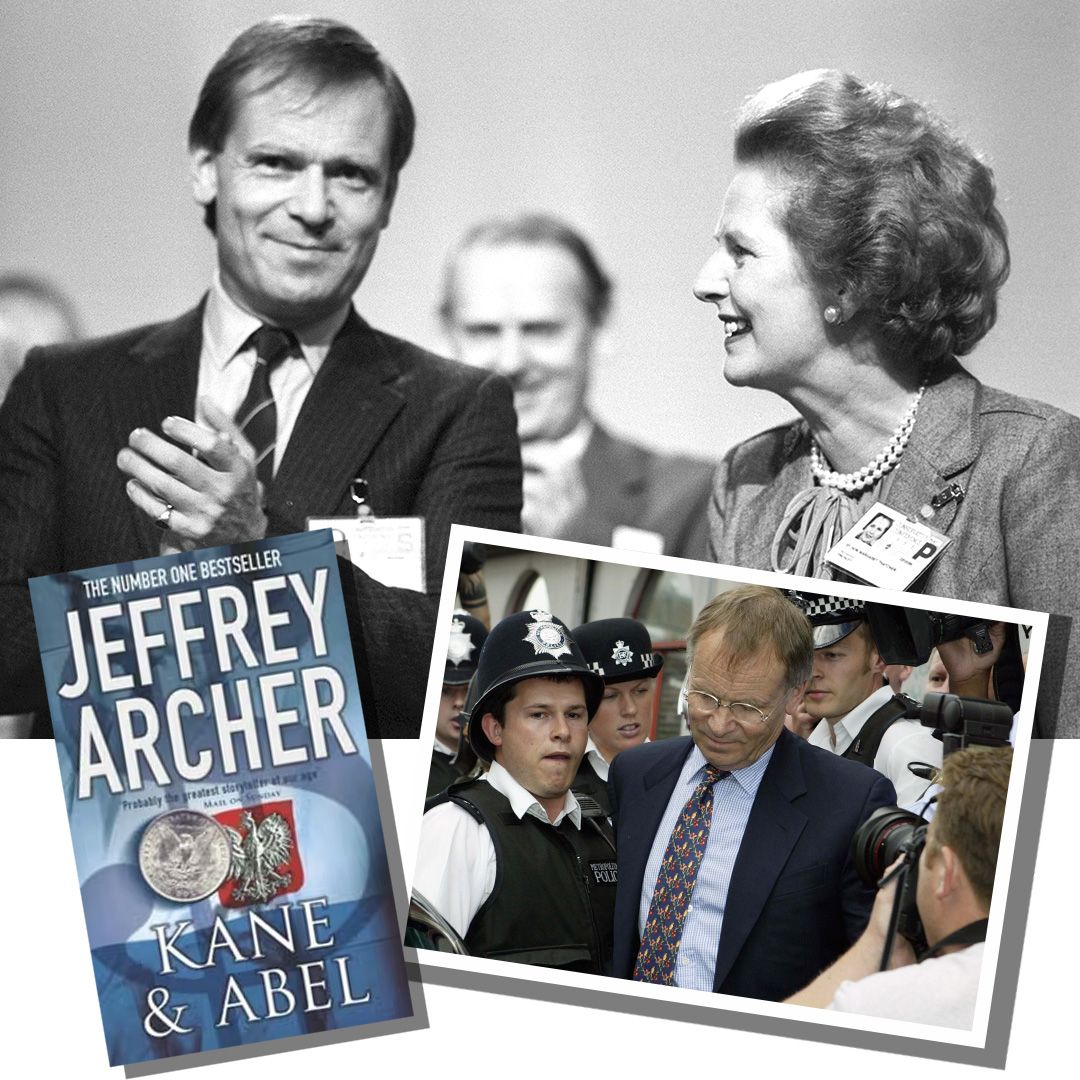
Over the course of a half-hour, he was vital and funny and dripping with British droll. Talking to Archer was never not going to be fun, and he was as much of a character on the phone as his imaginary creations. This is a man, after all, who was once an MP in the British House of Commons, a member of the House of Lords, too, as well as a top confidante and friend to Margaret Thatcher. He later spent a stint in prison – for perjury! (In a seemingly quaint sex scandal by today’s standards, he gave a false alibi in court and manufactured fake diary entries, which blends well with his success as a novelist.) And he famously purchased an actual Monet from the earnings of his breakout novel, Kane & Abel.
Now with Adam & Eve (he’s obviously a fan of biblical titles), he explores a classic “what if?” – backward-diving into history and the currents of the Second World War. “I first came across the idea,” said Archer, “when I read a non-fiction book on Operation Sea Lion. That was Hitler’s consideration of invading England in 1940. He changed his mind three times. I wonder how the world would have changed if he had only changed his mind twice. So that was half the idea.”
Then came the notion of an Earl “desperate to have a son so he could inherit the title and the land,” and, on the same estate, “a shepherd desperate to have a daughter so she would never go to war.” Both born on the 11th day of the 11th month, 1918, when the First World War ended.
“And when I put those ideas together,” he said, he had his frame. But then, also, what he called his greatest challenge: “How do I have these two – Adam and Eve – make Hitler change his mind? And do it in a believable way?”
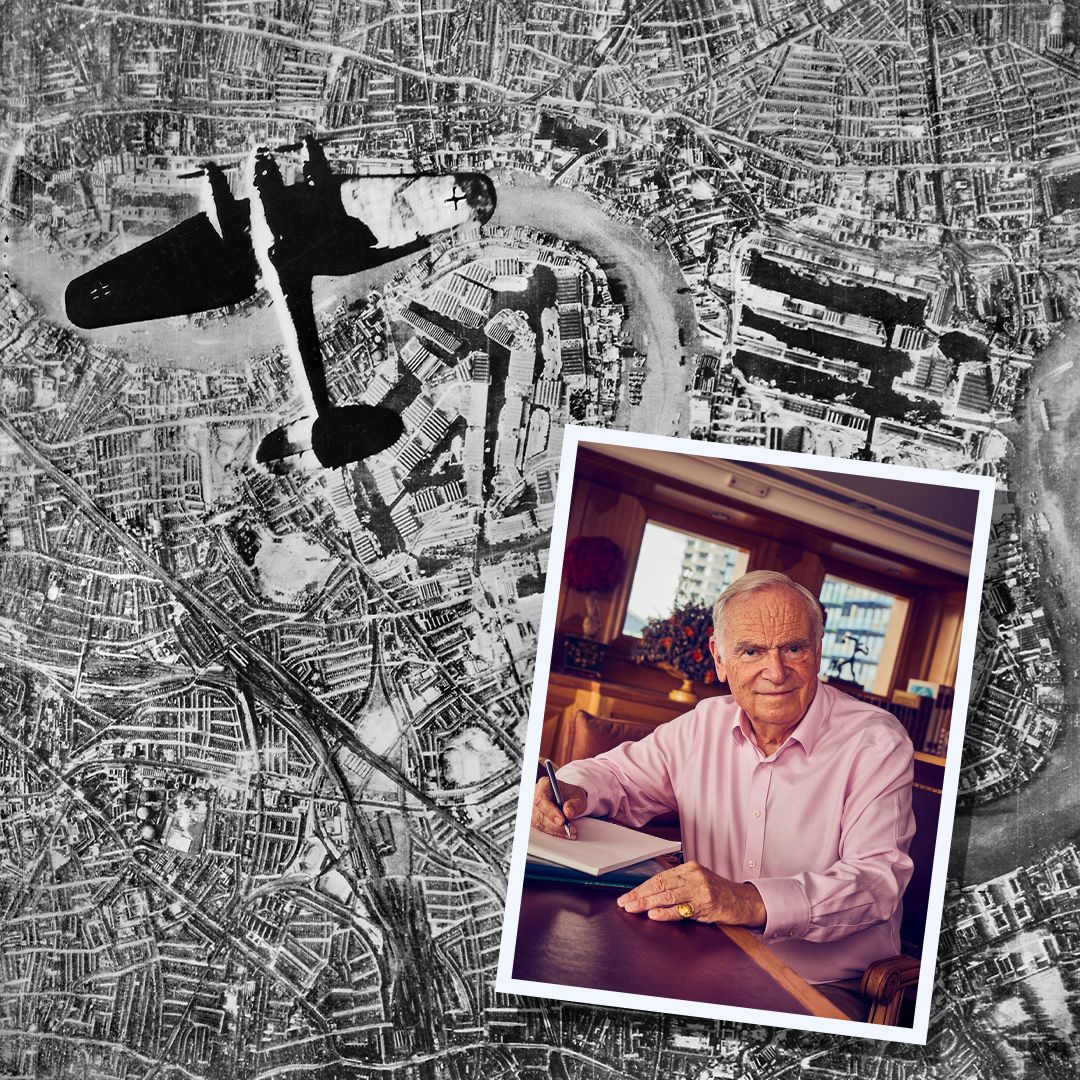
Born in 1940, this was the novel Archer was always meant to write, remembering well the effects of the Second World War on Britain, and how it cast a shadow on everything. “Here was a chance, at the end of my career, to write about what I remember, because there are now very few people in Britain who do remember.”
We went on to talk a little about class, and its many permutations – a subject that Archer often returned to in his books. “There is still snobbery … but it has changed considerably in England. That may be because we are not as powerful and almighty as we were. Any young person today has a very different attitude to Great Britain than I would have had in the 1940s.”
Later, we turned to his ever-changing art collection – considered one of the finest in England. “I have one Hockney,” he shared. A self-portrait (below). And also, at one point, the particularities of making shepherd’s pie with minced lamb – a dish that he and his wife of 60 years, Mary Archer, a scientist, always served for Christmas.
View this post on Instagram
As for Archer’s massive readership in India – specifically, buoyed by a growing middle class of readers on the subcontinent – the author told me: “I can’t explain why I’m so big there. I can explain, however, whenever I do a tour in India, I have an equal love of cricket as they do.” Recently, he added, Bollywood even purchased the rights to his latest novel, Adam & Eve. It’s in development now.
Before we turned to our Shelf Life questionnaire, probing his own love of reading and books, past and present, the author happened to mention that for his last novel he wrote “18 drafts,” adding, “There is no shortcut for me.” R.I.P. Sir Archer.
•••
What’s the best book you’ve read this year?
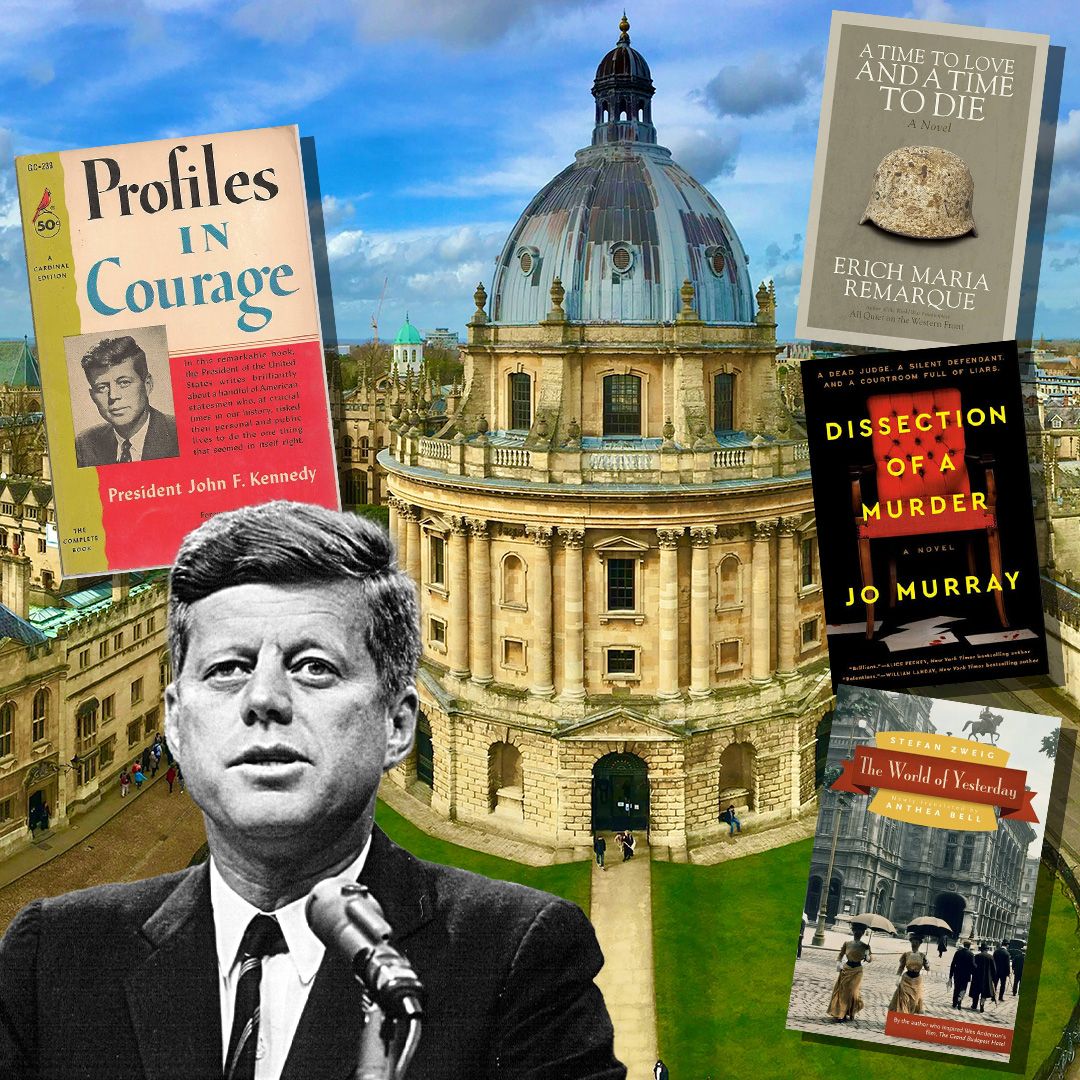
Dissection of a Murder by a former barrister from the north of England, Jo Murray. Even though it’s fiction, it reads like an autobiography. It’s his first novel.
What book can’t you wait to dive into?
I will wait for three years to get a proper biography on Trump, by a serious political journalist. But not until he is out of office.
What’s your favourite book of all time?
The World of Yesterday, written in 1942 by Stefan Zweig. It is nothing less than a masterpiece – a vision of Europe between 1930 and 1940. He’s an Austrian Jew, written as it happened, rather than written later. I read it for a second time when I was writing Adam & Eve.
What book completely changed your perspective?
A Time to Love and a Time to Die. Written ten years after the Second World War ended by Erich Maria Remarque. It’s a very moving story and equally important – beautifully written.
If you could have dinner with any author, living or dead, who would it be?
I’m cheating a little. I would choose John F. Kennedy because he was the president of the United States when I was at Oxford. And, when I was there, I read Profiles in Courage. Magnificent.