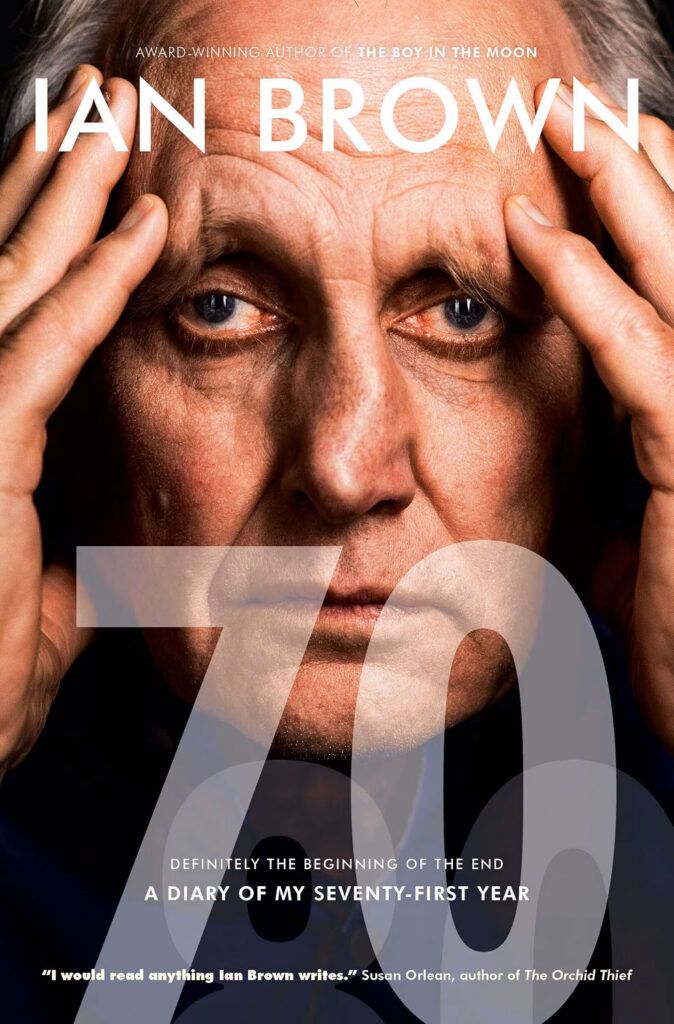
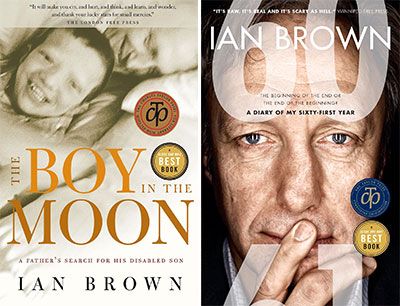
Pick any commanding adjective that might be used to describe a literary work and chances are it will apply to 70: A Diary of My Seventy-First Year, Ian Brown’s new memoir chronicling his passage into his 70s and a welcome bookend to his acclaimed 60, from 2015, which similarly recounted the Toronto-based journalist and author’s transit into a new decade, though perhaps with less existential angst.
At once beautiful, unsettling, funny, candid, contemplative and combative, 70 unfolds like a journal of sorts, beginning with Brown’s milestone birthday in February 2024 and rocketing through a constellation of sidebars, meditations and reminiscences, all propelled by his caffeinated prose and strident ruminations about what getting older can mean – and actually does mean – at least for him. Spoiler alert: there is plenty to anticipate, much of it quite good.
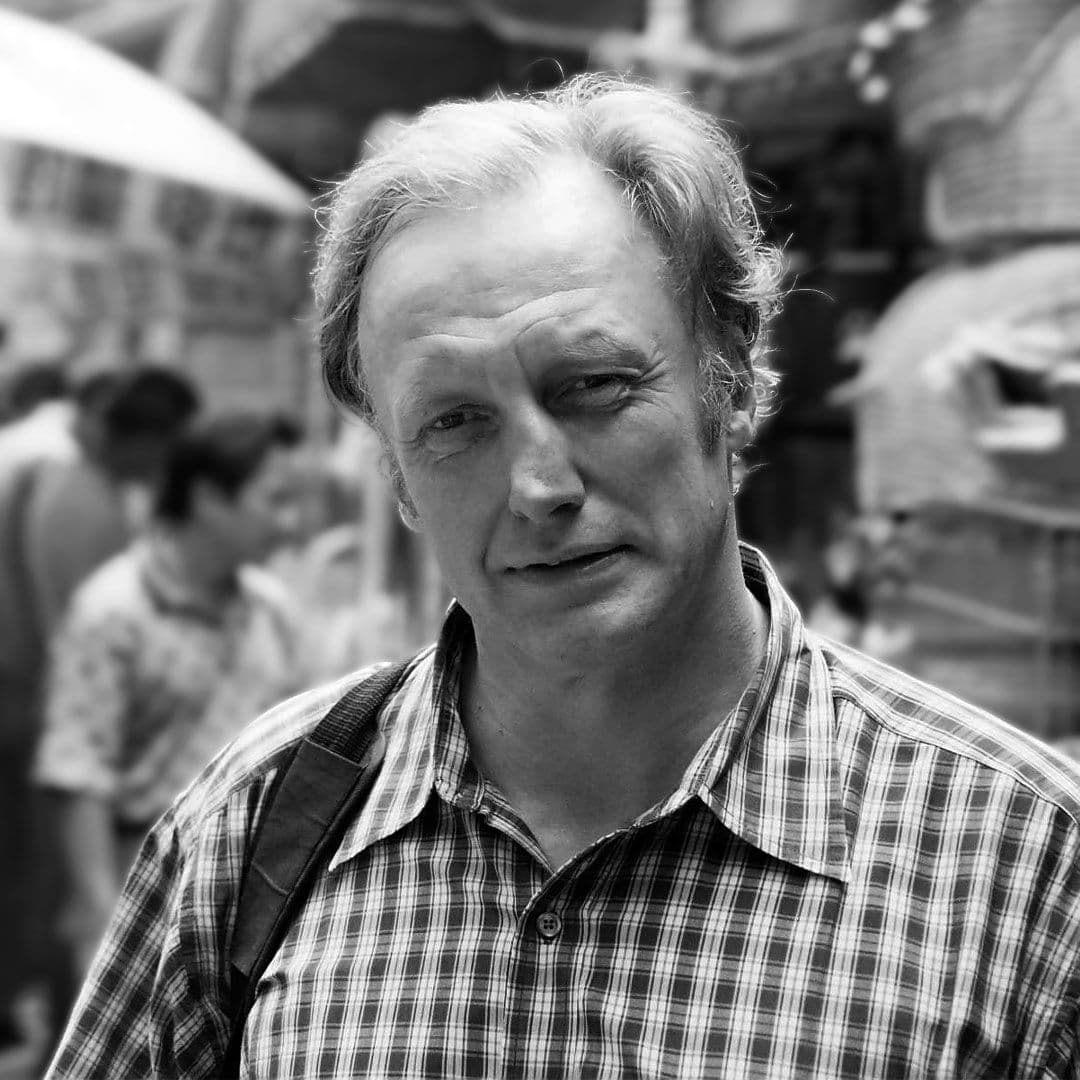
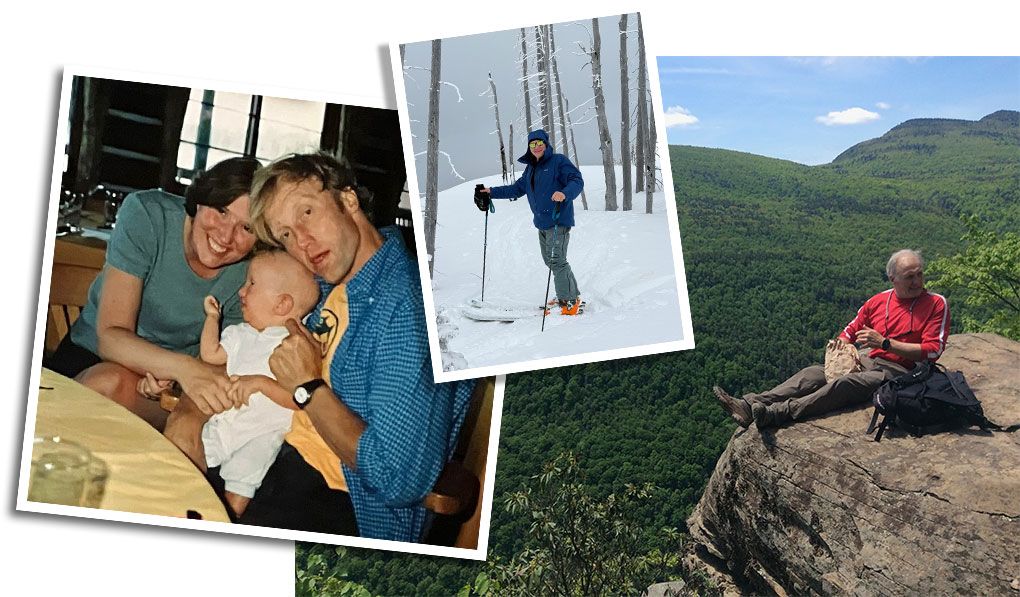
“We all live on borrowed time, but at 70 you can’t ignore the fact, because now you can feel it sweeping past like a steady breeze from the rear, carrying you towards your close-out date,” Brown writes in his introduction before going on to serialize bustling days marked by biking, hiking, rowing and backcountry skiing, occasionally against the counsel of more cautious onlookers.
Yet Brown – a longtime columnist with The Globe and Mail, whose 2009 memoir The Boy in the Moon: A Father’s Search for His Disabled Son won the Charles Taylor Prize for literary nonfiction – writes equally with pragmatism and idealism. He stoically catalogues aging’s physiological shifts while revelling in the intellectual liberty it confers.
“One of the big revelations to me in thinking about this stuff hard enough to write about it is that you have to live your life while you still have it,” Brown tells Zoomer. “Once you grasp that, all the other stuff that takes over your life, like regret, becomes pointless. You realize you don’t have time to regret anything – which feels freeing. I must say that, at 72, I feel psychologically freer than I ever have.”
A key trick to successful aging, Brown argues, is “triaging what you hope to do,” or prioritizing the most meaningful activities and letting the rest fall away. “I originally wanted to write a book about turning 50, but I was too busy,” he chuckles. “I had kids and a job and everything, so I wrote 60 which was interesting and fun to write. And I thought, ‘If I last another 10 years, I’ll write 70.’ In my weird fantasies, I have myself writing 90. But all of that is out of my hands.”
Still, Brown – whose wife, the author and award-winning journalist Johanna Schneller, makes many memorable appearances in the new memoir – has numerous grand ambitions. “I would like to write about four more books and four novels. And possibly a film and a play,” he says. “I would also like to learn to play the piano. Travel. I have maybe 20 years left; will they be productive years?” Only a fool would bet against him.
We asked Brown, a lifelong, inveterate bookworm, to share his favourite, most illuminating reads via our Shelf Life questionnaire.
What’s the best book you’ve read this year?
It wasn’t written this year, but William Finnegan’s Barbarian Days: A Surfing Life is an incredible piece of work. I also re-read Ian Frazier’s Lamentations of the Father, which is one of the funniest books I’ve ever read. He wrote the New Yorker piece that the movie Coyote vs. Acme is based on.
What book can’t you wait to dive into?
Drayton and Mackenzie by Alexander Starritt. I’m very keen to read that because people don’t write very often about the psychological and character-logical basis of capitalistic success. And we need to know more about that. These big-time billionaires are taking over the world, and we need some insight into that. I think this book might do that.
What’s your favourite book of all time?
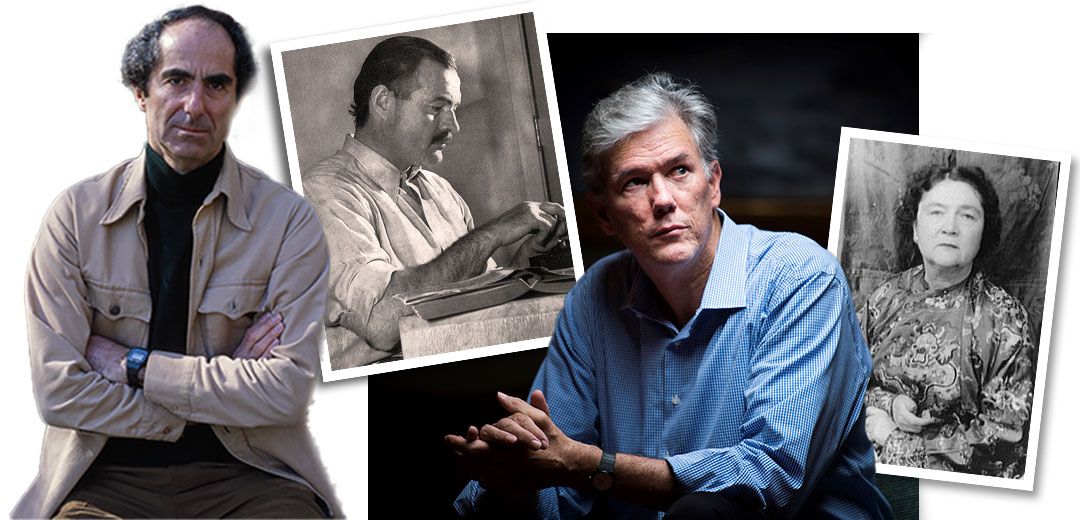
I love J.D. Salinger and Philip Roth. But there are two I keep returning to: The Yearling by Marjorie Kinnan Rawlings, which I read in grade five. It’s beautifully written and creates scenes that still grab you almost 90 years later. And Ernest Hemingway’s Big Two-Hearted River, about a guy who comes back from the war and goes fishing in Michigan, which I first read at about 12 or 13. Those books made me want to be a writer so I could make people feel the way those made me feel.
What book completely changed your perspective?
A better question would be, ‘What book didn’t?’ I’m as permeable as a three-dollar umbrella. That said, probably Becoming Human by Jean Vanier. I have a profoundly disabled son, and Vanier made me realize that including the disabled into our world is obviously important. But in many ways, it doesn’t work, especially if they are profoundly disabled and unable to speak or otherwise communicate. Vanier showed me that understanding the other from their point of view – reversing the inclusion process and making us the outsiders and them the central act – completely changed my view of things.
If you could have dinner with any author, living or dead, who would it be?
Salinger was too weird. Martin Amis was too prickly. I once asked him what he thought was the difference between English writing and Canadian writing. And he said (slipping into a posh British accent), ‘You don’t spend two years studying Paradise Lost the way we did at Oxford, do you?’ And I just thought, ‘Oh f- off!’ So, I’d have to say Philip Roth.