

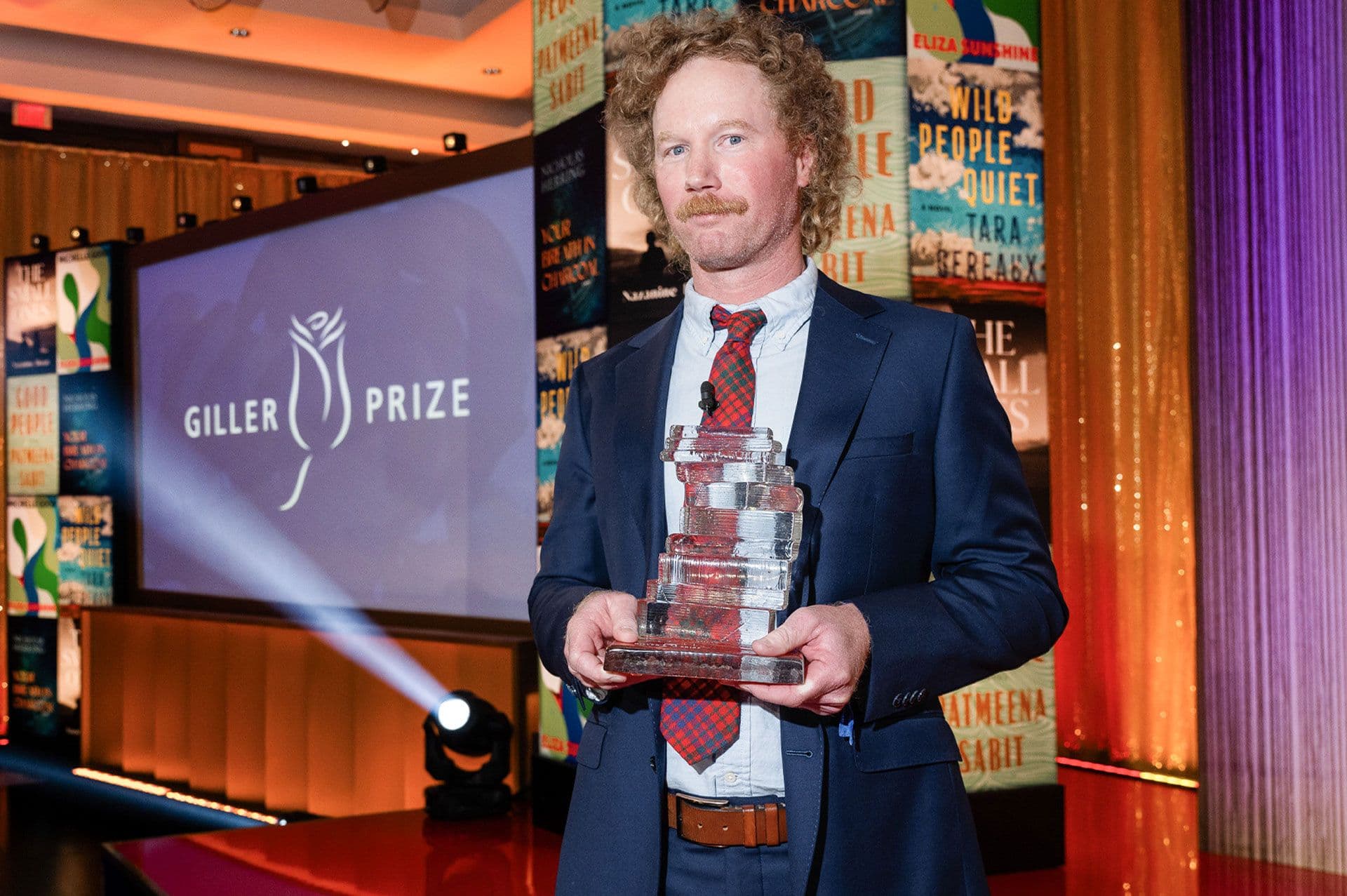
When Nicholas Herring was writing his second book, he thought, “If I make any money off of this, I’ll put it into my daughter’s education fund.” He certainly didn’t expect that the novel, Your Breath in Charcoal, would win the $100,000 Giller Award, or that it would experience the Giller Effect, which sees book sales jump by over 400 per cent. Reflecting on his big win, Herring tells Zoomer that his three-year-old daughter Gwen will definitely get a nice chunk in her RESP, but there might be some left over to help out a struggling writer. “We’ve got some bills to pay off. I’m pretty broke,” says the full-time Prince Edward Island lobster fisherman and carpenter.
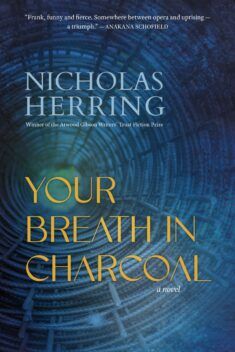
According to the jury, the book is an “uproarious, undeniably Maritime tale of an East Coast ‘everyman’ on a road trip from Prince Edward Island ‘down the road’ to ‘Tah-ron-ah’ … a character study of a young man learning how to live his life, facing the complexities of the modern world in a riotously funny working-class odyssey filled with love, loss and profound hope.” While Herring was a long shot to win the award, he does have some literary gravitas: he earned a master’s in creative writing at the University of Toronto, and his first book, Some Hellish, written during COVID, won the $60,000 Atwood-Gibson Writers’ Trust Fiction Prize in 2022, which led to a dinner with one of the award’s namesakes. “That was crazy,” he tells me. “I was fishing on a Tuesday, and then on Thursday, I was having supper in Toronto with Margaret Atwood.”
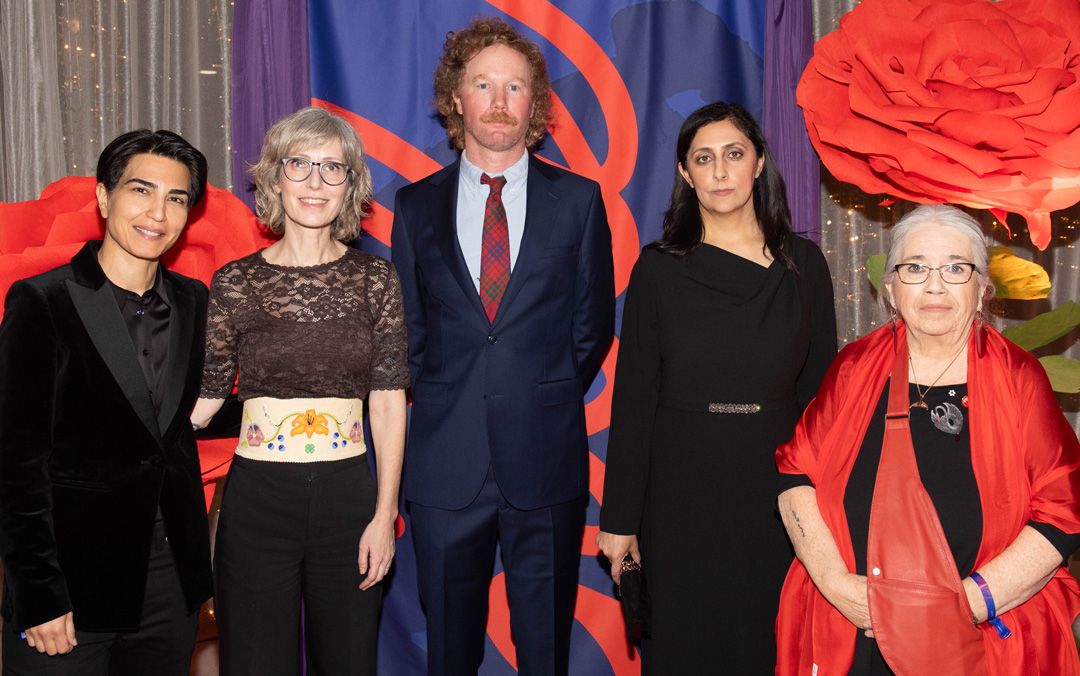
According to the jury, the book is an “uproarious, undeniably Maritime tale of an East Coast ‘everyman’ on a road trip from Prince Edward Island ‘down the road’ to ‘Tah-ron-ah’ … a character study of a young man learning how to live his life, facing the complexities of the modern world in a riotously funny working-class odyssey filled with love, loss and profound hope.” While Herring was a long shot to win the award, he does have some literary gravitas: he earned a master’s in creative writing at the University of Toronto, and his first book, Some Hellish, written during COVID, won the $60,000 Atwood-Gibson Writers’ Trust Fiction Prize in 2022, which led to a dinner with one of the award’s namesakes. “That was crazy,” he tells me. “I was fishing on a Tuesday, and then on Thursday, I was having supper in Toronto with Margaret Atwood.”
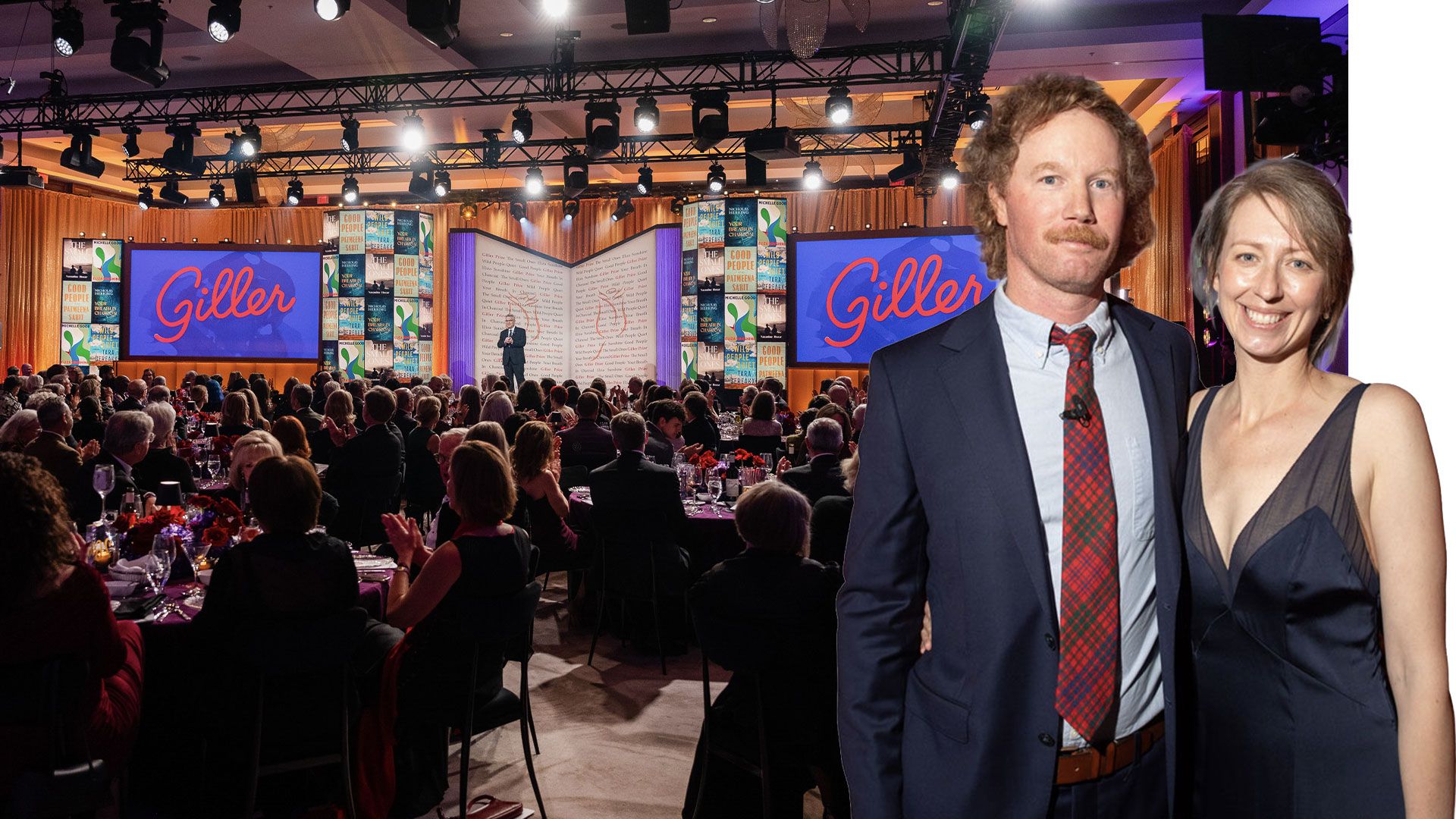
With that prize money, he was able to take time off work to write his latest award-winning novel, and he admits he’d like to do that again. “I’m not getting any younger,” says the 42-year-old, “and I’ve really just been working for other people my whole life. So I’d like a couple of years, if possible, to try and work for myself. I have all these books that I’ve been writing in my head for years, I just need time to sit and get them out. I don’t know what’s gonna happen, it’s all a scramble right now.”
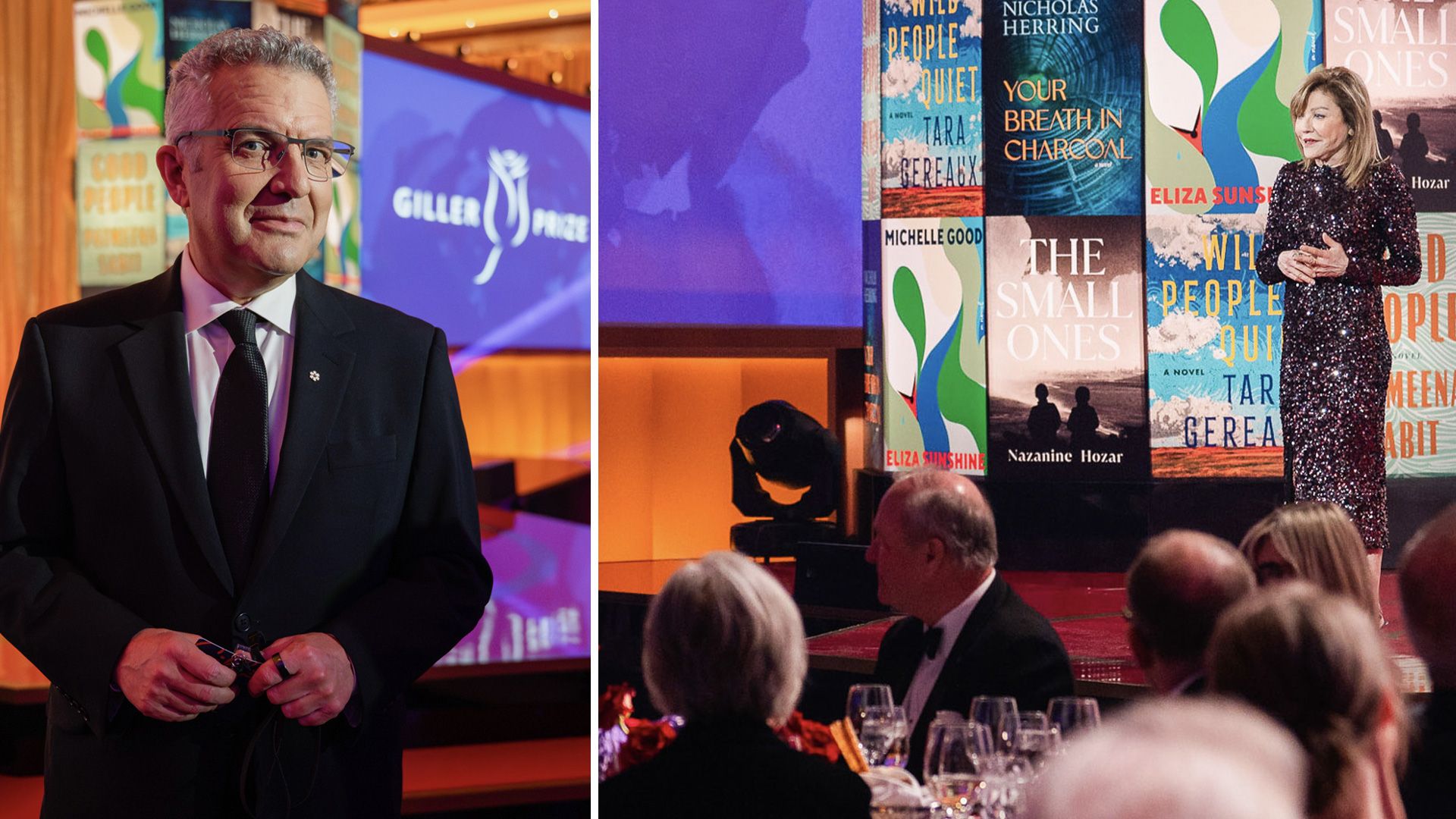
Herring is very much still wrapping his head around his new literary status – “it’s not even close to setting in” – which was cemented at the glamorous and star-studded Giller Awards gala at Toronto’s Ritz-Carlton hotel on Monday night. Carrying on her late father Jack Rabinovitch’s tradition, Giller Prize executive director Elana Rabinovitch welcomed the audience, saying, “When my father stood on this stage he always reminded us that for a price of a meal in this town you can buy all the nominated books. So buy the books and eat at home.” Elana spoke with Zoomer days before the ceremony after her cross-country tour with the nominees, whom she calls “really truly wonderful, people and writers. They are like my rock stars.” She was feeling good about the state of the awards – which her father founded in 1994 to honour his late second wife, Doris Giller, a Montreal journalist and literary editor. Following a few difficult years of protests and boycotts over the main sponsor Scotiabank’s ties with Israel, the foundation parted ways with the bank last year. Since then, The Hilary and Galen Weston Foundation has stepped in with a multi-year $5 million total donation. ”It feels like we’re back,” she said, “and we’re just getting started.”
Rabinovitch has even got the future of Canadian literature covered, thanks to the Giller Mantella Scholarship, an annual gift of $10,000 each to three aspiring Canadian writers from marginalized backgrounds to put toward their post-secondary studies in English literature or creative writing. “I’ve always said that talent is everywhere but opportunity isn’t – and talent doesn’t pay the bills unfortunately,” says Rabinovitch. “This is the next generation. And we know that the people who will help us understand ourselves and each other can only get that through reading and books. That’s what literature does. It helps us understand ourselves, it builds empathy and I think, honestly, that it’s the foundation of any just society we’ve ever built.”
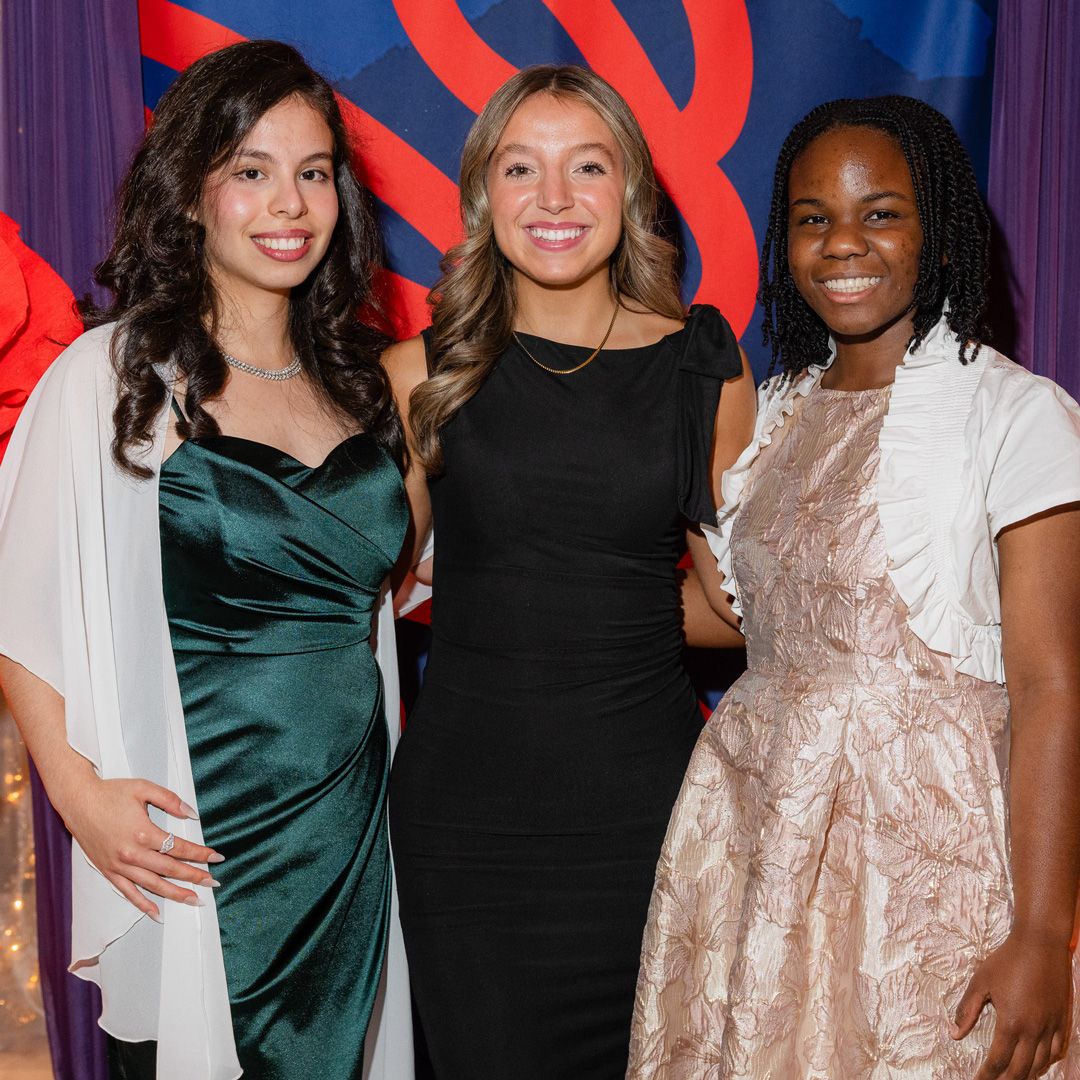
At the gala, the three scholarship recipients are scanning the room, taking in the faces and conversations of those who had come before them: Audrey Gignac plans to write Indigenous historical fiction; Sofia Cina loves 19th-century poetry and historical fiction; and Sarah-Marie Scale tells me she is creating her own genre: “Gordon Korman meets Christian fiction for a YA audience.” They have yet to read the nominated novels – with the demands of school and all – but now they plan to read them together, book-club-style.
During the ceremony, the teens are mesmerized, and host Rick Mercer starts with a reference they get: “Welcome to the Giller Prize or as the kids call it, Atwood and Chill.” From there, he goes for a literary throwback: “While one day artificial intelligence might very well destroy the world, it will never ever write a Barney’s Version. That takes old-fashioned intelligence – and whisky.” The comedian has the room in stitches, with jokes about Lake Ontario and a lame duck, Indigo’s “Michael Ondaatje reading socks,” and books about gay hockey players (natch). He even gets a chuckle or two out of the literary lions in attendance, Atwood and John Irving.
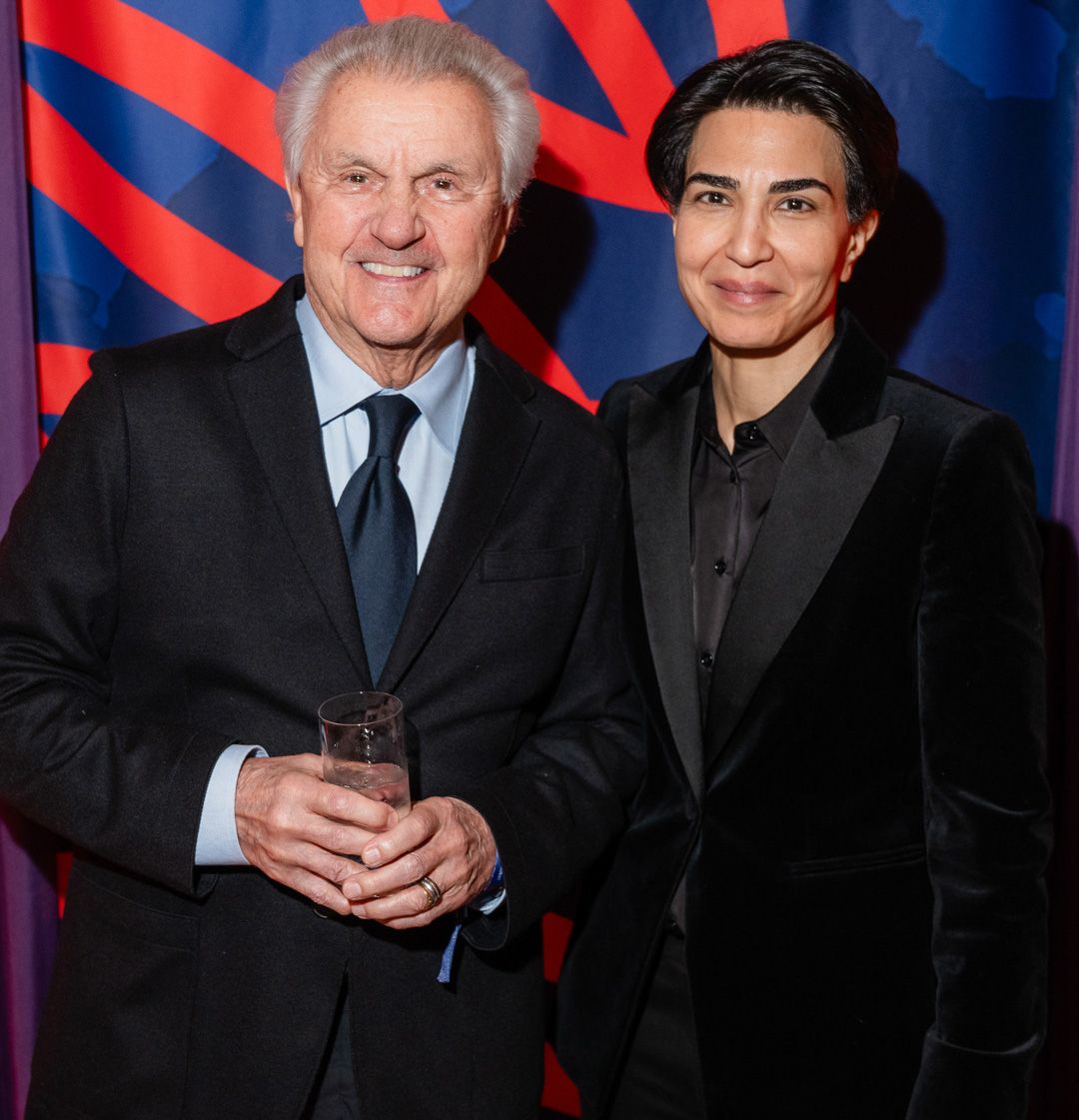
That said, Herring comes pretty close to out-East-Coast-charming the host. Absolutely gobsmacked when his name is called – he was by no means considered a front runner – Herring comes to the stage without a speech and proceeds to fumble his way into genuine appreciation and a few laughs. He starts by saying how great it’s been to spend time crossing the country doing readings with his fellow nominees, before recalling how, “on Thursday, I got to have a really beautiful dinner and John Irving was right across from me. That was really cool. I feel like John Irving should just come up and do this talk for me.” At that point, one audience member yells, “Watch out, he will!” Herring thanks his wife, his daughter and his editor, as all authors should, and notes how cool it is to meet Mercer. And looking like he can’t think of another word to say, he wraps it up, leaving the room wanting more.
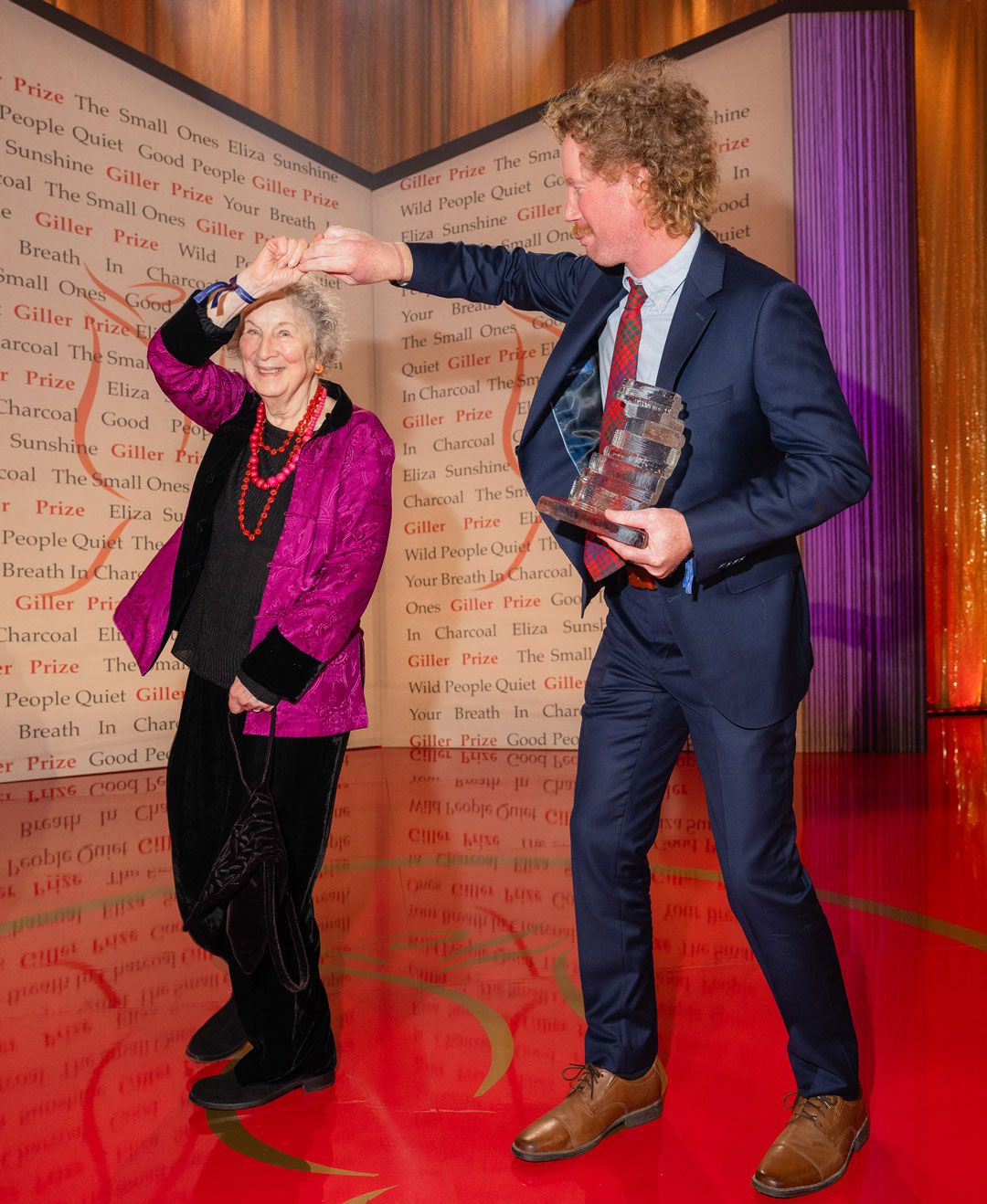
There are photos and congratulations to come. And in a blink-and-you-missed-it moment, Atwood is up on stage with him for a hug and a brief celebratory dance, as the very tall Herring gives the petite 1996 Giller Prize winner a twirl. It’s no wonder that the next morning the new literary star says the night is “just a blur.” So while he figures out his new normal, we propose he look back and tell us about his favourite novels and authors by answering our Shelf Life questionnaire.
What’s the best book you’ve read in the last year?
[Past Giller Prize winner] André Alexis’s Other Worlds, that was really lovely. And then I just read Cormac McCarthy’s Stella Maris. I got the book when it came out a couple of years ago, and I put off reading it because I was worried it wouldn’t be that good. But I just finished it last week, and I thought it was a really beautiful book.
And what book can’t you wait to dive into?
There’s a book by an English writer, Simon Critchley, about Martin Heidegger – it’s called Heidegger Thinking. It’s just sort of the Cliff Notes for Being and Time. It’ll be quite dense, but I’m excited.
What’s your favorite book of all time?
Oh, that’s easy, The Savage Detectives by Roberto Bolaño. That’s my all-time favourite, there’s nothing even close. It’s about poets in Mexico City in the 1970s, so on paper there’s nothing I would understand about it. But I read that book and felt, holy moly, this guy wrote this book just for me. That had never really happened before. I’ve never even been to Mexico but, oh my gosh, this book felt like it was just sent from the universe to me.
What book completely changed your perspective?
I would say anything by Marilynne Robinson, like Gilead. When you’re reading her books, you can just feel yourself changing, it’s powerful. Also anything by Colm Tóibín. When my mom died, I read Nora Webster – it had just come out and that book helped me kind of deal with my grief.
What author, dead or alive, would you like to have dinner with?
I got to have supper with Margaret Atwood and I got to have supper with John Irving, so I’m pretty good.