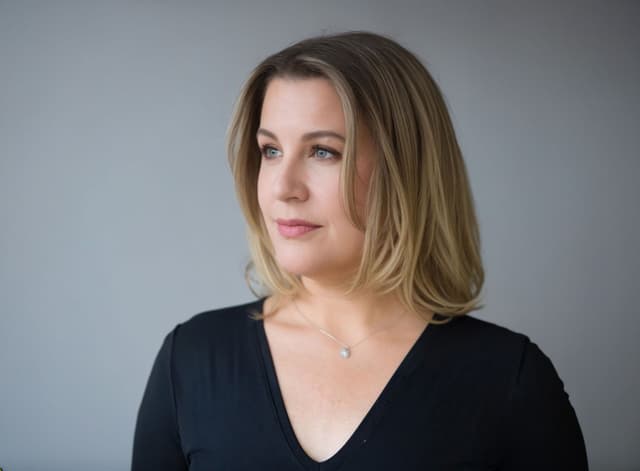


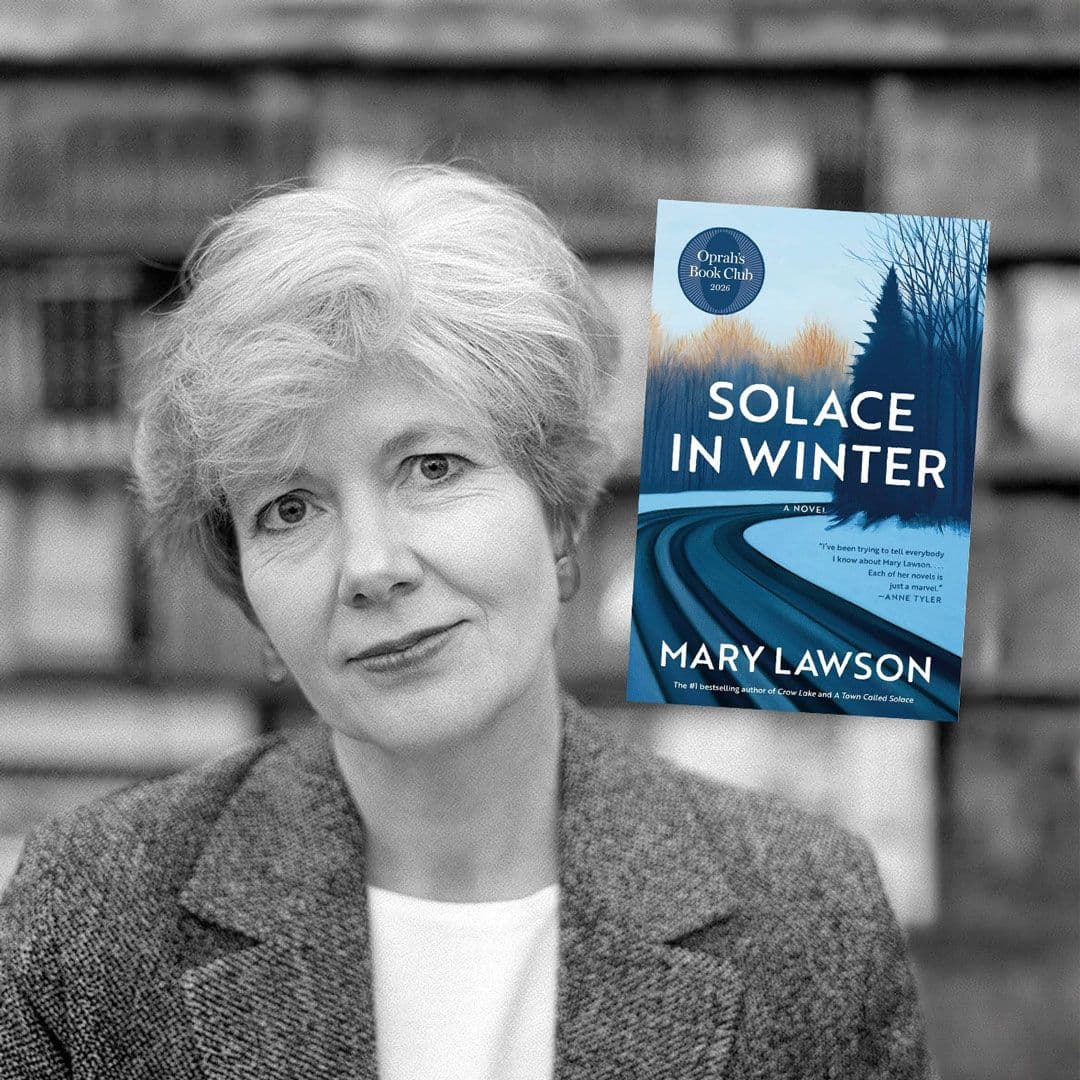
Living in Kingston upon Thames, England, 80-year-old Mary Lawson is quietly putting out a novel every five or six years, all of which are set in small Ontario towns, similar to the locales of her childhood. And every time she finishes one, the literary world remembers just what a marvel she is. Since her first, Crow Lake, which was published in 2002 when she was 55 – having worked as a psychologist before that – Lawson’s books have spent time on bestseller lists, racked up Booker nominations and won awards. Her latest, Solace in Winter, just got tapped as Oprah’s Book Club pick for November, with the queen of all media calling it “comforting” and adding, “it reminds us that even in our loneliest moments, unexpected connections can open our hearts, heal old wounds, and change our lives in ways we never imagined.”
View this post on Instagram
That high praise comes just after The Times in London hailed Lawson as “The Canadian Elizabeth Strout” due to their deeply moving character-driven fiction. But we like to think of Elizabeth Strout as “The American Mary Lawson.” In a recent video chat with Zoomer, Lawson, who grew up in Blackwell, Ont., explained that, for her, a novel starts with an idea that is usually just an image, and then she builds on it through characters. “I don’t start off with a story, far less a plot or a message or a theme or anything at all,” she says. “I just look for a character and then a situation. And this time I went for more than a year without any idea. And that’s where my sister, Eleanor, comes in.”
In fact, Eleanor is so helpful in coming up with a starting point and with helping Mary hammer out problems throughout her writing, that right from the first novel, Mary started giving Eleanor 10 per cent of the books’ profits. “During dinner one night, my sister, after a second bottle of wine, said, like an old woman looking into a crystal ball, ‘I see an old man and a dog.’ That is where Solace in Winter starts. But those two characters, living in a very isolated and icy Northern Ontario town are soon intertwined with a veterinarian, a hurt drafter dodger and a nurse in a story where both nothing – and yet so very much – happens.
When I ask why she set the story during the Vietnam War era, Lawson recalls that when she was attending McGill University between 1965 and ’68 – “which, by the way, was a fabulous time to be in Montreal, especially if you’re from the sticks” – it coincided with the anti-War protests in the U.S., with somewhere between 30,000 and 40,000 men dodging the draft by taking refuge in Canada. “And 10,000 of those came to Montreal,” says Lawson. “There were unofficial outfits set up to help them out. And I was asked if I could put one guy up for the night because he had nowhere to go when he was crossing that day.” Lawson said he could stay and put a mattress down on the living room floor. “I thought it would be interesting to hear his story. Well, he just came and said, ‘Thanks for this.’ He didn’t want anything to eat and just went to bed. The next morning, he was gone. And I still think of him. He looked so completely stunned and shellshocked, that it kind of stayed with me.”
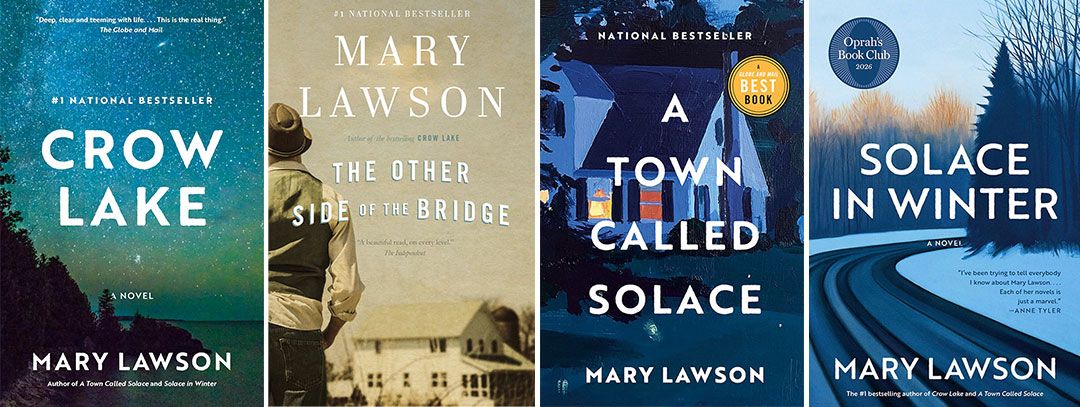
The draft dodger character in the book – not to mention the dog – certainly gives this it a cinematic appeal, but Lawson hasn’t had the best luck in regards to adaptations. “There was a lot of interest in Crow Lake and I said no at the time,” she explains. “I’d had four solid years of rejection slips and then, all at once, there was a bidding war for the book. It all happened so fast and there was immediate interest in films and I thought, ‘That little farming community in Ontario that I grew up in is going to recognize that I’m drawing on my own experience, upon life there, and they might not be happy with that.’ Actually with hindsight, I think they would have been thrilled.” There hadn’t been any takers on her follow up books until A Town Called Solace, which came out in 2021. “There has been interest in that one for about a year now and there is work ongoing. But whether that ever comes to fruition is anybody’s guess. According to our agent, it takes between one and 125 years to get a film made of a book. She says, ‘Forget about it and go write another one.’”
So that’s what she’s done and will keep doing. Lawson spends her days writing, walking, canoeing along the Thames – and reading, which she says helps her with her own creativity. Here, she gives us a few favourites and recommendations.
Best book you’ve read this year?
Fire Weather about the [2016] fire in Fort McMurray [by Canadian-American journalist John Vaillant]. It’s fabulously written and such a horrifying tale. The thing is, my dad used to work out there. He was a research chemist about 60 years ago. It’s about the tar sands and about Fort McMurray [Alberta] being this amazing oil refining town with only one road in. So if there’s a fire, just imagine what is going to happen. It was a sober read.
What book can’t you wait to dive into?
Ann Patchett’s latest, Whistler. I hear it’s magnificent.
What is your favourite book of all time?
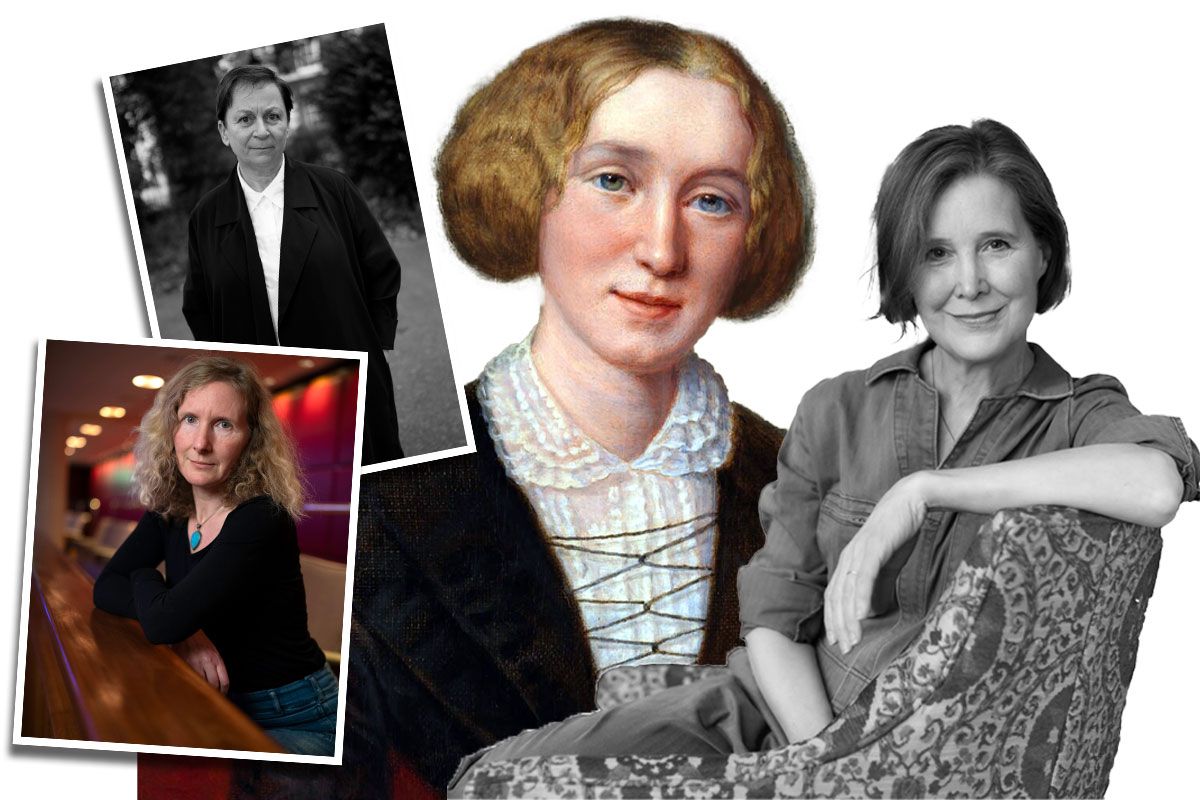
It’s a cliché, but it’s Middlemarch. I’ve been saying this for years because it is just the most astonishing achievement. I mean, Dickens is magnificent of course, Shakespeare’s in another category altogether. Jane Austen, the Brontës – they are all marvelous. But George Eliot is a standout in terms of the depth of her understanding of human nature and breadth of vision. Not just for her time but for our time too – a true intellectual heavyweight.
What book completely changed your perspective?
Orbital, by Samantha Harvey [the 2024 Booker Prize-winning novel]. It’s a view out of a spaceship’s window – amazing, quite uplifting. And I’ve been reading a couple of books by Ben MacIntyre. He writes about people who lived and about events that happened. They are like novels except that his research is astonishing. And The Lunar Men [by Jenny Uglow]: We’re talking the 1700s when a group of men, including Erasmus Darwin, Josiah Wedgwood and others were all living in the area of Birmingham, England. These multi-talented men, most of them not from posh backgrounds, in some cases self-educated and in others, they did have advantage of the university. But they got together once a month at the time of the full moon because back then there was no street lighting, so it was easier to find your way. They became known as the Lunar Men and they were immensely influential, not just within England but Europe-wide. They were an amazing group with interests in industry and the arts and medicine and philosophy and you name it.
If you could have dinner with a famous author, dead or alive, who would it be?
Right at the moment, I would like to have dinner with [Irish writer] Anne Enright. I very much admire her books. I have met her briefly, and she’s very humorous and quiet. I would quite like to just sit and listen to her. That would be fun. Can I have two? I’d have Anne Enright on one side and Ann Patchett on the other side.
It would be Mary and the Annes …
Yes, the Mary Annes, that’d be really good. Let’s invite Anne Tyler too.