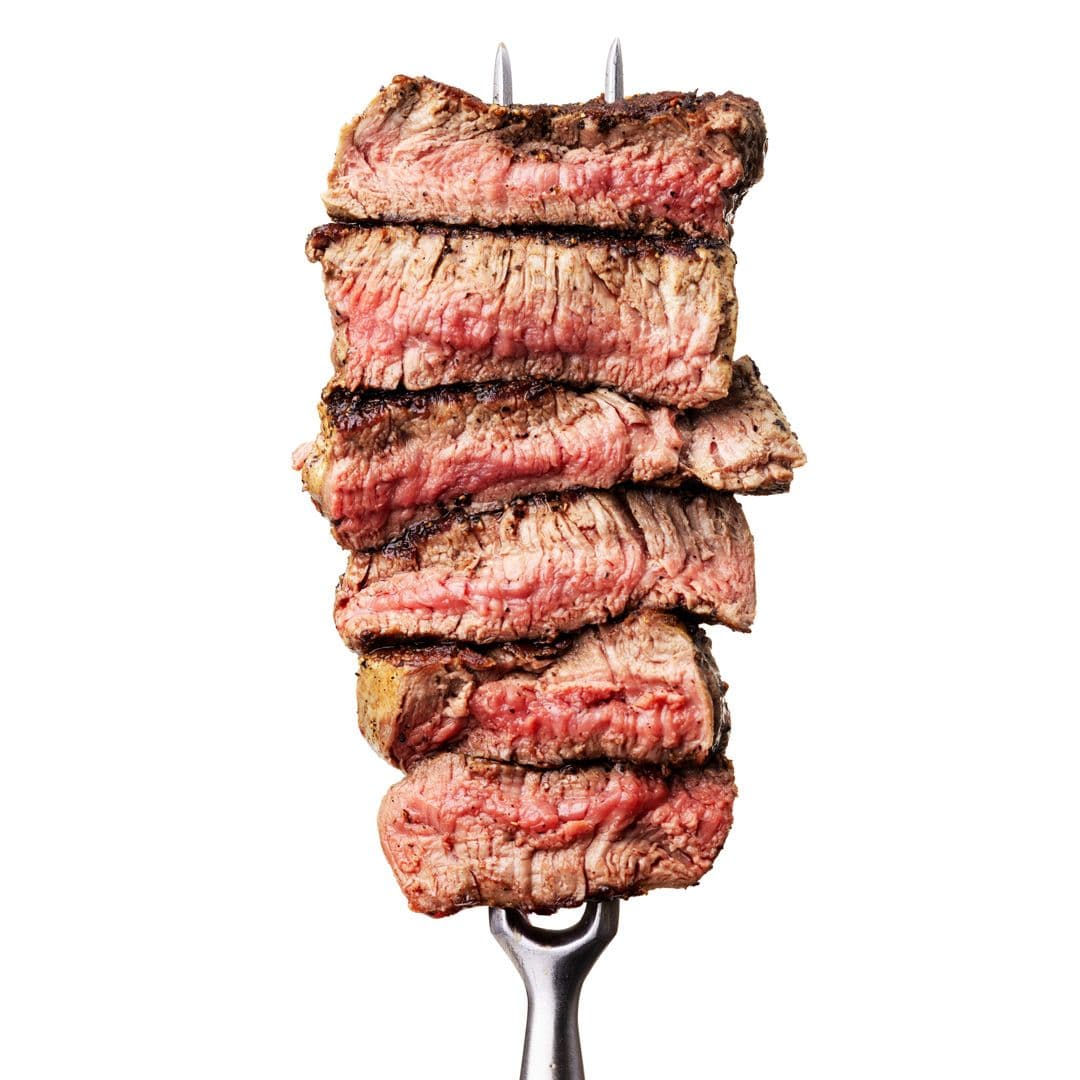
With today’s skyrocketing steak prices, planning your summer barbecue bash feels more like a financial decision than a much-anticipated social occasion. As the much-shared meme goes: ”I just looked at a package of steaks and had to double-check if I was buying dinner or making a down payment on a house.”
We love to barbecue, and we love our red meat. “Beef is the favourite protein of Canadians,” confirms Mike von Massow, a professor at the University of Guelph’s Department of Food, Agricultural and Resource Economics. We consume a hearty 20 kg of beef per person annually, ranking behind only the United States and Australia.
But our love for beef is being severely tested this summer with prices soaring across the country, increasing by 12.7 percent over last year, according to Statistics Canada.
To get a real taste of how drastically prices have increased, we need to look back further. In 2020, we could purchase a premium cut like striploin for about $13.50/kg. In 2026, however, that same cut now costs $38.15/kg – a shocking 182 percent increase. Even cheaper meat cuts are sending our barbecue budgets up in smoke: a kilogram of ground beef that cost around $9 in 2020 will now set you back $15.75 – a 73 percent increase.
The reasons for the huge price spikes for red meat, says von Massow, can’t be solely pinned on higher transportation fees (caused by rising fuel prices) or Trump tariffs. Instead, he points to changing climatic conditions – specifically drought – that are causing havoc for Western meat producers. “In the early 2020s, we had two very dry years in Western Canada and cattle producers had to reduce the size of their beef cow herd – there wasn’t enough grass and hay to sustain them,” he says. “Producers have lowered the number of cows they have to levels that haven’t been seen for almost 40 years.”
The smaller herd size has sent beef prices shooting up. Now Economics 101 usually suggests that as supply decreases, price increases, which typically causes a decrease in demand. But von Massow points to a peculiar flaw in this formula – even as beef prices have increased, demand remains inexplicably high, which accounts for the steak sticker shock. Prices will only come down, he says, when producers rebuild their herds – which could take at least two years. He also predicts that even when prices drop, they will still be subject to volatility from future tariffs or geopolitical pressures.
As for what this means for our summer barbecue plans, von Massow feels that Canadians on tight budgets will likely be eating out less, paring down their invitation lists and adapting their menus. “We’ll see people trading down – instead of putting a steak on the barbecue, more people will opt for burgers.” Perhaps we’ll even start sending out barbecue invitations where BYOB stands for Bring Your Own Beef rather than Bring Your Own Booze.
While the beef over higher prices for red meat may seem a bit overdone – it serves as a flashpoint for the higher price on all foods across the board – including packaged food, eggs, dairy and other grilling favourites like chicken (up 7.5 percent this year) and pork (up 6.2 percent). We certainly don’t need experts to tell us our grocery budgets are being stretched to the limit, but the statistics confirm our frustrations – the Bank of Canada (BoC) reports that food prices have jumped 22 percent in the last three years, compared to 13 percent for other consumer goods.
Higher food prices affect everyone but particularly those who don’t have any flex in their food budgets. Lower-income Canadians, according to the BoC, spend up to 27 percent of their disposable income on food and non-alcoholic beverages, and have no wriggle room to absorb price increases. Higher-income households, which spend only five percent of their disposable income on food, can easily scale their grocery budgets back without it substantially affecting their lifestyles.
This grocery-bill angst was borne out by a recent survey that CARP (the lobby group for older Canadians and a ZoomerMedia partner) sent out to members in April: 83 percent said that food prices had hit their household budgets the hardest, far more than taxes (38 percent); gas prices (31 percent) and utility bills (31 percent). “When more than eight in 10 respondents are worried about their grocery bills, that’s a red flag that many seniors are struggling,” says CARP President Anthony Quinn.
Opposition Leader Pierre Poilievre is using soaring food prices to bash Prime Minister Mark Carney’s government every chance he gets, dramatically referring to the affordability crisis as “an emergency in the lives of people who have empty fridges, empty stomachs and empty bank accounts.”
As Canada creeps into a recession and the government tries to carve out a new trade deal with the U.S., boost military spending and build big infrastructure projects, Carney has a host of pressing high-priority issues on his plate. Deflecting Poilievre’s criticism on affordability, he points to his government’s affordability measures, including a middle-class tax cut, the temporary removal of the federal tax on fuel, and the cancellation the consumer portion on the carbon tax. In terms of direct relief, the Liberals have rolled out the Canada Groceries and Essentials Benefit (with cheques starting to go out in July), which provides financial relief through increased GST rebates to low- and modest-income Canadians.
Not everyone is impressed with the government’s response. “It’s absolutely trivial,” fumes Valerie Tarasuk, Professor Emerita at the University of Toronto’s Department of Nutritional Sciences and an expert – and passionate advocate – on finding solutions to food insecurity. “A year from now, when the 25-percent increment kicks in, the maximum increase will be about $12 a month – when was the last time $12 changed anything?”
Tarasuk suggests that seniors over 65, who qualify for federal and provincial income supports (such as OAS, GIS and drug coverage) are better positioned to weather the affordability crisis better than those who are under the age of 65 – especially lower-income singles and the working poor.
“What will they do? They’ll be going without. They’ll be compromising. They’ll be borrowing. They’ll be going into debt. We’ve done studies with low-income families where they’re selling or pawning possessions. If people have prescription medications with any kind of a fee attached, they won’t be filling those prescriptions – the cascade of impacts is just huge.”