Many of us have grown tired of our bank-appointed financial advisers – what with their high-pressure sales tactics and bias for their own products – making the prospect of striking out on our own appear more and more attractive every day.
Now, with younger Canadians flocking to no-fee discount brokerages like Questrade or WealthSimple for their cheaper – and more independent – investment platforms, the major banks are finally waking up to a new reality in this hyper-competitive market. They have begun rolling out and expanding their own self-directed investing platforms in an effort to keep pace with the changing landscape.

The latest to hop on the trend is the Bank of Montreal, which has revamped its BMO InvestorLine self-directed platform. The idea is to give users more control over their portfolios while providing some of the research and analytical tools they might otherwise turn to an adviser to access. The platform includes market research, portfolio analysis and ratings from S&P Global, as well as research from Morningstar.
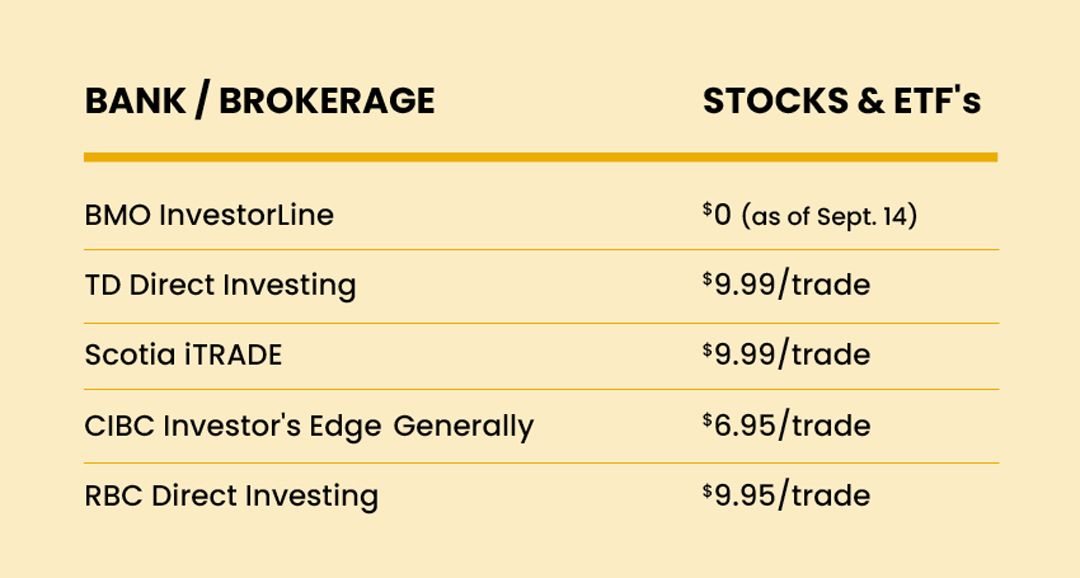
But the biggest change? Starting Sept. 14, you won’t see the trading fees or commissions cutting into your earnings. Consumers can use InvestorLine to buy and sell stocks, ETFs, mutual funds, GICs, bonds and other investments without paying commissions or needing a minimum balance to open a self-directed account. The major players offer similar products, including TD Direct Investing, RBC Direct Investing, CIBC Investor’s Edge and Scotia iTRADE.

If you’re approaching retirement – or taking a fresh look at your portfolio – the tools, along with the cost-cutting measures, offered by BMO’s platform could make breaking up with your financial adviser a little more palatable. But taking control can also mean living with investment missteps, which remain a possibility regardless of how well-informed your decisions are.
Rather than taking the reins entirely, BMO differentiates itself from other digital investment platforms by offering adviceDirect, a service built into InvestorLine that gives users access to a team of advisers who can provide guidance, trade recommendations and ongoing portfolio monitoring. In other words, you still have control, but you don’t necessarily have to figure everything out alone.
Here’s how BMO’s new offering compares with the self-directed investing platforms offered by Canada’s Big Five banks — particularly when it comes to fees:
The shift toward self-directed investing will give us more choice, greater control of our assets and, increasingly, lower costs. But choosing between managing your portfolio independently and paying for professional advice is ultimately a matter of personal circumstances, financial knowledge and comfort with risk. Lower fees can make a meaningful difference over time, but so can sound investment decisions provide by advisers.
And, down the road, as commission-free investing becomes the new norm, the banks will likely become increasingly focussed on giving their customers a reason to stay. That could mean better platforms, sharper research, cheaper foreign-exchange rates and, ideally, advice that’s worth paying for.