The sought-after haute plant-based lifestyle brand, Flamingo Estate, created by Richard Christiansen, has now arrived at Holt Renfrew. The department store stocks the lauded company’s signature sensorial goods, including their pantry staples – like their best-selling California olive oil – the Heirloom Tomato collection, the new Jasmine Rose Rich Cream, and more.
Here, we revisit our story of how Christiansen developed his “pleasure from garden” ethos.
THERE’S A LIMIT to how much advice a person can tolerate coursing through their social media feeds, but if it’s from Richard Christiansen, a lifestyle guru on the ascendance, I’ll take it. The former marketing entrepreneur has set his exquisite design eye on nature to produce a line of goods from the garden for his growing business. First, he seduced me on Instagram with his garden erotica; then, his 2021 cookbook, Fridays From the Garden, sent me into a sensorial swoon.
Now, he’s published The Guide to Becoming Alive, in which he exhorts us to put down our phones, eat real food and honour Mother Nature, whose gifts he calls “the last great luxury.” Well, why not? It’s worked for him. In just four years, the trained lawyer who became an award-winning creative director has spun his passion for his home and garden into a business, and his business into a lifestyle brand. His friend Martha Stewart can relate. “We’re unique in that we turned our love for home into a job,” she says in an interview in his new book. “It’s so powerful.”
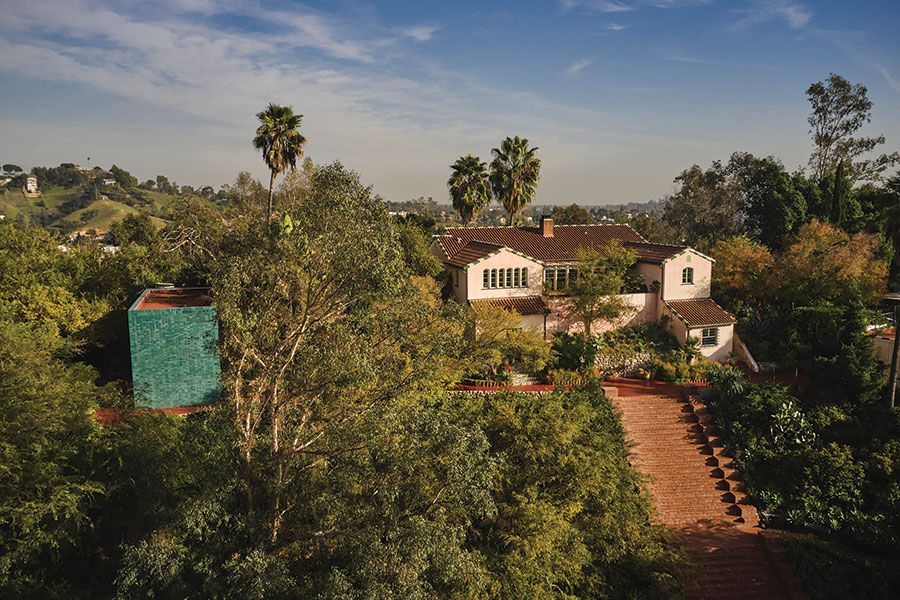
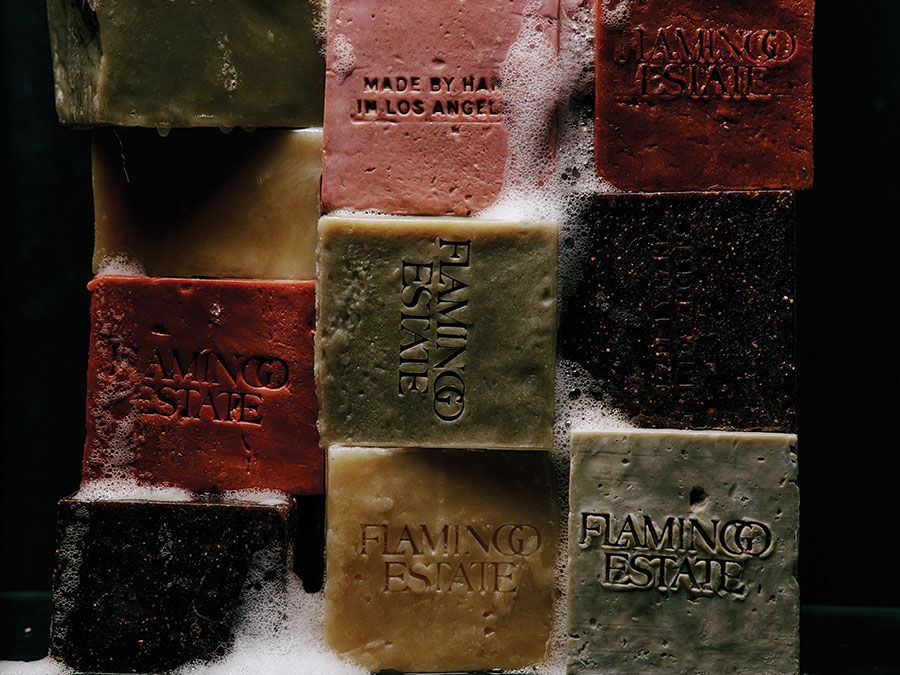
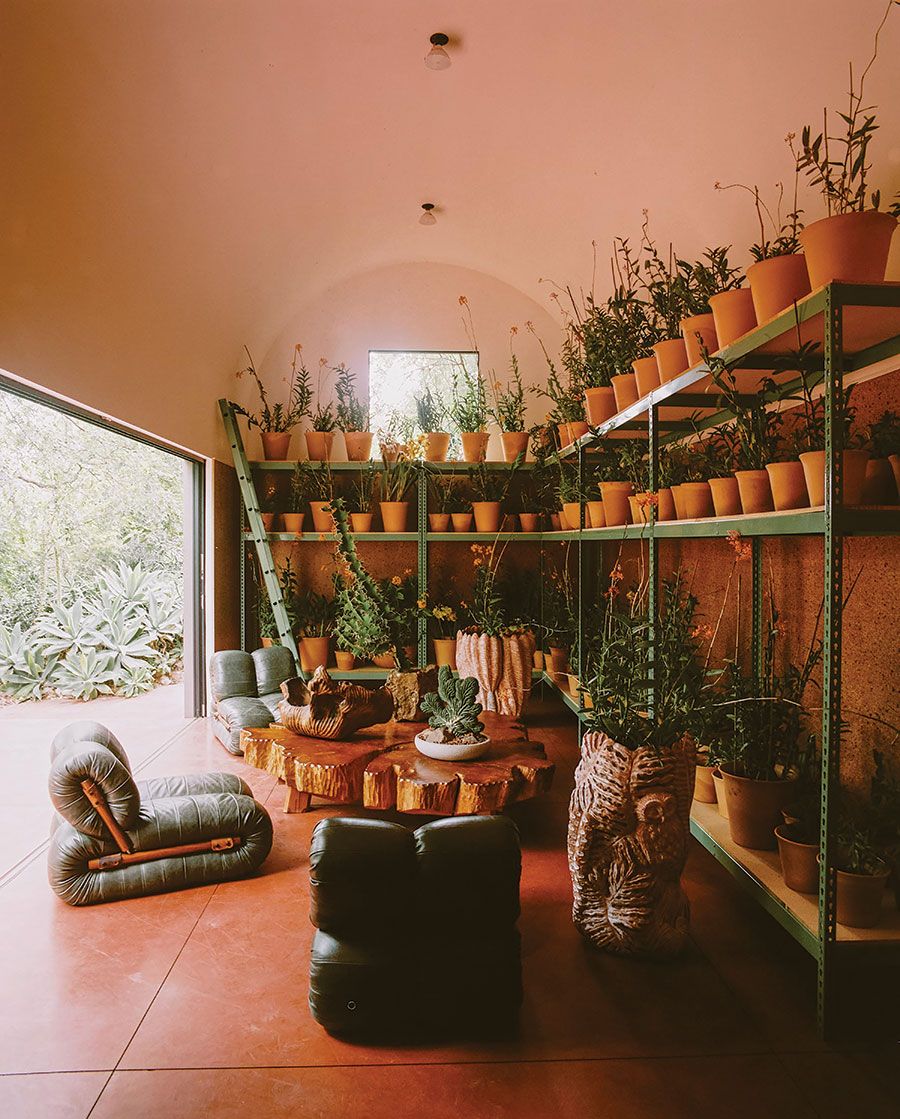
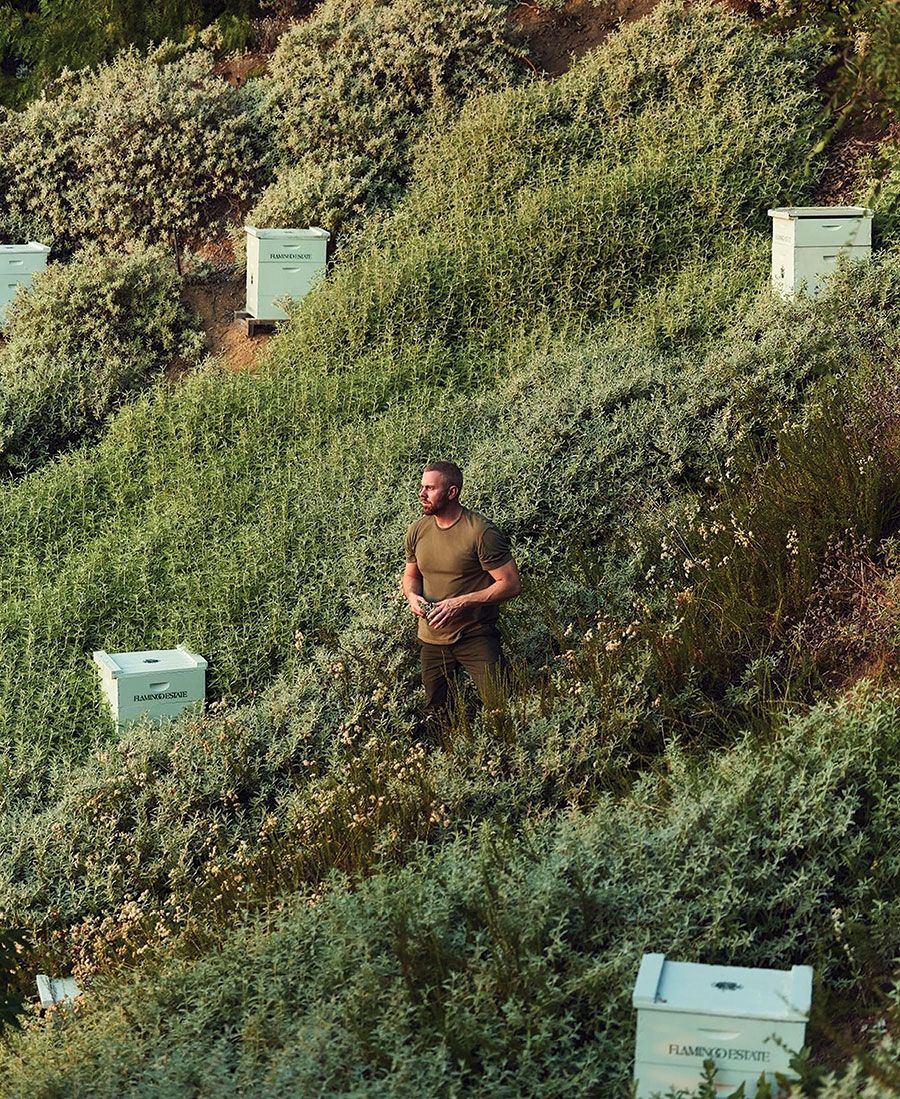
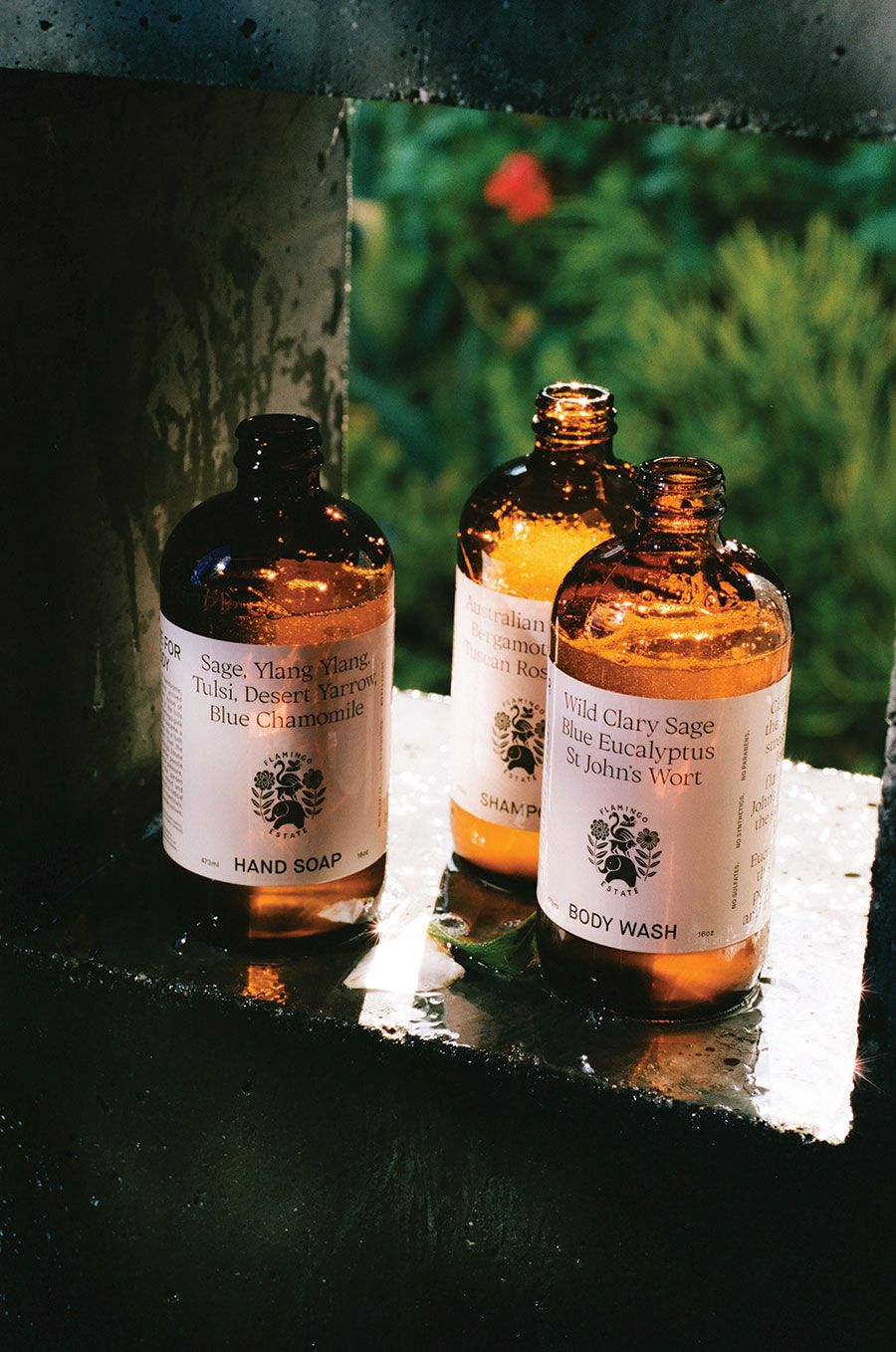
Home for Christiansen is Flamingo Estate, a pink stucco hacienda-style house with a storied past, set on seven overgrown acres overlooking Los Angeles. Now lush and verdant, the 1940s property was a ruinous mess when he bought it, but he, too, was burnt out. He’d spent two decades in New York toiling in publishing’s glam trenches and building his creative agency, Chandelier Creative. He was badly in need of renewal. The son of Australian farmers, he rolled up his sleeves and dug in. It was the garden that spoke to him first about the power of transformation. Puzzled that his roses were turning brown, he realized that the runoff from Flamingo Estate’s bathhouse flowed straight into the garden. The “fancy soaps and shampoos” he’d been using were to blame. From that moment, he started making his own, with essential oils pressed from sage and bergamot, eucalyptus and lavender. It gave him pleasure and healed the roses, too.
Then the pandemic hit and his new mission materialized. To help local farmers who’d lost their distribution channels, he started delivering weekly produce boxes for them, to the good and great of Los Angeles, bearing the Flamingo Estate brand. Next he added to the brand’s offering his own products, some homegrown – the soap he had started producing, honey, wine; others commissioned – olive oil, candles, body cream. The business began to flourish, most notably when Oprah featured the Three Sisters Candles Set on her 2021 Favourite Things list, and along the way he developed points of view on self-care, the menace of algorithms and the essential value of pleasure in our too fast, soulless times.
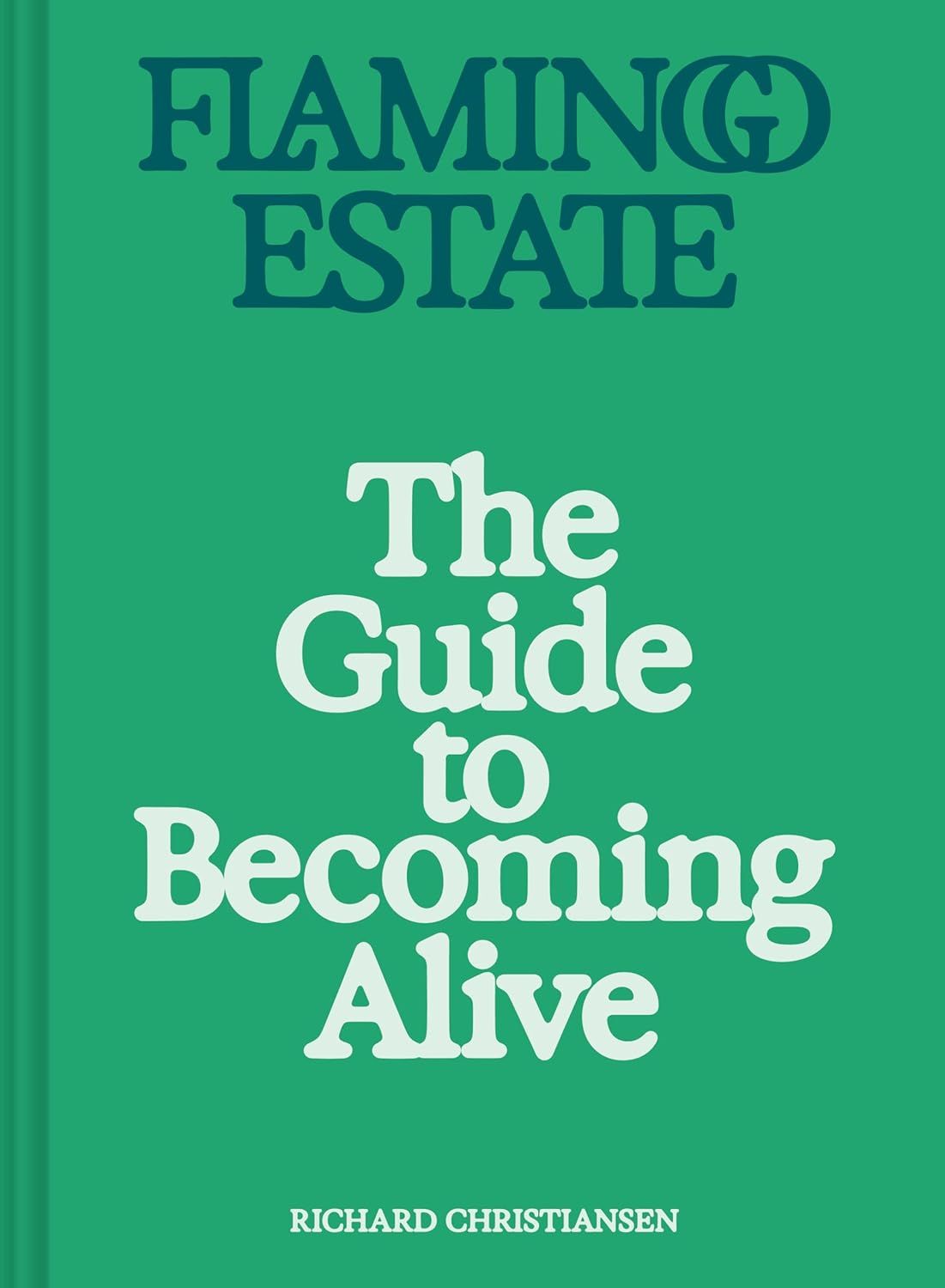
The Guide to Becoming Alive is an XL-sized book with a grass-green cover, dense with spectacular photography and clever graphics, but it’s the book’s text that presents a formidable amount of information, revelations and advice. In writing it, Christiansen sets out to help others wake up, as he did, by “radically transforming” his life. “I needed to wake myself up, have a hot bath, get back in touch with my body. I needed to taste and feel things again,” he says. Lesson No 1: Give yourself a break.
He attributes this, and many of his other epiphanies, to nature. “The garden teaches us that it’s okay to wobble, to find your own way on your own time.” Tree branches don’t grow in a straight line, he says, and a flower doesn’t look left and right to see if it’s the best flower. “It’s really, really hard not to compare,” he says, “but there’s real joy in trying to get that right.” Funny to think that accepting fallibility as a concept is pretty much the dead opposite of the perfectionism that the world ascribed to Martha Stewart, and then judged her so harshly for, as she rose to superstardom.
Years ago, when a mutual friend invited Christiansen to fly with Stewart to her island in Maine, he was so nervous, he almost declined. A good thing he didn’t. Today, their friendship is one of mutual admiration. Stewart wrote a glowing foreword for Christiansen’s cookbook and in The Guide to Becoming Alive, he dedicates a chapter to her remarkable achievements and prodigious ways. Indeed, Stewart recently published Martha: The Cookbook, her 100th book. “I don’t think Flamingo would exist if Martha hadn’t set the example of making a business from her home,” says Christiansen. Stewart is a mentor of his and, with her empire currently estimated at US$400 million, a solid choice.
There’s no doubt that Christiansen’s true heroes are the women who appear in The Guide to Becoming Alive. In a series of interviews that weave through the book, he honours them by ascribing to each a characteristic of a plant or flower that he admires. And since each is an advocate for living with purpose and respecting the earth, he seeks their wisdom. So it turns out that activist/actor Jane Fonda “sheds her bark like eucalyptus,” maximalist designer/entrepreneur Kelly Wearstler “prunes her roses” and Stewart “works like wisteria.” Author and podcaster Elise Loehnen “courts her shadow like a fern,” health educator Erica Chidi “flirts like an orchid” and the revered chef Alice Waters quite simply but powerfully “sets the table.” For legendary conservationist Jane Goodall, who occupies the top spot in the book’s introduction, it seems that no plant label was considered necessary. Goodall, a friend of the author, sets the bar high for the quality of the book’s content as well as for Christiansen himself, having once asked him the question that kickstarted it all: “Richard, why don’t you take everything you’ve learned and do something with it? Isn’t it time to evolve?”
Yes, was his short answer. The book is the long one, and it’s a confessional. From his charmed yet challenging childhood to his wildly successful agency run, it details his personal journey that eventually landed him, lonely, unhappy and inured to life’s charms, at Flamingo Estate. Crucially, it ends up a celebration of what he’s since gained: love in the form of his partner Aaron Harvey, joy, purpose, pleasure – and a brand. While he is serious about Flamingo Estates becoming the “Hermès of vegetables,” Christiansen is equally intent on setting an example, sourcing sustainably, damaging the planet less and “making stuff the old way in a world drunk on innovation.”
With regenerative farmer David Leon, formerly of the non-profit Farmer’s Footprint in Hawaii, he talks about how the promise of technology was to give us more time to spend on what matters in life, not less. Instead, we’re all running so fast that we’re “killing ceremony,” like the pleasure of setting a table and eating a meal hands-free, no cellphone. With Gonzalo Samaranch Granados, creator of Mestiza de Indias, a regenerative farm in Mexico’s Yucatán region, the topic is price transparency and respect for growers and makers. And with Loehnen, it’s the need for more dreaming and more ritual in our lives. And more baths.
Christiansen’s products are made for sybarites who revel in his unabashedly sexy, indulgent lens on lifestyle. They are rarefied and singular, designed with wit and style, elegantly packaged, priced accordingly and shipped in boxes that declare Flamingo Estate “a home for radical pleasure.” It’s an audacious move to bring attitude to farming and give it a design language normally reserved for luxury goods.
At a dinner party I threw recently, I offered my guests a Flamingo Estate “fruit snack” to follow dessert – a slightly dehydrated strawberry dusted with spicy Guajillo chili and a squeeze of key lime – and asked them to guess how much the small glass jar cost. Those with elevated palates weren’t shocked by the price (US$80), while others worried that I’d actually bought them myself. Either way, they were delicious, like nothing anyone had tasted, and a hit. Christiansen gamely justifies his prices by tallying up the time required to make them, for example, the Jasmine & Damask Rose soap, a gorgeously scented, big pink brick, or the Heritage Extra Virgin Olive Oil made from olives picked “slowly and intentionally.” The bottom line: It’s a matter of months, not days. And, like couture, there are no shortcuts – quality takes time.
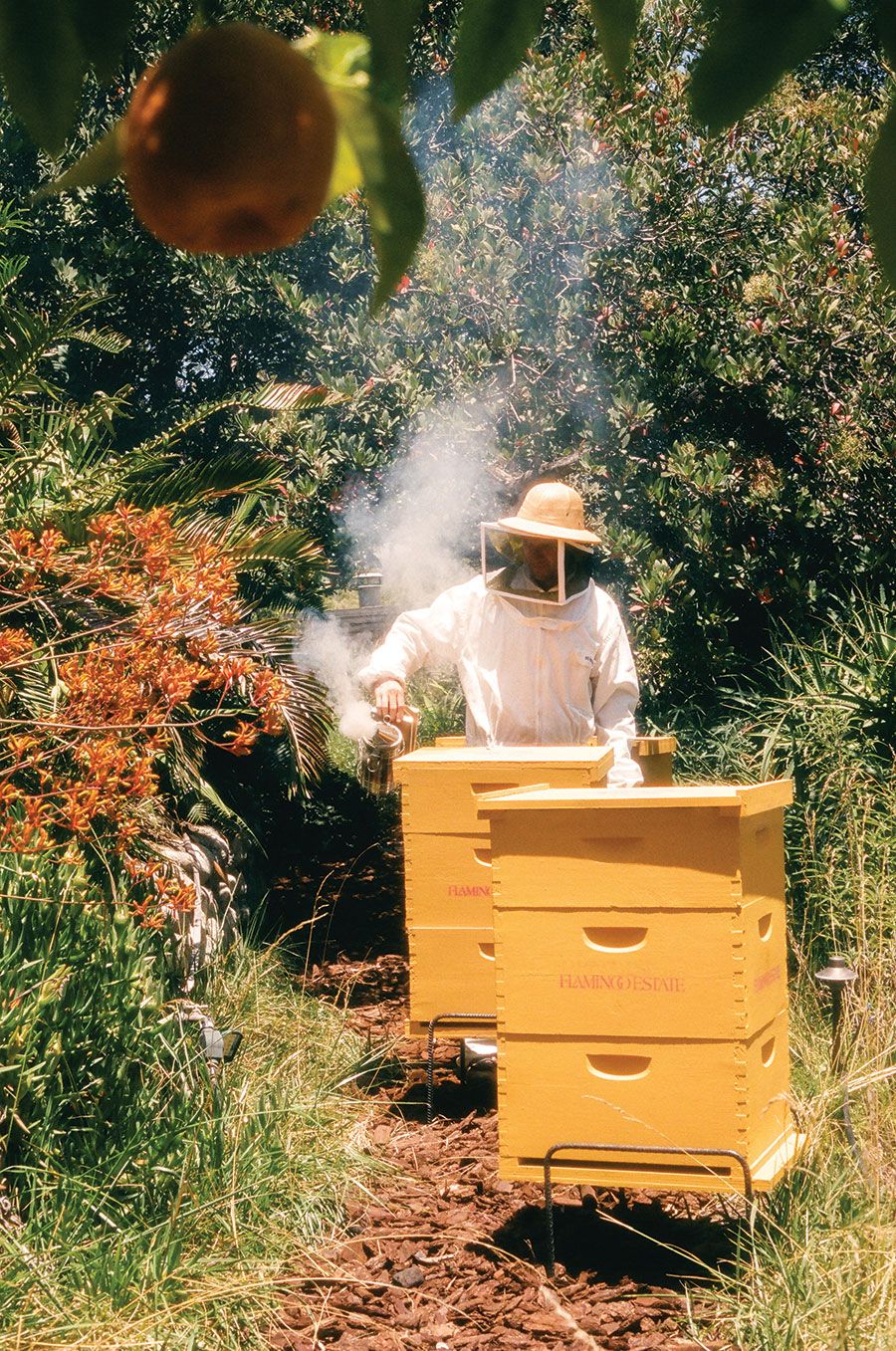
Then there’s Flamingo Estate’s Mount Taranaki Pure Manuka Honey. Producing it involves a helicopter drop of bee hives at the remote base of New Zealand’s Mount Taranaki, where the closest road is hours away. Left in peace, far from society’s destructive ways, the bees work in bounteous isolation to produce liquid gold. One 8.5-oz jar is US$98. Clearly, the most valuable ingredient in use at Flamingo Estate is time. Meanwhile Christiansen has turned iconic pop artist Ed Ruscha, and actors Tiffany Haddish and Julianne Moore into backyard beekeepers for his Private Harvest Honey – the proceeds from which all go to charity. He has also collaborated with the late designer Gaetano Pesce and artist Ai Weiwei, both heroes of his, along with the local farmers he represents (who must get a kick out of the company they’re keeping).
Turning Flamingo Estate into a business, Christiansen entered an industry that is unfathomably vast and lucrative. The United States’ wellness economy is the largest in the world and worth US$1.8 trillion as of April 2024, according to the Global Wellness Institute. It’s also hugely competitive and yet, dealing with investors, he is undaunted. “I am going to build a billion-dollar brand, I’m sure of it,” he says. He has priorities though: top among them, advocating for a lifestyle grounded in pleasure, sensuality and connection. He won’t be distracted from “living at full volume and tasting things fully,” he says, and urges others to do the same. It’s about becoming alive. And the remarkable Richard Christiansen wants to help you, me and the world wake up.
A version of this article appeared in the Dec 2024/Jan 2025 issue with the headline ‘Garden of Earthly Delights,’ p. 67.