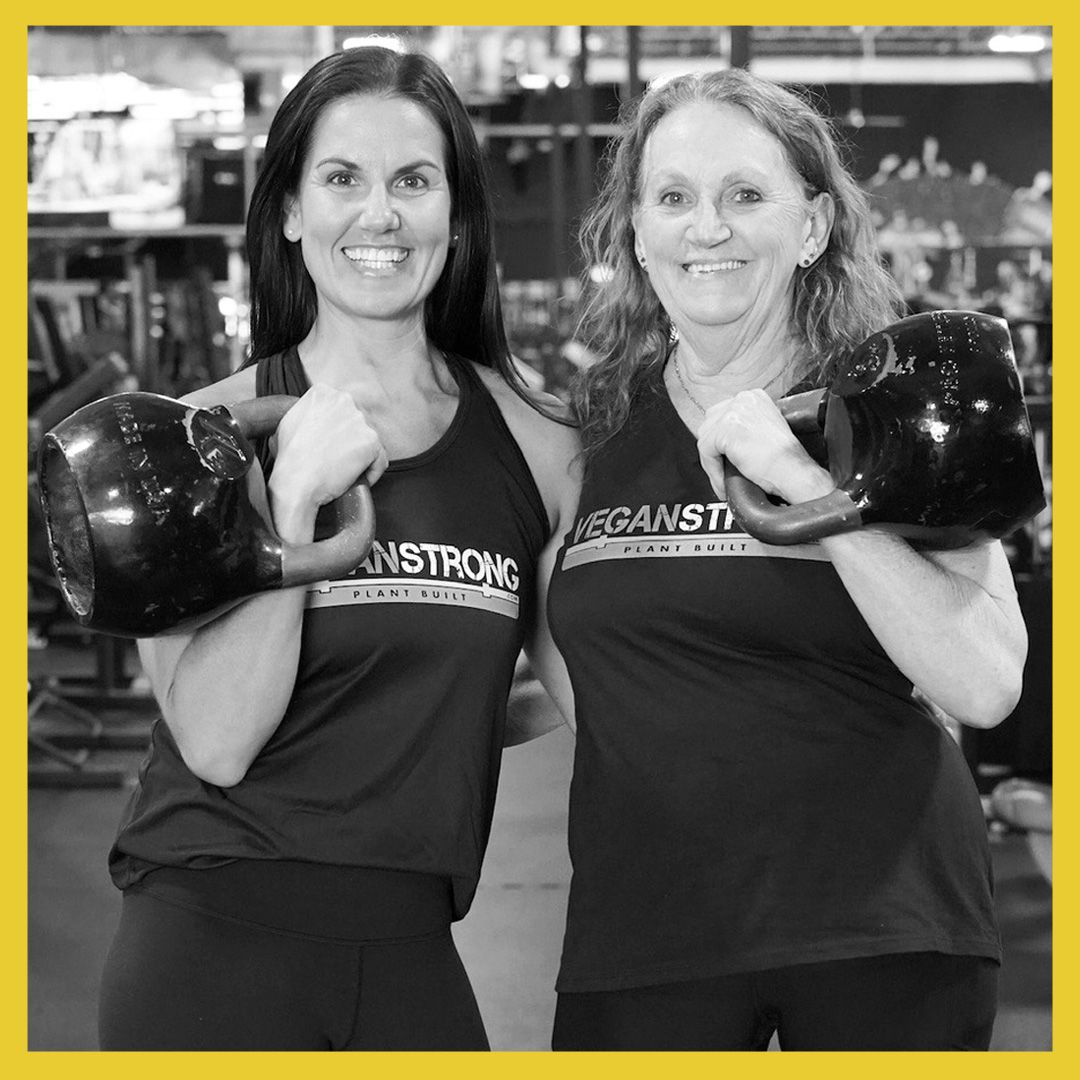


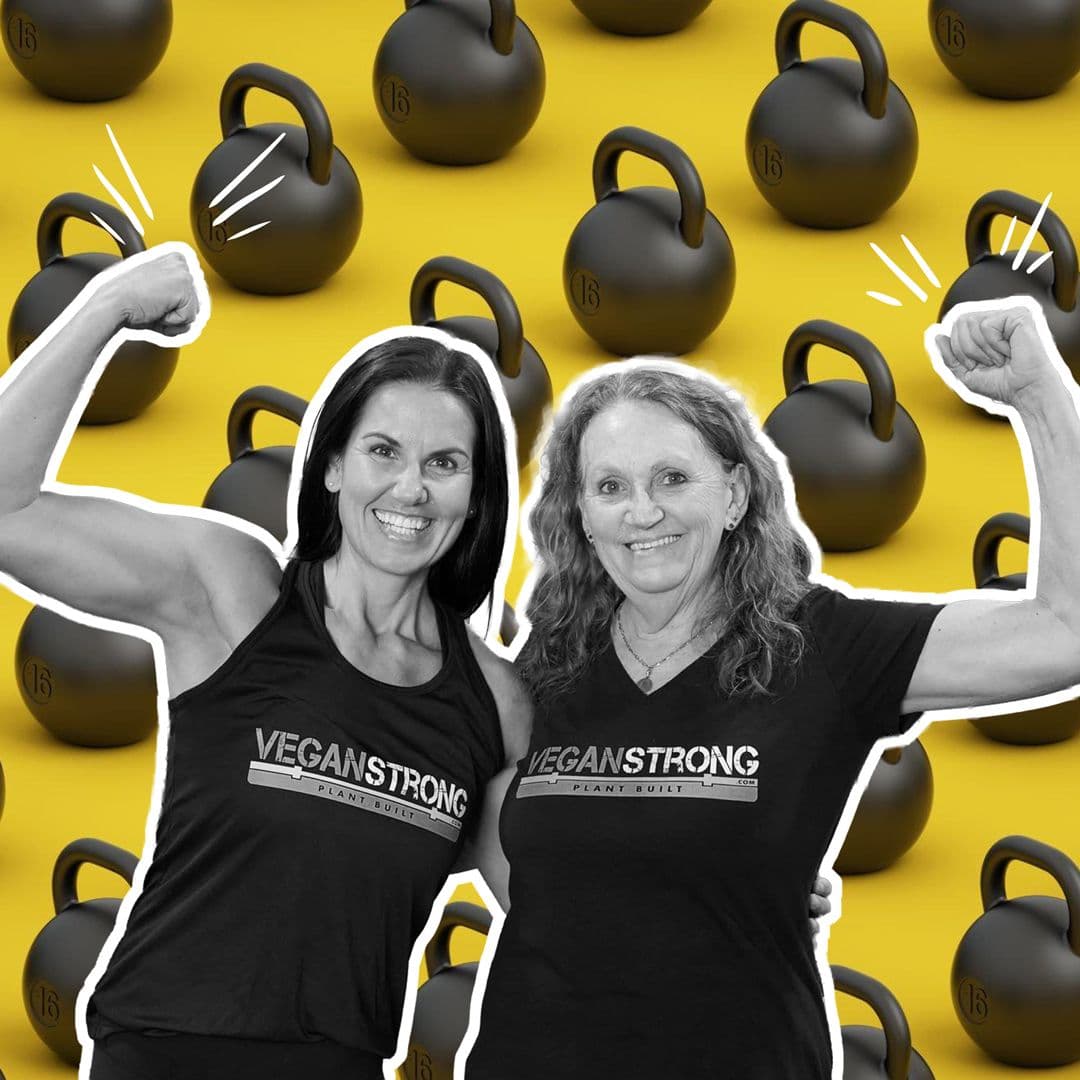
To say Geri Hintenberger is results-oriented might be the understatement of the century. Despite achieving elite status as a kettlebell (that cast-iron weight that resembles a cannonball with a handle) lifter over her 15 years in the sport – setting 11 world records and earning over 40 gold medals along the way – she maintains she hasn’t enjoyed a single lift.
“It’s been competitive all along. No matter how many times people say have fun, it’s no fun,” the 69-year-old tells me on a Zoom call from her Wainfleet, Ontario home. “Once I click the bell down and I get my numbers, I’m good.”
Joining us on the call from her home in Lunenburg, N.S., is Hintenberger’s daughter, Jennifer, who not only introduced her mother to the sport but also competes alongside her at nearly every competition she attends.
“At this point, it just feels natural, I can’t imagine what it would be like not to compete with my mom,” says Jennifer, who moved from St. Catharines, Ont., – just a half hour drive from her mother – to the east coast in 2018.
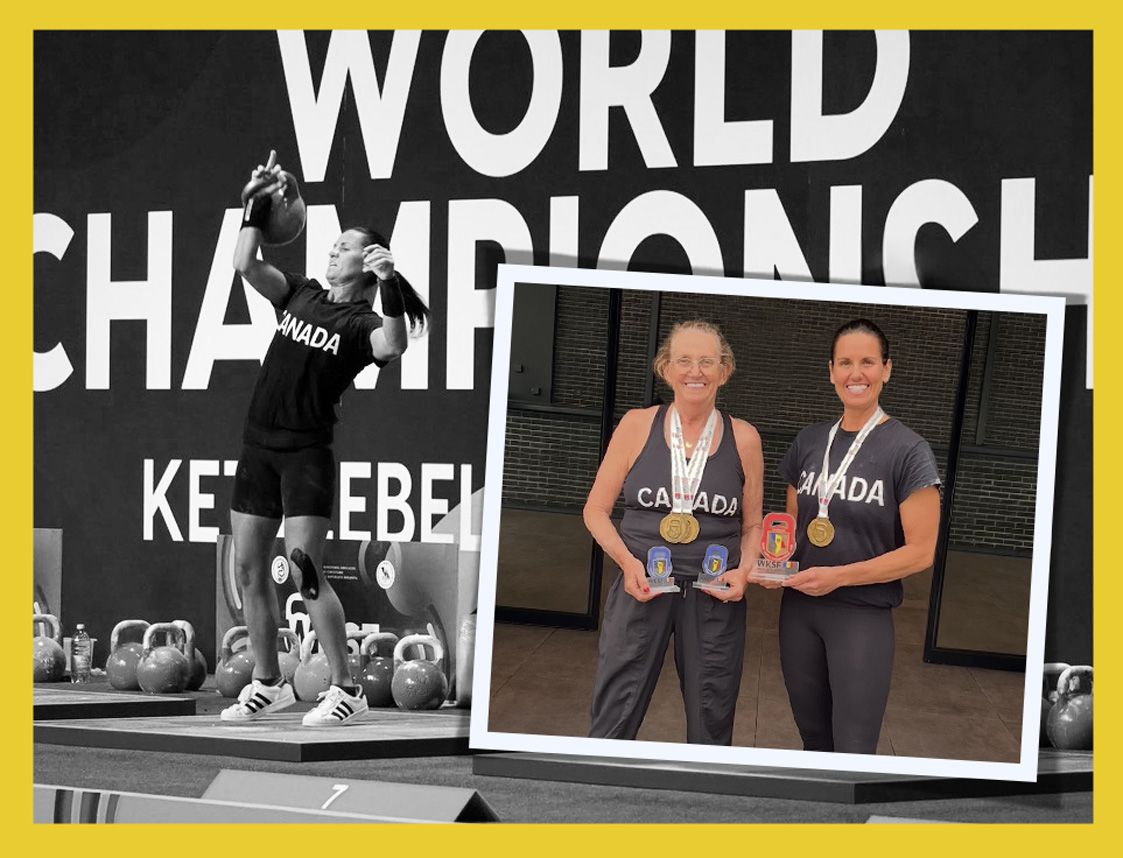
The sport has strengthened the mother-daughter bond, with each competition offering a chance for the pair to reconnect and explore far-flung destinations together – including Greece, Spain and Denmark, which Geri counts as her favourites.
But Jennifer says they don’t align entirely on their motivations for competing. “My mom’s actually more competitive than I am,” says the 45-year-old lifter, personal trainer and massage therapist, who holds over 20 world records and more than 70 gold medals of her own. “I train for my health; my mom likes to win.”
And win they do. At the World Kettlebell Sport Federation’s World Championships in June in Moldova, which drew over 500 competitors from all over the globe, Geri set two new world records in the 60-plus age division and nabbed a pair of gold medals, completing an astounding 427 reps in the 30-minute 8-kg One Arm Long Cycle (OALC); and 604 reps in the 30-minute 8-kg snatch. Not to be outdone, while competing in the open division – against many athletes younger than her – Jennifer took home gold and set a world record in the 30-minute 20-kg OLAC, with 380 reps.
Achieving those numbers isn’t just “no fun,” Jennifer confirms that it’s downright painful. “I don’t enjoy a second,” she admits. “But I think there’s something in all human beings who deeply appreciate how good it feels to complete any kind of challenge. I think that’s one of the reasons I continue to compete. It’s that satisfaction that I’m doing something hard.”
“I like the challenge,” says Geri, agreeing with her daughter’s no-pain, no-gain philosophy. Despite the gruelling nature of the sport, Geri never shies away from pushing her limits – especially when they’re closing in on a competition. “If my mom has a competition, suddenly she’s sending me a message everyday: ‘I just did 60 minutes, what do you want me to do next?’” She says.
“I think anyone can do anything they set their mind to. If you don’t try, you don’t know”
– Geri Hintenberger
Geri first took up the sport at the age of 53 after the loss of her son and Jennifer’s brother, Jonathan, who died at 25 from leukemia. Originally, lifting was born out of a desire to improve her fitness but the hobby quickly grew into something else. Both the intense training required to compete and the time they spent together at Jennifer’s Kettlebell studio in St. Catherines proved to be a balm for their souls.
“The sport helped in giving us something to put all of our focus into because to win and excel in this sport, it does demand your full attention,” Jennifer explains. “It gives you a different avenue to look at and keeps you going,” Geri says, adding that she feels her son’s presence at the end of her lifts, when the weight seems heaviest. “I still feel he gives me my strength.”
Today, Jennifers says her mom has gained near celebrity status in the kettlebell world. “One of my favorite things about it is how much everyone else loves watching my mom,” she says. “Because she’s 69, and she can lift what a lot of amateur lifters in their 20s can. She’s that fast and that capable of a lifter.”

“I surprise myself every time I finish,” Geri modestly adds. Outside of daily weight training, Geri, a retired rubber plant worker, says she stays active with chores around the house, from mowing the lawn to gardening. And despite being an older lifter, she maintains she doesn’t have to contend with any aches and pains – save for those gruelling lifts, of course. “Sometimes with the heavier weights I get what I call a kettlebell headache,” she allows.
Around the same time as her fitness renaissance, Geri also re-evaluated her health. In addition to feeding her competitive spirit with a steady slate of competitions, she took on a vegan diet – a change that rid her of a longstanding stomach issue that doctors couldn’t treat. “I just wanted to keep my health up,” she says nonchalantly when asked how she made such a drastic dietary change in her 50s. “I wanted to be around for the rest of my children and grandchildren.”
While us carnivores associate muscle building with animal protein, Geri assures me she finds plenty of sources that align with the strict diet, including a vanilla plant-based gluten-free protein powder that serves as the base for her daily green smoothie. Other high-protein staples in her diet include tofu, nuts, pumpkin and chia seeds and avocado.
The dietary changes also led to a post-retirement gig at her local farmers market, where she sold a variety of vegan and gluten-free baked goods – a venture that’s armed her with some creative ways to incorporate delicious, muscle-building snacks into her diet, including a delicious protein bar that’s become her go-to. (Check out the recipe at the bottom of this story)
Jennifer, who adopted a vegan diet in her 20s, credits it for remedying an array of health issues she had when meat and dairy were still in her diet – from acne and hair loss to bleeding stomach ulcers.
But intense training and nutrition aren’t the only things fueling this powerhouse mother-daughter duo. Each time they compete, they’re out to swing their kettlebells though any glass ceiling that may discourage older women from entering the fitness world. “That’s one of the biggest reasons I compete at 45 in the open division,” Jennifer says. Declining to compete in the 30 or 40-plus divisions, she takes on competitors significantly younger than herself. “Anyone can do anything they set their mind to,” Geri adds. “If you don’t try, you don’t know.”
Despite being a world-class master of sport athlete – a designation equivalent to a black belt in athletics – Jennifer doesn’t believe she’s an anomaly. “This is the first time, as women, we’re being given the opportunity to show what we’re physically capable of as athletes,” she says, adding that she’s only a generation removed from an era where women were discouraged from wearing pants. “My generation has been given the opportunity to participate in sport from a young age and find out what we’re really capable of.”
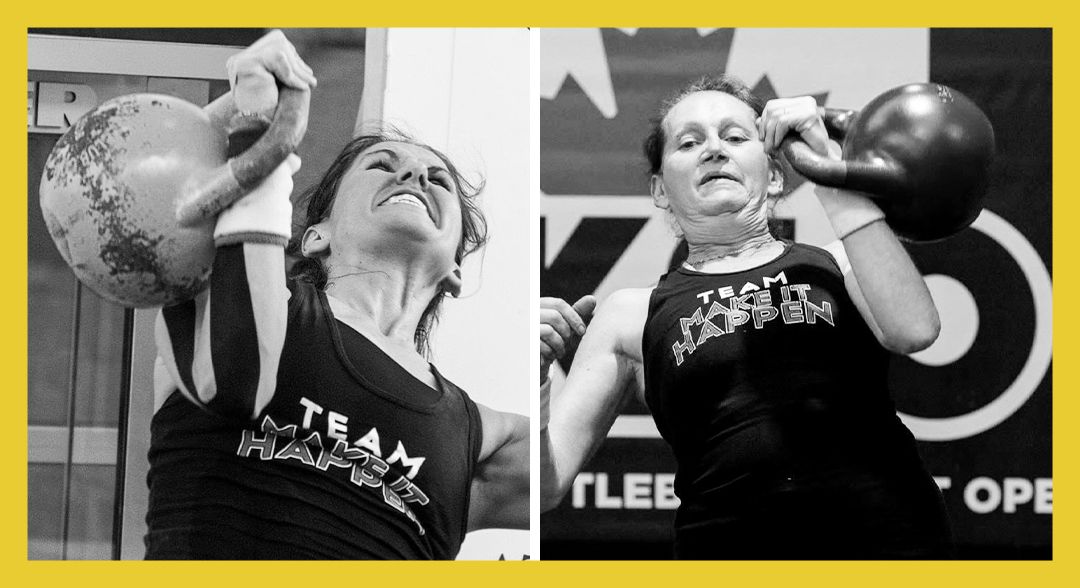
Jennifer doesn’t put much stock into chronological age, either, and who could blame her? At the time of writing, her mom beat two of her freshly-inked records and added another to the books in the 10-minute OALC with 147 reps. “We’re taught strength starts declining at 30 – my mom didn’t even pick up a wait until her 50s, and she’s only gotten stronger ever since,” Jennifer says. “A lot of people feel that we decline due to aging; I believe we decline due to the fact we stop challenging ourselves.”
Geri certainly doesn’t have a problem in that department. If anything, she has a healthy addiction to her sport. “I try to pick up the weights every day,” she says, panning over to a pair of kettlebells and an exercise mat in her family room. “Eveytime I say I’m going to quit, I do another competition. I’ll probably compete for as long as I can.”
As for what we can learn from Jennifer and Geri’s philosophy on aging, the pair offer up the short and long of it. “It’s never too late,” Geri says. “I presumed you were going to ask this so I wrote out my answer and, literally, the last sentence is, ‘It’s never too late to begin,” Jennifer says with a laugh before reading her response:
“I hope someone reads this and realizes they haven’t missed their chance. Whether you’re 45, 69 or 79, your body is remarkably adaptable. You don’t have to become a world champion, but you can absolutely become stronger than you are today.”
If you’ve been wanting to get off the couch and start exercising, these late-life fitness tips from Jennifer might be just what you need to get you motivated.
Start Small
“People feel like they have to work really, really intensely when they start or they have to work for long durations of time or train every day. That’s not true. If you’re doing absolutely nothing and you start training even two or three days a week for 20 minutes, your body will respond positively to that.”
Choose Activities You Enjoy
“Find something that you like. Maybe it’s walking. Walk 10 minutes away from your house and turn around and walk back, that’s 20 minutes of activity. It doesn’t have to mean going to the gym, it can be climbing, yoga, pilates or roller skating, but try to find physical movement that you enjoy.”
Avoid Comparisons to Your Younger Self
“Don’t do it – It doesn’t matter! You’re a different human right now. Just be where you’re at. Start there and focus on how the version of you that you are right now can get a little bit better every day.”
GERI’S WINNING FORMULA
For her workouts, Geri typically spends 30 minutes lifting lighter weights (8 kg in her case) at a fast pace, but she has a tried and true method for increasing the weight of her lifts – and increasing her strength as a result. When she’s ready to move up in weight, she’ll begin with 15 minutes of heavier lifting followed by 15 minutes of lighter lifting. From there, she adds five minutes to the heavier-weight portion and subtracts five minutes from the lighter portion each day, gradually working her way up to her goal of 30 minutes.
Having a set warmup and recovery is also important. Geri typically gets ready for a lift with a heavier weight than she’s training or competing with, but for us mere mortals who aren’t training for competition, starting lighter is recommended. Meanwhile, when she’s recovering from a lift, she’ll give herself a day or two of rest or engage in lighter workouts like stretching or yoga.
Protein Peanut Butter Bars
Ingredients:
2 cups peanuts / almonds
3 tbsp peanut or almond butter
1 cup dates method
3 scoops hemp protein powder
1/4 cup water
2 tbsp raw cacao powder
1/2 cup unsweetened coconut
1/4 cup chia seeds
1/4 cup hemp seeds
Method:
• Add peanuts, hemp seed, chia seed, raw cacao powder and coconut to food processor.
• Pulse until peanuts are in small pieces.
• Add dates, peanut butter and start blending, add water slowly as needed.
• Remove dough from blender.
• Form into bars.
• Roll in coconut or hempseeds.
• For bars you can leave plain or press into coconut or hempseeds.