


World COPD Day was created by the Global Initiative for Chronic Obstructive Lung Disease (GOLD) in collaboration with health care professionals and patient groups throughout the world.
COPD Canada is proud to be a participant in this year’s international COPD awareness campaign. Each year a new theme is chosen and used by organizations in each participating country. This year’s theme: Early Diagnosis & Management for a Better Life.
COPD is a common, preventable, and treatable disease, but extensive under and misdiagnosis leads to patients receiving treatment later in the disease course. The realization that environmental factors other than tobacco smoking can contribute to COPD, that it can start early in life and affect young individuals support the need for early diagnosis, and prompt and appropriate treatment.
There are many factors that can lead to delayed diagnosis of COPD, including patient, healthcare system, and provider-related impediments. Patients may not recognize or report symptoms accurately, healthcare systems may not have resources to adequately train staff in respiratory health or to provide adequate access to spirometry within their communities.
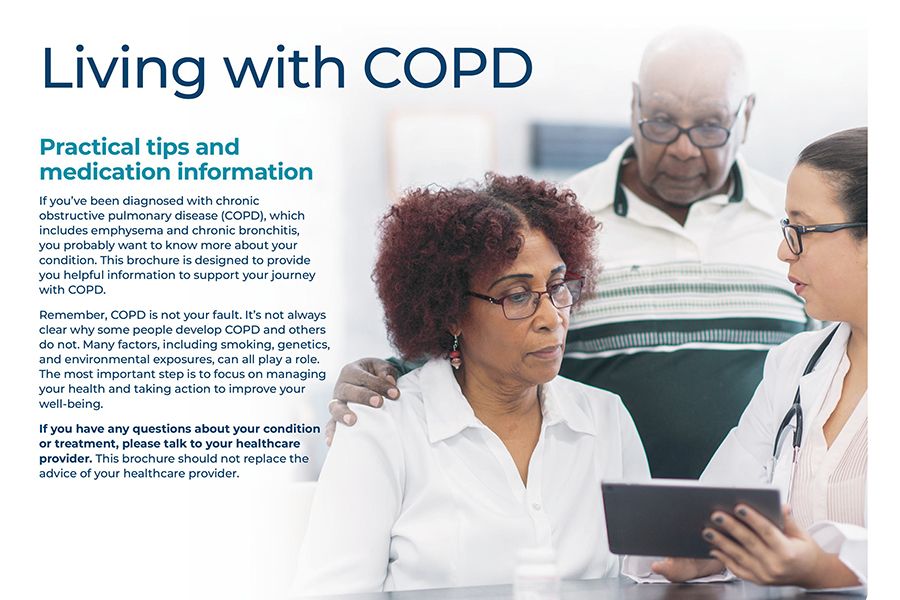
Patient education can help address some of these needs. To download a complimentary copy of our patient education brochure, “Living with COPD” visit www.copdcanada.info/patient-education.
A diagnosis of COPD should be considered in any patient who has shortness of breath, chronic cough or sputum production, a history of recurrent lower respiratory infections and/or a history of exposure to risk factors like tobacco, cooking fuels, or occupational hazards.
Chronic Obstructive Pulmonary Disease (COPD) is a lung disease that can affect every part of your life. In fact, it affects the daily lives of an estimated 840,000 Canadian adults. As the disease progresses and affects physical ability, it’s common to feel anxious, burdened and discouraged from doing activities that you once enjoyed. But it doesn’t have to be that way. With the right approach, you can overcome and prevent these limitations. Our Living with COPD brochure will provide you with valuable tips and advice to help you live well with COPD.
Taking your medications
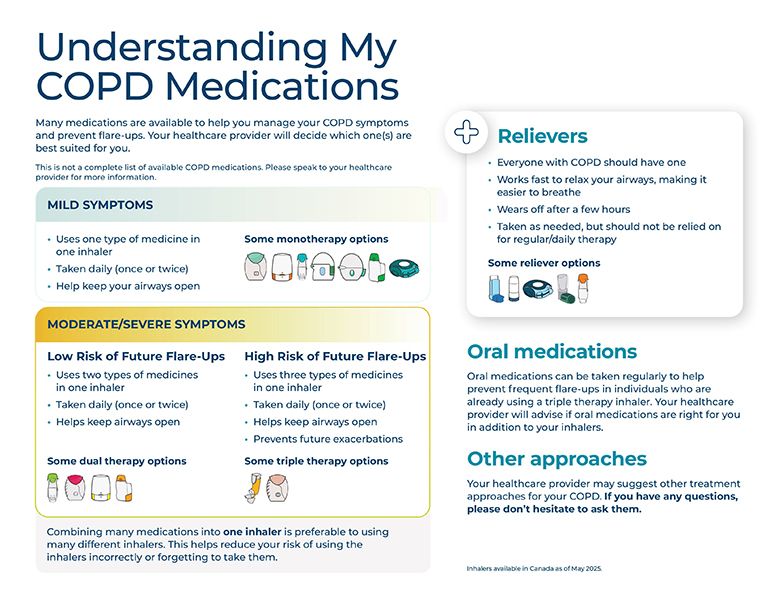
First things first: taking medications is one part of managing your COPD, but a very important one. They can reduce your symptoms like shortness of breath, coughing, wheezing and secretions. By treating your symptoms, COPD medications can help you feel better and do more daily.
It’s important to know:
- The name of each medication you’re taking.
- What your medication does.
- How much you should be taking and when.
- How to take your medications properly.
- Any precautions you should take and be aware of any side effects.
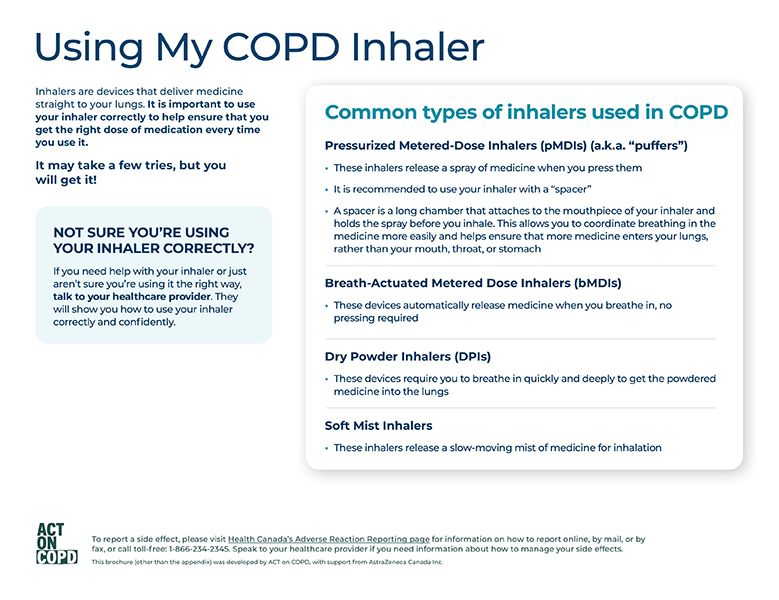
Using your inhaler
Most COPD medications are inhaled because they act directly in the lungs, and they work faster and with fewer side effects than medications that you swallow. That’s why it’s so important to know exactly how to use your inhalers, so your medication can reach your lungs. Every time you visit your doctor or pharmacist, ask them to review the proper technique for using your inhalers.
If you smoke – quit! If necessary, get help from your doctor for a smoke cessation plan.
Preventing Symptoms
The symptoms of COPD are most commonly triggered by indoor and outdoor pollutants, emotions, changes in temperature, and respiratory infections. Living well with COPD means managing your exposure to these triggers.
Indoor and outdoor pollutants
- Make sure your home and workplace are well ventilated and odour-free.
- Try to stay indoors when outdoor air quality is poor or smoggy.
- When in a car, keep windows shut to avoid car exhaust and gas fumes.
- Avoid second-hand smoke.
Keeping your emotions in check
- Talk to your friends and family when feeling stressed or anxious.
- Practice slow, deep breathing and relaxation techniques.
Be aware of changes in temperature
- When it’s cold, dress warmly and cover your nose with a scarf.
- When it’s hot, stay in an air-conditioned environment and avoid strenuous activities.
Respiratory infections
- Try to avoid contact with people who have a cold or flu.
- Try talking on the phone, email or online chat instead of in-person contact.
- Wash your hands frequently.
- Try not to touch your face before washing.
- Get the flu shot and ask about the pneumonia vaccine.
Managing your breathing
In addition to taking your COPD medication as directed, there things you can do to help manage your breathing. Using the following techniques can help you return your normal breathing patterns and regain your sense of control. They are especially useful when you start to feel panic or an acute attack of shortness of breath.
Pursed – Lip Breathing
- Inhale slowly through your nose until you feel that your lungs are filled air.
- Purse your lips as you would if you were whistling or about to kiss someone.
- Exhale slowly while keeping your lips pursed. Make sure to take longer to breathe out than you would to breathe in. Remember to keep your lips pursed. Do not force your lungs to empty.
While sitting: Place both feet on the ground. Lean your chest forward slightly. This will decrease pressure against your diaphragm, allowing it to relax more. Rest your elbows on your knees and rest your chin on your hands OR Rest your arms on a table and rest your head on a pillow
While standing: Lean your chest forward slightly and rest your hands on your thighs OR Lean forward and rest your elbows on a piece of furniture and rest your head on your forearms OR Lean forward and rest your hands on a piece of furniture, but avoid “grabbing the table,” which can overwork your breathing muscles
Recognizing “Lung Attacks”
“The first time I had a lung attack I was thinking, this is it. I’m going to die. And it’s true, what they say that when you can’t breathe, nothing else matters”. The most common physical symptoms of COPD are shortness of breath, excessive sputum production and chronic cough. Worsening of these symptoms can lead to attacks of breathlessness, distress and feelings of suffocation. These instances can also lead to panic or sudden anxiety. When COPD symptoms worsen and the worsening persists for 48 hours or longer, they are known as “lung attacks” or exacerbations. They’re often linked to bacterial or viral infection and can be a sign of underlying chronic inflammation. Although lung attacks have a significant impact on quality of life. People dealing with the burdens of COPD don’t always seek prompt care.
They need to be more aware of worsening COPD symptoms and report these to their doctor as soon as possible.
To download a free copy of COPD Canada’s informative patient education brochure visit www.copdcanada.info/patient-education.