

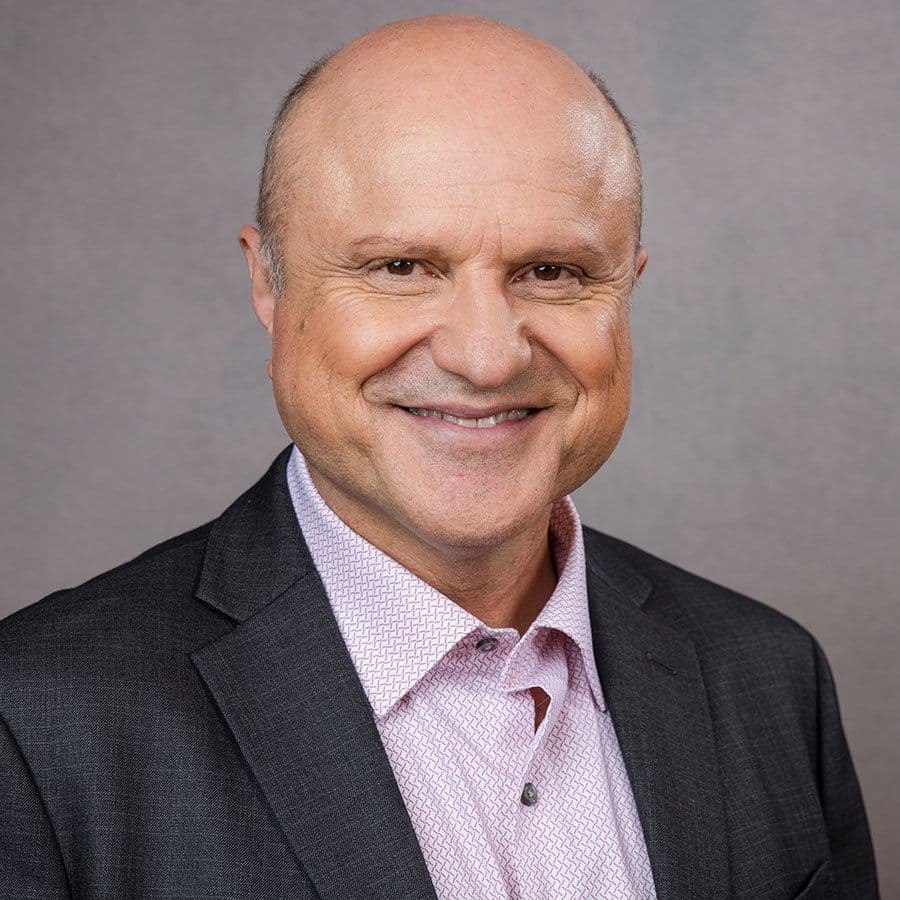
When I met Enrico Colantoni at the CBC building in downtown Toronto, the 61-year-old Canadian actor was celebrating New Year’s Eve – a month early. After a full day of interviews, he was pre-shooting his part of the broadcaster’s NYE special. Slumped in a chair and repeatedly blowing on a sparkly noisemaker, the star of the hit police drama Allegiance (currently in its second season) was not looking all that celebratory. “It’s been a long day,” he said, rubbing his hip as stood up to greet me. I promised to take it easy on him but, little did I know, that’s the last thing he wanted.
Colantoni, of course, is used to the showbiz grind. A veteran character actor, he broke out in the ‘90s playing Elliott, the womanizing photographer on the sitcom Just Shoot Me. He also hit the big screen in the cult favourite, Galaxy Quest, as friendly alien leader Mathesar; in iconic ’00s teen show Veronica Mars, he played star Kristen Bell’s private eye dad, Keith Mars; and the past couple decades he’s ruled Canadian cop shows, including as Sgt. Greg Parker, a crisis negotiator on Flashpoint. Colantoni also happens to steal his share of scenes in last year’s breakout Gen Z sitcom The English Teacher – playing a beleaguered high school principal whose staff cause him as much trouble as his students.

We’re here, however, to talk about the Vancouver-set Allegiance, where he plays Vince Brambilla, a veteran training officer who’s ready for retirement until he takes on a mentor-like relationship with a rookie (played by series star Supinder Wraich). But Colantoni isn’t interested in the same old promotional soundbite. He wants to go deeper and is ready to open up about his health, his recent separation and lifelong insecurities. So we did – and it was one of the most refreshing interviews I’ve had in a long time.
SHANDA DEZIEL: After five seasons on Flashpoint, how are you feeling about starring in Allegiance, another homegrown Canadian success story?
ENRICO COLANTONI: I’m just happy that the show has been allowed the room to grow. It’s unfortunate that some shows, they get out of the gate but they never hit their stride. You do the building up in the first season, but it takes two or three to find the rhythm, the story, where it lives. We are fortunate that in our rehearsal period – in our first season when we were figuring out what the show is – people were watching. So we’re grateful for that.
SD: There’s likely been a few shows you’ve worked on that didn’t get that chance to grow.
EC: That’s always sad when that happens. Mostly because of the community you’ve built. People see the story, but not what we do on the floor every day – the tears, the camaraderie, the love, the frequency we operate at. That’s not always translatable. But somehow, with some shows, like this one, the people who watch it are maybe getting at least an unconscious sense of that, of the joy and community that we bring.
SD: And I guess that’s what keeps you in this business?
EC: It’s the only reason. After having done it as long as I have, I ask myself why do I keep going back to television? Is that a conscious choice or an unconscious choice? But that’s where communities are built. With films, you fall in love for all of a month or two. They’re more like an affair, like a vacation – a love vacation. It’s short lived. But with TV it’s about potentially years. Just Shoot Me was eight years with the same people and the love that we still have… And Allegiance has all the makings of that because Supinder, the lead of the show, takes on that responsibility really seriously and beautifully. She’s a great leader and makes everybody feel welcome. And that’s just contagious all the way down.

SD: What sort of leadership and tone do you provide having been through this all before?
EC: I think I bring the same thing my character Vince brings, his mentorship, his groundedness. You know, I’ve seen it 10 and 12 times over. It doesn’t panic me. Younger people will be panicked and you give them a reassuring glance and you remind them that it’s fun. Right? You remind them that the world is already way too serious. What we do shouldn’t be included in that. It really is just lighthearted.
SD: Do you think about retirement or struggle with the decision the way your character does?
EC: This year, filming the second season with this chronic pain in my hip took the joy out of things, out of life. But not out of the work. Shooting in Vancouver was different this time because weekends were spent taking hot baths and going to chiropractors and just nursing it. When people ask, “Hey, did you have fun? Did you enjoy Vancouver?” I go, “No, not at all.” But there’s always joy in the work and you forget about the pain while you’re filming, doing something you love. But the minute they say “Cut,” I’m like, “Oh, fuck, I got to walk back to that chair. Could they bring that chair a little closer?” So you start thinking that while I don’t want to stop, that’s not entirely up to me. How much longer can I do it physically, mentally? I don’t know. I’m going to let everybody else decide.
SD: You’ve already had one hip replaced?
EC: Yes, five years ago, and that one’s fine. Now it’s the other one.
SD: And will you get this one replaced?
EC: I’m looking, I’m looking. Up until now, we’ve been working. But now I have a window, so I will probably go to the States. Otherwise, it might take a while trying to get it done here.
SD: I know you’ve often split your time between New York, Los Angeles and Toronto, but are you living in Canada at the moment?
EC: Yes, I’m here and I’ve got my daughter here close to me.
SD: Your kids are 27 and 24, so you’ve been an empty nester for a while.
EC: Not really, everyone comes back. My son is in Portland with his mom and she’s doing all the heavy lifting. She’s a champ. And I’ve got my daughter, she’s 24. And she goes, “Dad, I never got to really live with you growing up, can I live with you now?” What are you going to say to that? “Okay, but we’ll need a bigger apartment.”
SD: What is it like for children of actors? Do the perks outweigh the time spent apart?
EC: You have to make it about quality and not quantity. And you really have to impress that upon them and remind them that “This is what I do, this is what I love to do. And I want you to make that a blueprint as well, to follow your heart and follow your bliss.” And that’s all I could really teach them.

SD: Tell me about your parents.
EC: They were immigrants. My mom worked in a sweatshop throwing buttons on things. My dad dug ditches. Every cent they earned went into paying a mortgage and putting food on the table. They never took a vacation, never knew what that was like. They taught me integrity and if I’m gonna do this, I’m gonna treat it like a profession, treat it like a job and show up on time and know my lines and try not to waste anybody’s time.
SD: What was it like for them when you became an actor?
EC: Oh my God, the resistance at the beginning when I left for New York. “You want to go where?” they said. But once they started seeing me get work and I stopped asking them for money it was ok. My dad was very funny though. He would still slip me a 20. It made him feel like he was still on my side.
SD: What do you want to do in your career next? Is there something you haven’t done or someone you want to work with?
EC: I think just individually I want to be less shy about who I am. And really just stop apologizing for taking up space. I want to talk about things, you know? I want to talk about love. I want to talk about God. Not “God.” But the creative spirit that we all have. I want to talk more about all of that.
SD: And how will you do that? Will you write and create your own projects?
EC: Maybe that’s where this is leading me. I don’t know, I’ve always been a gun for hire as an actor. All I’ve ever wanted was to be a working actor. I couldn’t say to my dad or my mom, I want to be a star. What is that? I just want to be a working actor, Mom.
SD: And you’ve achieved that. You’re successful at that. So what is the second act?
EC: I turned 60 a year ago. I’m 61 now. So if not now, then when? But I just don’t know what that looks like. Is it making my own movie? Or is it just being more aware of bringing the frequency that I want into the work – try to play interesting, complex characters. I ask myself, how did I become a dad figure on TV? And I have to not be reluctant about that and just embrace it. Be Wilford Brimley and prepare myself for the great grandpa characters. Overall, I just want to not be so shy about smiling all the time. Because I’m actually just happy to be here. I think that comes with getting older. You think, I’m going to keep smiling because everybody’s way too serious.
SD: As I get older I just find it way easier to let things go and wonder why others can’t.
EC: Exactly, what are we holding onto? I’m going through a separation, my second. And it’s like thank god for the second separation because it made me realize who I was in that relationship and what I wasn’t getting and what I want. And what I want is not a lot.
SD: It must be difficult to go through a separation later in life.
EC: It’s a little scary because you think, oh, I’m 60 years old. And even scarier for her because she’s a little older. There is a fear, I guess. But we just have to keep showing up….Wait, are we still talking about Allegiance? [Laughs]
SD: Ha! I know, I did not expect us to go here.
EC: Are you kidding? Thanks for this. Thanks for bringing it right back down to earth. This made my hip feel better.
The second season of Allegiance airs Wednesday nights at 9pm on CBC and also streams on CBC Gem.
RELATED:
New Year, New Shows: 8 Fresh TV Offerings to Binge In January
Remembering Jimmy Carter, Whose Post-Presidential Career Set the Bar For Meaningful Second Acts