Sandra Perron’s story has haunted me for decades. The Manitoba-born military brat was the first female infantry woman in the Canadian Armed Forces, and she racked up skills and accolades, and proved herself in training and in missions overseas. Then in 1997, a photo of her from five years prior was leaked to the media; in it, she was tied to a tree in the snow, with no shoes and looked badly beaten. The military called it a “prisoner of war” exercise, but the extreme image – and the fact that she was left like that for hours – shocked the country. Perron had already left the military when the photo hit newspapers; and when it came to light, Perron said she didn’t quit over that incident but rather the constant harassment she faced. And then she said nothing more for 20 years.
I was working at Maclean’s at the time – as a very junior reporter on the investigative team (led by Jane O’Hara) – and Perron’s story prompted the magazine to look into the treatment of women in the military. What quickly came to light was not only routine harassment but rampant sexual assault – and a number of brave military women opened up about their experiences in a series of articles that led the Canadian Forces and Department of Defence to admit to the problem and, we hoped, move toward justice and change. During the reporting, we reached out to Perron – who better to describe the culture than the first female infantry officer – but she wouldn’t speak. She would later tell her story on her own terms in the 2017 memoir Out Standing. And she would eventually re-enlist in the armed forces from 1996 to 2003, as part of the Cadet Instructor Cadre where she was promoted to Major. I never thought I’d get the chance to discuss her experience with her, but 27 years later – at the Toronto International Film Festival for the movie adaptation of Out Standing – she’s more than happy to take my questions (and unnecessarily apologizes for not talking to me back in the ’90s).
Sitting alongside the film’s director, Quebec’s Mélanie Charbonneau, Perron looks relaxed in a ”Fight Like a Girl” T-shirt. She emanates strength and warmth, and is appreciative of the standing ovation that the movie, which stars Nina Kiri (The Handmaid’s Tale), received the night before – not exactly a common occurrence at the Toronto festival. But Perron’s story of resilience and honour is bound to touch many service men and women and civilians, too, as it starts to roll out to theatres this week. For me, this chance to talk to Perron, 55, would prove to be well worth the wait.
Zoomer: Sandra, how did you feel watching Out Standing, and seeing those difficult parts of your life story up on the screen in a room full of strangers?
Sandra Perron: Pride, excitement and a little overwhelmed, of course. Mélanie’s team and Nina do such a good job that, of course, I saw myself in this movie. It was very touching. I’m very proud of it and not just for me, but for women everywhere who have served in the military and will undoubtedly see themselves in this movie.
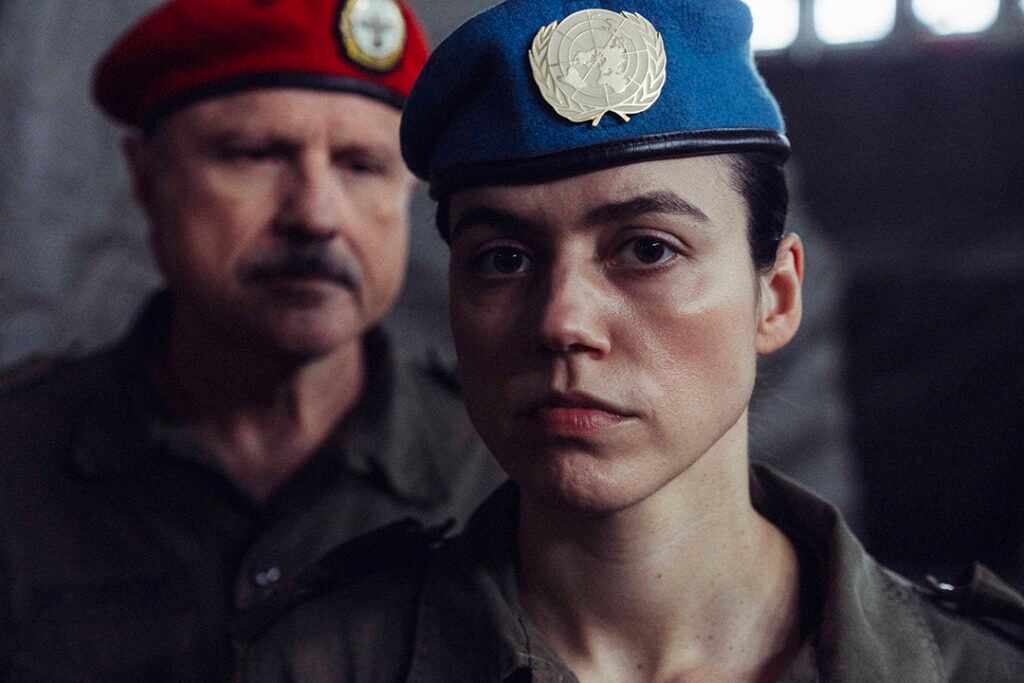
Z: Mélanie, what kind of responsibility did you feel in portraying Sandra’s story?
Mélanie Charbonneau: I really wanted to portray Sandra’s story as authentic and true to her. I didn’t want it to be sensational. I wanted to bring the audience into her boots, follow her steps and really be close to her because that is how I felt when I read the book. I felt that I became Sandra and it was a real experience, a real transformative experience because I could understand what made her decide to stay silent for so long.
Z: Did you feel a personal connection to the book when you read it?
MC: Sandra comes from a family of four children, her and three sisters. I also have three sisters, and in French we call it a sorority. And when our parents had four girls, they couldn’t say, “You’re a girl, you cannot do it.” So there’s something in Sandra that’s also in me that we grew up with parents who said, “There’s no limit for women.” But sometimes when you get into the real world, the doors are closing and there are limits. And this is how I felt connected to her story.
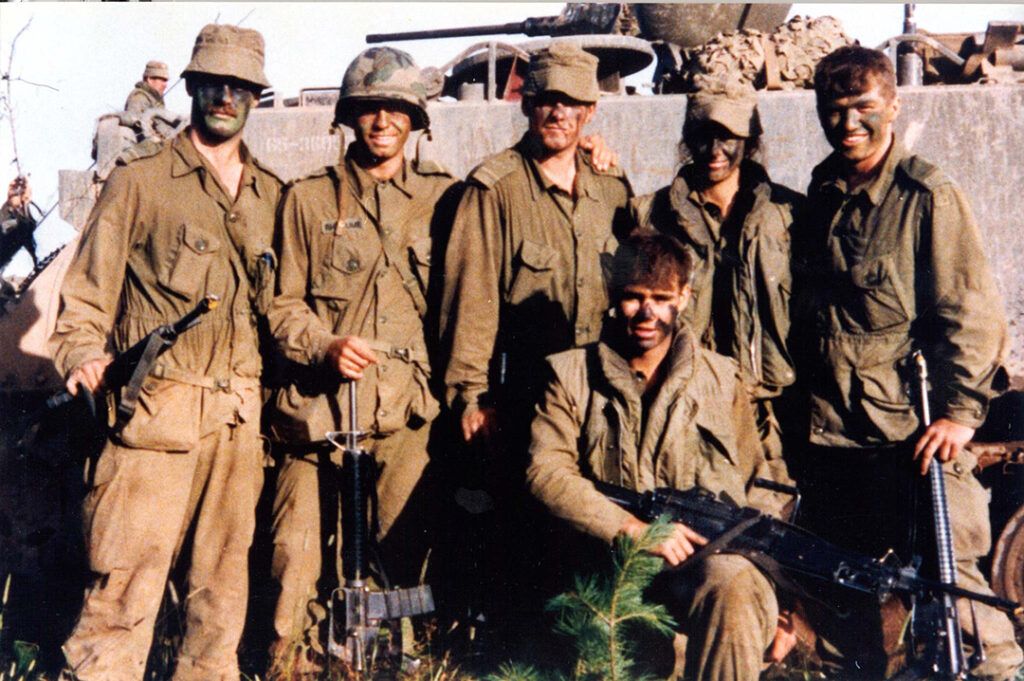
Z: My connection to your story, Sandra, is that I was one of the reporters who worked on the “Rape in the Military” articles at Maclean’s in 1998, and we were prompted into action by the picture of you in the news. Years later, you opened up in your memoir that you were also raped while you were serving, and I’ve heard you say you regret not coming forward earlier.
SP: I think that most women who don’t come forward with their stories feel guilty because they’ve left an injustice silent, and it hurts the next generation of women. So yes, I have carried that a long time. But also, at the time, because I was the first in the infantry, I did not want to be the poster child for abuse in the military. I wanted to be a successful soldier, a warrior. So I couldn’t tell that story. And I realized just when we were here at TIFF that part of the silence comes from the fact I didn’t want to hurt the men who were my champions and didn’t want them to be painted with the same brush. I didn’t want to hurt the people who, at a very young age, stood by their convictions to protect me. Now, I can tell their story too because they are champions. And they are still there in the military. And I think that’s in my DNA, to celebrate the positive. So I’m glad the story is coming out. I’m glad I wrote the book. It was inside of me, and it needed to come out. It was a hard thing to do. It has felt liberating. And I’m glad that this beautiful movie is going to be a voice for all the women across Canada who have had similar journeys.
Z: It’s understandable that you didn’t want that photo to become the defining moment of your military career. Unfortunately, for a very long time, that did seem to be the case. How did you cope with that?
SP: I hid. For those first few months after the story and photo broke, I hid. I avoided all journalists. I just thought maybe it’ll go away, but it never did.
Z: And to this day, it keeps coming back.
SP: That’s okay. I’m ready now to talk about it. But also for the two years after I left the military, I read every imaginable book on men and women and organizational behaviour and communication and how to change culture. I needed to understand what had happened to this young woman who, since the age of 14, wanted to be infantry and airborne. So I spent the first two years educating myself and making peace with what had happened.
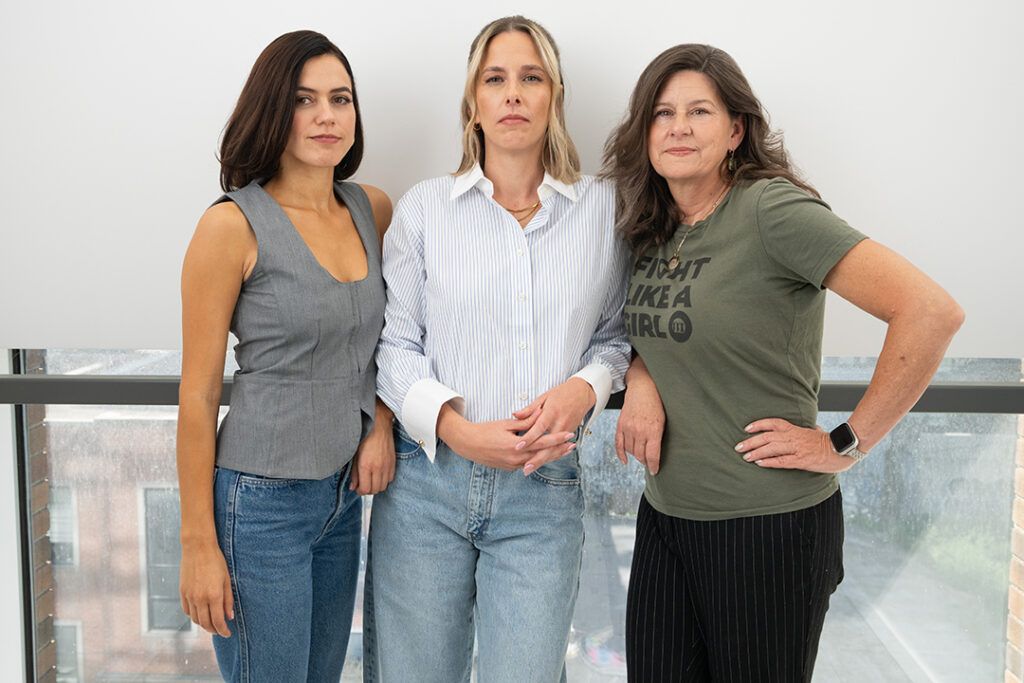
Z: And since then, it seems you have been trying to change the culture from within through different Canadian Forces advisory committees and returning to the military to take a leading role in cadet instruction. What in your experience actually brings about change?
SP: We have a retreat centre in the Gatineau Hills called The Pepper Pod [Perron is the founder and president]. It’s named after a military manoeuvre that helps you protect your buddy while you move toward the enemy – pepper podding. And that’s what we do at the retreat. There, we’ve had over 400 women sitting around a table for a whole weekend telling their stories. I package those stories and experiences into themes, and we present it to the leadership of the Canadian Armed Forces. They come to our centre and we tell them the themes that we hear over and over again. And this is not just from my generation. This is from young women in their 20s who are saying, “This is where we are, I’m still struggling in every single corner of the military.” And the leaders soak it in, and they listen and we have mature conversations. And then they go back and they affect change. I’ve seen so much progress in the last two decades. And that brings me hope, and it brings me energy to continue. I’m going to be relentless until I’m in a coffin.
Z: You’ve said that it was very important for you to locate the centre in the woods, surrounded by trees. And I notice in the film that nature and trees dominate so many of the scenes. Yet, it seems from your past that trees could be a painful or poignant reminder of what you have gone through.
SP: I always tell the women who come to the centre that I wanted it to be in the trees because we can learn a lot from them, how to support and lean on each other in the storms of our lives. That tree that I was tied to served that purpose for me because I was able to lean on it when I thought I was going to crumble and it supported me and it stayed with me. I don’t think [the soldiers] knew that at the time when they tied me to the damn tree, but it supported me and it helped me go through that experience. Full circle.